Your search Rohr im Kremstal gave 1037 results.

Limestone base with remains of a torchbearer and an inscription to Mithras by Lucius Pervincius Sequens.
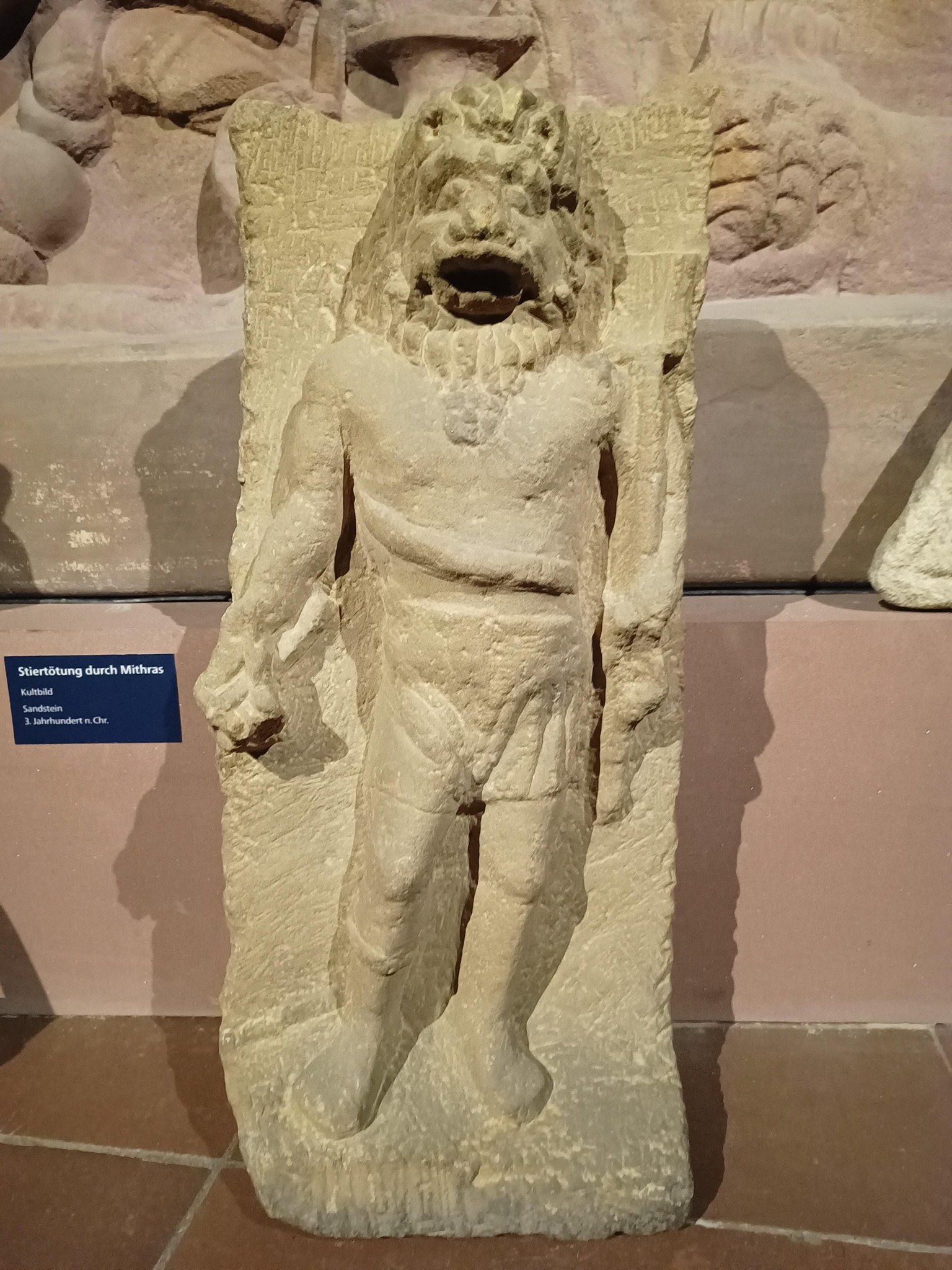
This lion-headed figure from Nida, present-day Frankfurt-Heddernheim, holds a key and a shovel in his hands.
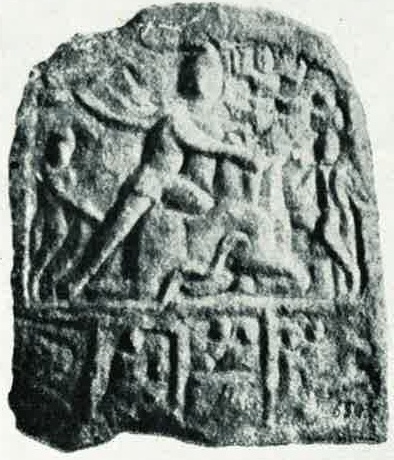
Small arched marble tauroctony relief from Philippovtsi near Sofia, Thracia, divided into two parts by a horizontal rim.
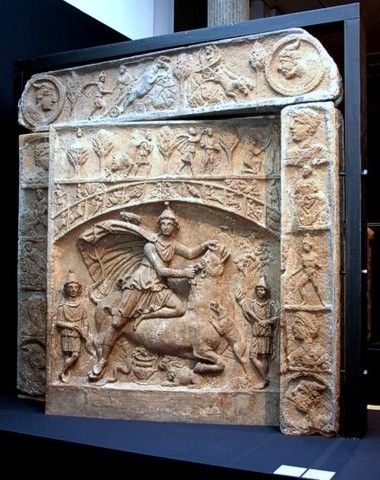
This relief is so well-known that it has been reproduced in nearly every handbook of archaeology and of history of religions.

Nida was an ancient Roman town in the area today occupied by the northwestern suburbs of Frankfurt am Main, Germany, specifically Frankfurt-Heddernheim, on the edge of the Wetterau region.
Marino is an Italian comune with 46,676 inhabitants located in the Metropolitan City of Rome Capital in Lazio.
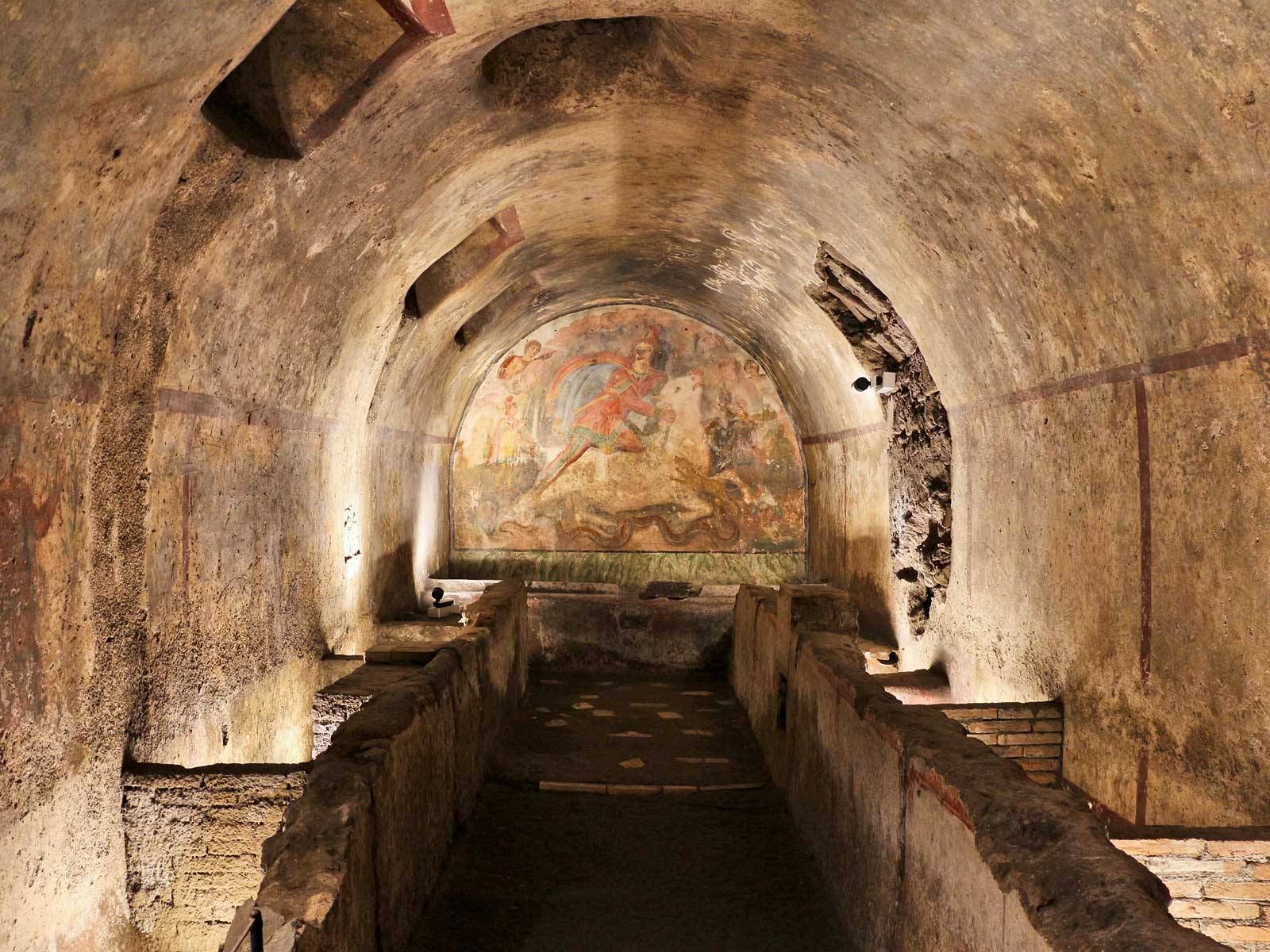
One of Roman Italy’s most important Mithraic sanctuaries, the Mithraeum at S. Maria Capua Vetere preserves a remarkable painted cycle of initiation scenes, offering rare visual evidence for the ritual life of Roman Mithaism.
The Pontiae islands, including modern Ponza, formed part of the Roman maritime landscape of Latium and preserve one of the most remarkable Mithraic sanctuaries of Roman Italy, renowned for its rare stucco zodiac and astral symbolism.
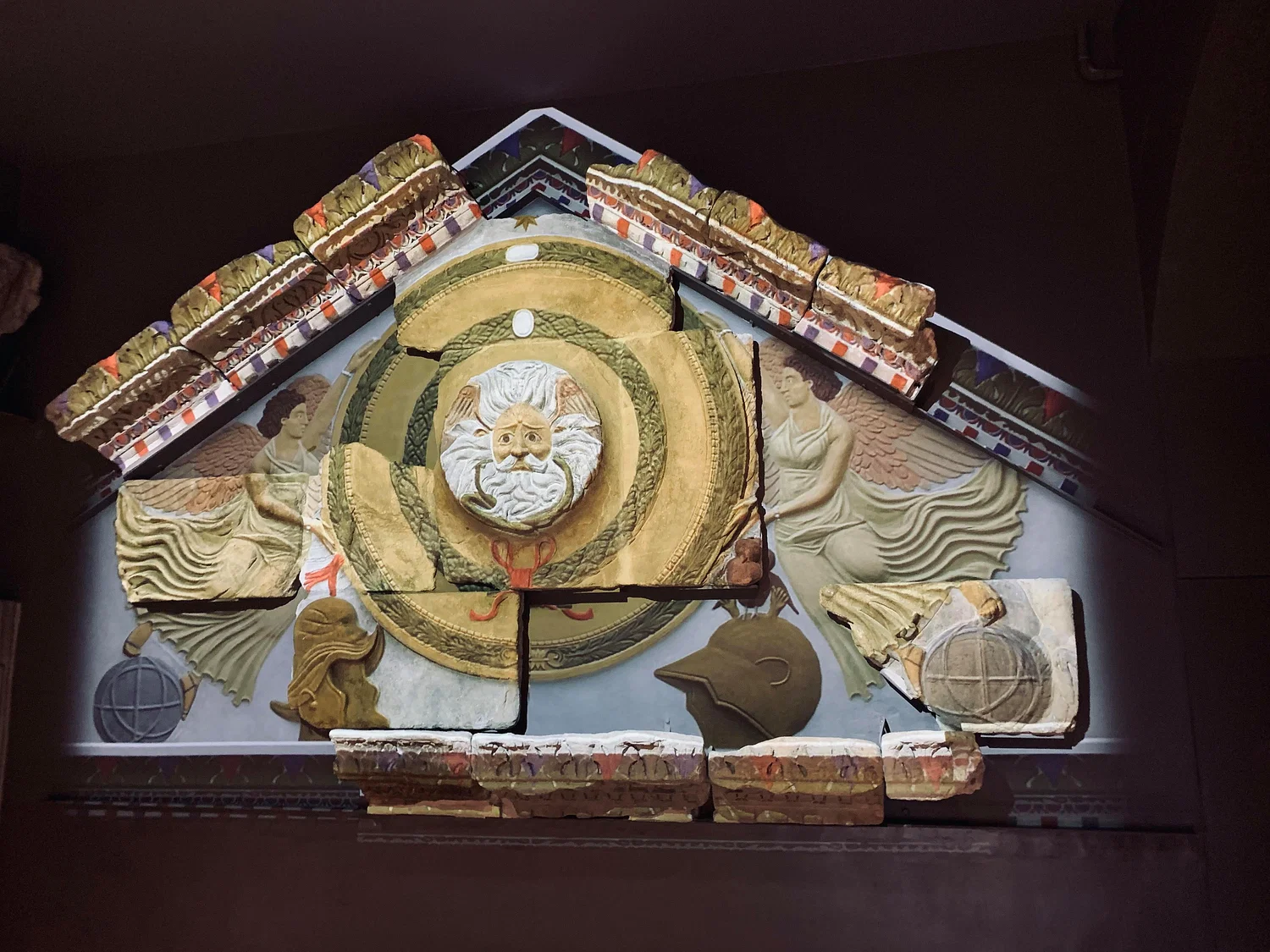
Roman Britannia preserves one of the most strongly militarised corpora of Mithraic evidence in the western empire.
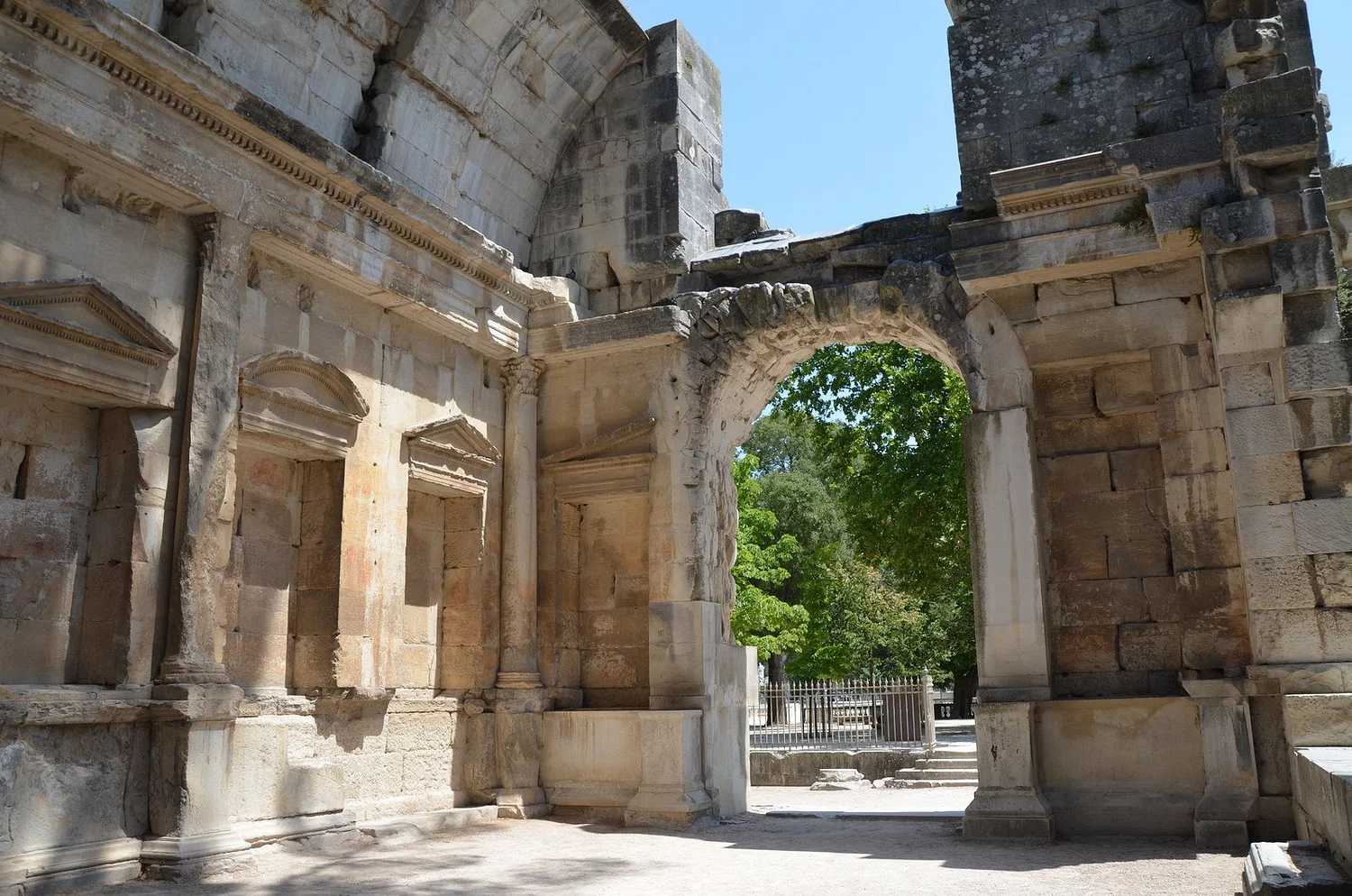
Roman Gallia preserves one of the largest and most geographically diverse corpora of Mithraic evidence in the western empire.
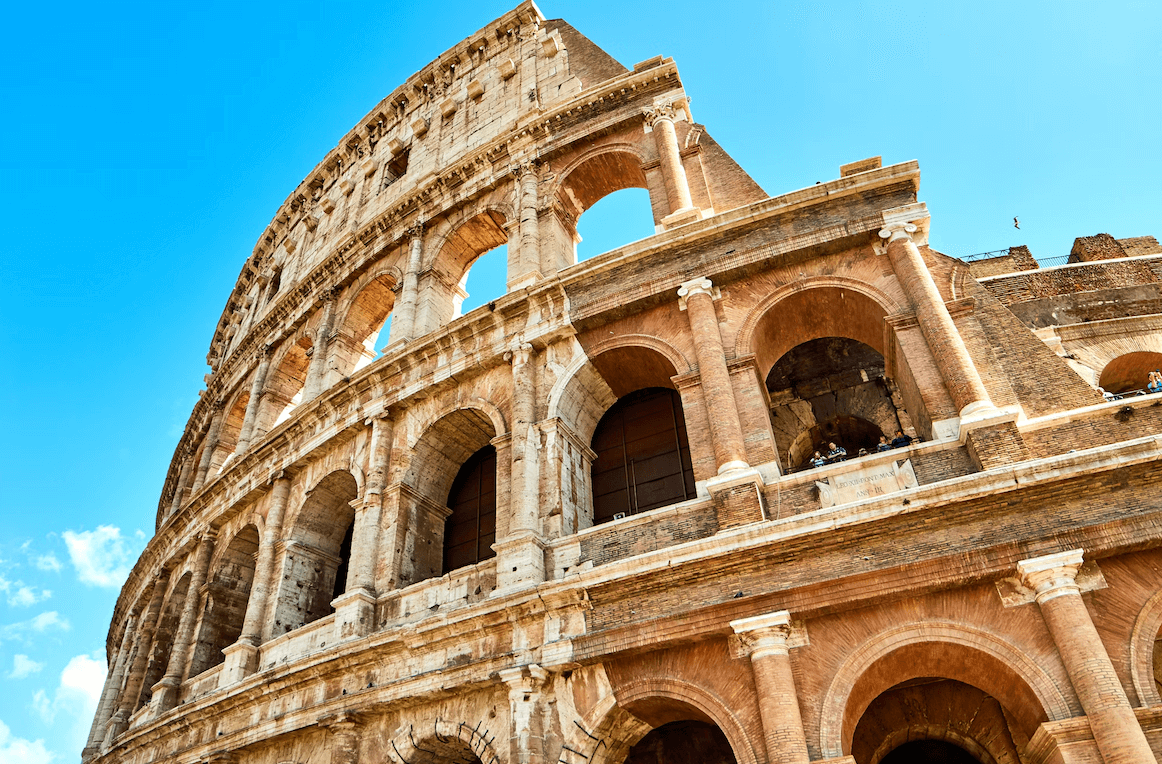
Roman Italia preserves a central and exceptionally influential corpus within the development of Mithraic cults.
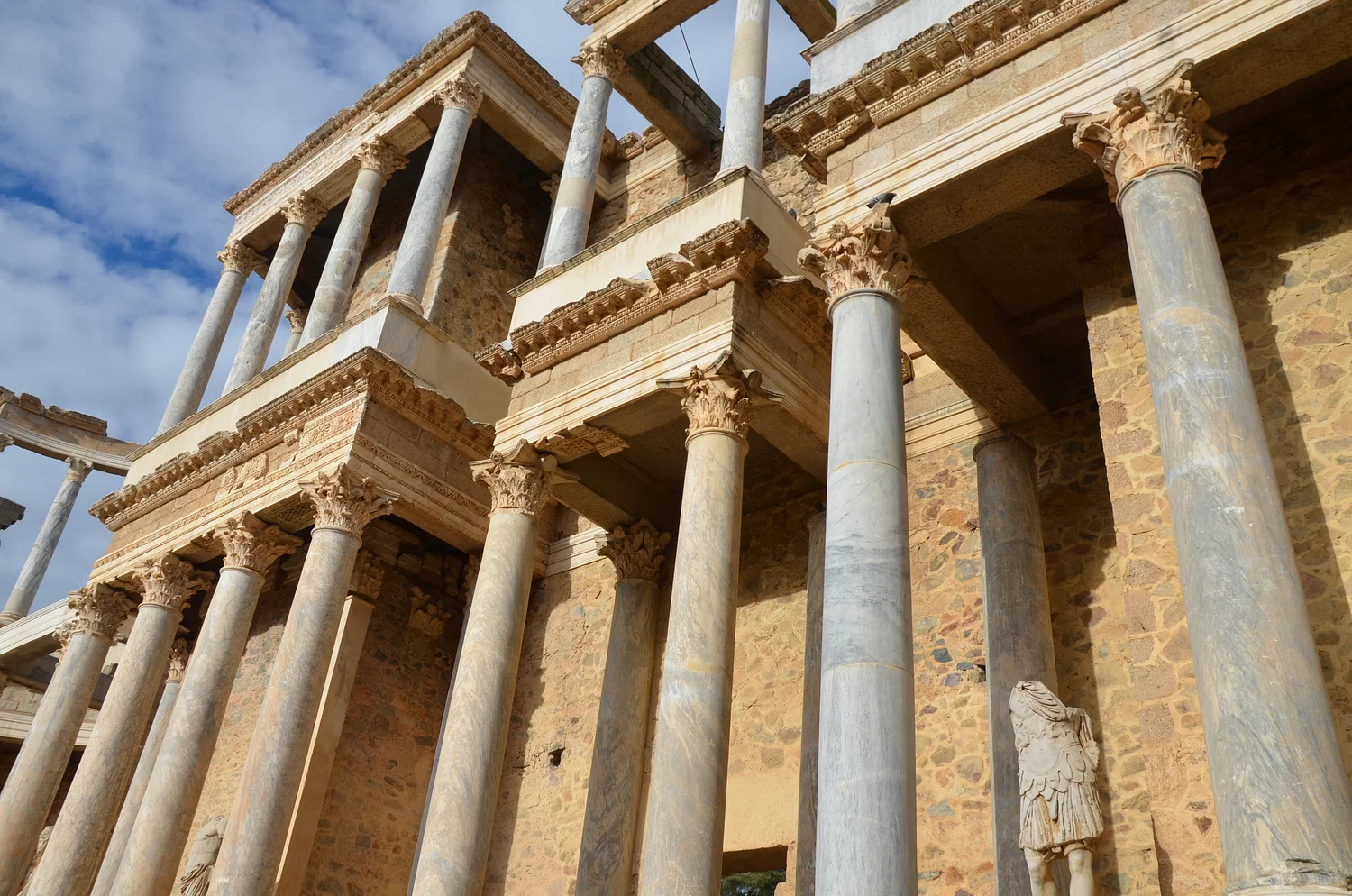
Roman Hispania preserves a relatively modest but strongly urban body of Mithraic evidence, centred above all on Mérida.
Aix-en-Provence or simply Aix, is a city and commune in southern France, about 30 km north of Marseille.
Dijon is the prefecture of the Côte-d'Or department and of the Bourgogne-Franche-Comté region in eastern France. The earliest archaeological finds within the city limits of Dijon date to the Neolithic period.
Puteoli, the great commercial harbour of Roman Italy, preserves evidence of the cosmopolitan maritime environments through which Mithraic cults circulated across the Mediterranean world.
Madauros was a Roman-Berber city in Numidia, in present-day Algeria, renowned in antiquity as an important intellectual and educational centre of Roman North Africa.
Founded on the site of ancient Byzantium and refounded in 330 CE, Constantinopolis became an imperial residence in the eastern Roman Empire. In the 4th century, it was a key setting for interaction between traditional cults and Christian authority.
