Your search Rome gave 377 results.
The relief marble of Mithras sacrifying the bull, exposed on the Hermitage Museum comes from Rome.
These two parallel altars to the diophores were dedicated by the Pater and a Leo from the Mithraeum of S. Stefano Rotondo.
This remarkable marble relief from the end of the 3rd century was discovered in the most remote room of the Mithraeum in the Circo Massimo.
Maarten Vermaseren acquired this rosso antico marble of Mithras slaying the bull in 1961.
This relief was found under the Palazzo Montecitorio, in Rome, and bought by the Liebighaus at Frankfort.
Tauroctony from a gemme, printed on Le gemme antiche figurate di Leonardo Agostini.
This sculpture of Mithras slaying the bull was bequeathed to the Republic of Venice in 1793 by Ambassador Girolamo Zulian.
Except for the serpent, the sculpture of the taurcotony found on the Esquiline Hill lacks the usual animals that accompany Mithras in sacrifice.
The relief of Mithras slaying the bull found on the Esquiline Hill includes two additional scenes with Mithras and two other figures.

Dedicated multiple monuments to Mithras, Fortuna Primigenia and Diana in Etruria.


Dedicated a sculpture of Mithras killing the bull in the 4th mithraeum of Aquincum together with Marcus.

Firmidius Severinus was a soldier who served in the Legio VIII Augusta for 26 years.

Scholar, politician and a court astrologer to the Roman emperors Claudius, Nero and Vespasian.

Thrasyllus was an Egyptian of Greek descent grammarian, astrologer and a friend of the Roman emperor Tiberius.

He was a soldier of the Cohors I Belgarum, probably of Dalmatian origin, who dedicated an altar to Mithras in Aufustianis.
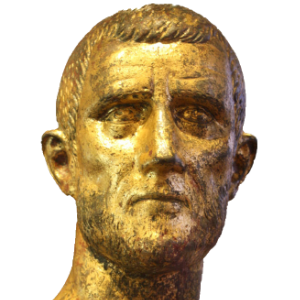
Roman emperor of humble origin who reunited the Empire and repelled the pressure of barbarian invasions and internal revolts.


First African emperor of Rome (193 – 211), born in Leptis Magna, now Al-Khums in Libya.

Roman emperor and philosopher known for his attempt to restore Hellenistic polytheism.
