
Biography
of Aulus Caedicius Priscianus
- Aulus Caedicius Priscianus, an eques, is attested as a Pater at the Mitreo di Santo Stefano Rotondo.
- Also recorded as Sacerdos domus Augustae.
- Attested in 180 – 190.
- Attested at Roma, Latium, Italia in 180 – 192 (TNMM 152).
- Attested at Roma, Latium, Italia in 180 – 190 (TNMM 473).
TNMP 89
A. Caedicius Priscianus was a Roman eques and a prominent member of the Mithraic community established in the castra peregrinorum on the Caelian Hill in Rome, beneath the present church of Santo Stefano Rotondo. He is identified by Bianchi with the A. Caedic(ius) Priscianus, egregius vir, named among the sacerdotes domus Augustae under Commodus, in a list probably dating to c. 180–184 CE (Bianchi 1979; CIL VI 2010b, 22).
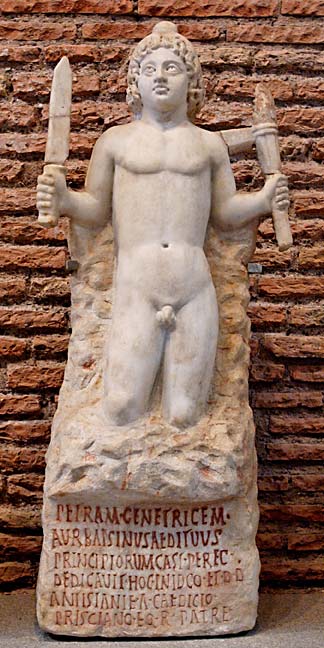
Within the mithraeum, Caedicius held the grade of Pater. His name appears in connection with the dedication of the petra genetrix (TNMM 152), and Bianchi regarded him as the more prominent of the two Fathers attested in the sanctuary, the other being Aurelius Sabinus, Pater huius loci (Bianchi 1979). The coexistence of the two men led Bianchi to reject, as unlikely, a simple succession of Sabinus by Caedicius and to favour the contemporaneity of the relevant dedications.
Caedicius is also named in the acclamation Leo vivas cum Caedicio Patre, added to the sides of the two altars dedicated to Cautes and Cautopates. Bianchi interpreted the formula as celebrating the promotion of an initiate to the grade of Leo and suggested that the initiate may have been Baebius Quintianus, one of the dedicators of the altars. Gordon later accepted the identification of the Leo with Baebius Quintianus and cited the inscriptions as evidence for the symbolic relationship between a Mithraic initiate and his Father (Gordon 2001).
Bianchi further proposed that the group of dedications could belong to the initial establishment or furnishing of the mithraeum, which would place its foundation in the reign of Commodus and associate one of its earliest leading figures with the domus Augusta. Mastrocinque subsequently described Caedicius Priscianus as a sacerdos of the domus Augusta of Commodus who built and dedicated the Mithraeum of Santo Stefano Rotondo within the castra peregrinorum (Mastrocinque 2017).
References
- Attilio Mastrocinque (2017) The Mysteries of Mithras. A Different Account.
- Elissa Lissi-Carrona (1986) Il Mitreo dei 'Castra Peregrinorum' (S. Stephano Rotondo).
- Manfred Clauss (1990) The Roman Cult of Mithras. The God and His Mysteries.
- Ugo Bianchi & Multiple authors (1979) Mysteria Mithrae.
- Philippe Roy & Laurent Bricault (2021) Les cultes de Mithra dans l’Empire romain.
- Roger Pearse (2014) CIMRM Supplement - Mithraeum. S.Stephano Rotondo / Castra Peregrinorum, Rome.
Attestations
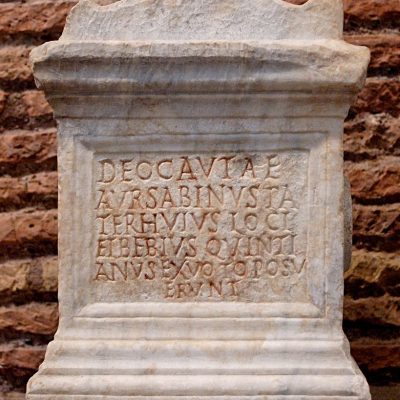
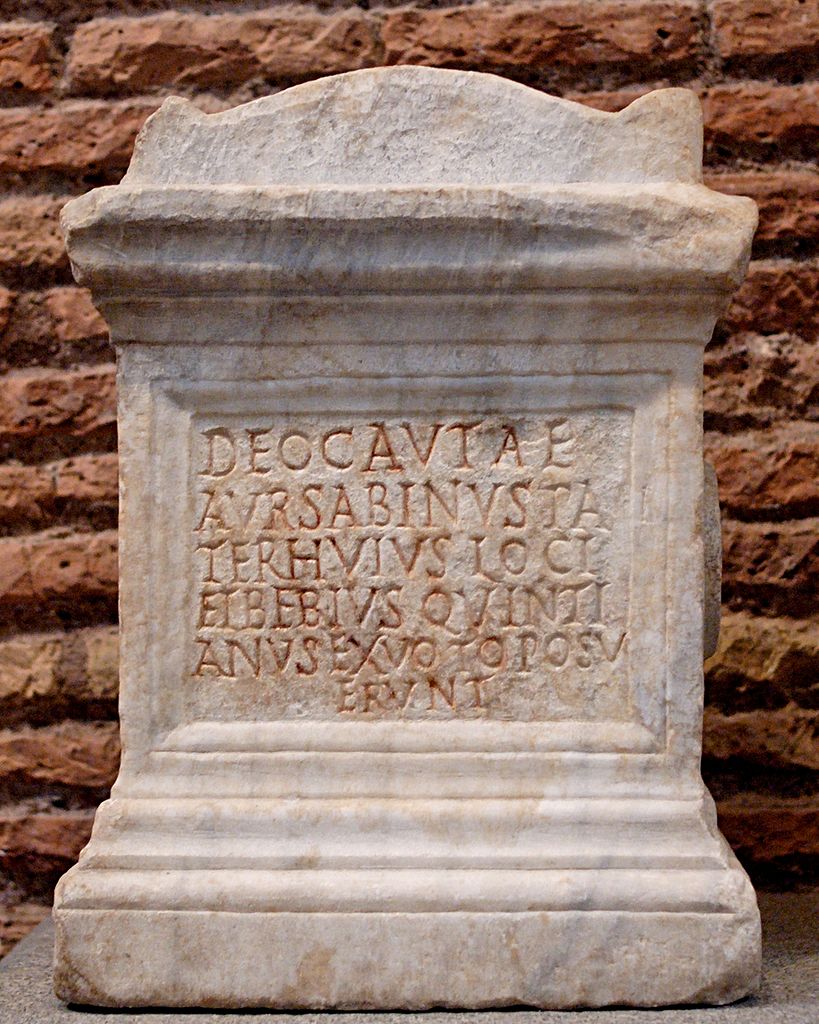
Altars to Cautes and Cautopates from Stefano Rotondo
TNMM 473
These two parallel altars to the diophores were dedicated by the Pater and a Leo from the Mithraeum of S. Stefano Rotondo.
Leo vivas / cum Caedicio / patre.
Deo Cautae/opathi / Aur[elius] Sabinus, / pater huius loci, / et Bebius Quintianus / leo, / ex voto posuerunt.
Leo vivas cum / Caedicio / patre.
Que vive le Lion, avec Caedicius, Père.
Au dieu Cautopates, Aurelius Sabinius, Père de ce lieu, et Bebius Quintianus, Lion, à la suite d’un voeu, ont déposé.
Que vive le Lion, avec Caedicius, Père.
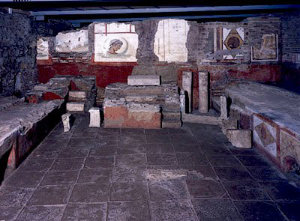
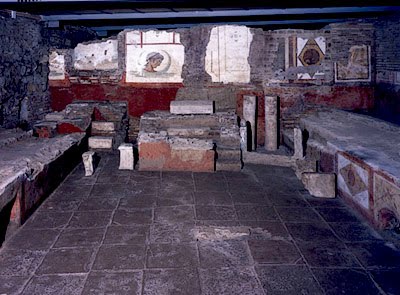
Mitreo di Santo Stefano Rotondo
TNMM 17
The Mitreo dei Castra Peregrinorum was discovered under the church of Santo Stefano Rotondo in Rome.
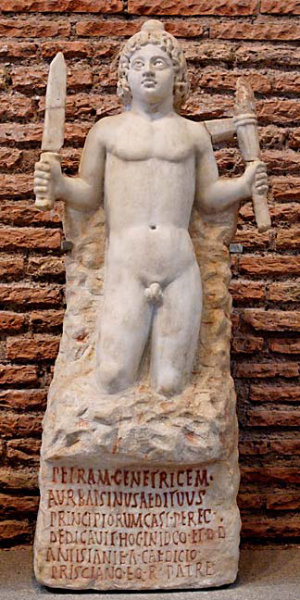
Petrogeny from Santo Stefano Rotondo
TNMM 152
The sculpture of Mithras rock-birth from Santo Stefano Rotondo bears an inscription of Aurelius Bassinus, curator of the cult.
