Your search San Gemini gave 585 results.
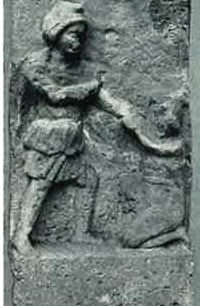
Red sandstone relief from Mithraeum I at Stockstadt depicting Mithras in Oriental dress approaching kneeling Sol with outstretched arms
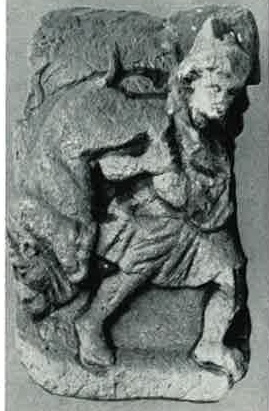
Grey sandstone relief from Mithraeum I at Stockstadt showing Mithras in Oriental dress walking to the right while carrying a bull on his shoulders

Sandstone stele from Mithraeum I at Stockstadt depicting Cautes cross-legged in Oriental dress, resting his left hand on a pedum
Sandstone stele from Mithraeum I at Stockstadt showing Cautopates in Oriental dress, cross-legged, holding a burning torch down and resting on a pedum
Lower portion of a red sandstone stele of Cautes from Mithraeum I at Stockstadt, cross-legged, with a dedicatory inscription on the base
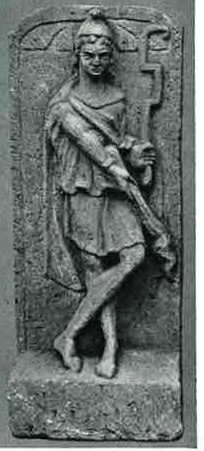
Red sandstone stele from Mithraeum I at Stockstadt depicting Cautopates in Oriental dress, cross-legged, holding a downward torch
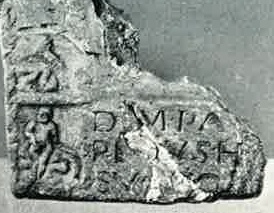
Double-sided white sandstone relief from Mithraeum I at Stockstadt, with Mithraic imagery on both faces
Fragment of a sandstone relief from Mithraeum I at Stockstadt depicting a beardless figure in a velum, identified as a wind or winter deity
Large red sandstone tauroctony relief from Mithraeum I at Stockstadt, mostly thrown into the river Main when the sanctuary was destroyed
Late Roman funerary inscription from Antium commemorating the senator, governor of Numidia and Mithraic pater Alfenius Ceionius Iulianus Kamenius.
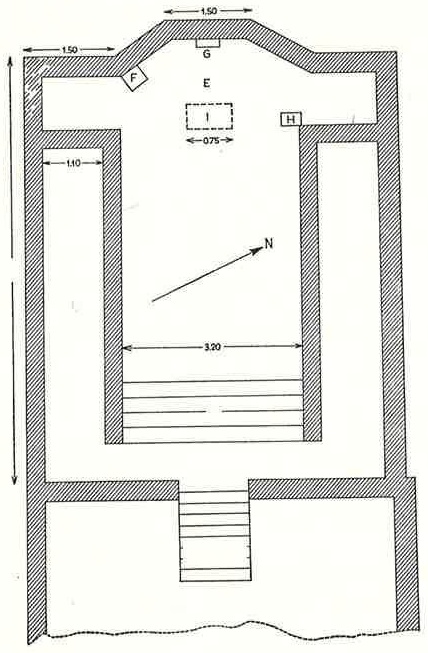
Mithraic sanctuary found at Biljanovac north-east of Kumanovo, Moesia Superior, with a pronaos and inner sanctuary, yielding marble reliefs, an altar, and associated cult objects.
Sandstone ritual basin discovered in situ beside the north bench of the Vindobala Mithraeum.
Major Mithraic sanctuary in the City of London with east-west orientation, multiple building phases and rich sculptural finds.
Group of Mithraic and other cult remains possibly originating from several neighbouring sanctuaries destroyed or abandoned in Late Antiquity.
Series of small bronze plaques depicting zodiac signs and planetary figures discovered in Ostia and possibly connected with the decoration of a Mithraic sanctuary.
Dedication for the safety of the provincial governor erected by an actarius and notarius within the Mithraic sanctuary of Lambaesis.
Architectural and numismatic finds from the Mithraeum at Serdica, Thracia, comprising a door cornice, a capital fragment, two pilaster pieces, a stone water-basin, and two coins of Arcadius deposited when the sanctuary was reused as a cellar.
Lower part of a sandstone altar from Svichtov, probably transported from Novae in Moesia Inferior, dedicated to Invicto by Caius Iulius Maximus, praefectus castrorum of Legio I Italica.
Inscription from Viminacium, Moesia Superior, recording that Caius Iulius Valerius, veteran of Legio VI Claudia, restored a Mithraic sanctuary destroyed by lightning at his own expense.
Sandstone altar from Romula, Dacia, dedicated to Deo invicto Mithrae by Aurelius Rufus ex voto, with the busts of Sol and Luna flanking the text.
