Your search San Giovanni al Timavo gave 3161 results.

A fragment from the Mithraeum at Pons Saravi (modern Saarburg) in Belgica, showing a standing naked man with a bird, possibly a cock, on his left arm, tentatively identified as Mercury, with the head, hands, and parts of the legs lost.
The right lower corner of a relief fragment from the Mithraeum at Pons Saravi (modern Saarburg) in Belgica, showing a standing naked man holding his hands crosswise on his breast, with the upper part and head lost.
A brief dedicatory inscription to Deus Sol Invictus Mithras, found at Vasio (modern Vaison-la-Romaine) in Narbonensis.
A white marble statuette of Cautes, dressed in a long cloak and raising his torch with both hands without being cross-legged, found near Eauze (ancient Elusa) in the Armagnac region of Aquitania.
An ara thought to originate from the Mithraic sanctuary at Borcovicium (modern Housesteads), bearing a fragmentary inscription dedicated to Sol Invictus.
An altar with a praefericulum on the right side and a patera on the left, found at the Mithraeum at Borcovicium (modern Housesteads) in 1822, recording a vow fulfilled to Sol Invictus Mithras Saecularis by Litorius Pacatianus, beneficiarius consulis, for himself and his family…
An altar found in 1822 at the Mithraeum at Borcovicium (modern Housesteads), recording a vow fulfilled to Sol Invictus Mithras Saecularis by Publius Proculinus, centurion, for himself and his son Proculus, during the consulship of Gallus and Volusianus in 252 A.D…
Ceramic finds from both excavations of the Mithraeum at Borcovicium (modern Housesteads), comprising red and thin black-glazed pottery fragments together with a silver coin of Faustina Minor, indicating the sanctuary was in use before 253 A.D. and was most likely destroyed by fire…
The inscription on the altar No. 858 from the Mithraeum at Borcovicium (modern Housesteads), recording a vow willingly and with merit fulfilled by Herion to Sol.
A limestone statue from the Mithraeum at Borcovicium (modern Housesteads), representing a standing male figure in short tunic with bare legs and feet, arms held tight along the body with clenched fists once holding attributes now lost, with part of a snake on his right arm…
A large limestone tauroctony relief in several fragments from the Mithraeum at Borcovicium (modern Housesteads), the vaulted main fragment showing Mithras slaying the bull with Cautes raising his torch beside the bull's foreleg, a crescent of Luna in the upper corner…
A marble statue from Augusta Emerita (modern Mérida), depicting a standing dressed male person whose right leg leans against a tree-trunk and whose raised right arm once held a lance or trident, tentatively identified as Poseidon.
A brief inscription reading D(eo) M(ithrae), found inside a fullonica at Pola (modern Pula) in a room that had once served as a vestibule.
A fragmentary inscription from Aquileia, probably dedicated to Cautopates, recording a soldier named Marcianus, optio of the Second Adiutrix Legion, who fulfilled his vow for the welfare of himself and his family.
Two inscriptions found at Aquileia in 1805, both dedicated by Q. Baienus Proculus as pater, the first to Cautopates and the second to Cautes.
An inscription from the vicus Vicciomitum in Milan (ancient Mediolanum), recording a votive dedication to the Invincible Mithras by L. Atilius Pupinius on a site granted by decree of the town council.
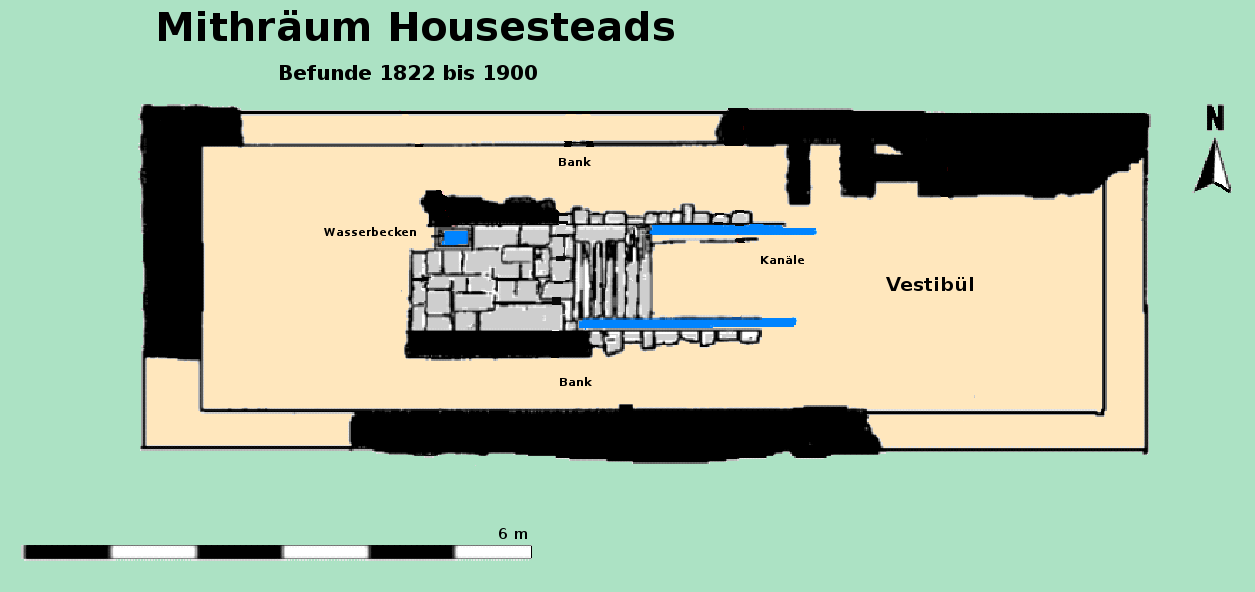
The Housesteads Mithraeum is an underground temple, now burried, discovered in 1822 in a slope of the Chapel Hill, outside of the Roman Fort at the Hadrian's Wall.

Housesteads Roman Fort is the remains of an auxiliary fort on Hadrian's Wall, at Housesteads, Northumberland, England, south of Broomlee Lough.
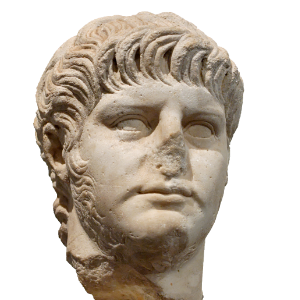
Roman emperor whose ceremonial reception of Tiridates I of Armenia established one of the earliest recorded links between Mithras and the Roman imperial court.
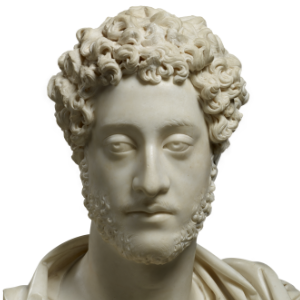
Roman emperor traditionally regarded as the first ruler initiated into the Mysteries of Mithras.
