Your search San Giovanni al Timavo gave 3665 results.
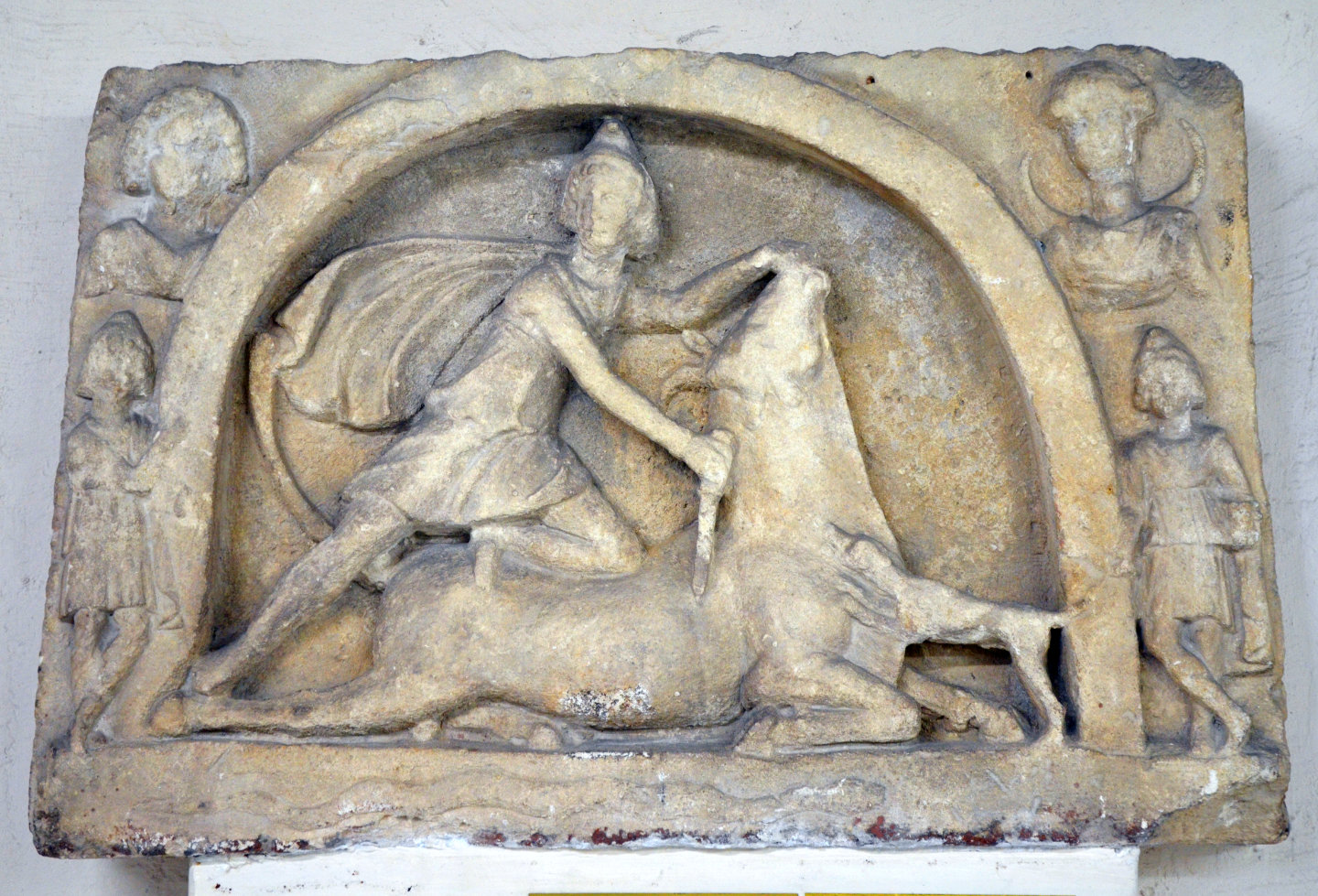
Sandstone tauroctony relief from the Mithraeum at Kreta (Крета), depicting Mithras within a vaulted grotto accompanied by the torchbearers, Sol and Luna.
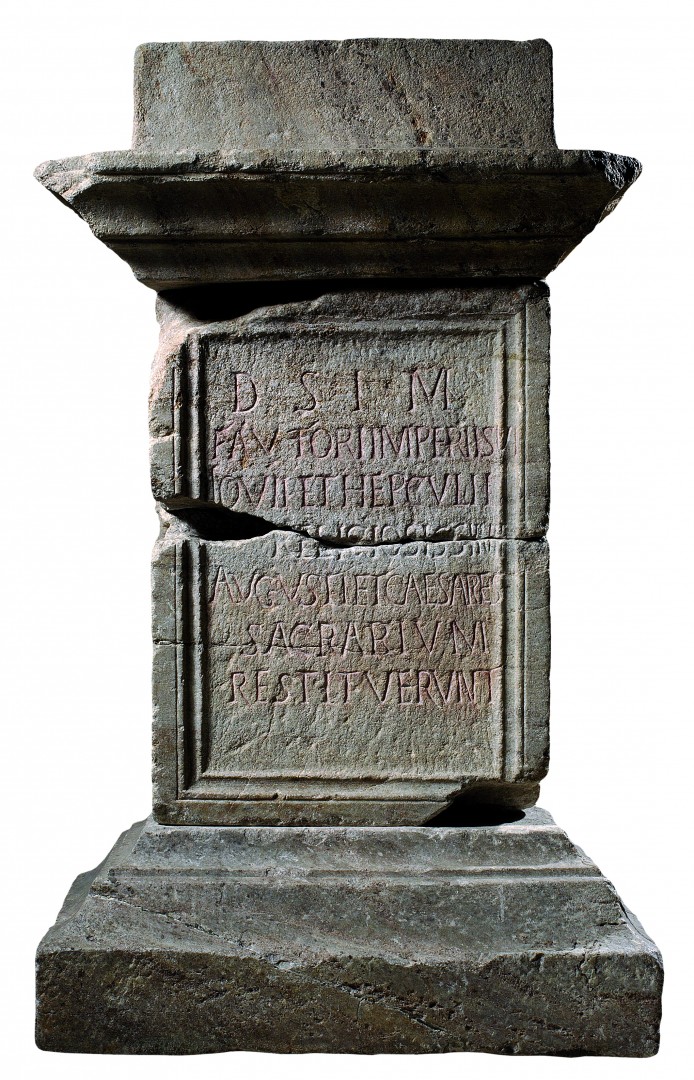
Altar with Cautes and Cautopates dedicated to Sol Invictus Mithras as protector of the Tetrarchy in 3rd-century Carnuntum.
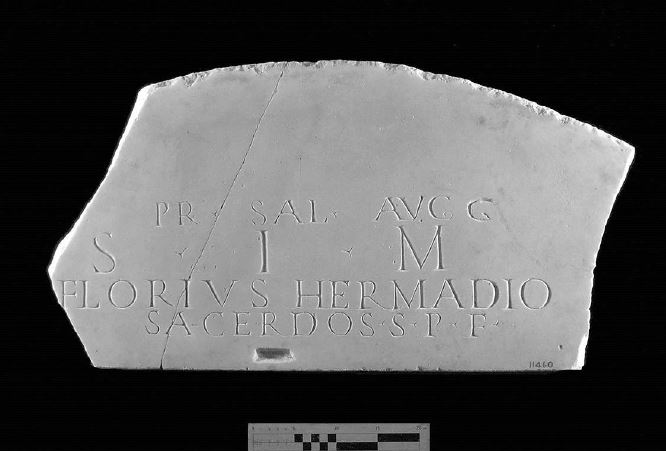
Marble revetment inscription from the cult niche of the Mitreo della Planta Pedis recording a dedication to Sol Invictus Mithras by the priest Florius Hermadio for the welfare of two emperors.
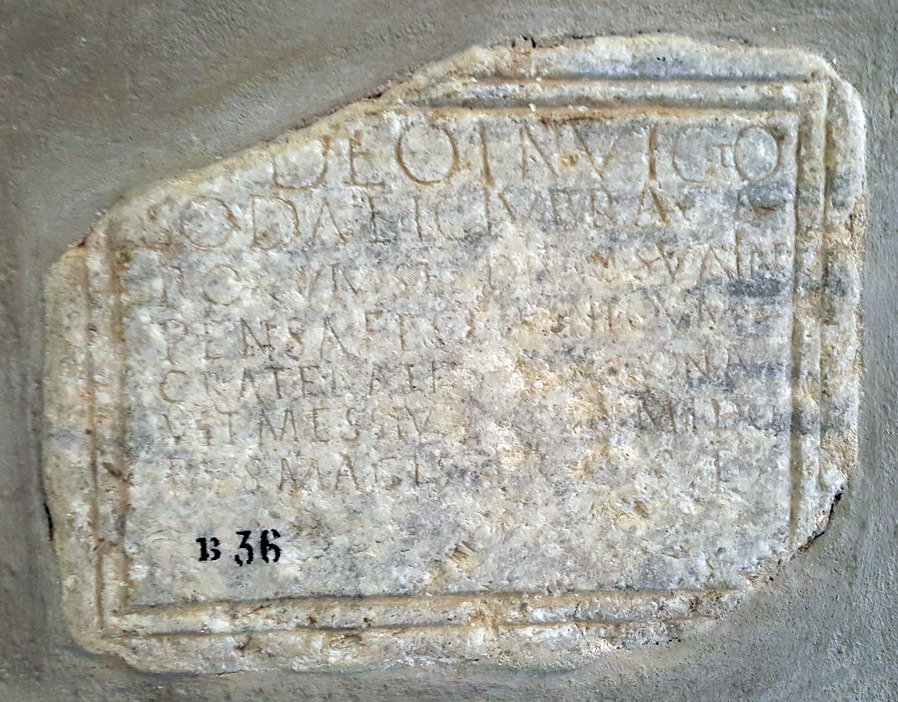
Marble inscription recording the construction of a Mithraic meeting place and the donation of a crater by Titus Flavius Artemidorus.

Member of a Mithraic community at Stockstadt who dedicated altars to Cautes and Cautopates.
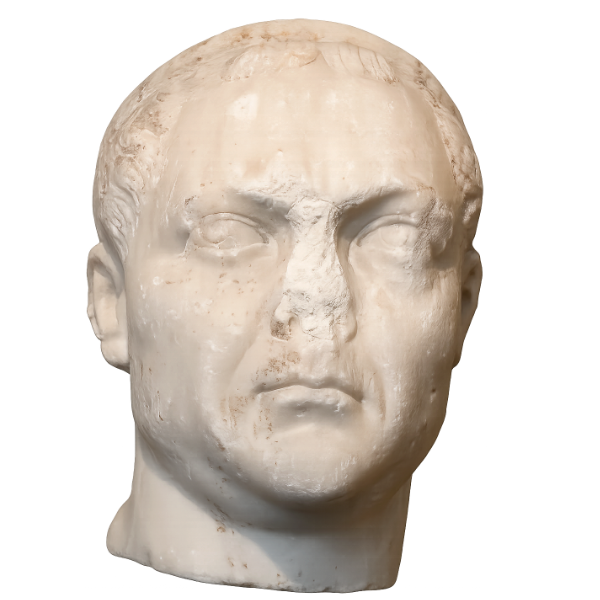
Roman emperor from 253 to 260, he was taken captive by Shapur I of Persia. He was thus the first emperor to be captured as a prisoner of war.
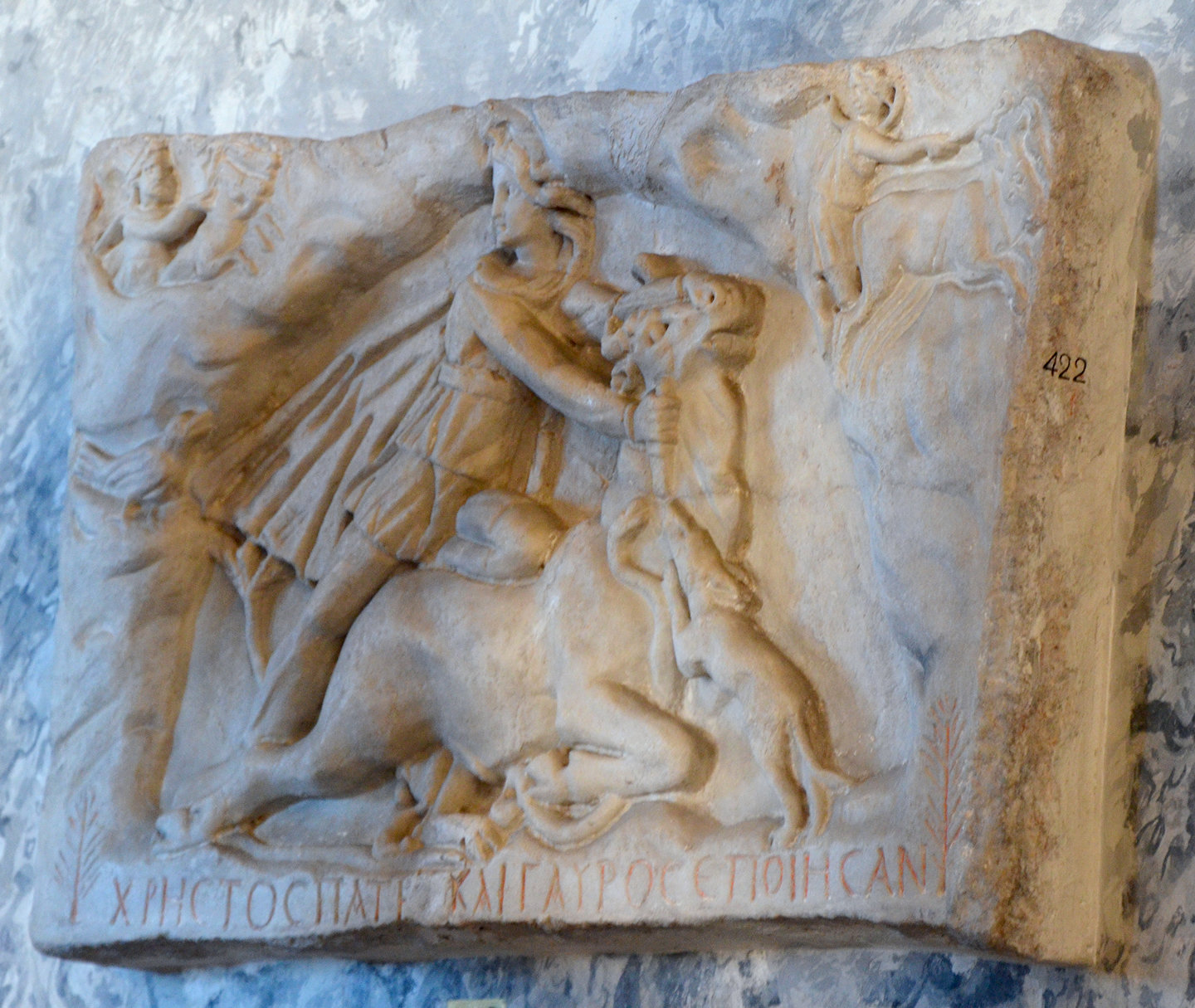
This relief of Mithras killing the bull, signed by a certain Χρῆστος, is on display in the Sala dei Animali of the Vatican Museum.

This altar from Grumentum in Lucania was dedicated to Sol Invictus Mithras by Titus Flavius Saturninus, an evocatus in imperial service.
A small limestone votive altar from Pola (modern Pula) bearing on its front face a damaged relief head of a youthful Sol with long curly hair, above which is carved the inscription Soli and below the dedicatory text by Atticus (No. 757).
An altar found at Milan (ancient Mediolanum), dedicated to the Invincible Mithras by Varia Severa, daughter of Quintus; because the dedicant is a woman, Cumont suggests it may alternatively be dedicated to the Dis Manibus.

Val di Non is an Alpine valley in Trentino associated with Roman-period finds.
Zwiefalten belongs to the upland territory historically associated with the province of Raetia.
Thessalonike became one of the principal urban centres of the Balkans and the Via Egnatia corridor.
The locality of San Juan is associated with archaeological discoveries from the Iberian provinces.
Rohr im Kremstal belongs to the Alpine hinterland associated with Roman Noricum.
Halle lies within the broader northern frontier zone of the Roman imperial world.
Dolna-Malina lies within the inland territory historically associated with Roman Thrace.
Callatis developed as an important Black Sea port on the western coast of the Pontus Euxinus.
Alesia became famous as the site of Caesar’s decisive siege during the Gallic Wars.
Alcsút lies within the central Danubian region historically associated with Roman Pannonia Inferior.
