Your search San Valentino in Abruzzo Citeriore gave 587 results.

Sankt Thomas belongs to the rural Alpine territory associated with Roman Noricum.
Sankt Johann occupied a position along the Alpine communications network of Noricum.

Wall remnants found deep underground at San Zeno near Trento, possibly indicating a Mithraeum, discovered alongside Roman coins, lost bronze figures and a small gold disc decorated with an ear of corn or a sword.
A fragmentary inscription on the lower border of the limestone tauroctony relief from San Zeno di Romedio near Trento, partially reading a dedication to the Invincible Mithras by Marius.
A limestone low-relief tauroctony fragment found in 1869 near the entrance of the valley of San Zeno di Romedio in the Trentino, now in the Museum at Trento, showing a primitive Mithras bullkiller with Cautes upraised, the bust of Luna and an inscription on the lower border…
A coarse-grained yellowish-white marble tauroctony relief fragment found walled in at San Zeno am Nonsberg in the Trentino in 1911, now in the Museum Ferdinandeum at Innsbruck, showing part of Mithras slaying the bull and Cautes raising a flaming torch.
A brief inscription reading "Deo Invicto Mithrae", found in the ruins of the Castello di Tuenno near San Zeno at the entry to the Tovel valley in Trentino, alongside the decorated relief No. 723.
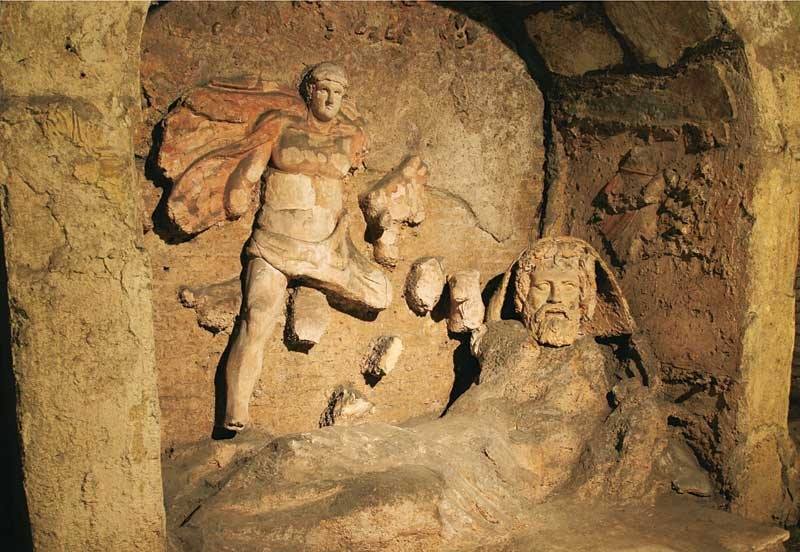
Even if only a few fragments remain, it is very likely that the main niche of the Mitreo di Santa Prisca contained the usual representation of Mithras killing the bull.
The fragmented tauroctony of the Mitreo di Santa Prisca rests on the naked figure of a bearded man, probably Ocean or Saturn.
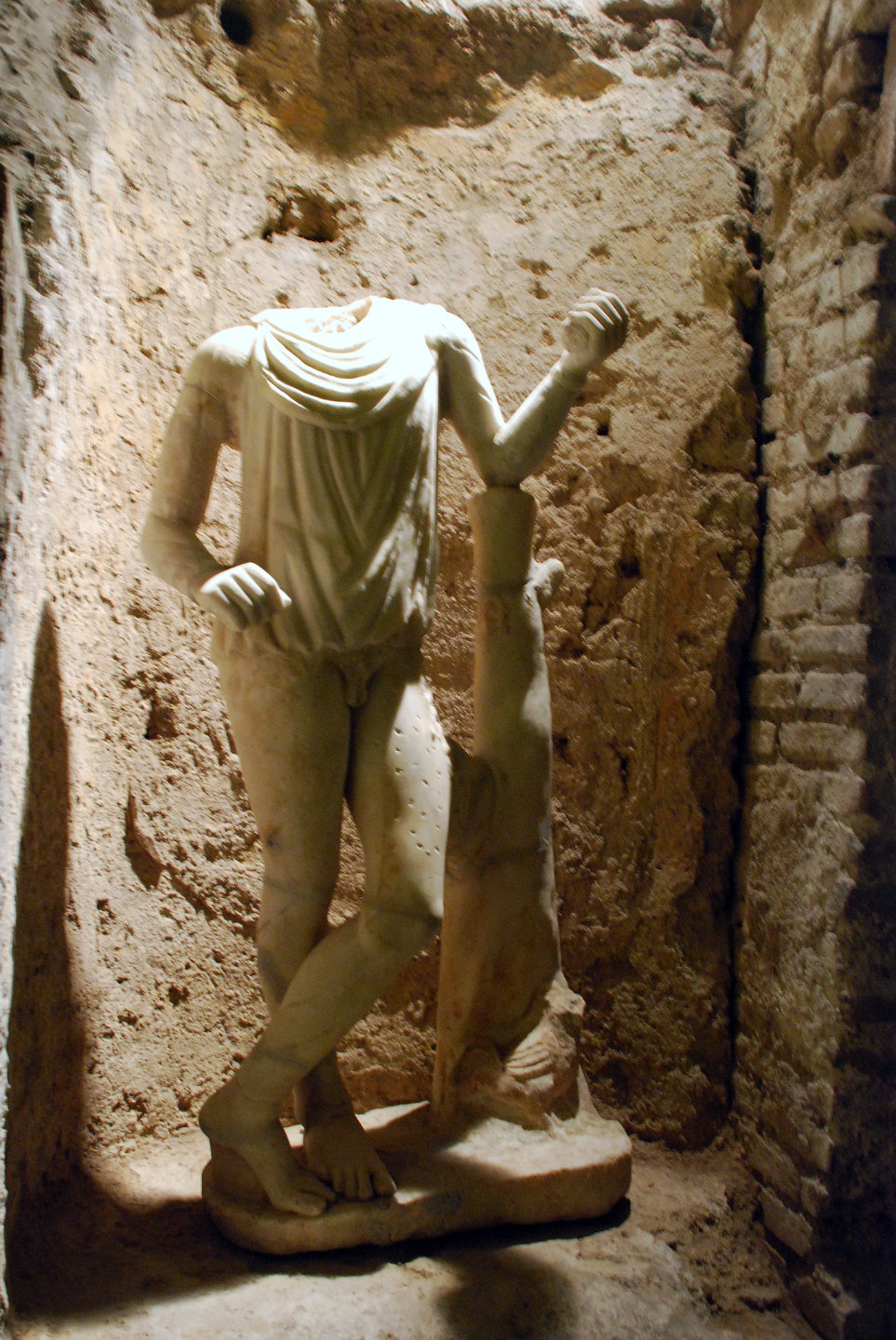
The marble statue of Cautes, found in the Mithraeum of Santa Prisca, was originally a Mercury.
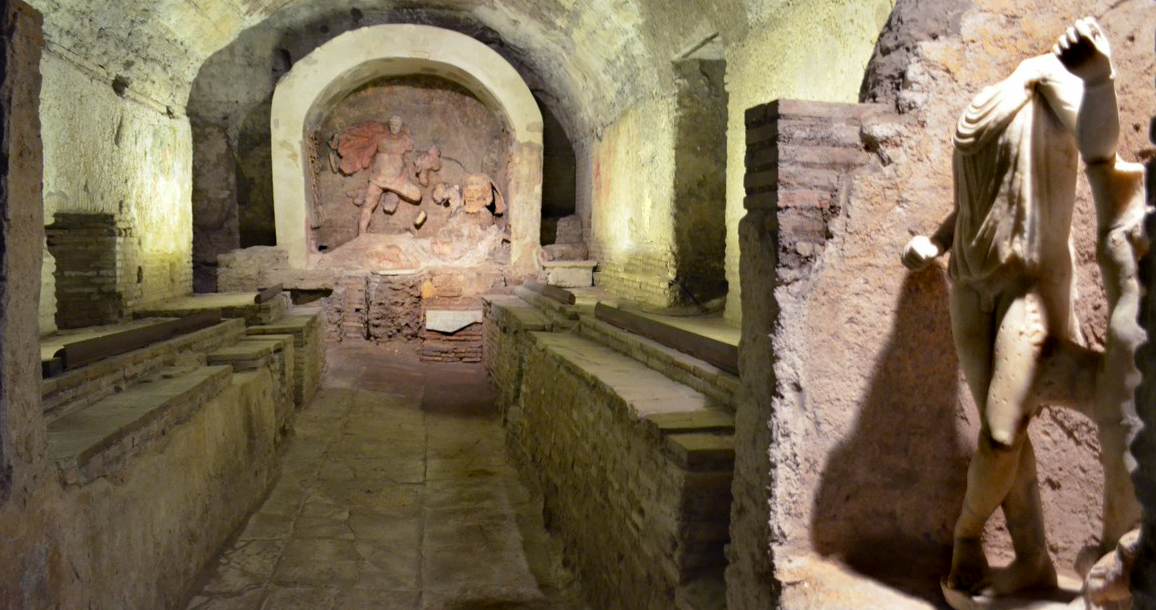
The Mithraeum of Santa Prisca houses remarkable frescoes showing the initiates in procession.
Small altar found in 1843 at Sankt Johann in the Saan valley, Noricum, dedicated to Deo invicto Mithrae by Sextus Masclinus.
Altar from Vidy near Lausanne, ancient Leusonna, dedicated to Soli Genio Lunae sacrum by Publius Clodius Primus, curator of the vici Lousonnenses, sevir Augustalis, and curator of the Roman citizens of the Helvetian conventus; not earlier than AD 161–169…
Group of Mithraic finds distributed across different localities named San Zeno along the Verona–Brenner route.

Partial relief of a Giant with snake-feet found in the Mithraeum of Santa Prisca.
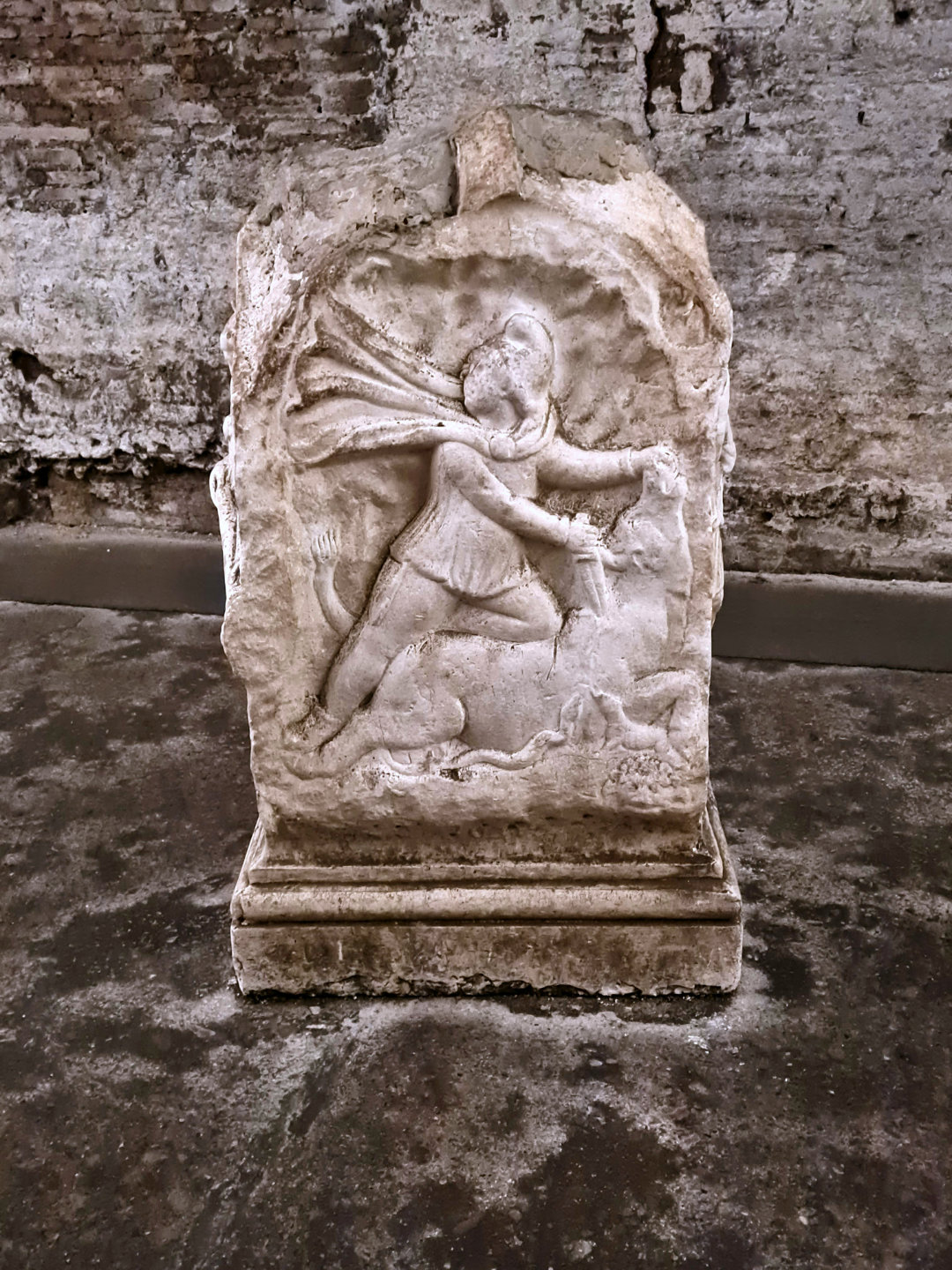
The altar of the Mithraeum of San Clemente bears the Tauroctony on the front, Cautes and Cautopates on the right and left sides and a serpent on the back.
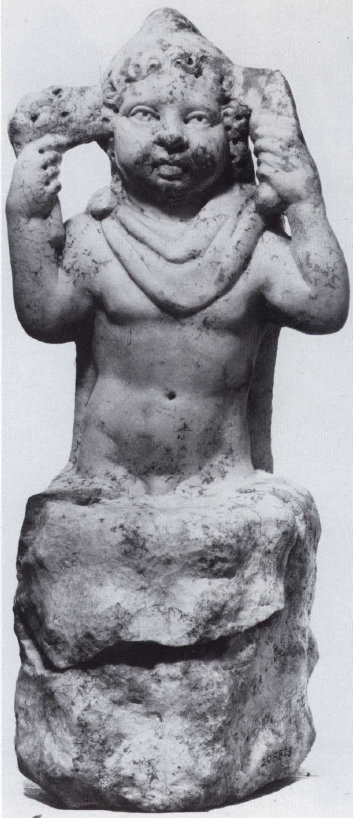
The second statue of Mithras rock-birth was found in the Mitreo di Santo Stefano Rotondo shows a childish Mitras emerging from the rock.
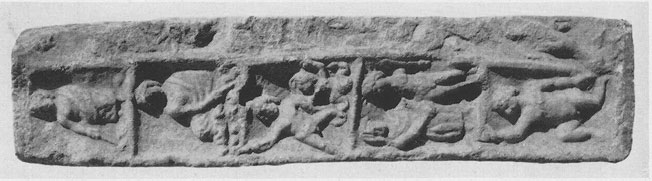
Fragment of a double-sided white marble Mithraic relief from San Zeno, found near the Castello di Tuenno, depicting elements of the tauroctony cycle and bearing a dedication to Deo Invicto Mithrae.

Professor Wind's acclaimed work explores pagan mysticism and neoplatonic philosophy in Renaissance art, offering insightful analyses of masterpieces by Botticelli, Michelangelo, Raphael and Titian.

The Mithraeum under and behind S. Prisca on the Aventine is without doubt the most important sanctuary of the Persian god in Rome.
