Your search St Albans gave 2762 results.

Inscription from Apulum, Dacia, dedicated to Bono Puero by Aurelius Chrestus — one of several dedications to the Bonus Puer from Apulum with Mithraic associations.
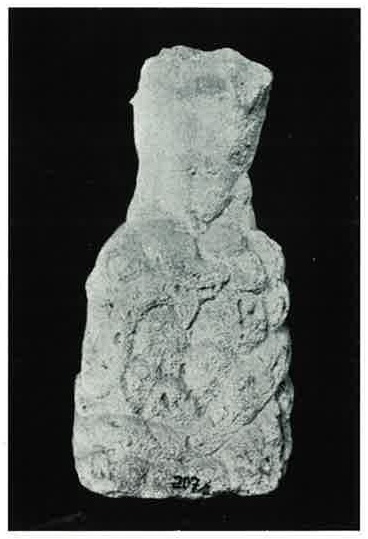
Sandstone rock-birth statue from Apulum, Dacia, depicting the naked Mithras emerging from a rock encircled by a snake; head and arms are lost.
Lost tauroctony relief from Apulum, Dacia, formerly at the Palace of the Prince at Alba Julia, recorded only in early modern sources.
Statues of a man and a woman from the same Mithraic context at Apulum, Dacia; no further details are known.
Limestone altar from Apulum, Dacia, dedicated by Aelius Mestrius.
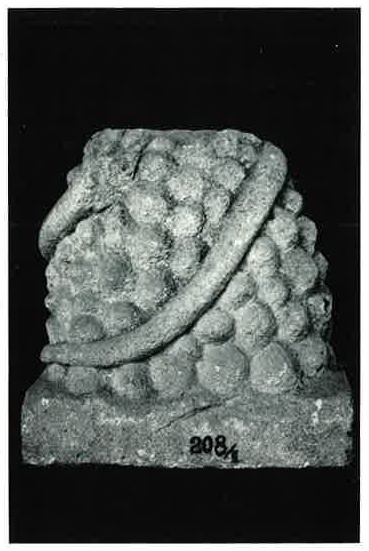
Dark sandstone statue from Mureș Port, Dacia, depicting Mithras's rock-birth with the rock encircled by a serpent; the statue's attribution to Mureș Port rather than Apulum is uncertain.
Limestone altar from Mureș Port near Apulum, Dacia, dedicated to Invicto Mithrae; the dedicant is identified only as Augustalis (coloniae?).
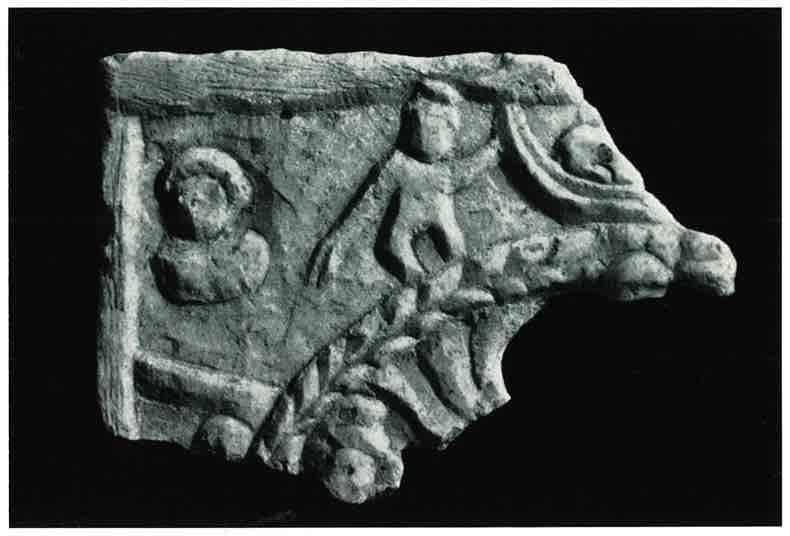
Marble relief fragment found in the Turda castrum in 1954, Dacia, preserving the bust of Sol in the upper left corner and Mithras grasping the bull; remnants of a wreath are visible in the upper right.
Limestone altar from Cluj, ancient Napoca in Dacia, dedicated to Soli invicto Mithrae for the welfare of the ordo Augustalis.
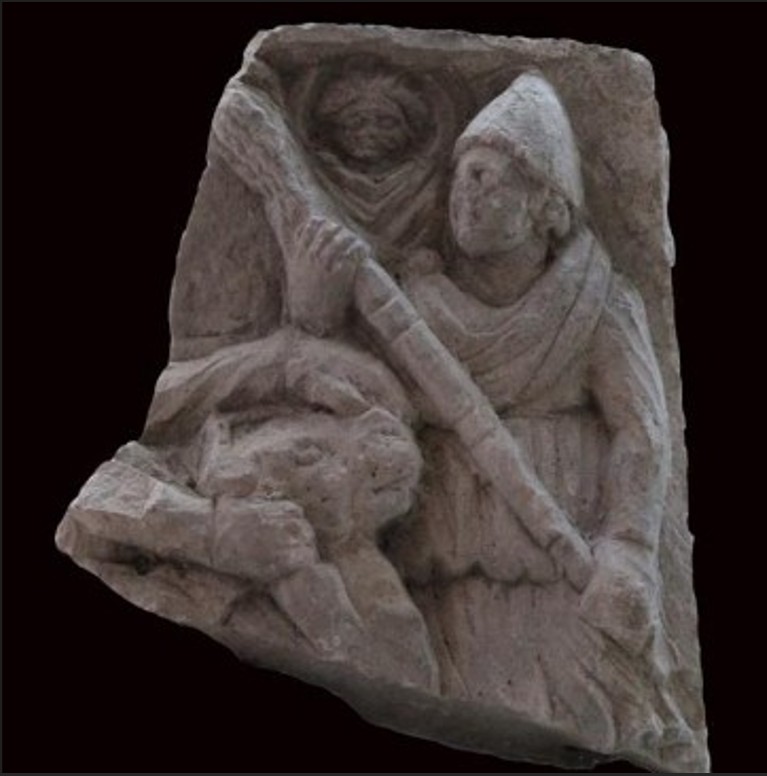
Right upper portion of a limestone relief from Salona or its surroundings, Dalmatia, depicting a standing figure — probably a torchbearer or divine attendant.
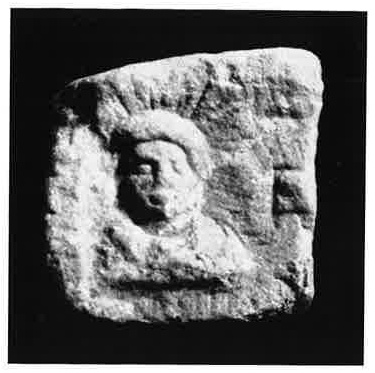
Left upper corner of a white marble relief from Salona, Dalmatia, found in 1895, preserving the bust of Sol in radiate crown.
Reference to a Cautopates statuette with inscription from Rácálmas near Intercisa, Pannonia Inferior, preserved at Székesfehérvár; the publication cited was inaccessible to the author.
Marble statue from Intercisa, Pannonia Inferior, depicting Cautopates in Oriental dress and a high Phrygian cap, walking.
Limestone altar fragment from the Mithraeum at Sárkeszi, Pannonia Inferior, recording the restoration of a templum that had collapsed through age.
Fragments of two painted torchbearer statues from the Mithraeum at Brigetio, Pannonia Superior, including a Phrygian-capped head and fragments of garments and hands.
Lost base from the Mithraeum at Brigetio, Pannonia Superior, dedicated jointly to Cautopates and Invicto deo by Marcus Ulpius Castrensis, veteran of Legio I Adiutrix; a companion piece to the preceding Cautes dedication.
Lost base from the Mithraeum at Brigetio, Pannonia Superior, dedicated to Cautes by Marcus Ulpius Castrensis, veteran of Legio I Adiutrix; dated to the early third century.
Votive altar from Carnuntum, Pannonia Superior, dedicated to Deo invicto Mithrae sacrum by Ulpius Vitalis pancrestarius — a term denoting an athlete or performer, possibly in the context of Mithraic initiation rites.
Lost sandstone altar from Carnuntum, Pannonia Superior, dedicated to Soli invicto deo.
Sandstone shell from Mithraeum III at Carnuntum, Pannonia Superior, probably mounted on a base and serving as a cult water basin.
