Your search St Albans gave 2762 results.

Roman Dacia preserves one of the densest and most frontier-oriented bodies of Mithraic evidence in the empire.
The evidence from Roman Africa reflects the implantation of Mithraic cults within prosperous urban centres of the western Mediterranean.
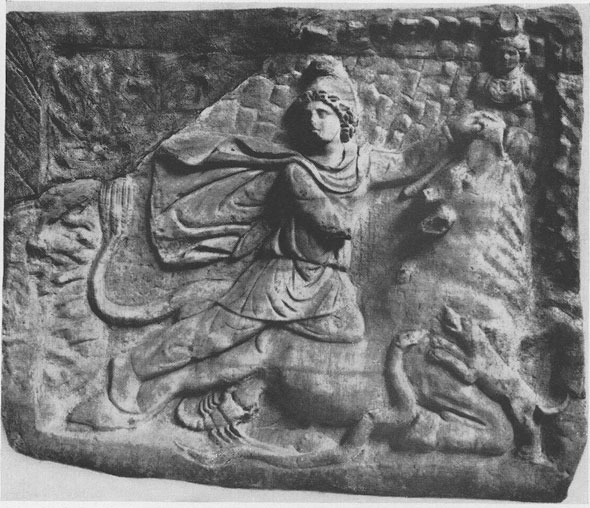
This marble tauroctony relief, probably originating from Naples, depicts Mithras slaying the bull within a cave-like setting, accompanied by the usual animals and celestial busts.

This small inscription from Termini Himeraeae in Sicily was dedicated to Sol Invictus as protector of the emperor Antoninus Augustus.
Persia occupies a central place in the intellectual and historical background of Mithraic studies.
Roman Syria preserves a major eastern corpus of Mithraic evidence within one of the empire’s most interconnected regions.
Pannonia preserves one of the most important frontier corpora of Mithraic evidence in the Roman world.
Macedonia preserves Mithraic evidence shaped by major Balkan routes and long-standing urban traditions.
Moesia preserves a strongly militarised body of Mithraic evidence along the Danubian frontier of the empire.
Galatia preserves Mithraic evidence shaped by central Anatolian routes and eastern provincial networks.
Corsica and Sardinia preserve a small island corpus within the western Mediterranean diffusion of Mithraism.
Crete and Cyrene connect Mithraic evidence to island, North African and eastern Mediterranean networks.
Cappadocia preserves evidence shaped by military movement, eastern frontier dynamics and Anatolian religious landscapes.
Armenia occupied a strategic position between Roman and Iranian religious worlds during the centuries of Mithraic expansion.
Roman Aegyptus preserves a distinctive body of Mithraic evidence shaped by Alexandria and the religious diversity of the eastern Mediterranean.
Roman Asia preserves a rich and diverse body of Mithraic evidence connected to the major cities of western Anatolia.
Bithynia and Pontus preserve important evidence for the diffusion of Mithraic cults across the Black Sea and northwestern Anatolia.
Achaea preserves some of the earliest and most culturally complex evidence for Mithraic activity in the Greek-speaking eastern Mediterranean.
The Alpine regions preserve scattered Mithraic evidence associated with military circulation and strategic routes across the western empire.

Hector erected an altar to Mithras in Emerita Augusta by means of a ‘divine vision’.
