Your search Stein am Rhein gave 1059 results.

Caetobriga, now Setúbal of Proto-Celtic *Caetobrix, became a Turdetani settlement which passed under Roman rule. In the time of Al-Andalus the city was known as Shaṭūbar.
Caesarea was first settled by the Phoenicians in the 4th century BC. In 63 BC, the Romans annexed the region and Caesarea became the seat of the Roman procurators.
Caere is the Latin name given by the Romans to one of the larger cities of southern Etruria, modern Cerveteri, some 50-60 kilometres north-west of Rome.
Brigetio, which became Szőny, was an independent town until 1977, when it was incorporated into Komárom. The Roman legion Legio I Adiutrix was stationed here from 86 AD until the middle of the 5th century.
The area was populated by Iberians, but the origins of Baetulo date back to the 1st century BC, when the Romans founded the city on the Rosés hill. Baetulo was famous for its vineyards, which produced wine for export throughout the Empire.
Argentoratum or Argentorate was the ancient name of Strasbourg. Its name was first mentioned in 12 BC, when it was a Roman military outpost established by Nero Claudius Drusus. The Legio VIII Augusta was stationed there from 90 AD.
Apulum, now within Alba Iulia, was a Roman settlement first mentioned by the mathematician, astrologer and geographer Ptolemy. Its name comes from the Dacian Apoulon.

This marble tablet found at Portus Ostiae mentions a pater, a lion donor and a series of male names, probably from a Mithraic community.
Along the upper Rhine frontier, Germania superior became one of the principal centres of Mithraic activity in northwestern Europe.
This heavily damaged relief from Narbo preserves the figure of a cross-legged Mithraic torchbearer carved in low relief near the church of Saint-Sébastien in Narbonne.
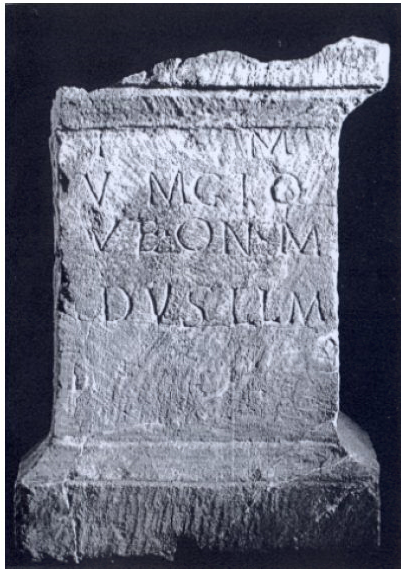
This fragmented monument bears an inscription of a certain veteran named Valerius Magio.
Along the lower sectors of the middle Danube, Pannonia inferior became a major centre of Mithraic activity in the frontier provinces.
The Mithraeum of Angers, excavated during a preventive operation and subsequently dismantled in 2010, yielded numerous objects, including coins, oil lamps, and a ceramic vessel bearing a votive inscription to the invincible god Mithras.
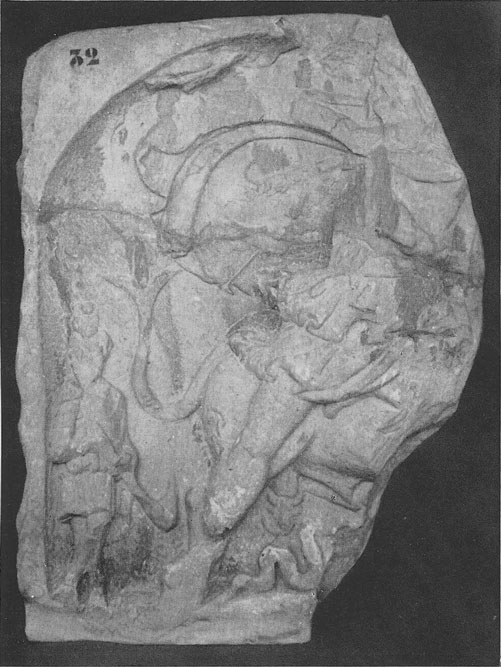
This fragmentary tauroctony relief from Timziouin near Saïda depicts Mithras slaying the bull within a cave-like frame, accompanied by the raven, serpent, scorpion, and Cautopates.
This small Greek dedication from the island of Aenaria invokes Helios Mithras under the epithet “unconquered”.
This marble dedication from Puteoli was offered to Sol Invictus and the genius of the colony by Claudius Aurelius Rufinus together with his wife and son.
This lost Mithraic relief, formerly kept near the church of the Santissima Annunziata in Naples, was probably a large tauroctony associated with the area of Puteoli or Pausilypon.
Cappadocia preserves evidence shaped by military movement, eastern frontier dynamics and Anatolian religious landscapes.
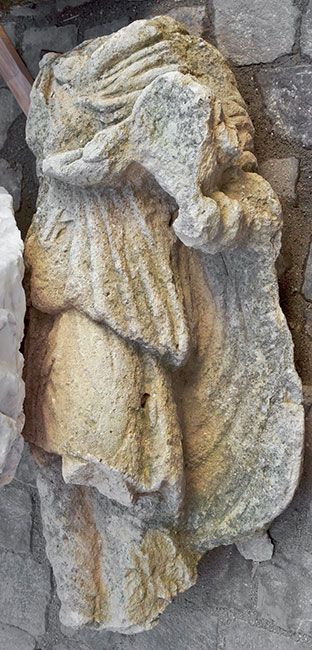
This weathered limestone statue from the Mithraeum of Apulum depicts a standing figure in Oriental attire holding the head of a bull or ram.
This inscription shows that Publilius Ceionius, most distinguished man, dedicated a temple to Mithras at Mila, in the modern Constantina, Algeria.
