Your search Syria-Coele gave 102 results.
This shrine developed towards the end of 2nd century and remained active until beginning 4th.
This relief of Mithras as bull slayer is surrounded by Cautes and Cautopates with their usual torch plus an oval object.
The Mithraeum of Hauarte or Hawarte, which preserves colourful frescoes, it's the latest know and used.
Fresco du Mithraeum de Hawarte, Syria, depicts Mithras' victory over the Sun.
The second tauroctony of Jabal al-Druze seems to have be made by the same sculptor.
"Several heads were found of such a large scale that they must have belonged to fairly large paintings" (See fig. 12, IO) (Report, 104).
The soffit or reveal of the arched niche had been decorated with white stars on a blue background.
Inscription carved on the pairs of columns on the backs of the five thrones, which stand on the west and east part of the terrace.
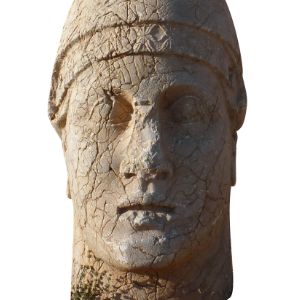

Centurion who dedicated the first known Latin inscription to the invincible Mithras.

Hermadio's inscriptions have been found in Dacian Tibiscum and Sarmizegetusa, as well as in Rome.
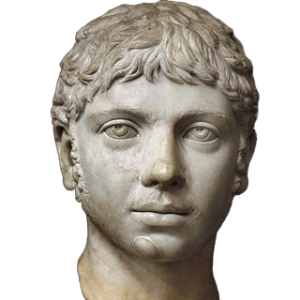
Roman emperor at the age of 14, from 218 to his death in 222, Elagabalus was a main priest of the sun god Elagabal in Emesa.
Thrasyllus was an Egyptian of Greek descent grammarian, astrologer and a friend of the Roman emperor Tiberius.
Danube region can be traced back to the legions that fought under his command in Armenia.
