Your search Tal hal Hariri / Es-Sâlihiyeh / As Salhiyah gave 3725 results.
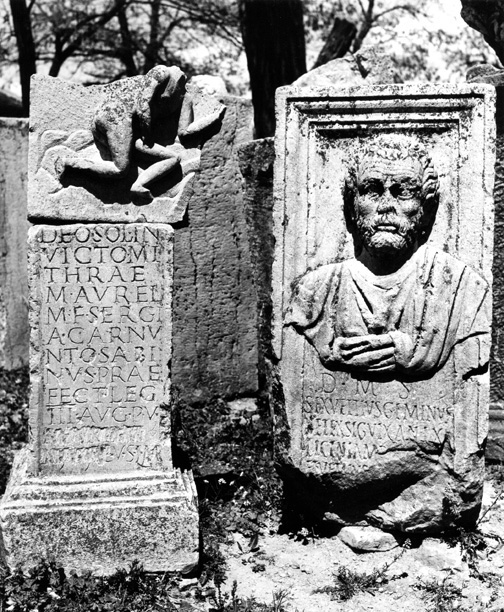
This altar to the god Sol invicto Mithra was erected by a legate during Maximin’s reign in Lambaesis, Numidia.

Corner fragment preserving the feet and lowered torch of the Mithraic torchbearer Cautopates.
Only the left section survives, showing Sol above the torchbearer Cautopates beside the cave border.
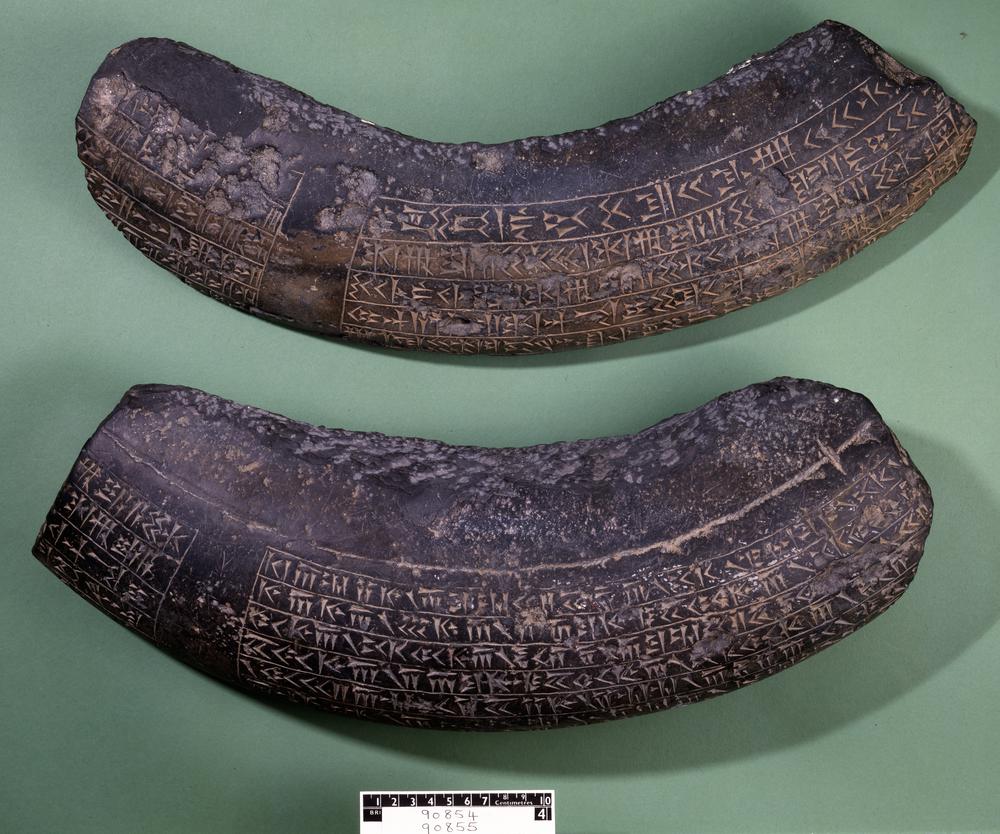
The base of the column bears an inscription that records the rebuilding of a palace at Ectabana ’by the favour of Ahuramaza, Anahita and Mithra’.
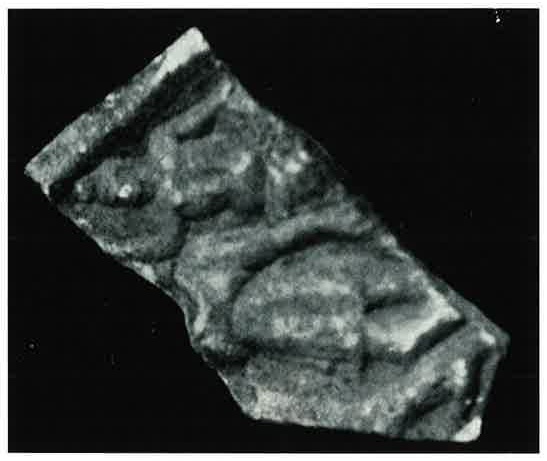
Tauroctony relief fragment with torchbearer and scene of Mithras’ rockbirth from Romula, Romania.

Termini Imerese is a town of the Metropolitan City of Palermo on the northern coast of Sicily, in Italy.
Cales was an ancient city of Campania, in today's comune of Calvi Risorta in southern Italy, belonging originally to the Aurunci/Ausoni, on the Via Latina.
Rhodes is the largest of the Dodecanese islands of Greece and is their historical capital. The island has been known as Ρόδος (Ródos) which in ancient Greek was used to describe the pomegranate, whilst in modern Greek the same word is also used to…
Mendes was a famous city that attracted the notice of most ancient geographers and historians, including Herodotus, Diodorus, Strabo, Mela, Pliny the Elder, Ptolemy, and Stephanus of Byzantium. The city was the capital of the Mendesian nome.
Italica was an ancient Roman city in Hispania; its site is close to the town of Santiponce in the province of Seville, Spain.
Volubilis is a partly-excavated Berber-Roman city in Morocco situated near the city of Meknes that may have been the capital of the Kingdom of Mauretania, at least from the time of King Juba II.
Pescorocchiano is a comune in the Province of Rieti in the Italian region of Latium, located about 60 kilometres northeast of Rome and about 30 kilometres southeast of Rieti. Pescorocchiano borders the following municipalities: Borgorose, Carsoli
Lambaesis, Lambaisis or Lambaesa, is a Roman archaeological site in Algeria, 11 km southeast of Batna and 27 km west of Timgad, located next to the modern village of Tazoult.
Hermopolis, the city of Hermes, was an important city located between Lower and Upper Egypt. A provincial capital since the Old Kingdom of Egypt, Hermopolis developed into a major city of Roman Egypt.
Boulogne-sur-Mer; Picard: Boulonne-su-Mér; Dutch: Bonen; Latin: Gesoriacum or Bononia, often called just Boulogne, is a coastal city in Northern France.
Moesia superior preserves frontier evidence shaped by the military infrastructure and circulation networks of the middle Danube.
This small Greek dedication from the island of Aenaria invokes Helios Mithras under the epithet “unconquered”.
This small inscription from Termini Himeraeae in Sicily was dedicated to Sol Invictus as protector of the emperor Antoninus Augustus.
Moesia preserves a strongly militarised body of Mithraic evidence along the Danubian frontier of the empire.
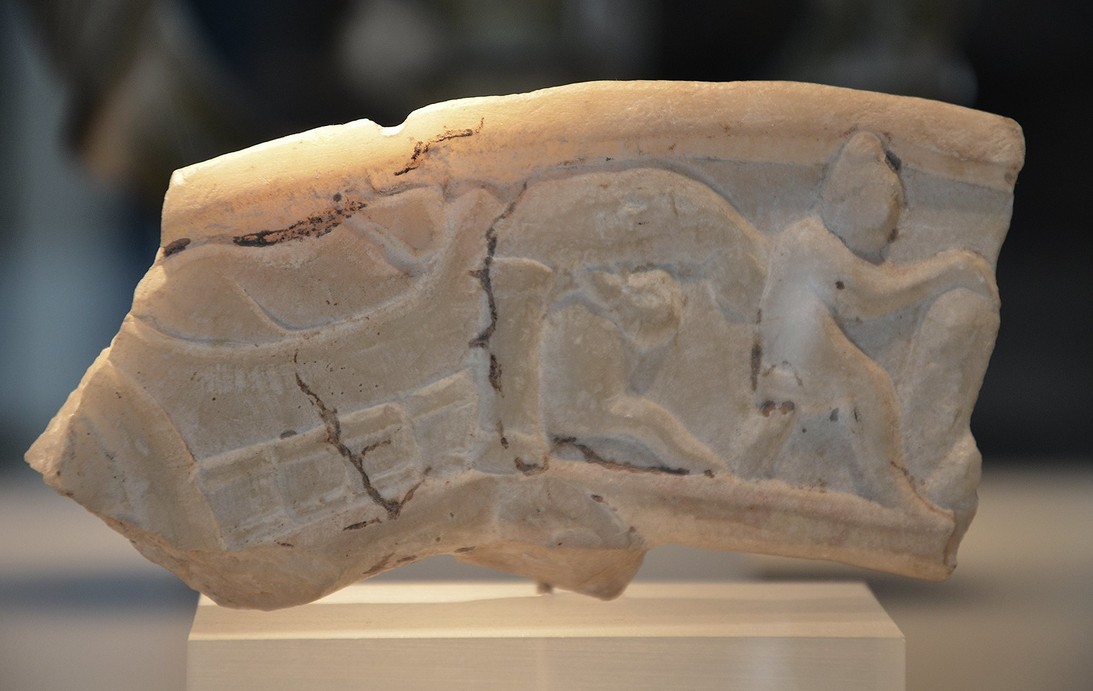
Fragment of an alabaster relief from Cologne with part of a tauroctony scene. Only the tip of Mithras’ Phrygian cap and small narrative details above are preserved.
