Your search Tal hal Hariri / Es-Sâlihiyeh / As Salhiyah gave 3730 results.

This votive silver plaque depicting Mithras was found at the site of Pessinus, Ballıhisar, in Turkey.

Arabia connected the Roman Near East to caravan routes, desert frontiers and the commercial networks of the southern Levant.
Tripolitania connected the southern Mediterranean coast to caravan routes and maritime exchange networks of Roman North Africa.
Venetia connected northern Italy to the Adriatic and Danubian worlds through trade, mobility and imperial communication routes.
Picenum connected the Adriatic coast of central Italy to inland communication routes and the wider networks of the Roman Peninsula.
Bruttium occupied the southernmost reaches of the Italian Peninsula where maritime mobility linked Italy, Sicilia and the wider Mediterranean.
Apulia connected southern Italy to the Adriatic and eastern Mediterranean through maritime trade and regional urban networks.
Cilicia occupied a key position between Anatolia, Syria and the eastern Mediterranean maritime routes.
Cilicia preserves Mithraic evidence linked to coastal mobility, eastern Mediterranean trade and Anatolian crossroads.
Roman Sicilia preserves Mithraic evidence shaped by Mediterranean mobility and the island’s strategic position between east and west.
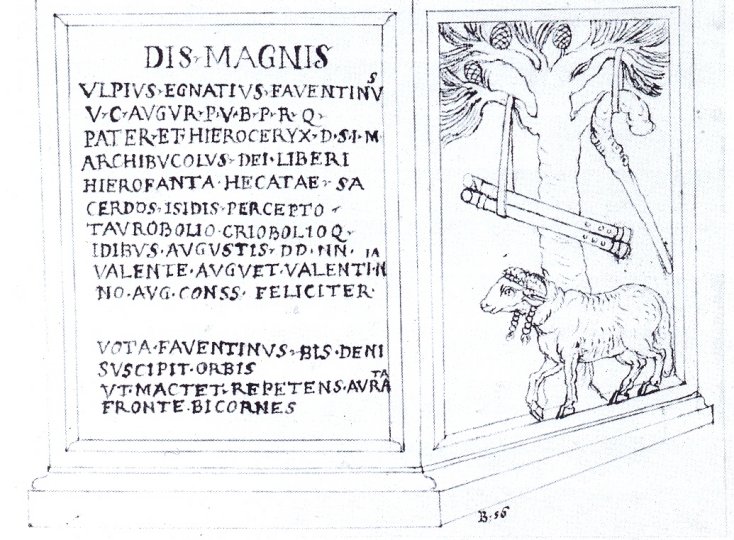
Both of them were discovered in 1609 in the foundations of the façade of the church of San Pietro, Rome.
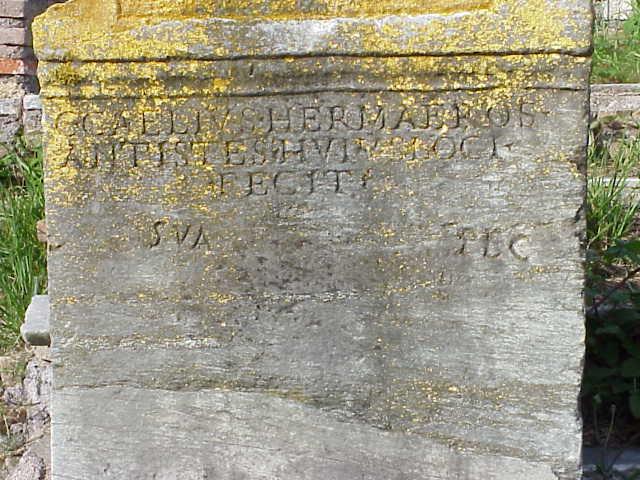
This is one of several marble inscriptions made by a certain Caelius Ermeros, who was the antistes of the Mithraeum of the Imperial Palace.

This altar was dedicated by a certain Marcus Aurelius Decimus to Sol Mithras and other gods in Diana, Numibia, present Argelia.
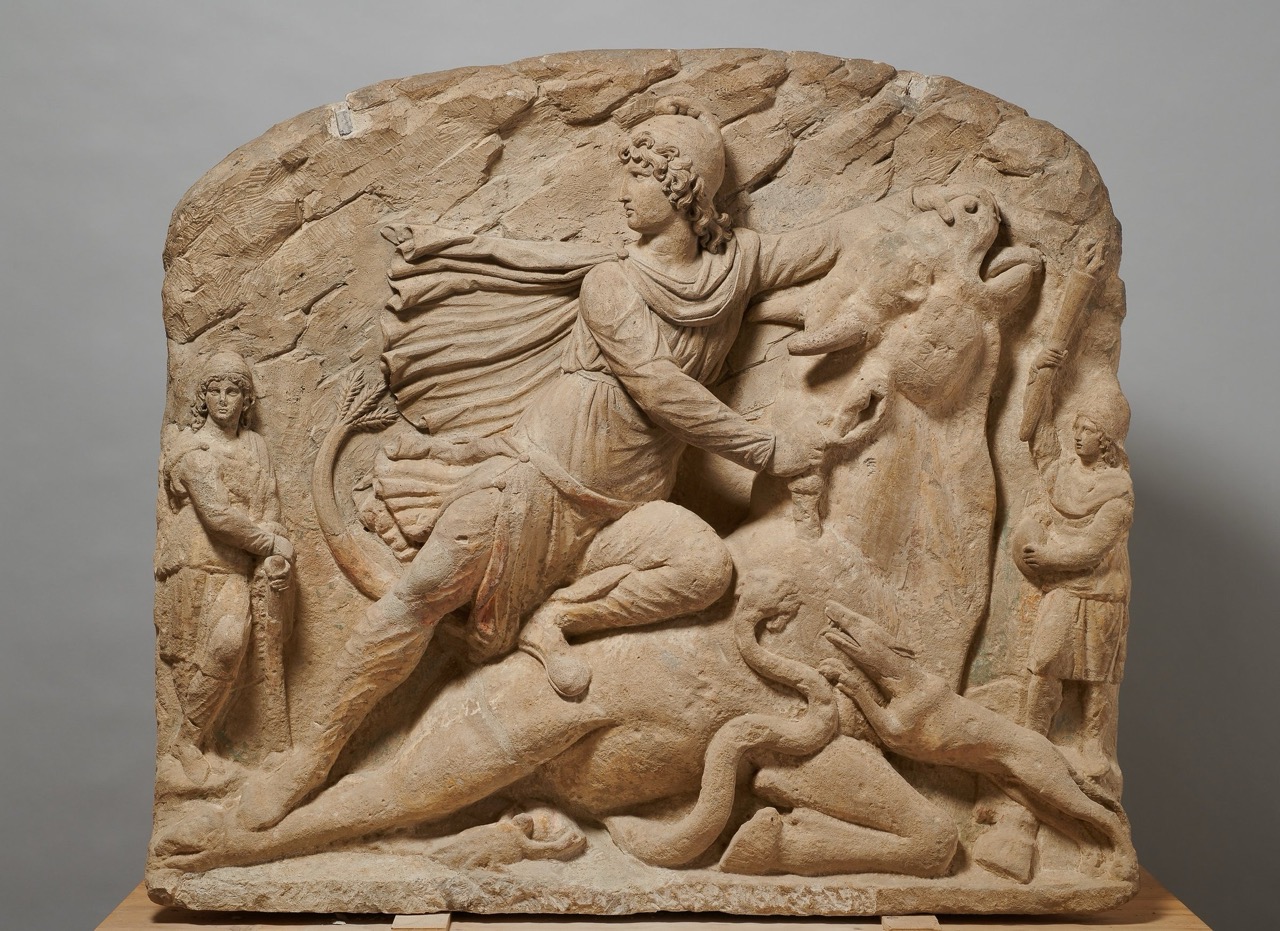
Limestone tauroctony relief from Carnuntum with traces of polychromy and a graffito on the bull’s neck. The inscribed base was carved separately.

By reading Orphic theology together with Eleusinian ritual practice, the mysteries emerge as a structured mystagogy of transformation: a disciplined passage from forgetfulness (Lethe) to knowledge (aletheia), from mortality to participation in the divine.
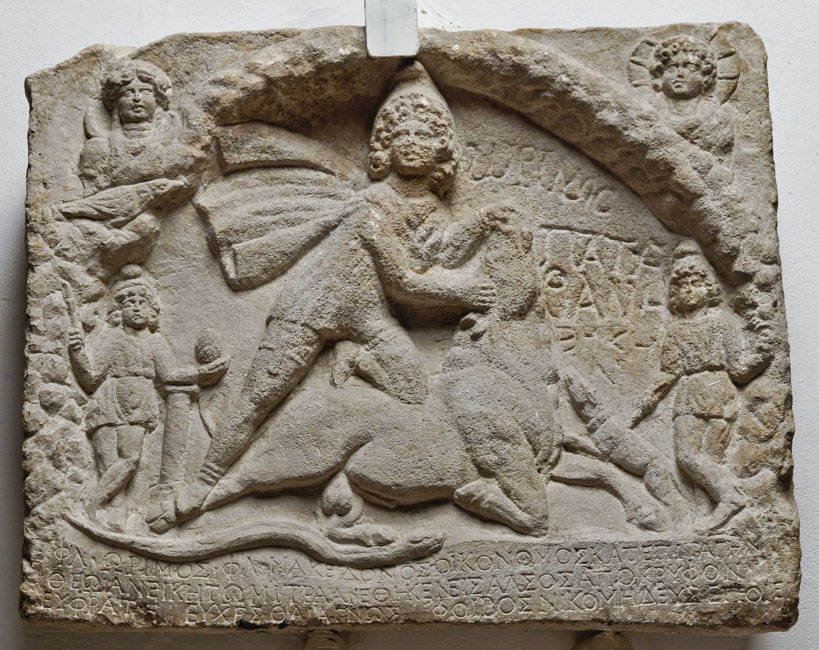
This limestone relief of Mithras killing the bull bears an inscription by a certain Flavius Horimos, consecrated in a ’secret forest’ in Moesia.
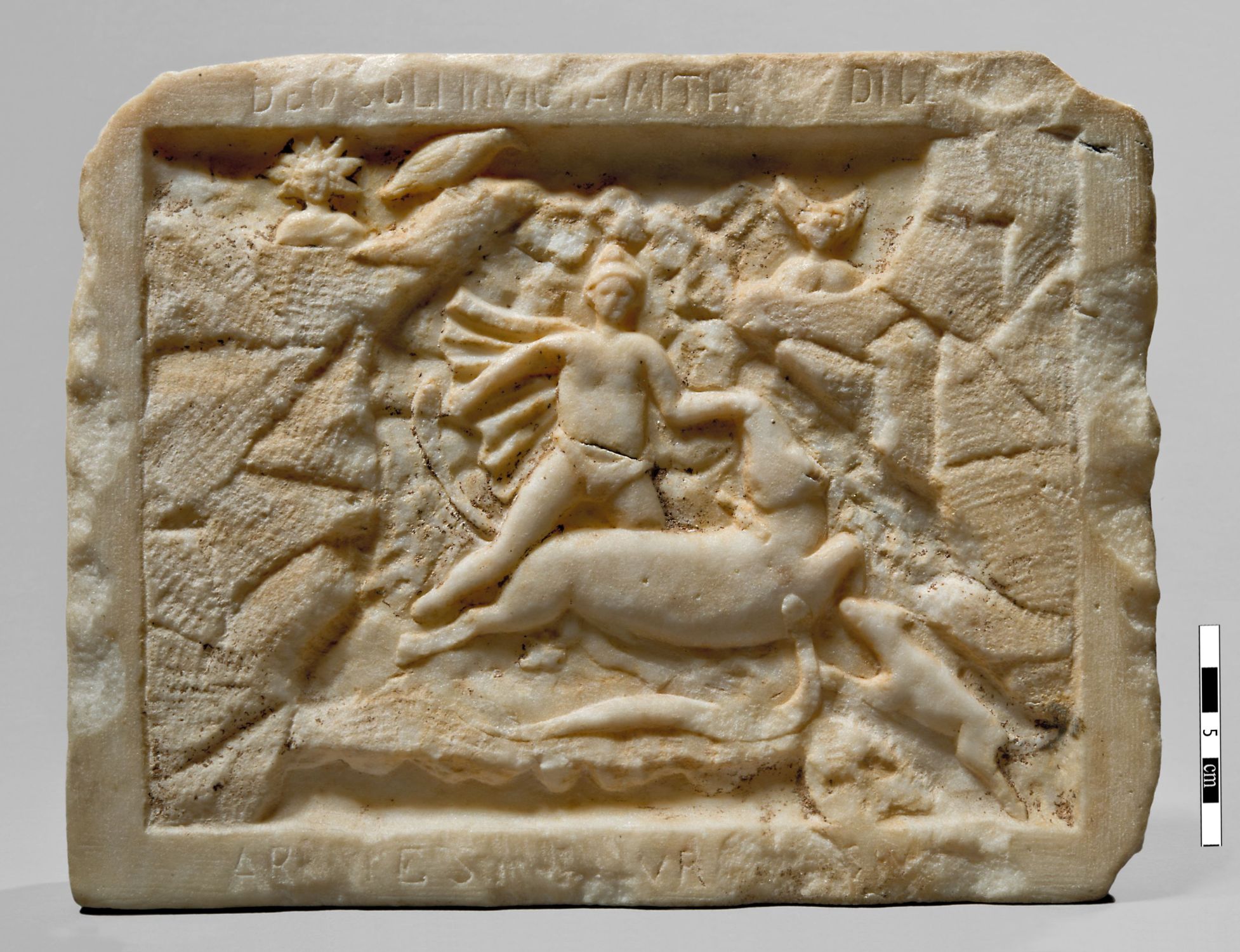
White marble relief depicting Mithras as bull-slayer in a grotto from the Froehner collection, now in the Cabinet des Médailles, Paris.

Papers of the international conference "Roman Mithraism: the Evidence of the Small Finds". Tienen 7-8 November 2001.