Your search Tulln an der Donau gave 577 results.

Latin dedication to the invincible Mithras reportedly discovered north of ancient Colophon in Lydia.
Only the left section survives, showing Sol above the torchbearer Cautopates beside the cave border.

Nida was an ancient Roman town in the area today occupied by the northwestern suburbs of Frankfurt am Main, Germany, specifically Frankfurt-Heddernheim, on the edge of the Wetterau region.
Ancient region of the Crimean Peninsula associated with the Greek colonies and Roman presence in Taurica.
The Pontiae islands, including modern Ponza, formed part of the Roman maritime landscape of Latium and preserve one of the most remarkable Mithraic sanctuaries of Roman Italy, renowned for its rare stucco zodiac and astral symbolism.

Roman Italia preserves a central and exceptionally influential corpus within the development of Mithraic cults.
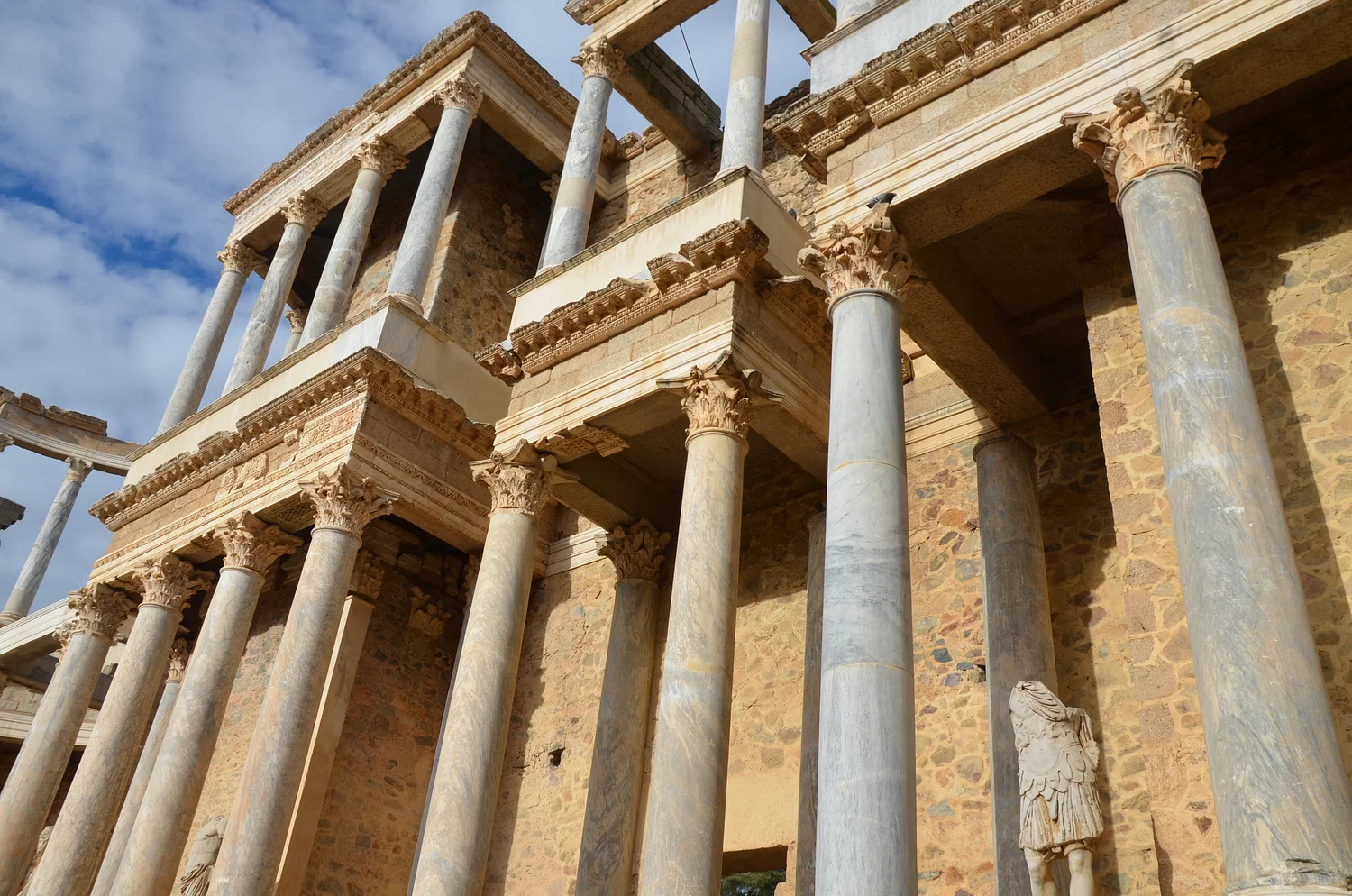
Roman Hispania preserves a relatively modest but strongly urban body of Mithraic evidence, centred above all on Mérida.

Emperor Caracalla ordered one of Rome’s largest temples to the god Mithras to be built in the baths bearing his name.
Alexandria was founded by Alexander the Great in April 331 BC as one of his many city foundations. After he captured the Egyptian Satrapy from the Persians, Alexander wanted to build a large Greek city on Egypt’s coast that would bear his name.
Anazarbus was an ancient Cilician city. Under the late Roman Empire, it was the capital of Cilicia Secunda.
Sopron is a city in Hungary on the Austrian border, near Lake Neusiedl/Lake Fertő.
Vicus Baudobriga was a Roman settlement on the left bank of the Rhine, founded during the conquest of Gaul. Its development reflects the Rhine’s shifting role as frontier, trade route, and fortified border before Roman withdrawal.
Lanuvium (modern Lanuvio) was an ancient city of Latium Vetus, about 32 km southeast of Rome. A member of the Latin League, it was conquered by Rome in 338 BC and remained an active municipium into the Imperial period.
Zeugma was an ancient Hellenistic era Greek and then Roman city of Commagene; located in modern Gaziantep Province, Turkey.
Antium was an ancient coastal settlement in Latium, founded around the 11th century BC. A major stronghold of the Volsci before its conquest by Rome, its territory largely corresponds to modern Anzio and Nettuno.
Under Roman rule from the 1st century CE, Histria was incorporated into the province of Moesia. The city is noted on the Tabula Peutingeriana, which places it 11 miles from Tomis and 9 miles from Ad Stoma.
Pessinus was an Ancient city and archbishopric in Asia Minor, a geographical area roughly covering modern Anatolia.
Settlement of prehistoric origin that developed into the Roman Vicus Vetonianus, modern Dieburg, incorporated into the civitas Auderiensium in Germania Superior and attested as an active centre during the Roman period.
Dalj is a village on the Danube in eastern Croatia, near the confluence of the Drava and Danube, on the border with Serbia.
Szombathely is the oldest recorded city in Hungary. It was founded by the Romans in 45 AD under the name of Colonia Claudia Savariensum, and it was the capital of the Pannonia Superior province of the Roman Empire.
