Your search Villa of Domitian at the Castel Gandolfo gave 3663 results.


This is the first known inscription that includes Phanes alongside Mithras found in a Mithraic context.
This inscription found in the Mithraeum Aldobrandini informs us of certain restorations carried out in the temple during a second phase of development.
In this 4th-century Roman altar, the senator Rufius Caeionius Sabinus defines himself as Pater of the sacred rites of the unconquered Mithras, having undergone the taurobolium.
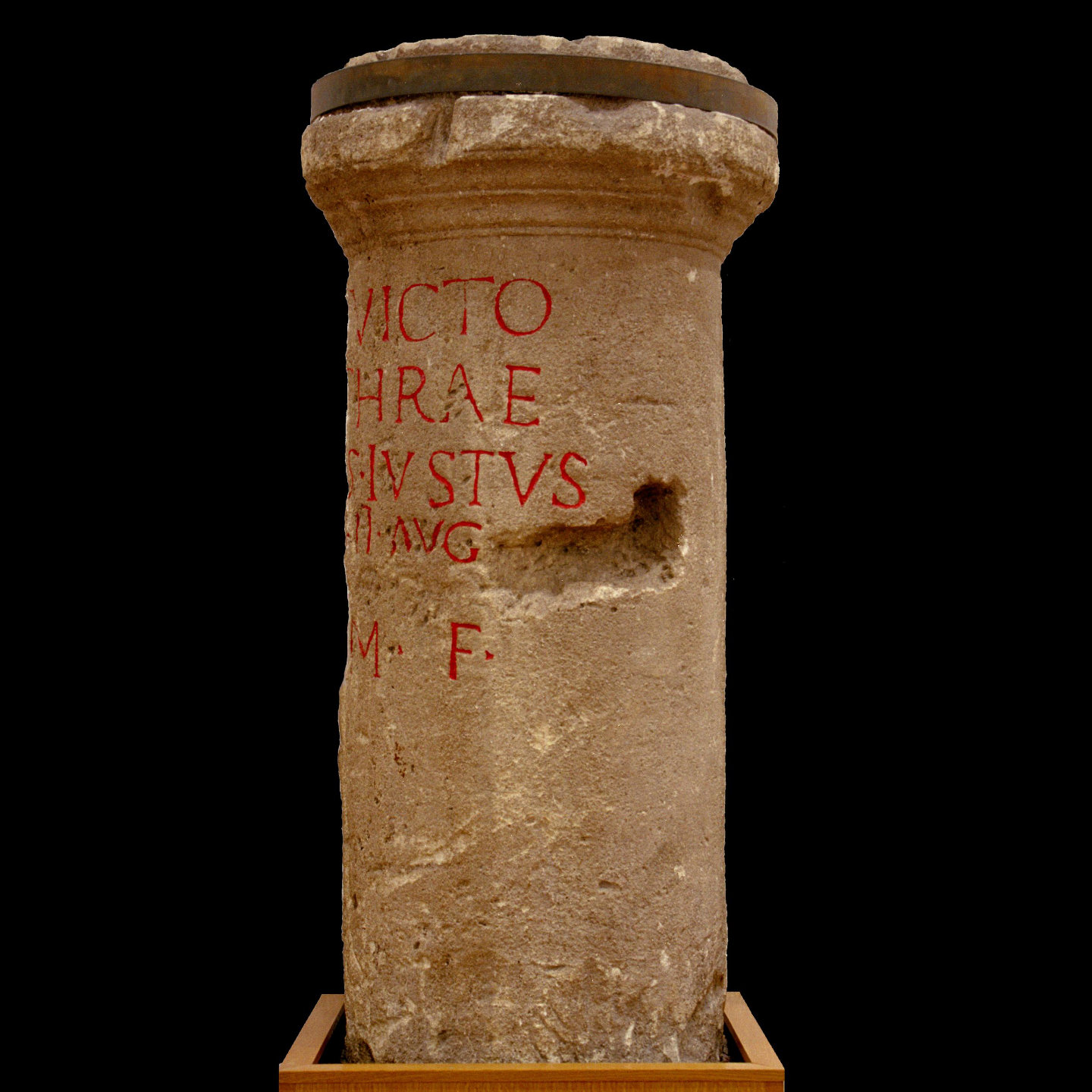
This oolite base, dedicated to the invincible Mithras, was found in the baths of the Villa de Caerleon, Walles.
This small white marble cippus bears an inscription of a certain Pater Antoninus to Cautes.
This inscription was dedicated to God Cautes by a certain Flavius Antistianus, Pater Patrorum in Rome.
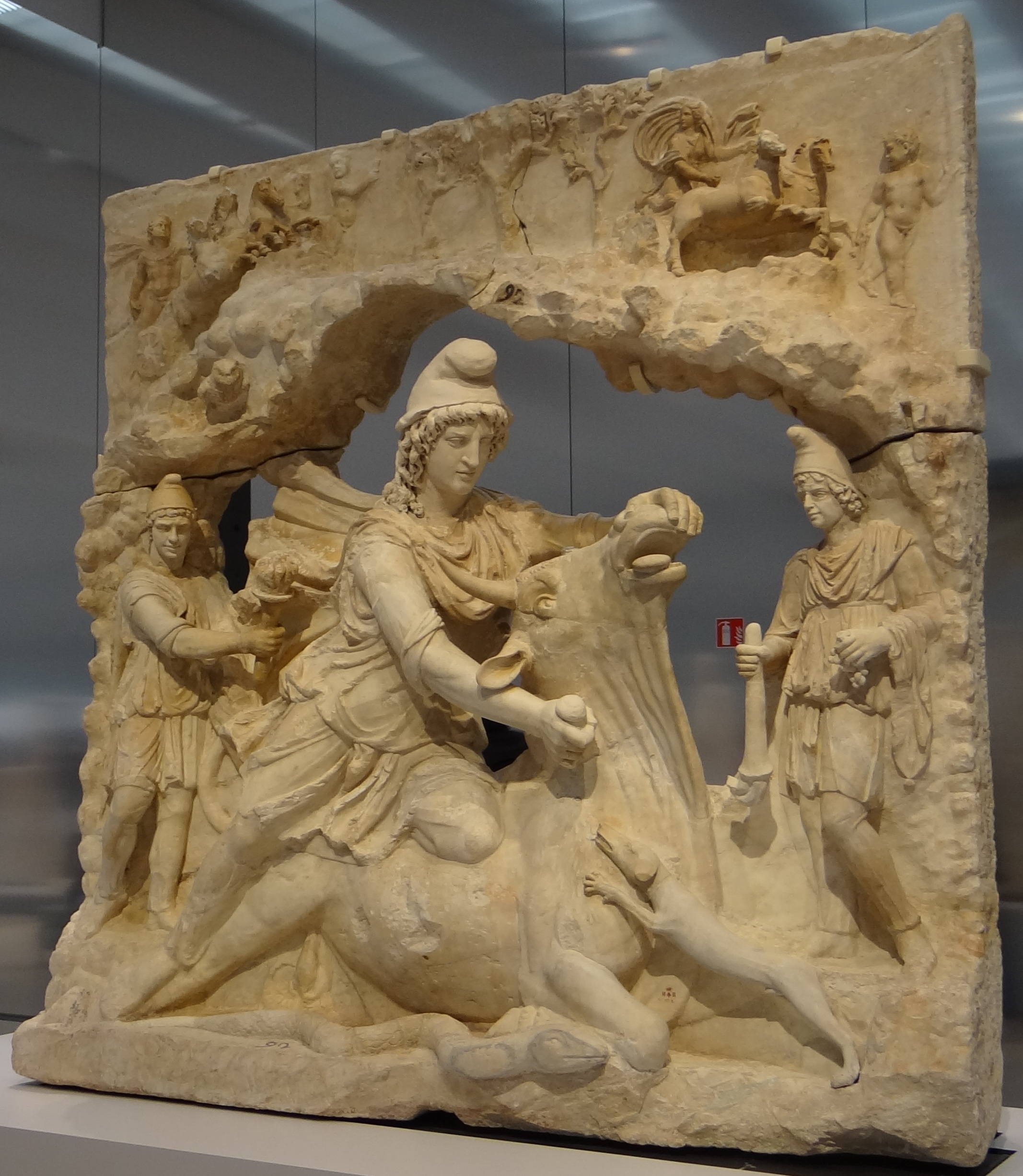
This relief of Mithras slaying the bull was erected in Piazza del Campidoglio, moved to Villa Borghese and is now in the Louvre Museum.
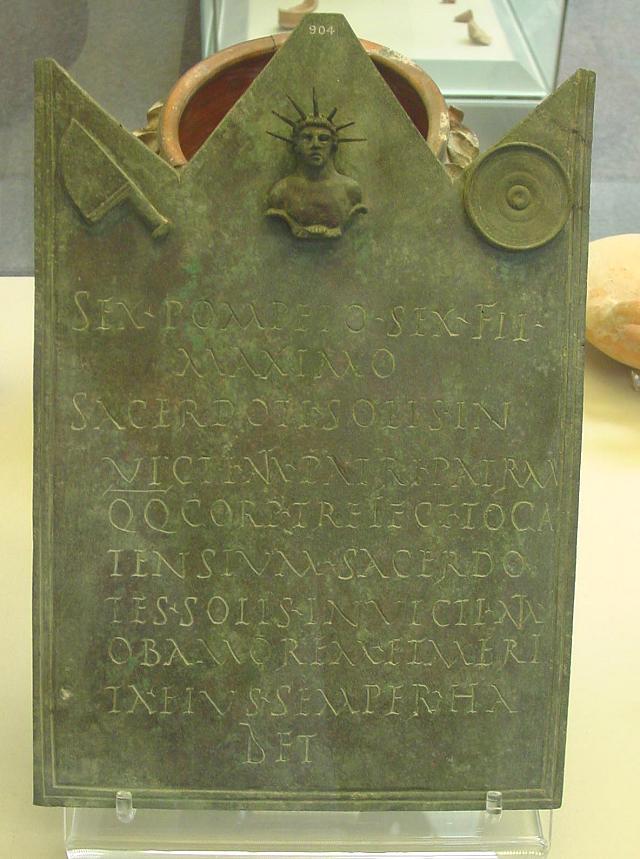
This plaque, now on display in the British Museum, may have come from the Aldobrandini Mithraeum in Ostia.
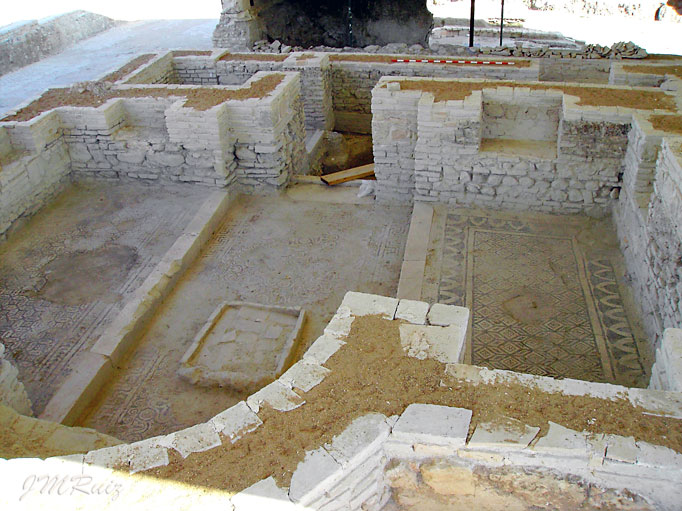
One of the rooms of the villa has been interpreted as a mithraeum, but we do not have enough evidence to confirm this.
This inscription reveals the names of 36 cultori of Sentinum, one of whom bears the title of pater leonum.
The inscription explains the transmission of the fourth Mithraic degree through the Paters of the Mitraeum of San Silvestro.
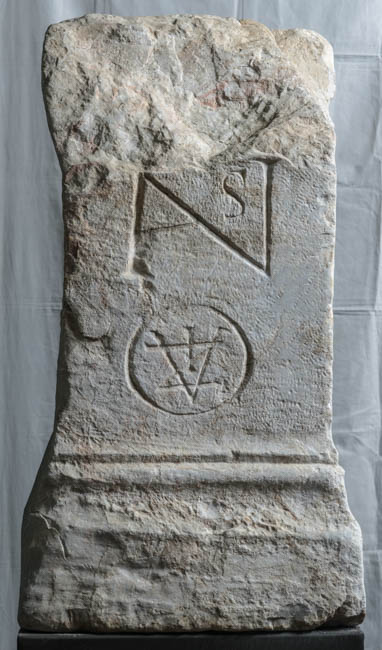
The limestone altar at Klechovtse in North Macedonia bears an inscription to the invincible Mithras.
This marble slab found near the Casa de Diana in Ostia bears two inscription with several names of brothers of a same community
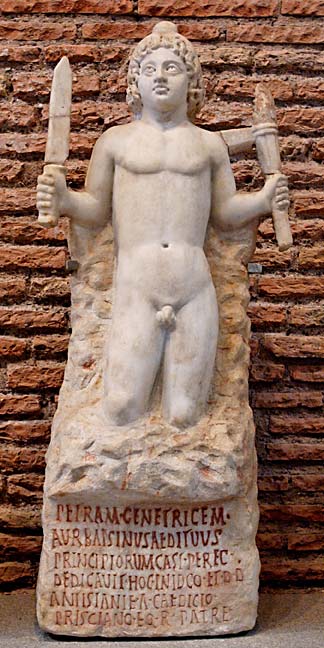
The sculpture of Mithras rock-birth from Santo Stefano Rotondo bears an inscription of Aurelius Bassinus, curator of the cult.
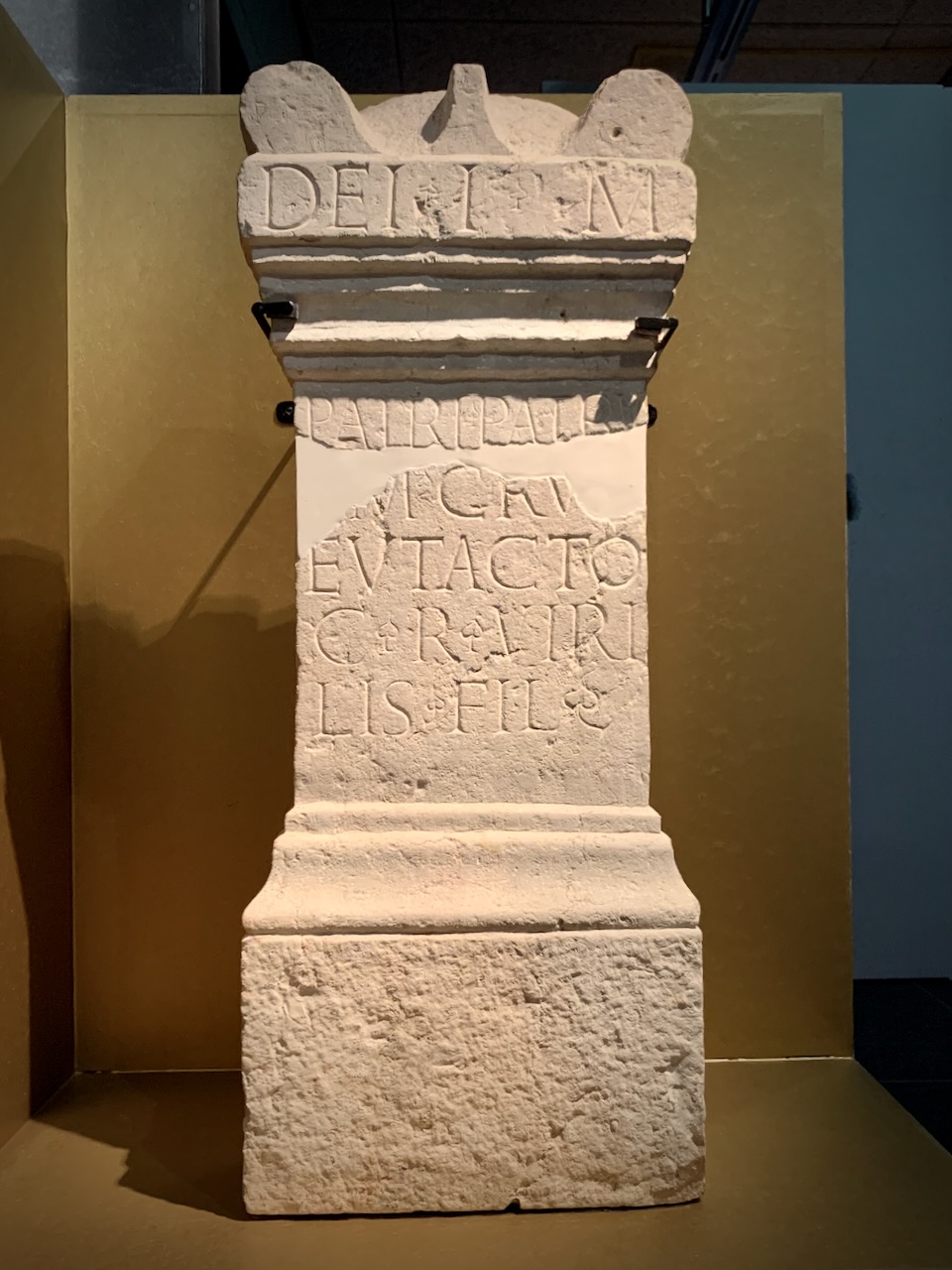
This altar was dedicated by a son to his father, one of the few Patres Patrum recorded in the western provinces.

Cataio is associated with archaeological material from the Euganean area of Venetia.
Lower part of a white marble cinerary casket decorated with a relief of Mithras killing the bull, from the necropolis area near the amphitheatre of Sabratha.
Rough-hewn statuette found at Emir Ghasi in Lycaonia, once thought to represent a Mithraic soldier; according to Cumont, a modern forgery.
