Your search farid ud din attar gave 1818 results.

Mithraeum II was found at Ptuj at a distance of 20 m south of the Mithraeum I in 1901.
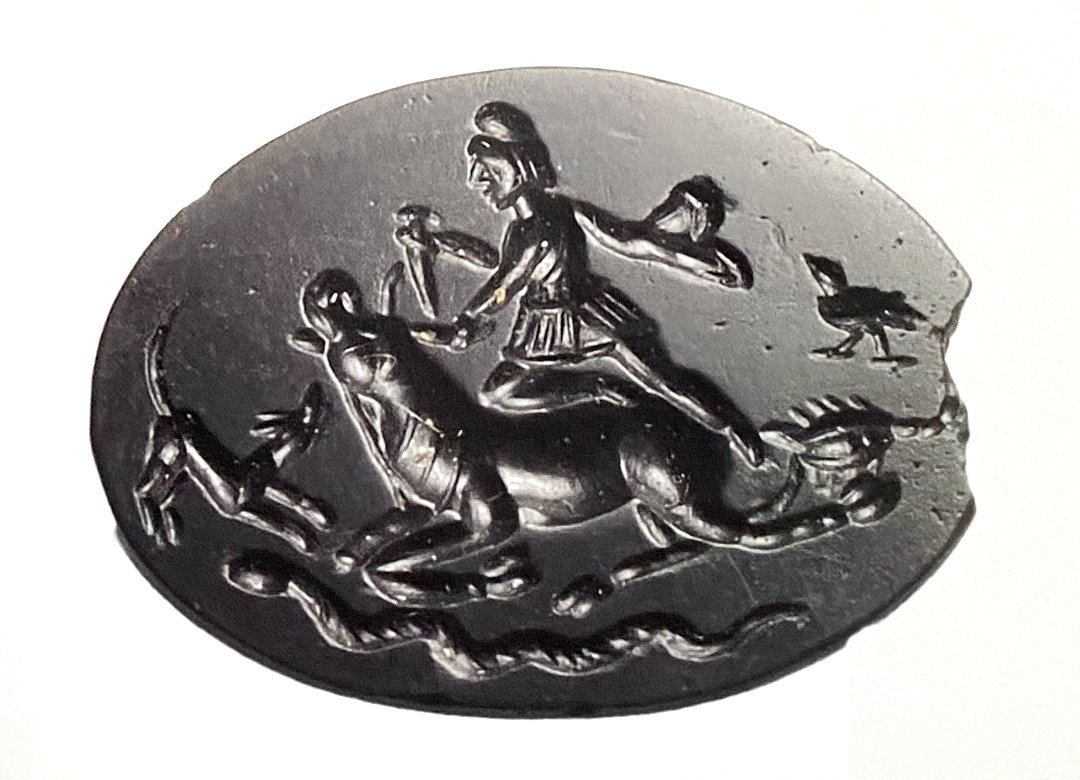
This intaglio with Mithras killing the bull on one side and Kabiros on the other was probably used as a magical amulet.
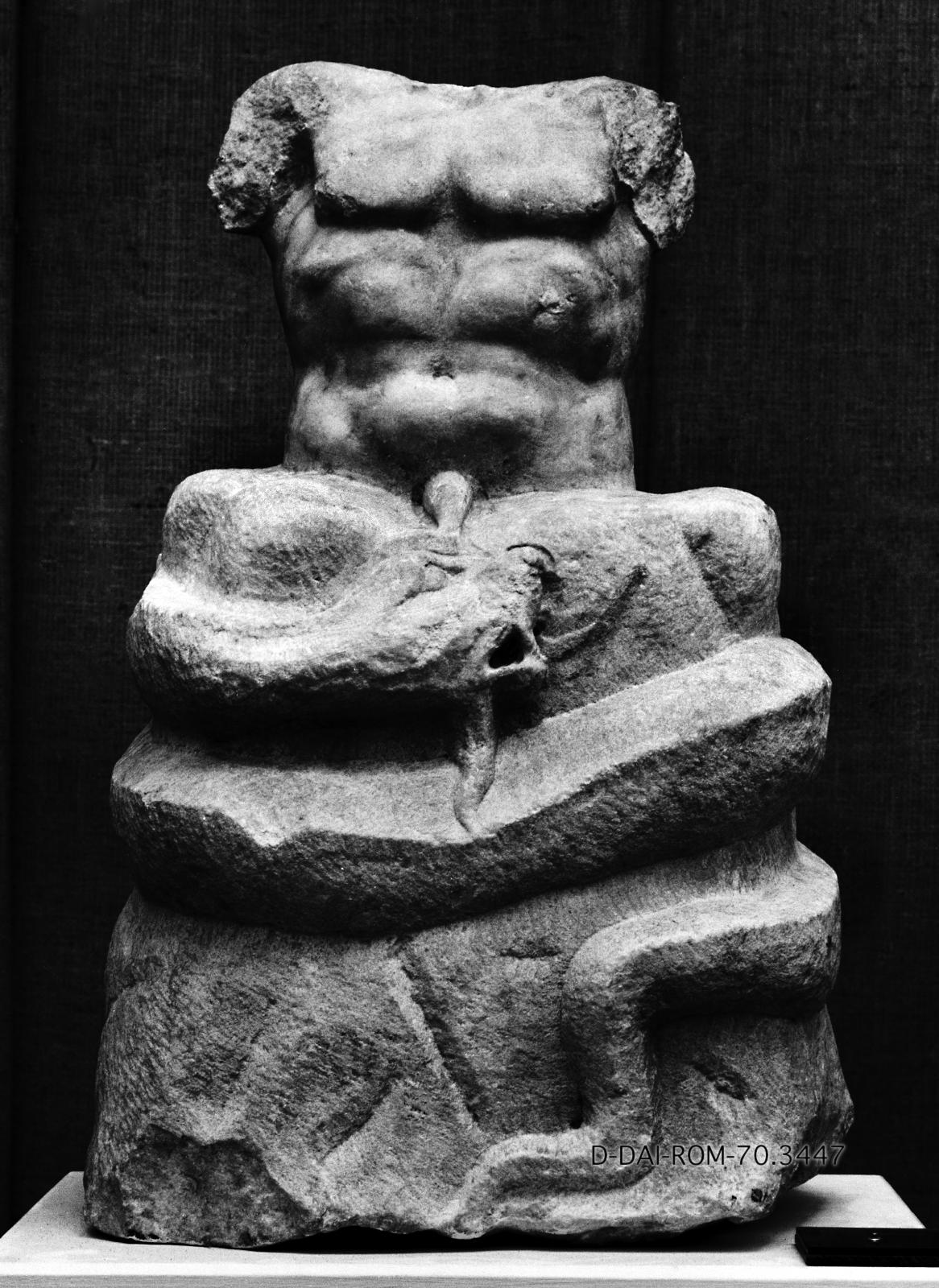
Mithras born from the rock with a snake raising in coils around it.
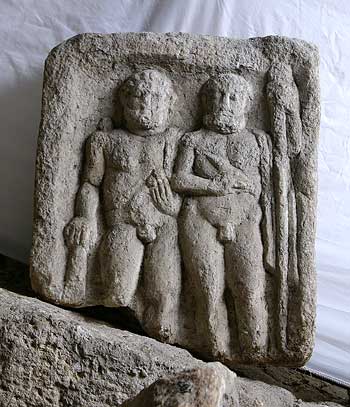
This marble relief was found in a Mithraeum in Ptuj.
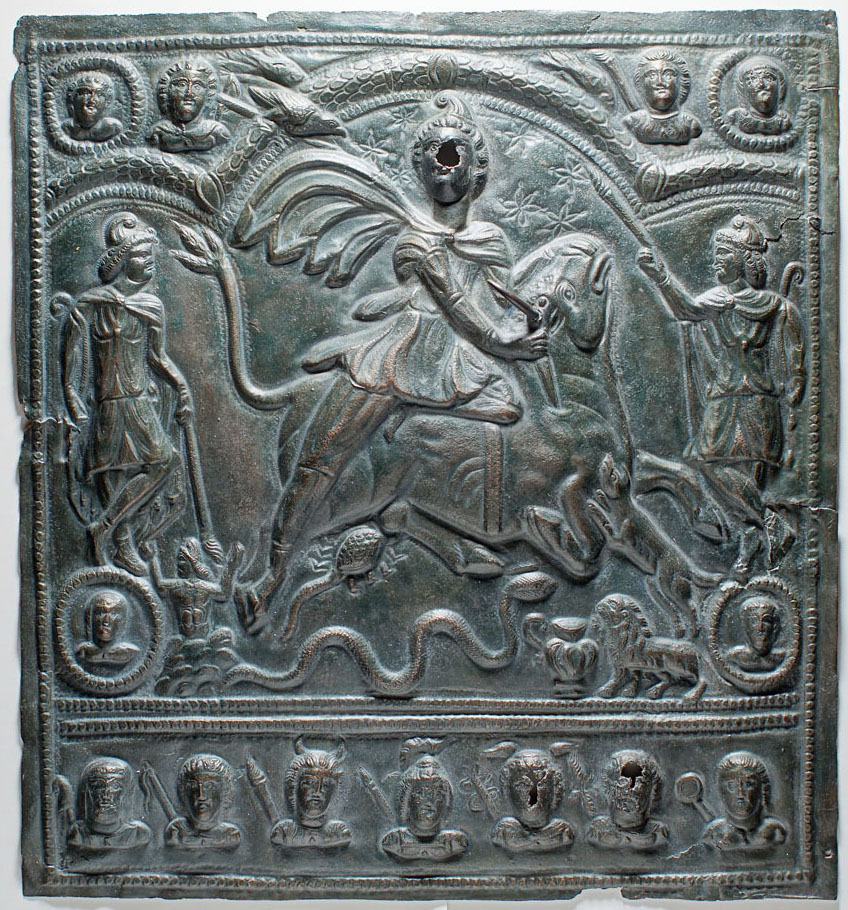
Szony's bronze plate shows Mithra slaying the bull and the seven planets with attributes at the bottom of the composition.
This altar to Mithras is dedicated by a certain Gaius Iulius Castinus, legate prefect of the emperors.

In Aquincum petrogenia, Mithras holds the usual dagger and torch as he emerges from the rock.

Patron of the corpus stuppatorum and benefactor who financed the construction of the Mithraeum of Fructosus at Ostia.

His name was added to the main tauroctony sculpture of the Mitreo Fagan.


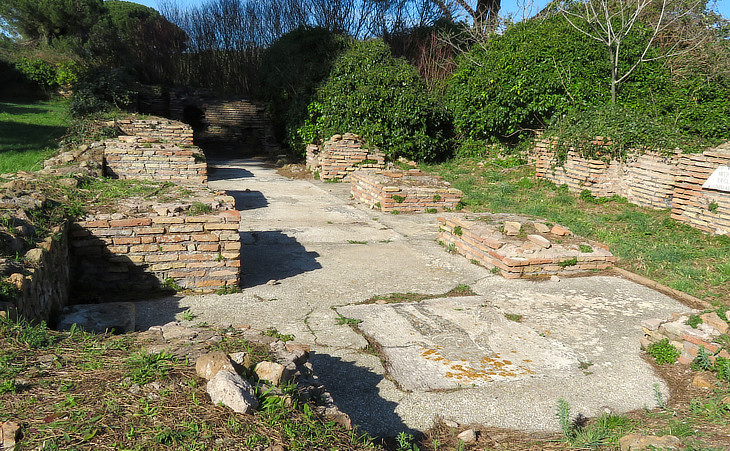
The Mithraeum of the Animals was decorated with a mosaic depicting a naked man, a cock, a raven, an scorpion, a snake and the head of the bull.
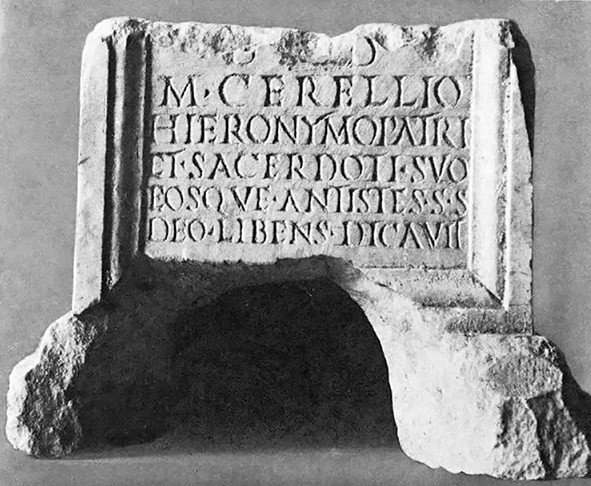
Small marble base recording a donation to M. Cerellio Hieronymo, pater and sacerdos, on behalf of an antistes who dedicated objects to the god, from the Mitreo degli Animali at Ostia.
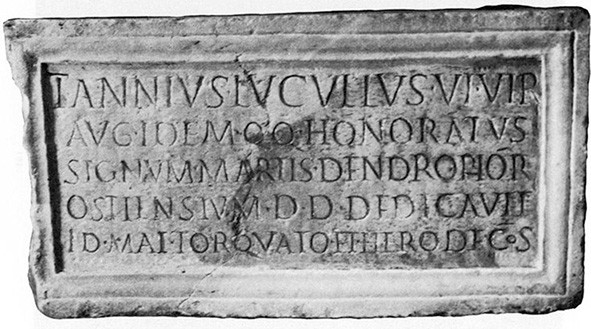
Small marble base with a dedication by T. Annius Lucullus, sevir and quinquennalis, to Martis Dendrophoris Ostiensium, from the Mitreo degli Animali at Ostia, dated to 143 A.D.
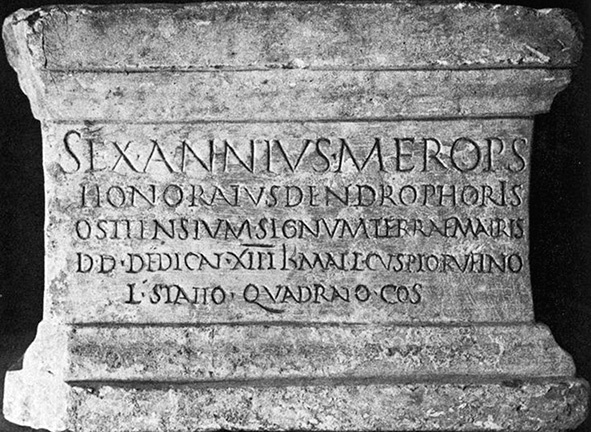
Small marble base dedicated by Sex. Annius Merops, honoured Dendrophoros, to the image of Terrae Matris, from the Mitreo degli Animali at Ostia, dated to 142 A.D.
The Sacello delle Tre Navate near the Therms of the Sette Sapienti at Ostia, whose identification as a Mithraeum remains uncertain, with a decorated cult-niche but lacking typical Mithraic iconography.

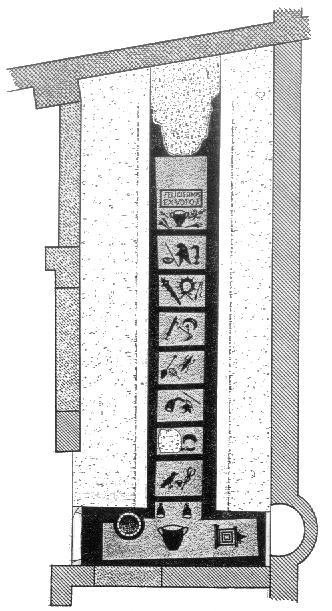
The Mithraeum Felicissimus has a floor mosaic depicting the seven mithraic grades.
A small cippus from the Mithraeum of Sabazeus records the rebuilding of the sanctuary after its collapse.

Marble torso found at Ostia in 1912 between the Decumanus and the Via dei Molini, dedicated to Mithras by a certain Atilius Glyco.
