
Biography
of Lucius Sempronius
- Lucius Sempronius is attested as a member of a Mithraic community (syndexios) at the Mitreo delle Pareti Dipinte.
- Attested at Ostia, Latium, Italia in 2nd half of 2nd century (TNMM 489).
TNMP 112
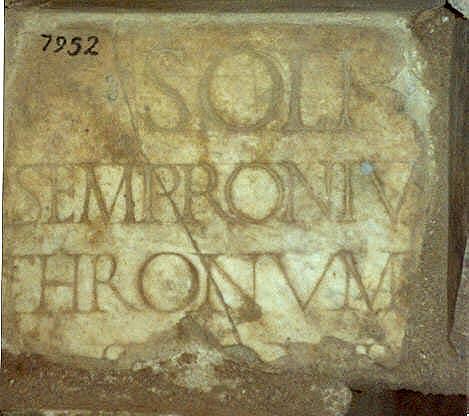
Lucius Sempronius is known from a fragmentary marble inscription discovered in the Mithraeum of the Painted Walls (Mitreo delle Pareti Dipinte) at Ostia. The surviving text records a dedication to Sol and mentions a thronus, probably referring to the cult platform or stepped structure associated with the rear part of the mithraeum. The inscription reads in part: Soli […] / L(ucius) Sempronius […] / thronum […] (TNMM 489). Because of the incomplete state of the monument, neither the dedicant’s full name nor his social status can be established with certainty (Becatti, 1954; Marchesini, 2012-2013).
The Mithraic character of the inscription has generally been accepted. Becatti restored the dedication as Soli Invicto Mithrae and associated the inscription with the original furnishing of the sanctuary. He proposed that the marble plaque belonged to the original thronus and was subsequently reused during a later restoration of the stepped altar (Becatti, 1954). Marchesini challenged this interpretation, arguing that the plaque, the niche above it, and the surrounding masonry formed part of a coherent architectural programme, suggesting that the inscription was integrated into the monument from the outset rather than reused from an earlier phase (Marchesini, 2012–2013). Battisti incorporated this debate into his broader analysis of the architectural development of the sanctuary (Battisti, 2020).
More recently, Chalupa has emphasised that the occurrence of the word thronum strongly supports the Mithraic interpretation of the inscription, since the term appears in a specifically Mithraic context at Ostia. Although the surviving text remains fragmentary, Lucius Sempronius appears to have contributed to the construction, furnishing, or dedication of one of the principal ritual features of the Mithraeum of the Painted Walls (Chalupa, 2023).
References
- Ostia-Antica.org (2020) Regio III - Insula I - Domus and Mitreo delle Pareti Dipinte (III,I,6).
Attestations
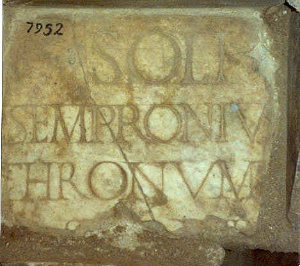
Inscription of Lucius Sempronius
TNMM 489
Slab marble indicates that Lucius Sempronius has donated a throne to the Mitreo delle Pareti Dipinte.
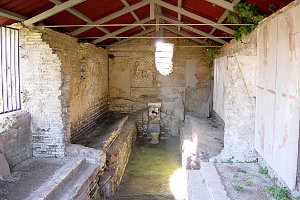
Mitreo delle Pareti Dipinte
TNMM 2
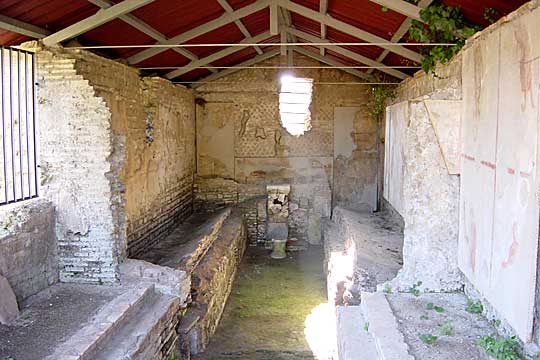
The House of the Mithraeum of the Painted Walls was built in the second half of the 2nd century BC (opus incertum) and modified during the Augustan period.
