
Biography
of Lucius Sextius Karus
- Lucius Sextius Karus is attested as a member of a Mithraic community (syndexios) at the Mitreo Fagan.
- Attested at Ostia, Latium, Italia in late 2nd century (TNMM 106).
TNMP 20
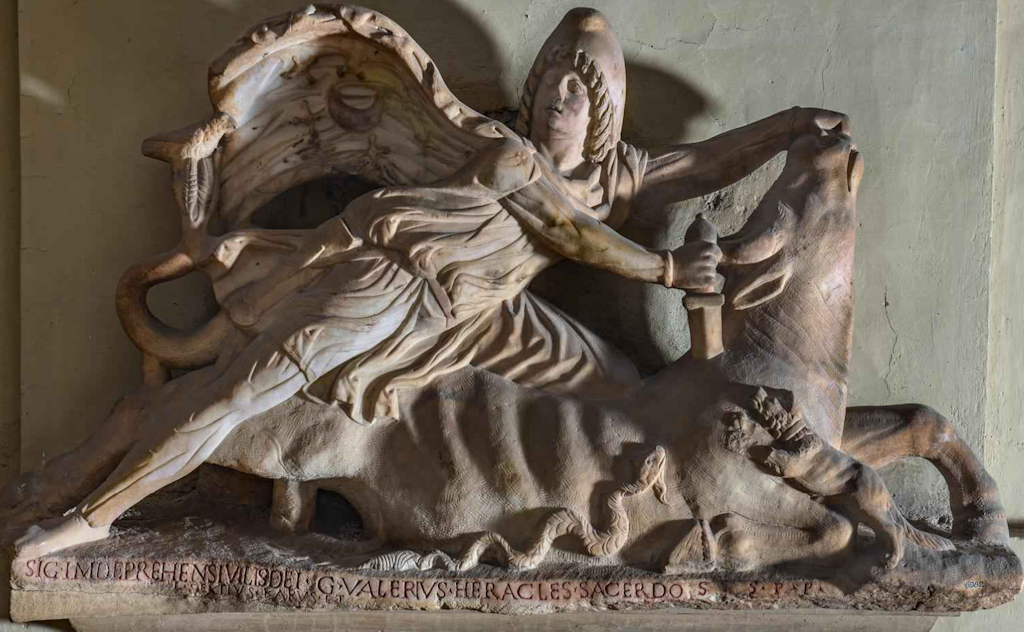
Lucius Sextius Karus is known from the inscription engraved on a marble tauroctony (TNMM 106) discovered in the so-called Fagan Mithraeum at Ostia, the first Mithraic sanctuary unearthed in the city during the excavations conducted by Robert Fagan at the end of the eighteenth century (Becatti, 1954; Marchesini, 2012–2013; Battisti, 2020). The monument, now preserved in the Vatican Museums, depicts Mithras slaying the bull in a conventional tauroctonic scene accompanied by the raven, dog, serpent and scorpion. The god’s billowing cloak is decorated with a crescent moon and seven stars, an unusual detail among Ostian representations of Mithras (Canciani, 2022).
The inscription records that the statue of the indeprehensibilis deus was erected at private expense by <b>Gaius Valerius Heracles</b>, a sacerdos. A second line, however, was added later and introduces the name of Lucius Sextius Karus before that of Heracles. Epigraphic analysis has shown that this addition was executed in a different hand and at a lower level than the original inscription, indicating that Karus was incorporated into the dedication after the monument had already been completed (Canciani, 2022; Marchesini, 2012–2013).
Although nothing else is known about his social background, profession, or rank within the Mithraic community, the inscription demonstrates that Lucius Sextius Karus was regarded as a co-benefactor of one of the principal cult monuments of the Fagan Mithraeum. His association with Gaius Valerius Heracles, who appears elsewhere as a leading figure of the sanctuary, suggests that he belonged to the circle responsible for the financing and embellishment of the cult place during the late second or early third century CE (Becatti, 1954; Canciani, 2022).
References
Attestations

Mitreo Fagan
TNMM 98
The Fagan Mithraeum, also known as the Mithraeum of Tor Boacciana, yielded remarkable sculptures of lion-headed deities, several of which are now preserved in the Vatican Museums.
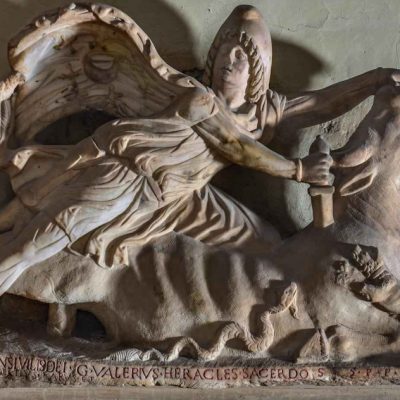
Tauroctony marble from Mitreo Fagan
TNMM 106
This sculpture of Mithras killing the bull was dedicated to the “incomprehensible god” by a certain priest called Gaius Valerius Heracles.
p[ecunia] p[osuit].
L[ucius] Sextius Karus et.
And Lucius Sextius Karus.
