Your search farid ud din attar gave 1818 results.

A fragmentary inscription found in the foundations of the Theodosian walls at Aquileia, recording a dedication to the Invincible Mithras by ...ntius Manilianus.
An inscription from Aquileia recording a vow fulfilled to Sol Invictus Mithras by C. Calidius Agathopus, a member of the college of the seviri Augustales of Aquileia.
A fragmentary inscription from Aquileia, probably dedicated to Cautopates, recording a soldier named Marcianus, optio of the Second Adiutrix Legion, who fulfilled his vow for the welfare of himself and his family.
An inscription copied at San Marco's in Venice in 1829, recording a dedication by Q. Baienus Proculus, pater nomimus, to Sol.
An inscription from the vicus Vicciomitum in Milan (ancient Mediolanum), recording a votive dedication to the Invincible Mithras by L. Atilius Pupinius on a site granted by decree of the town council.

I am an historian of religions. I currently studies so called "Oriental cults of the Roman Enmpire
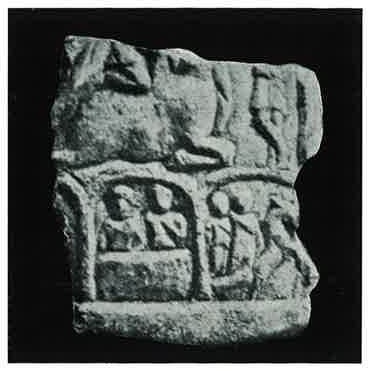
Right lower corner of a marble tauroctony relief from Oltenia, Dacia, preserving the lower portion of Mithras killing the bull.
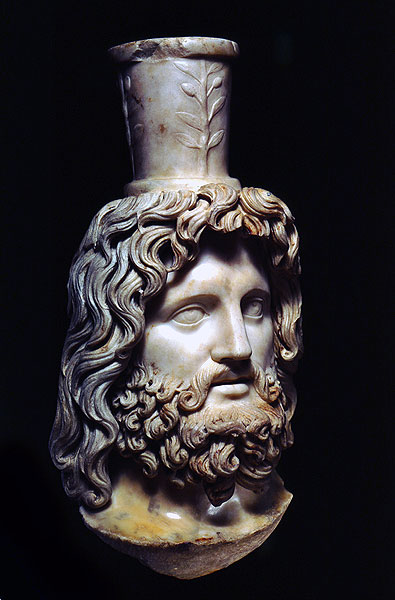
The head of Serapis found at Walbrook, London, is decorated with stylised olive branches.
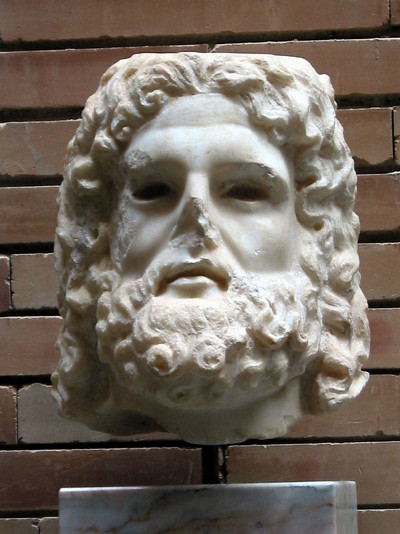
This head of Serapis from Cerro de San Albín may be unrelated to Mithras worship.
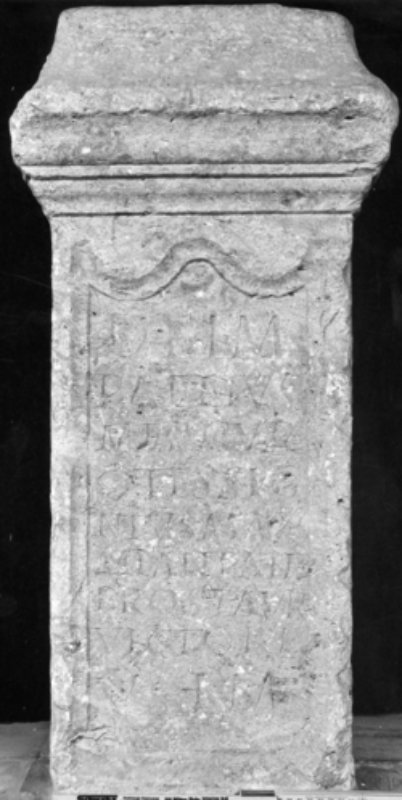
This altar to Mithras found in Aquilieia mentions several persons of a same community.
A subterranean room with a stucco depiction of Mithras slaying the bull, probably from the fourth century, discovered at Agurzano near Ponte Mammolo on the Via Tiburtina outside Rome.
A marble inscription fragment found in the cemetery at the Duos Lauros along the Via Labicana outside Rome, commemorating a sacerdos of Sol Invictus Mithras who lived forty years.
A marble funerary cippus from the Vigna Dionigi at Torre Pignatara outside Rome, dedicated to Sextineius Restitutus as most indulgent pater sacrorum by his children and mother, with a crown carved to the left of the final line.
Small marble arula found near the church of SS. Apostoli in Rome, bearing a brief Greek dedication to Helios Mithras Invictus.
Fragment of a relief from the Villa Wolkonsky showing the usual representation of Mithras slaying the bull, with the dog, serpent and scorpion; the bull's head, Mithras' head and right foot are lost.
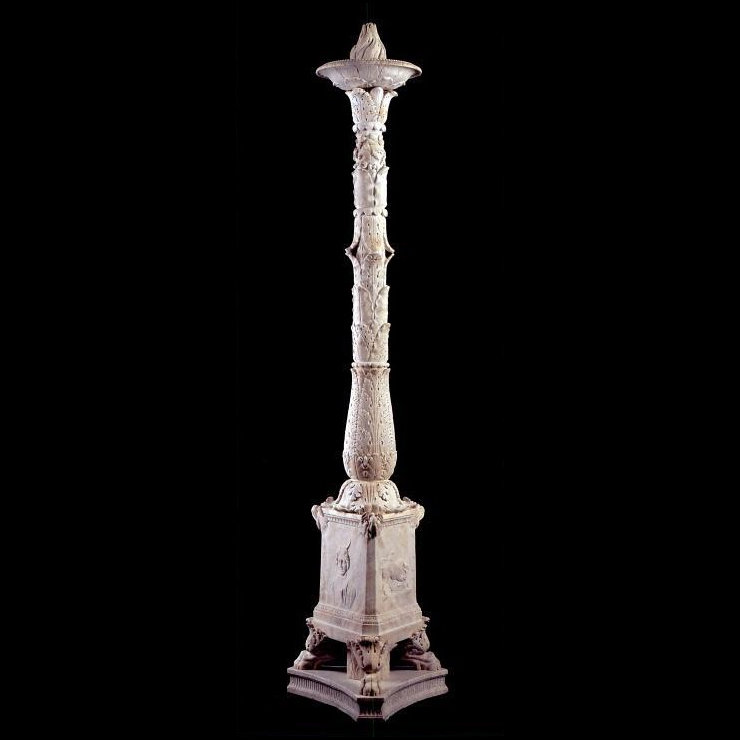
This magnificent candelabrum was found in Rome in 1803, in the Syrian Temple of Janicule.
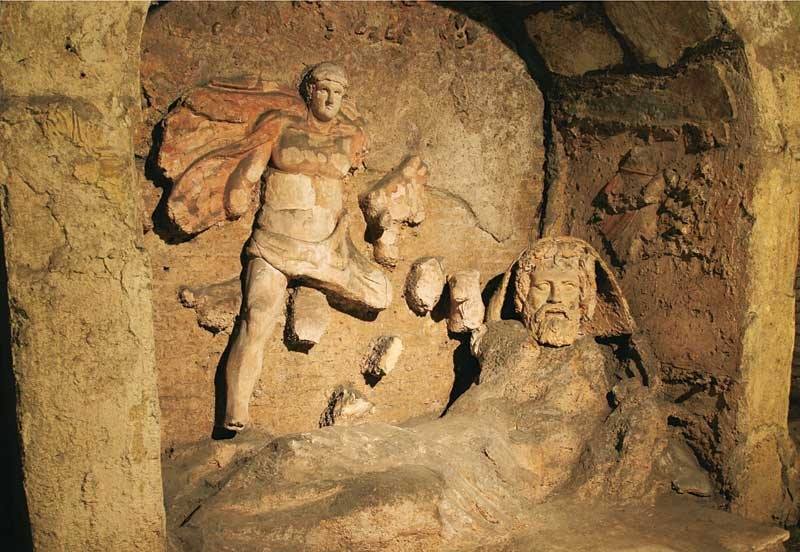
Even if only a few fragments remain, it is very likely that the main niche of the Mitreo di Santa Prisca contained the usual representation of Mithras killing the bull.
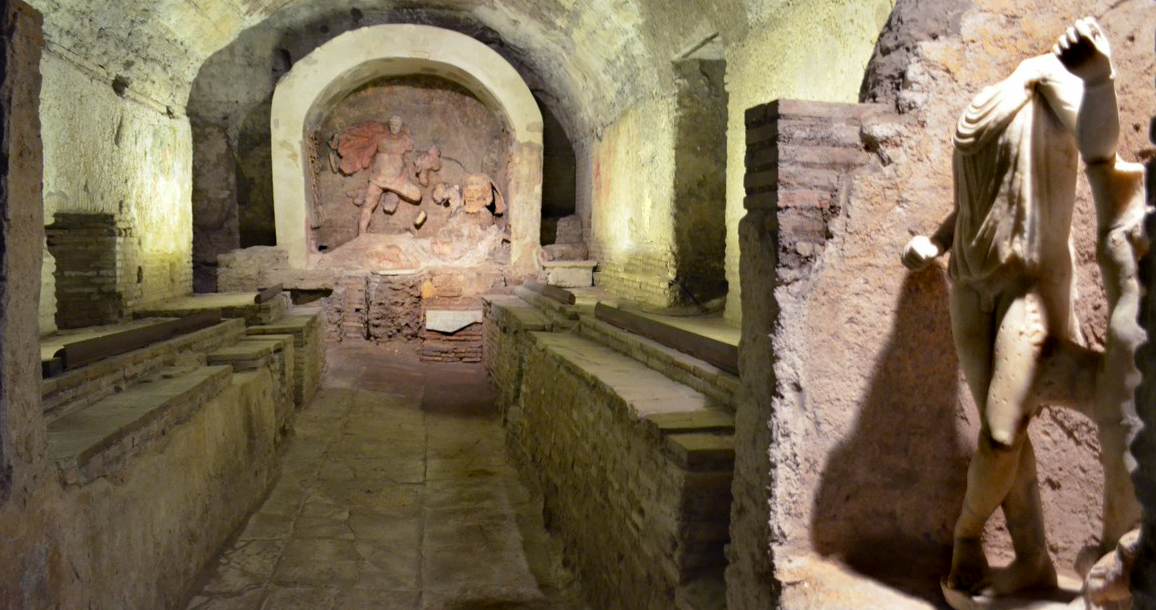
The Mithraeum of Santa Prisca houses remarkable frescoes showing the initiates in procession.
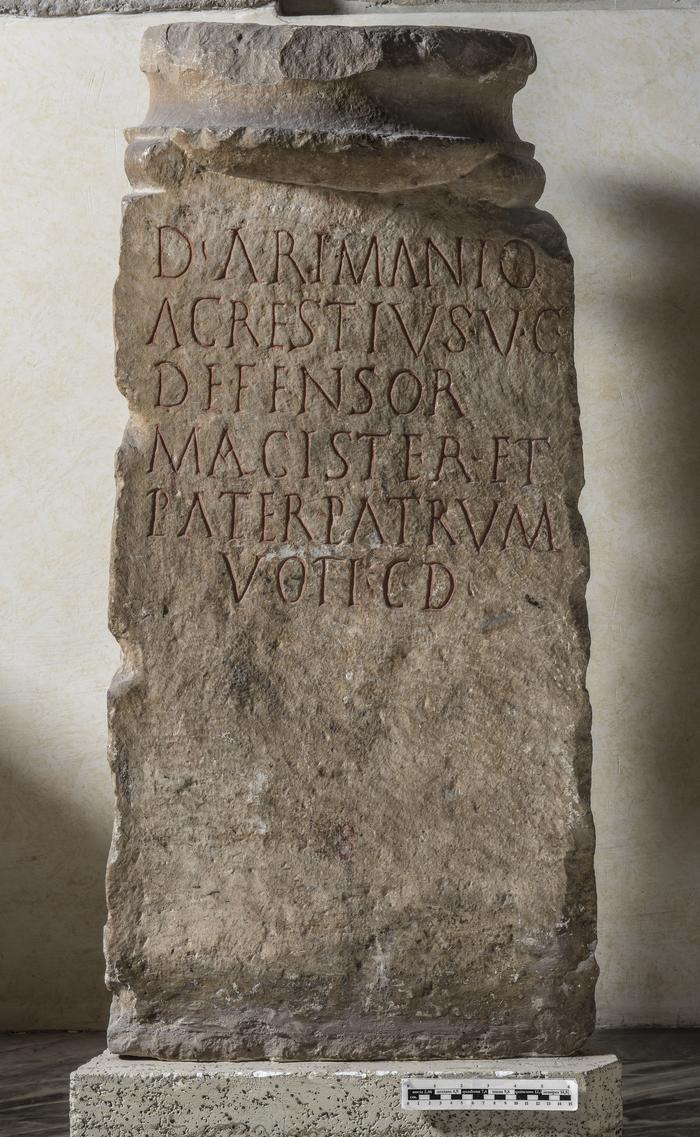
This altar mentioning the god Arimanius was found in 1655 at Porta San Giovanni, on the Esquilino.
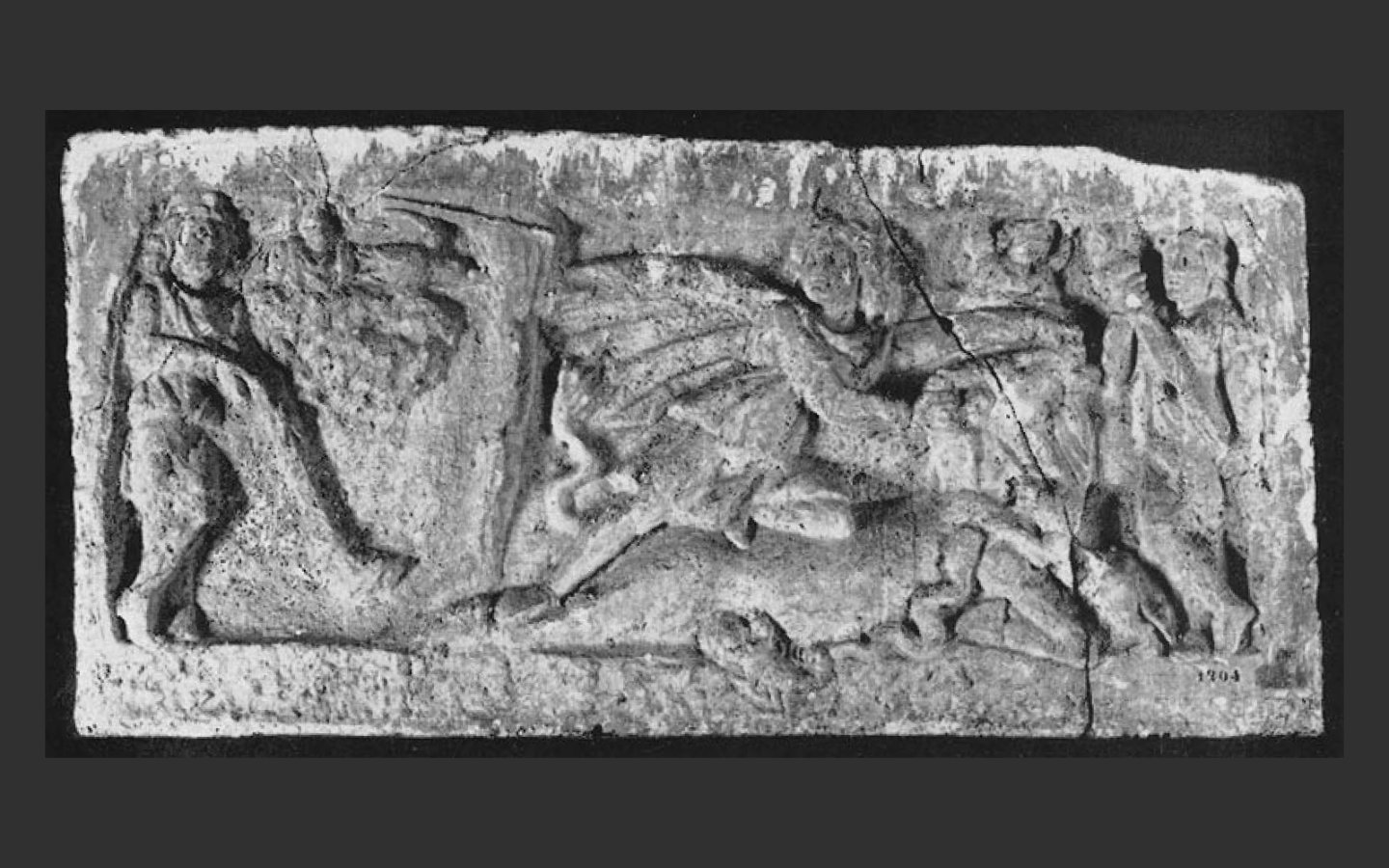
This relief of Mithras Tauroctonos from Rome bears the inscription of three brothers, two of them lions.
