Your search franz valery marie cumont gave 236 results.
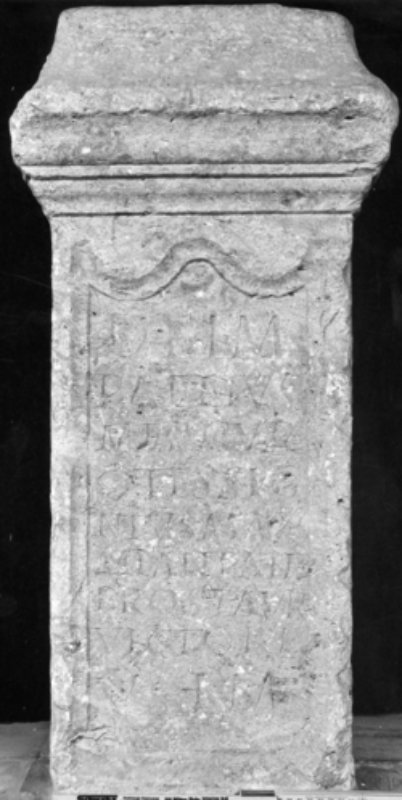
This altar to Mithras found in Aquilieia mentions several persons of a same community.
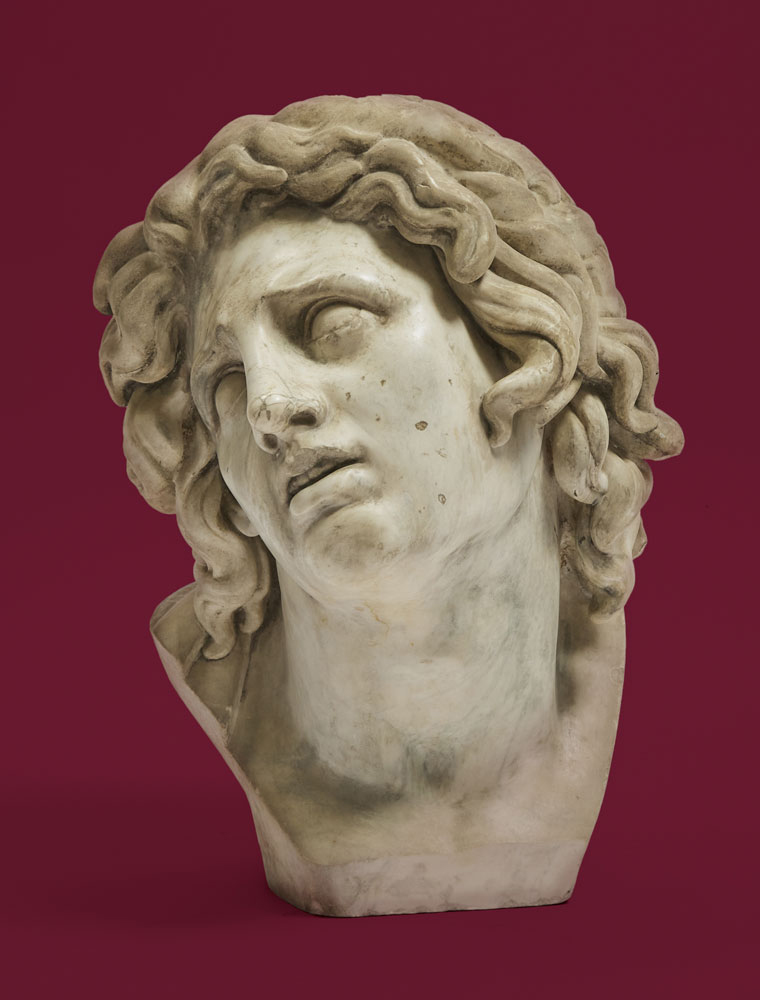
Head formerly associated with Mithraic material but interpreted by Margarete Bieber as a dying Giant.
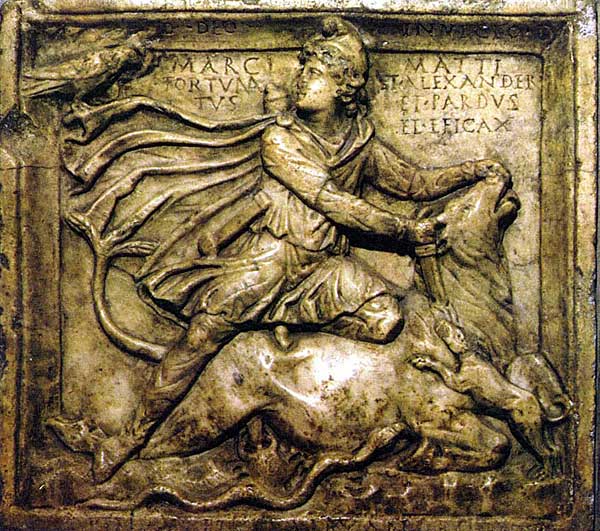
The relief marble of Mithras sacrifying the bull, exposed on the Hermitage Museum comes from Rome.

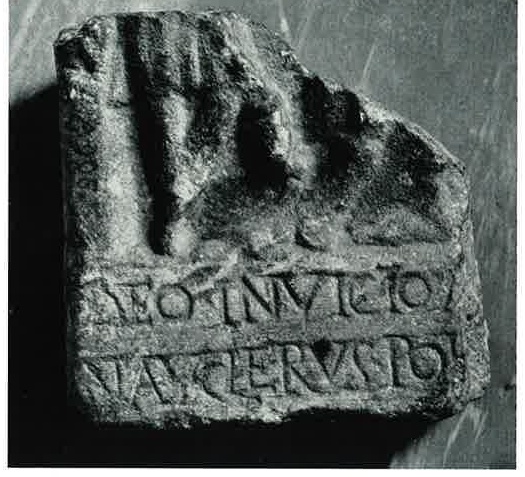
Greek inscription dedicated to Sol Invictus Mithras by Balbillus, saved from the waters, in the presence of Bassus the priest, belonging to the Mithraic grade of Leo.
Marble head in the Museo Baracco, Rome, generally described as an Alexander but very probably representing Mithras with his eyes lifted towards heaven; the back of the head is finished obliquely with a small hole for fastening a Phrygian cap.
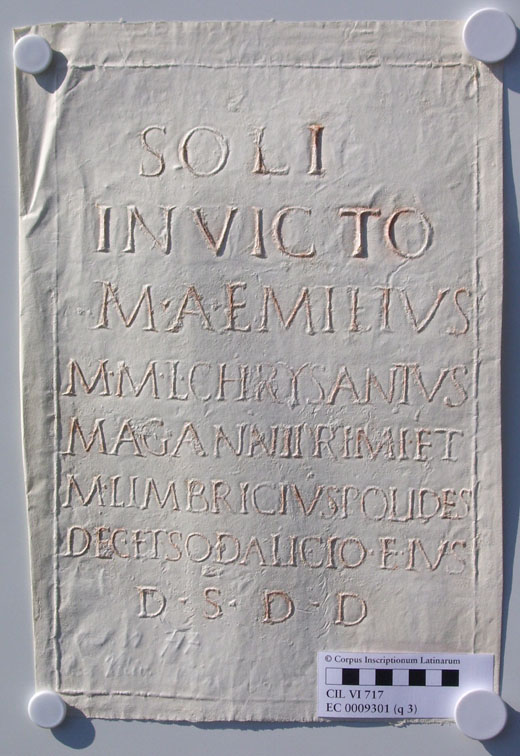
Aemilius Chrysanthus shares the expenses of this monument with a decurio named Limbricius Polides.
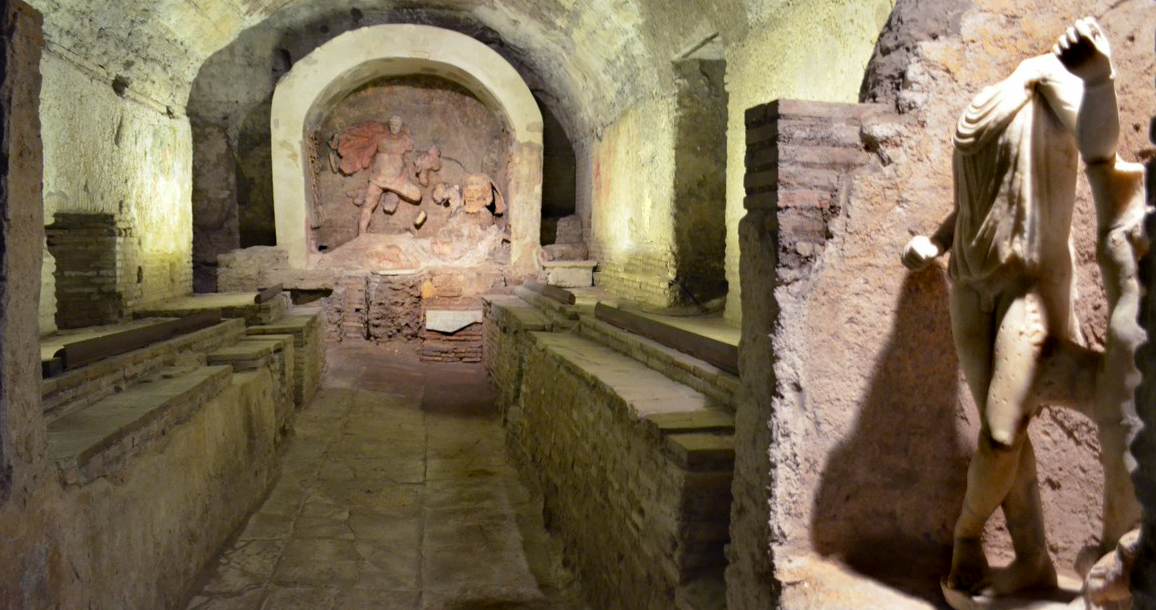
The Mithraeum of Santa Prisca houses remarkable frescoes showing the initiates in procession.
This small cippus to Zeus, Helios and Serapis includes Mithras as one of the main gods, although some authors argue that it could be the name of the donor.
Rock inscription of Sagarios, strategus of Ariaramneia, recording a Mithraic ceremony near Farasha (ancient Ariaramneia), Cappadocia, likely 1st century A.D.
Marble funerary stele dedicated to the soldier Aurelius Lucanus, a devotee of Mithras, found at Amasya (ancient Amasia), Pontus.
Marble altar from Thessalonike, Macedonia, with a dedication on the front and a pedum on the left side and a caduceus on the right — attributes associated with Mithraic cult furniture.
Third-century sepulchral inscription from near Philippi, Macedonia, studied for its Mithraic content in the upper lines of the text.
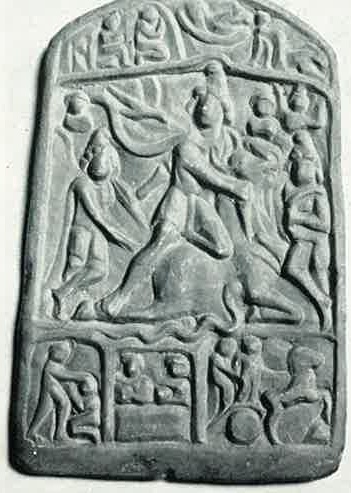
White marble tauroctony relief fragment from Drmno, Moesia Superior, found in 1892 and now in Brussels, depicting the standard bull-slaying scene.
Inscription from Nefertara, Dalmatia, dedicated to Invicto Augusto by Aurelius, probably dated to the consulship of Aspro and Orfito.
Fragment of a marble tauroctony relief from Surduk, ancient Rittium in Pannonia Inferior, preserving only Mithras's right foot and leg with the bull below.
Bronze plate from Budapest, ancient Aquincum or vicinity, preserving a Mithraic representation of uncertain composition; no longer in a known collection.
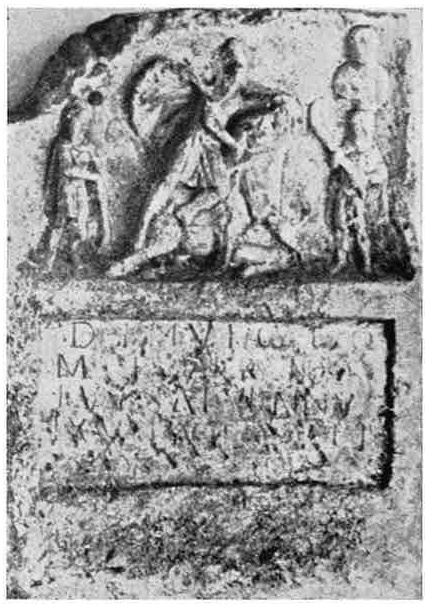
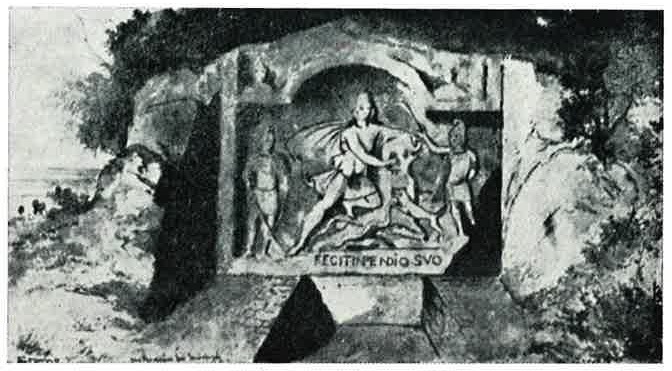
Limestone tauroctony relief found in a grotto at Nagy-Kovácsi, Pannonia Inferior, depicting the standard bull-slaying with flanking torchbearers and divine busts in the upper register.
Inscription from Schwadorf, ancient Aequinoctium in Pannonia Superior, dedicated to Petrae genetrici dei — the rock that gives birth to the god — by Aurelius Statorius.
Marble tauroctony relief from the Mithraeum at Sopron, ancient Scarabantia, depicting the standard bull-slaying scene with raven, dog, serpent, scorpion, and torchbearers.
Marble tauroctony relief from the Mithraeum at Sopron, ancient Scarabantia, depicting the standard bull-slaying with raven, dog, scorpion, and cross-legged torchbearers.
