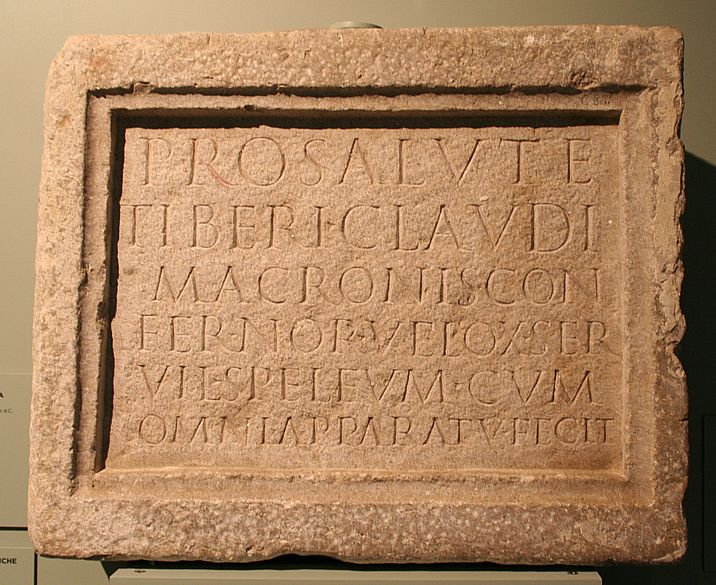
Marble slab with inscription by Velox for the salvation of the chief of the iron mines of Noricum.
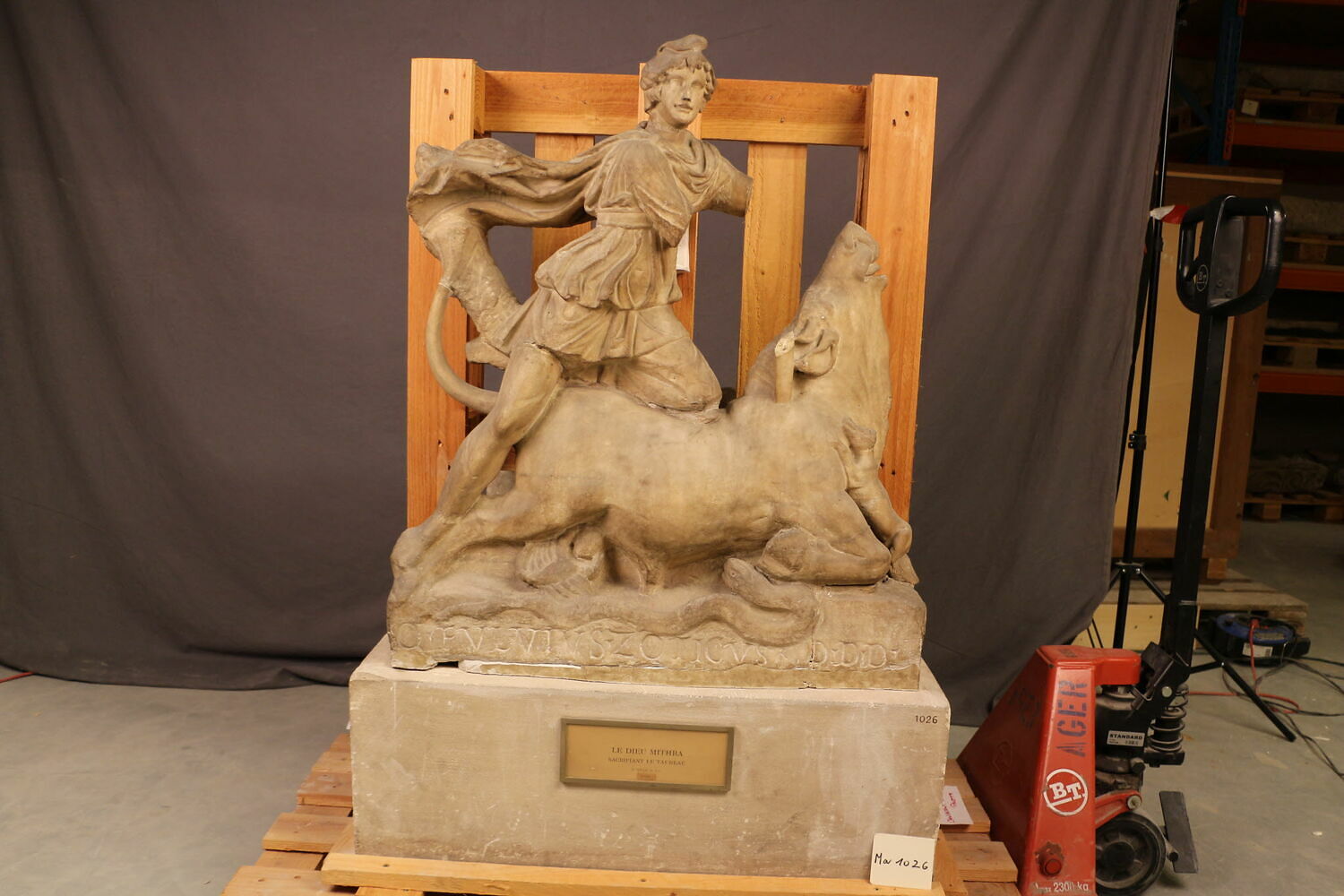
The Tauroctony found in Velletri, Rome, bears an inscription from its owner and donor.

This marble sculpture from Sicily, known as the Randazzo Vecchio or Rannazzu Vecchiu, contains some essential elements of the Mithraic Aion, the lion-headed god.

This fine Roman marble slab of the killing bull of Mithras belongs to a private owner, most recently from Los Angeles, USA.
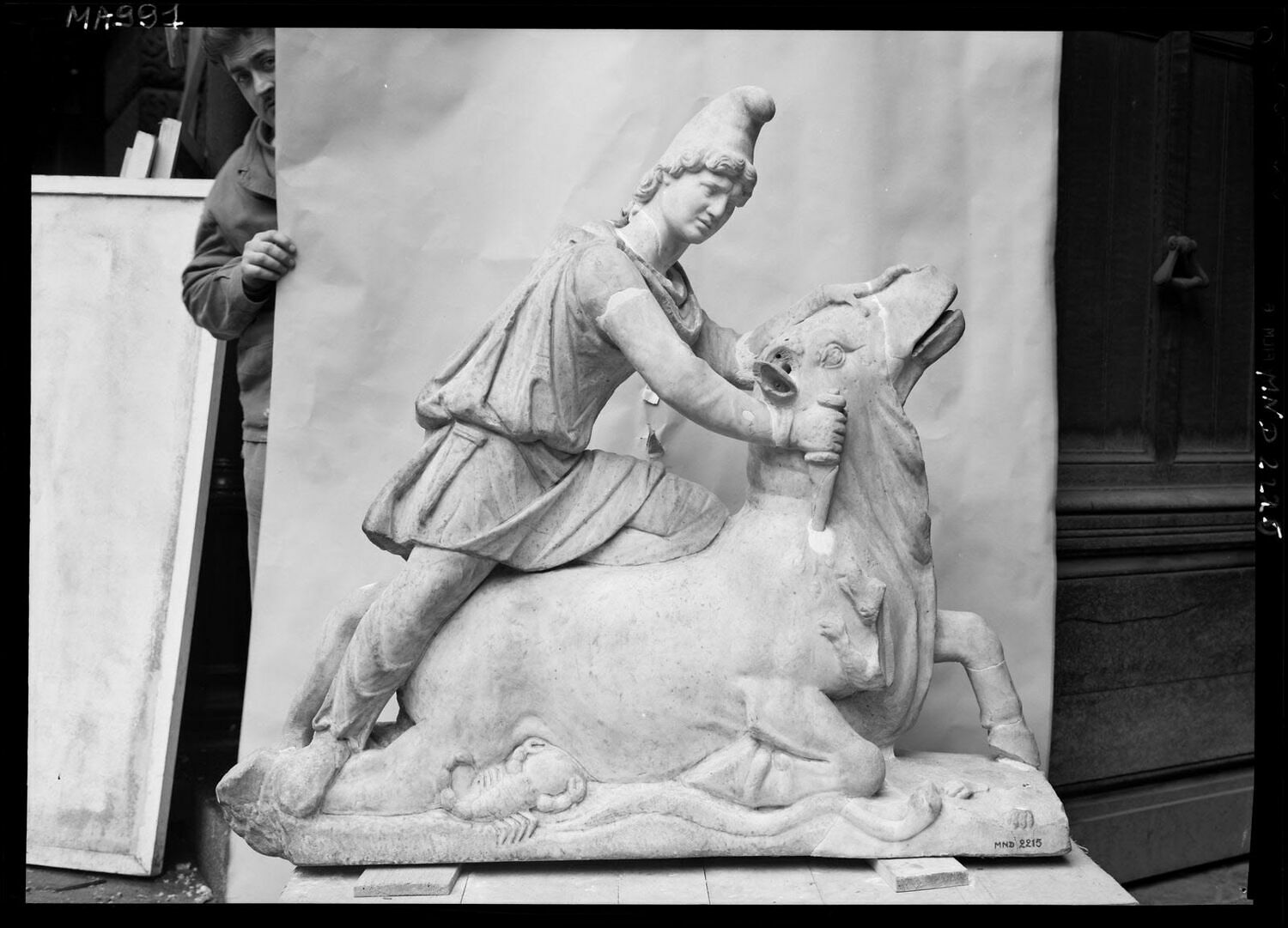
This sculpture of Mithras killing the bull, which belongs to the Louvre Museum, is currently on display in Varsovia.
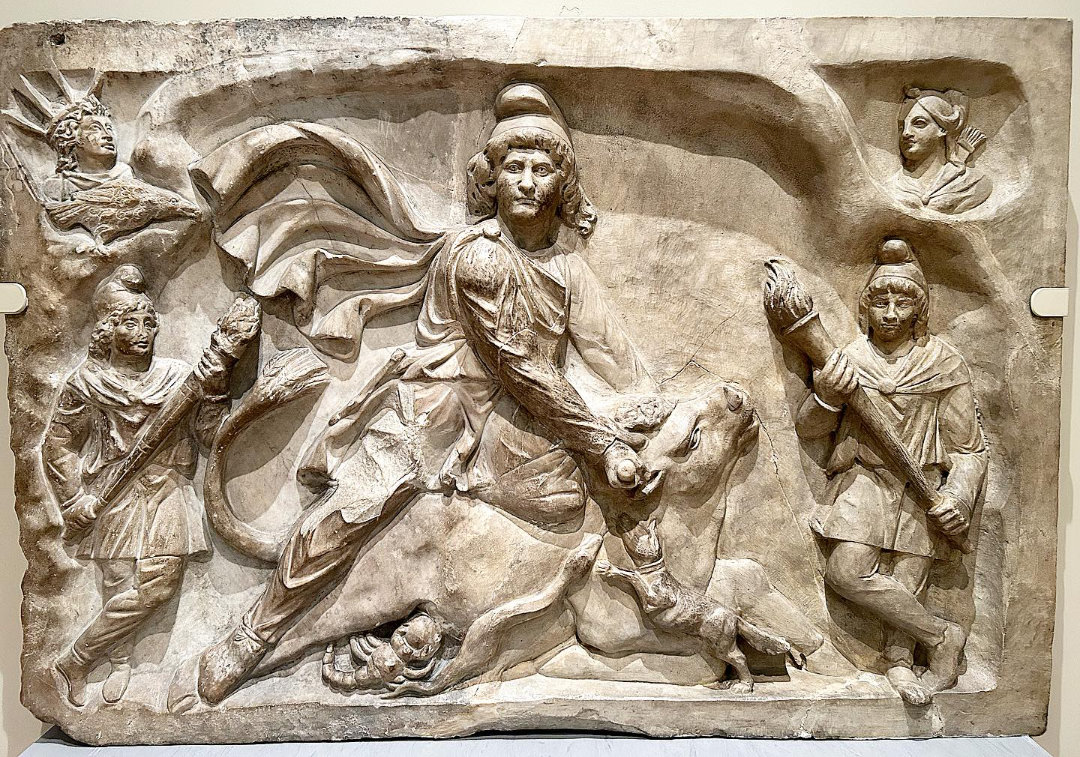
This relief of Mithras killing the bull is on display at the Royal Ontario Museum.
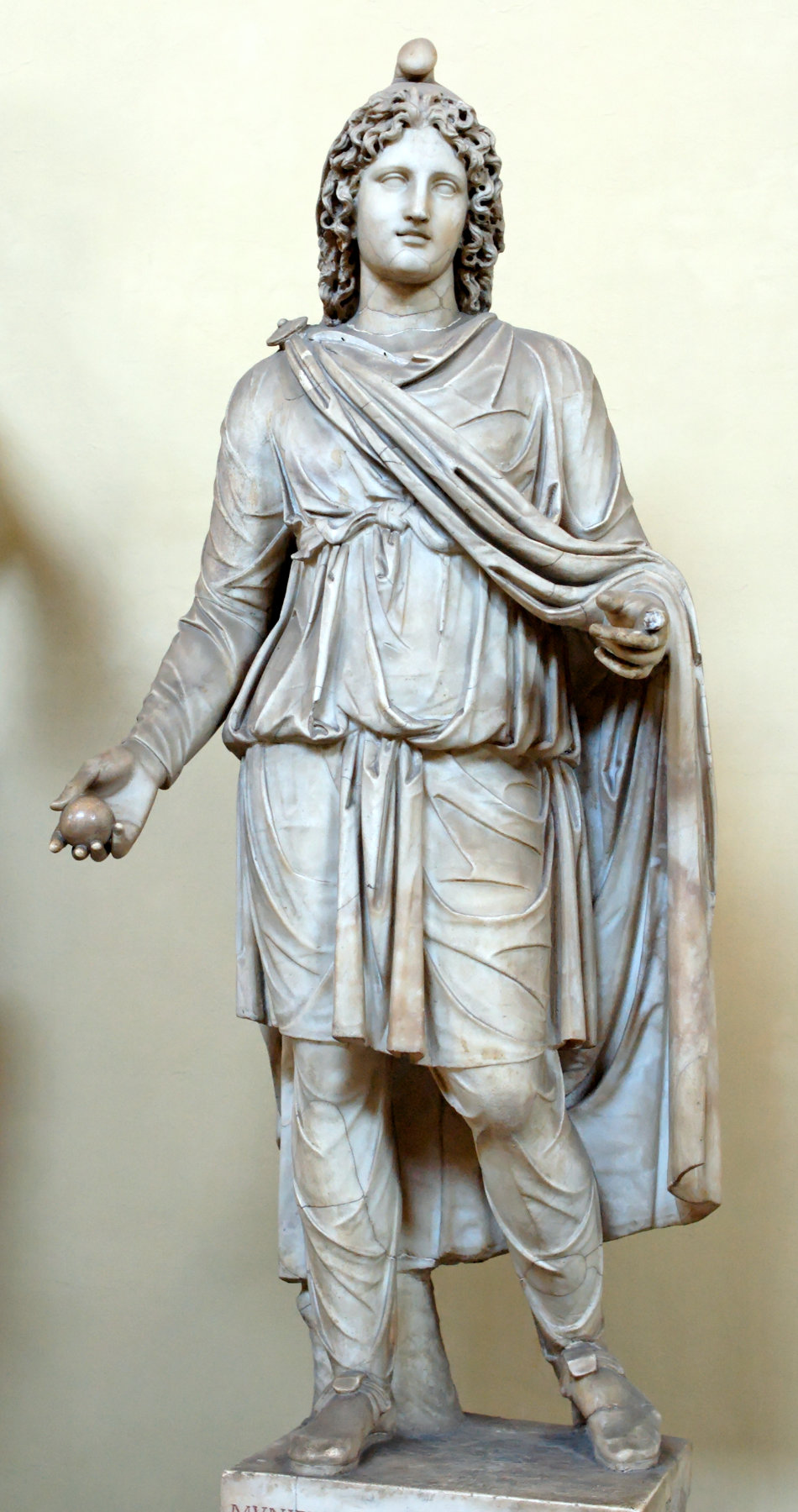
This sculpture, probably of Cautopates, now in the Musei Vaticani, was transformed into Paris.

This inscription was dedicated to God Cautes by a certain Flavius Antistianus, Pater Patrorum in Rome.
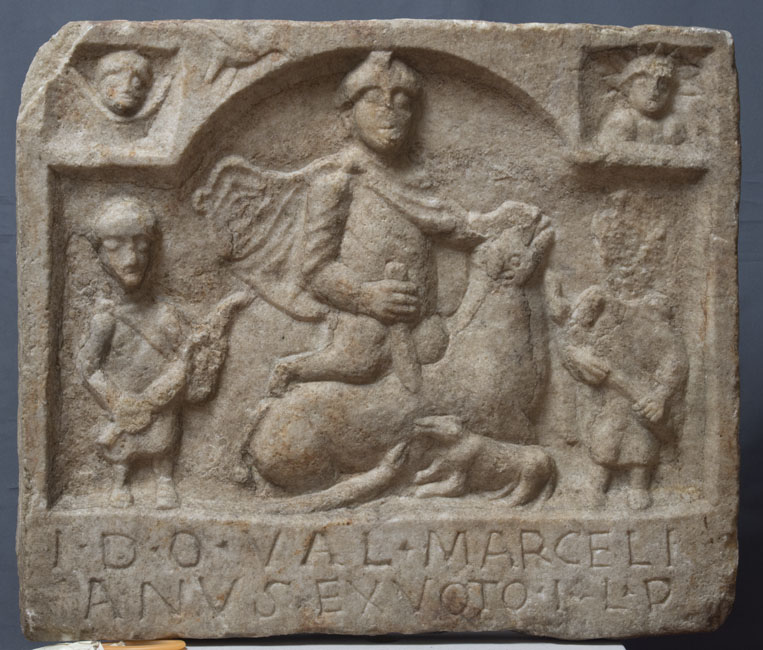
This primitive relief of Mithras as a bullkiller is signed by a certain Valerius Marcelianus.
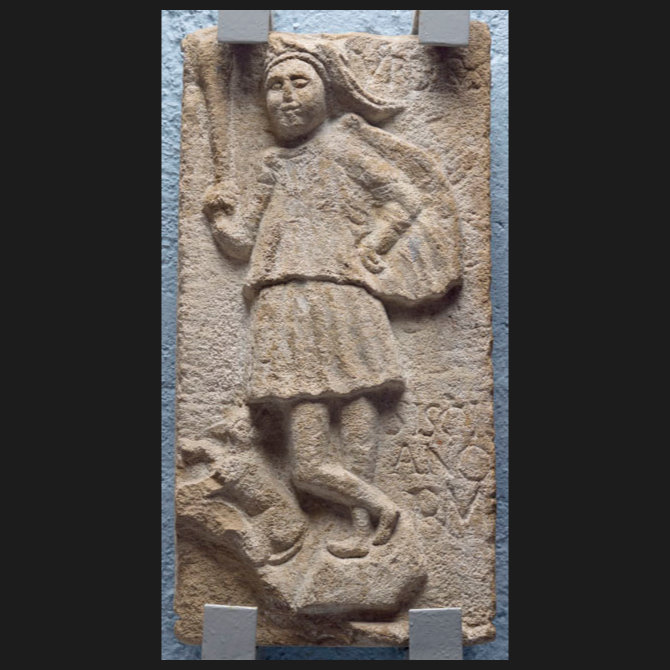
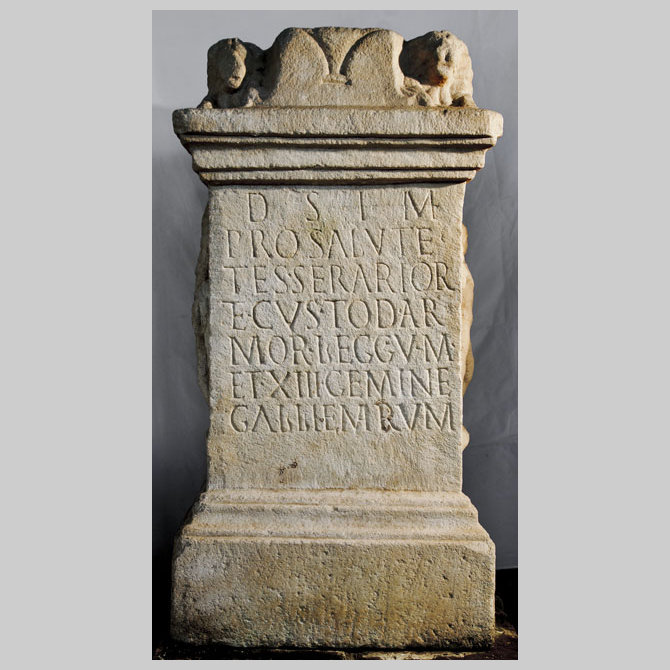
This altar, found in the 3rd mithraeum of Ptuj, bears an inscription and a relief of Sol and a person with a cornucopia.
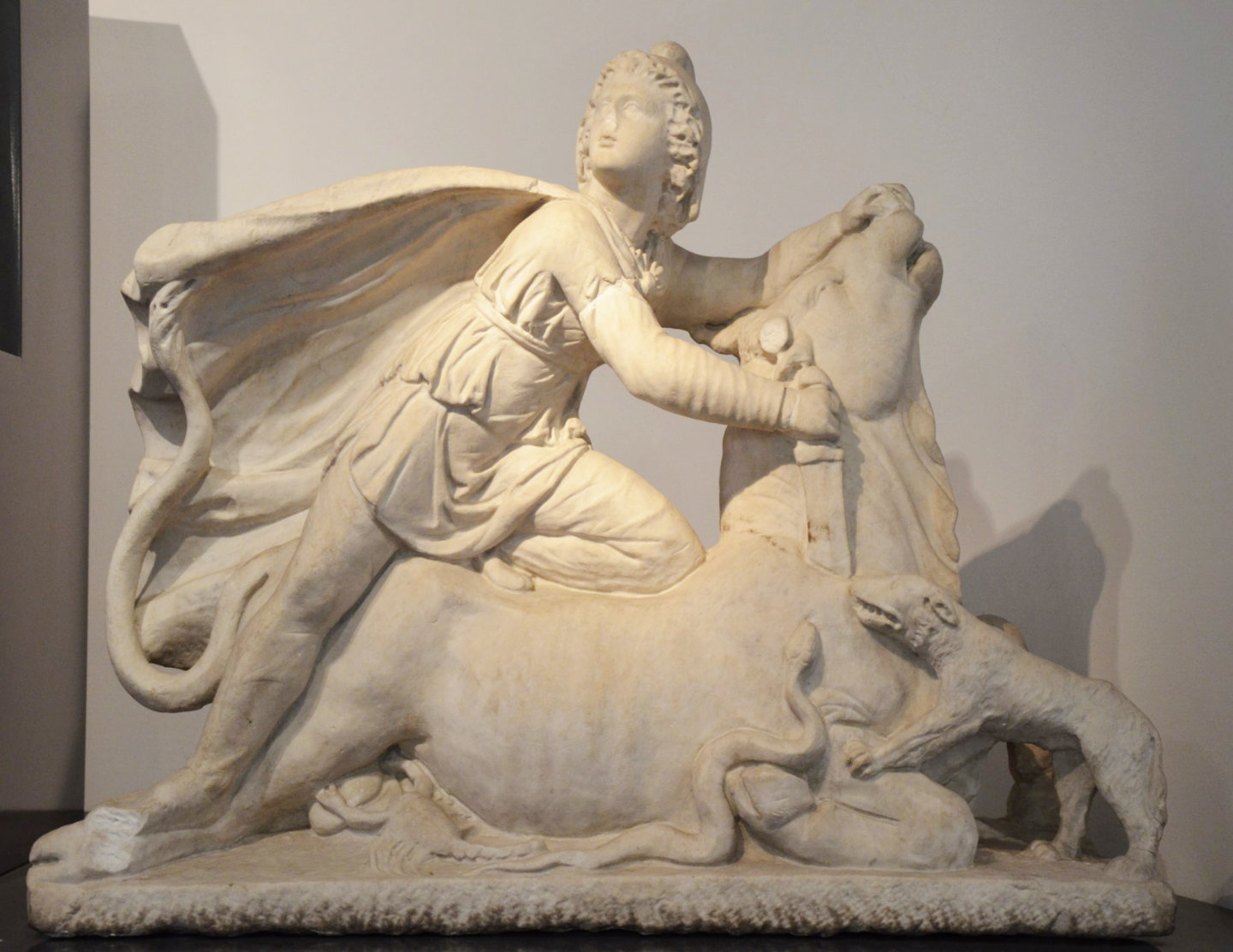
This statue of Mithras as a bullkiller was bought at Rome where it might be found.
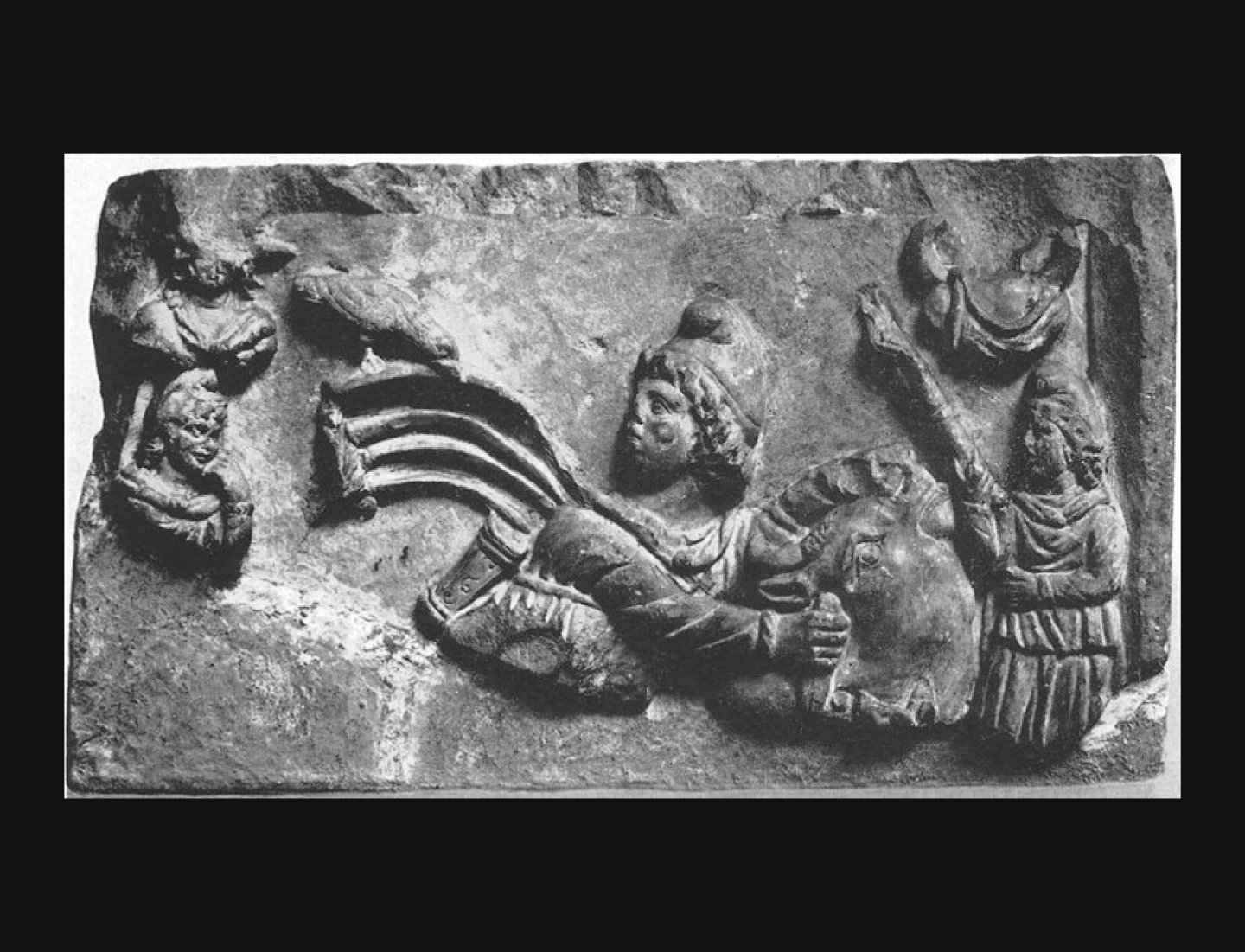
Franz Cumont bought this relief of Mithras as a bullkiller from a dealer who claimed to have found it in a vineyard near the church of Saint Pancrace, in Rome.
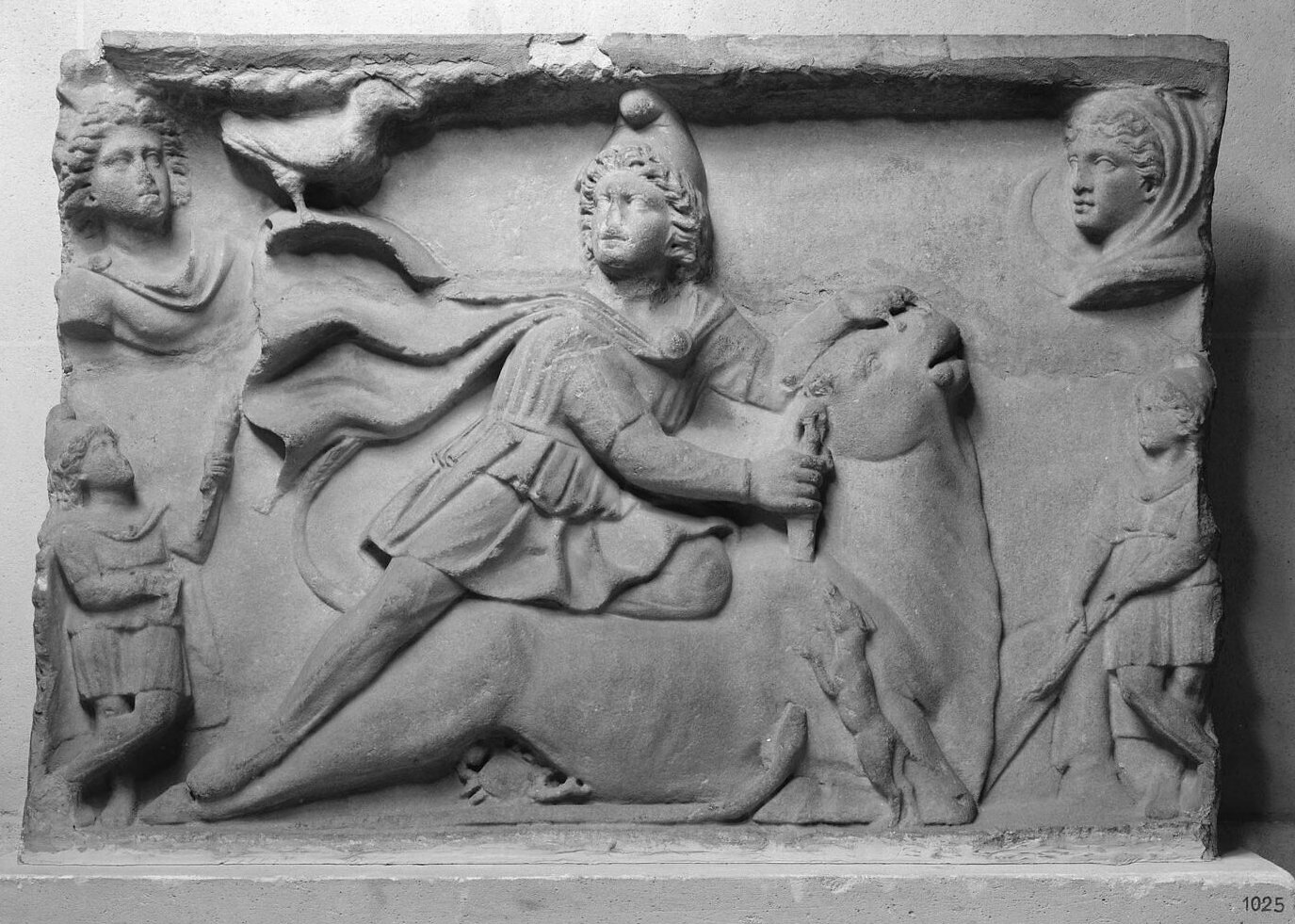
This is one of the three reliefs of Mithras as a bullkiller from the Villa Borghese collection that belong to the Louvre museum, now in the Louvre Abu Dhabi.
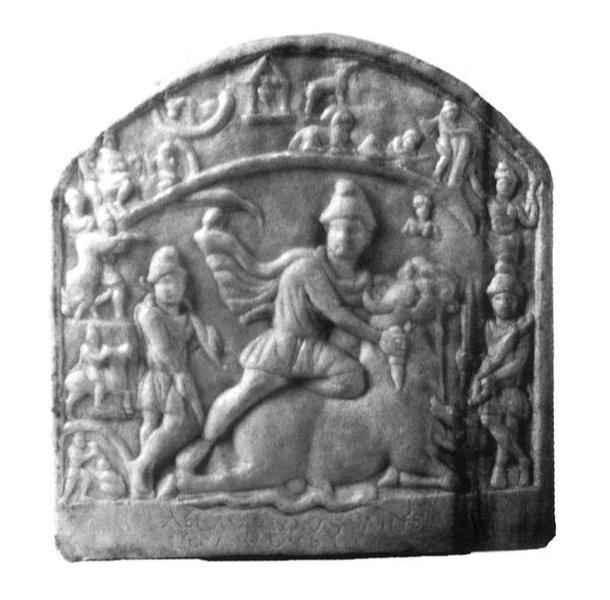
This small relief of Mithras killing the bull was found in 1859 in Turda, in the Cluj region of Romania.
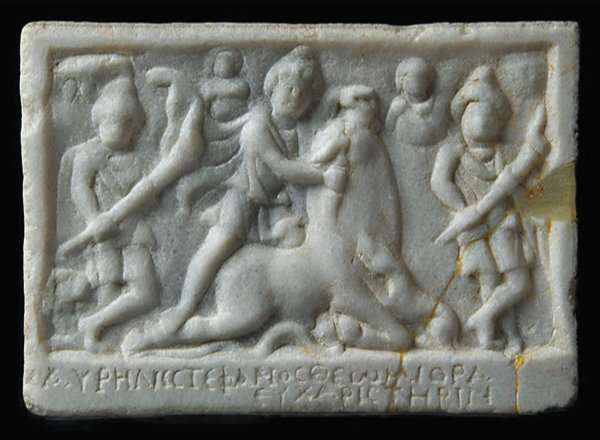
This relief of Mithras killing the bull is unique in the Apulum Mithraic repertoire because of its inscription in Greek.
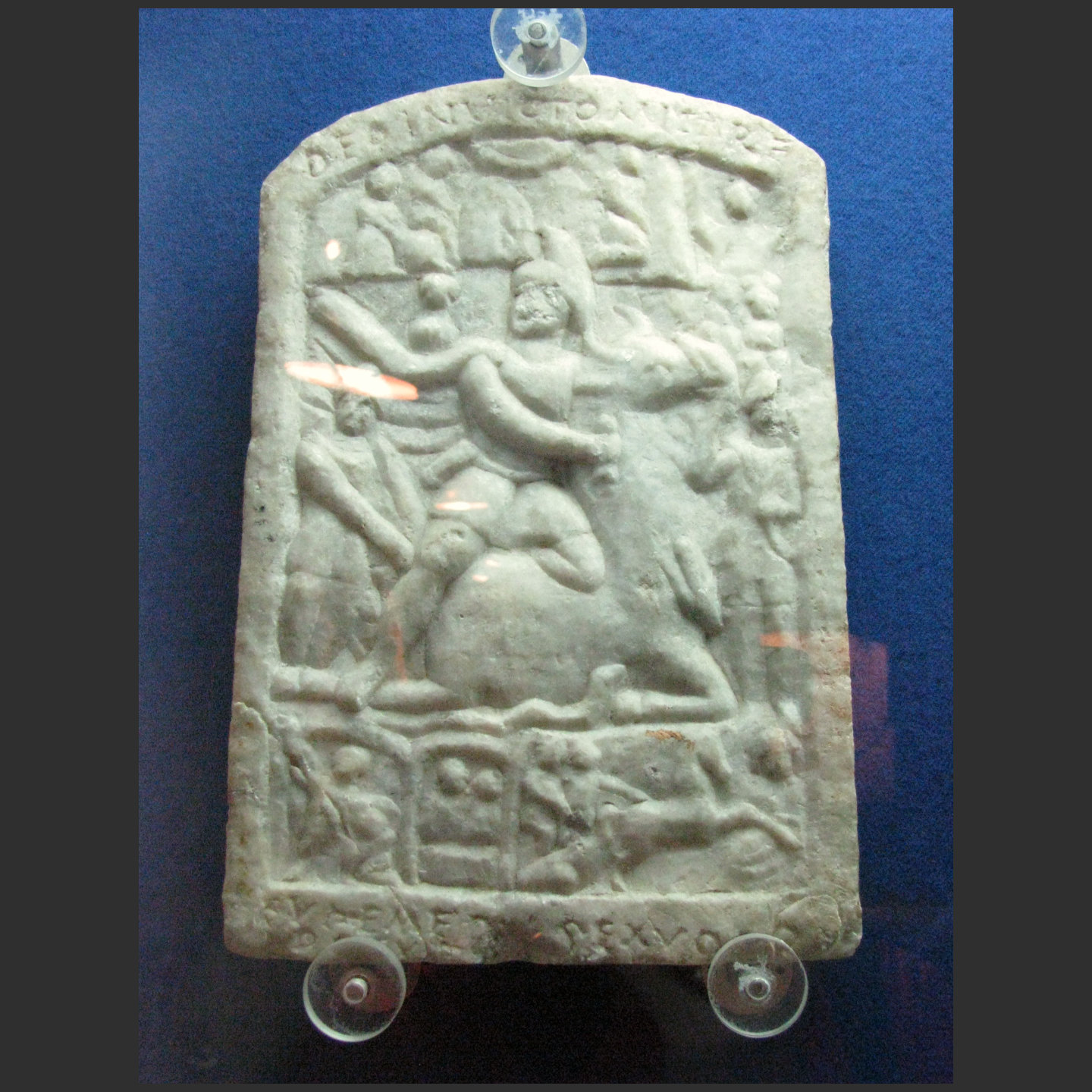
Several authors read the name Suaemedus instead of Euhemerus as the author of this mithraic relief from Alba Iulia, Romania.
This marble of Cautes was found together with his partner Cautopates in Ostia in 1939.
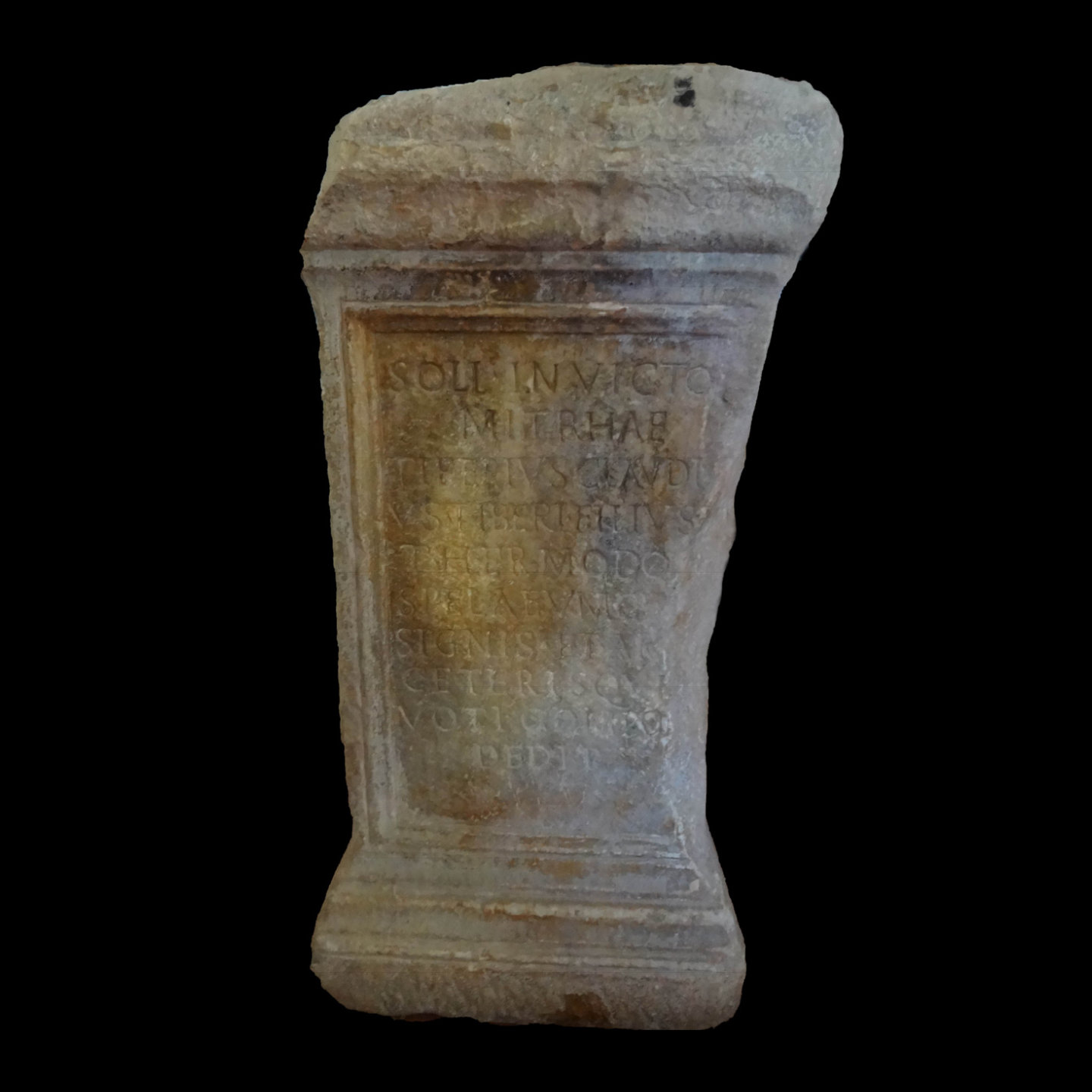
The donor of this Mithraic inscription from Bolsena, a certain Tiberius Claudius Thermoron, is known from two other monuments.
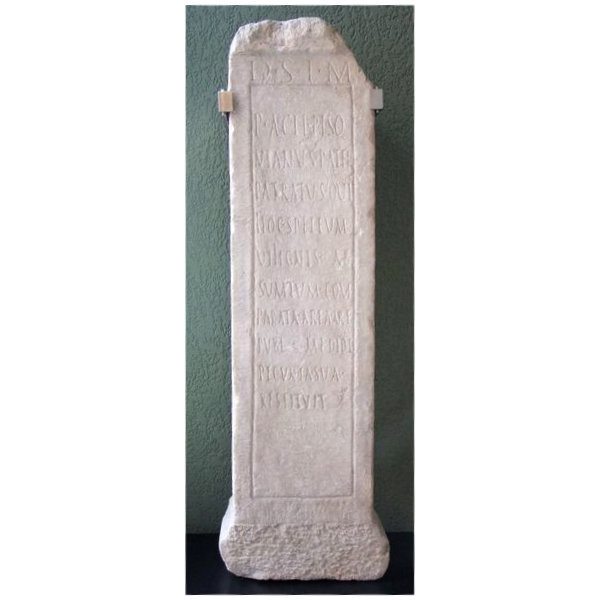
This high stele by a certain Acilius Pisonianus bears an inscription commemorating the restoration of a Mithraeum in Mediolanum, today's Milan.
