Your selection in monuments gave 81 results.
.jpg)
The statue of Arimanius/Ahriman was found in 1874 under the city wall of York during the construction of the railway station.

An altar found in the west corner of the sanctuary at Borcovicium (modern Housesteads) in 1898, recording a dedication to Jupiter Optimus Maximus, the god Cocidius and the genius of the place by soldiers of the Second Augustan Legion on garrison duty.
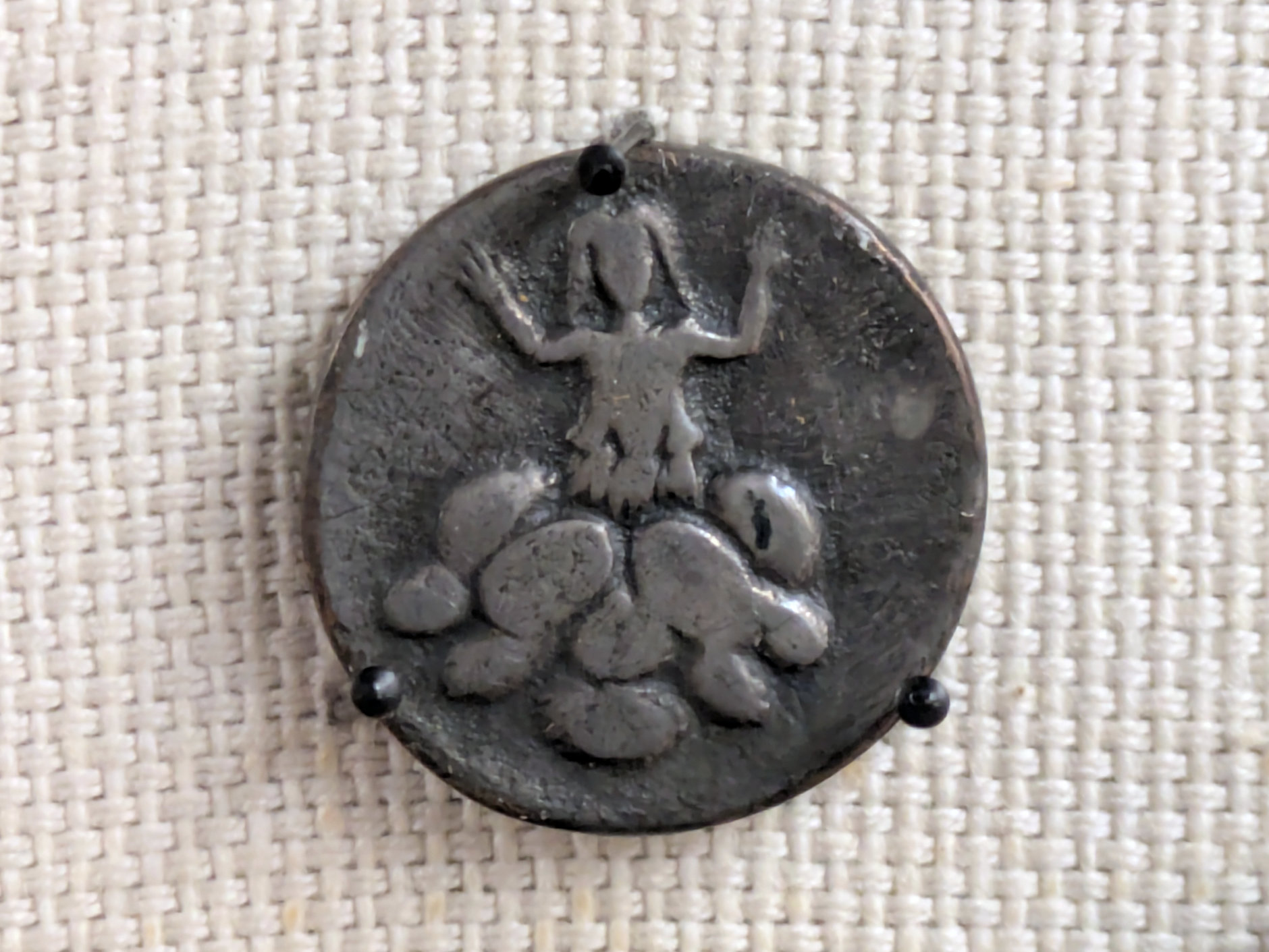
The mithraic denarius of St. Albans dates from the 2nd century.
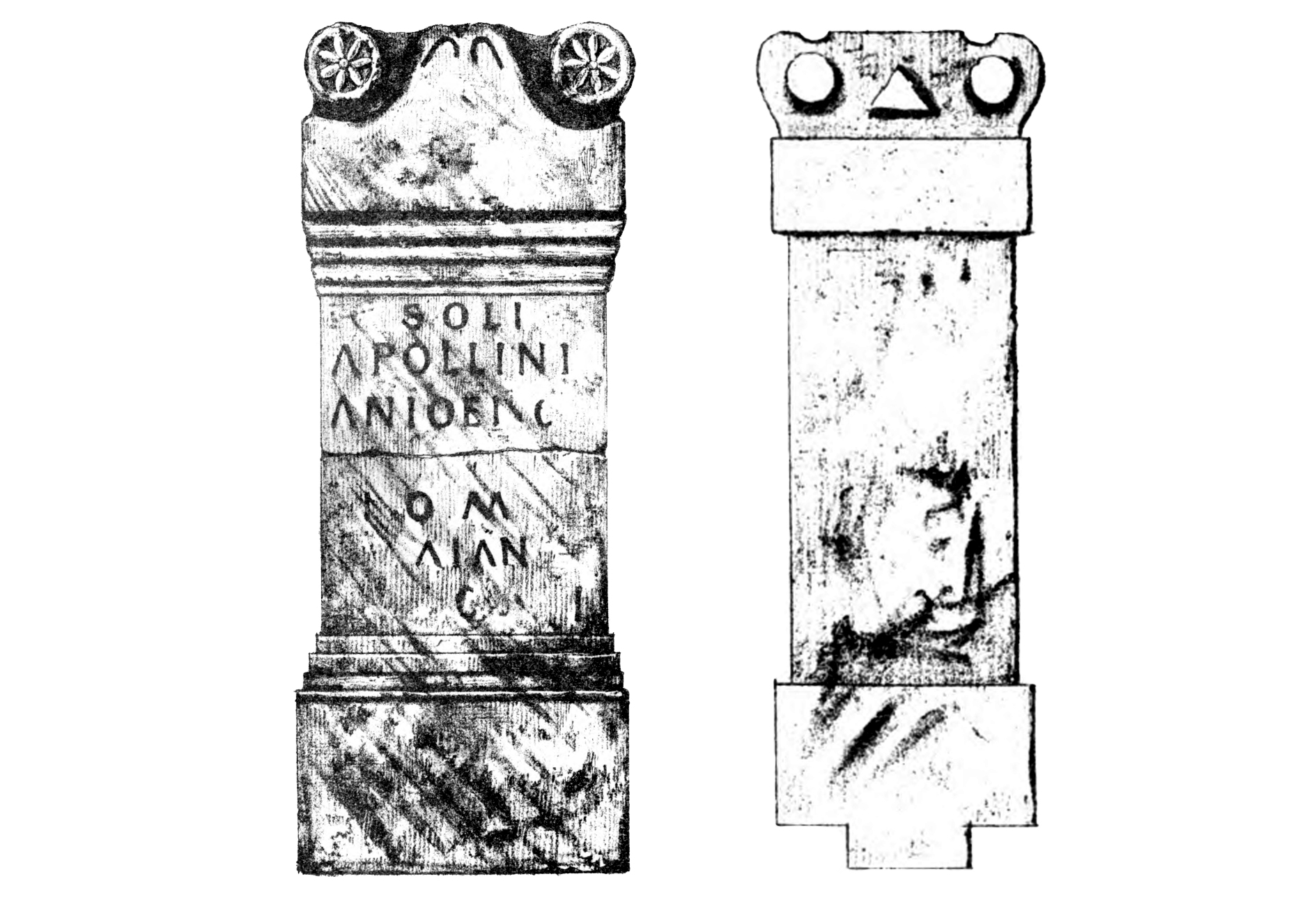
Fragmentary inscription from Vindobala preserving a rare dedication to “Sol Apollo Anicetus” within a Mithraic context on Hadrian’s Wall.
Inscription from Corstopitum (modern Corbridge) recording a dedication to Sol Invictus by a vexillation of Legio VI Victrix under the governorship of Sextus Calpurnius Agricola in AD 163.
Sandstone altar from the Mithraeum of Vindobala bearing a dedication to Sol Invictus and Mithras by the prefect Aponius Rogatianus.
A small stone pedestal and the fallen statue of a seated Mother-goddess from the Mithraeum at Procolitia (modern Carrawburgh), depicting a figure of ungainly proportions enfolding in her arms a basket resting on her knees, found in the corner behind the screen at the east end of the temple…
Dedication from the Mithraeum of Rudchester recording the restoration of a temple dedicated to Sol Invictus.
This sandstone altar from the Mithraeum of Vindobala (modern Rudchester) preserves a dedication to the Invincible Mithras by P. Aelius Titullus, prefect of a cohort.
The inscription on the decorated altar No. 839 from the Mithraeum at Vindobala (modern Rudchester), recording a gift to the Deity by L. Sentius Castus, a soldier of the Sixth Legion.
A decorated altar from the Mithraeum at Vindobala (modern Rudchester), with the letters DEO crowned with vittae on the shaft, surrounded by palm-branches, a representation of Mithras' rock-birth on the capital, and on the front of the die a naked figure grasping a bull's horns…
A marble fragment with an inscription in a tabula ansata from the Mithraeum at Walbrook in London, reading [Au]gggg(ustis) invicto..., a dedication to the Invincible probably addressing multiple emperors.
The base of a statuette, preserving only one foot of Cautes, found at Luguvallium (modern Carlisle), bearing a dedication to Deus Cautes by Iulius, the archietus.
An inscription found in the ruins of an old stone wall at Cambeck, near Petrianae, recording a vow willingly and with merit fulfilled to Deus Sol Invictus by Sextus Severius Salvator, prefect.
A fragmentary inscription from Scaleby Castle near Cambeckfort (ancient Petrianae), preserving a partial dedication to Sol Mithras.
An altar mentioned by Stukeley as being kept in his garden at Stanford (ancient Hattwifel), bearing the inscription Deo Soli Invicto.
A small ara from Longovicium (modern Lancaster), bearing a fragmentary dedication to the Invincible God and decorated on the left side with a relief of a boar.
A small altar from Longovicium (modern Lancaster), bearing a brief inscription dedicated to Deus Mithras, Cautopates and Sol Invictus.
A marble relief found in 1851 built into the adjoining hall of White Friars at Chester (ancient Deva), now in the Grosvenor Museum, depicting a standing dressed figure with a sheep-hook in his left hand and possibly a downward-pointing torch in his right…
A stone relief from Chester (ancient Deva), now in the Grosvenor Museum, depicting a cross-legged torchbearer in Eastern attire pointing his torch downwards with his right hand.
