Your selection in monuments gave 263 results.
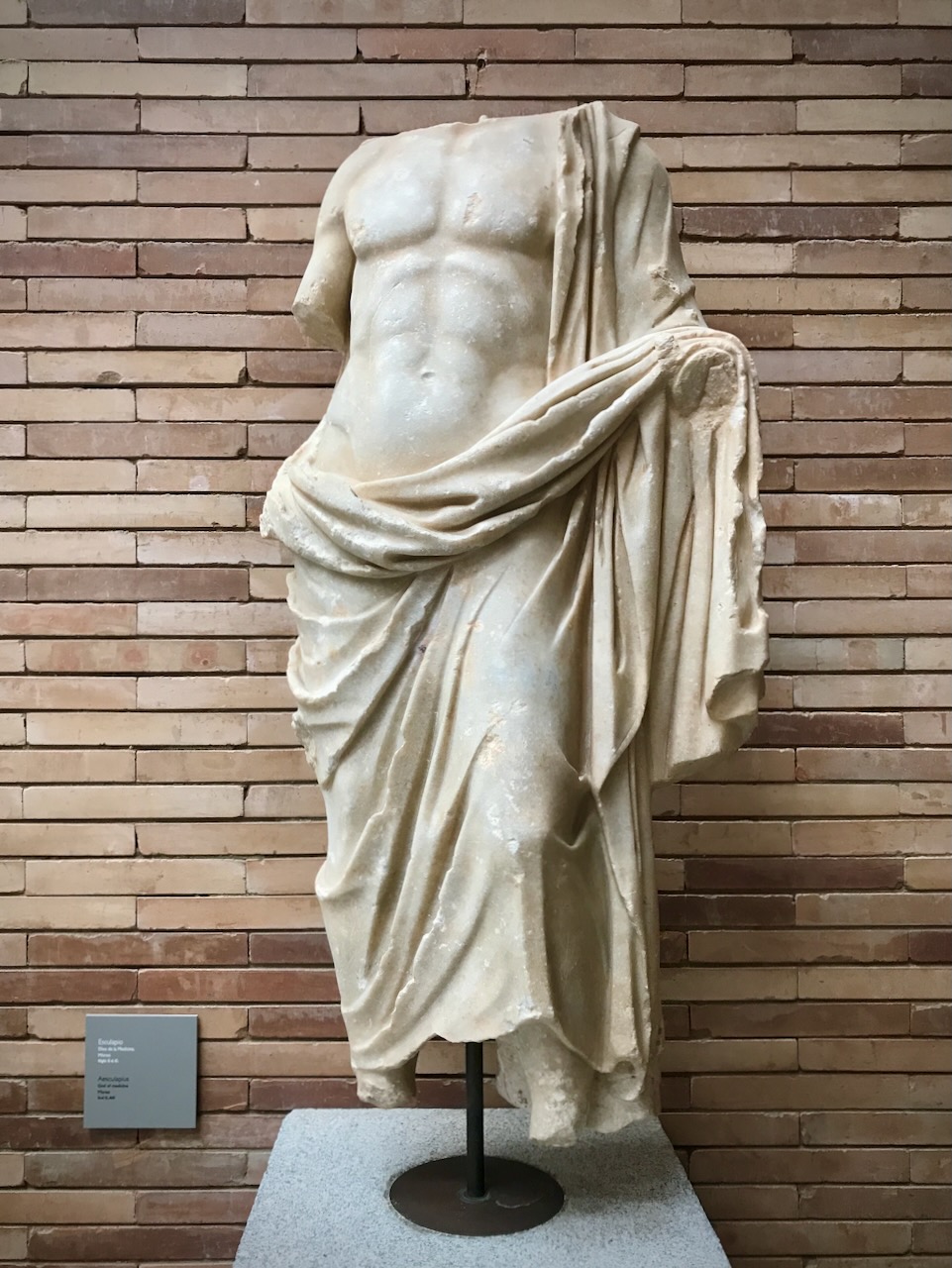
This standing sculptural figure from Mérida appears to carry the serpent staff, characteristic of the medicine god Aesculapius.
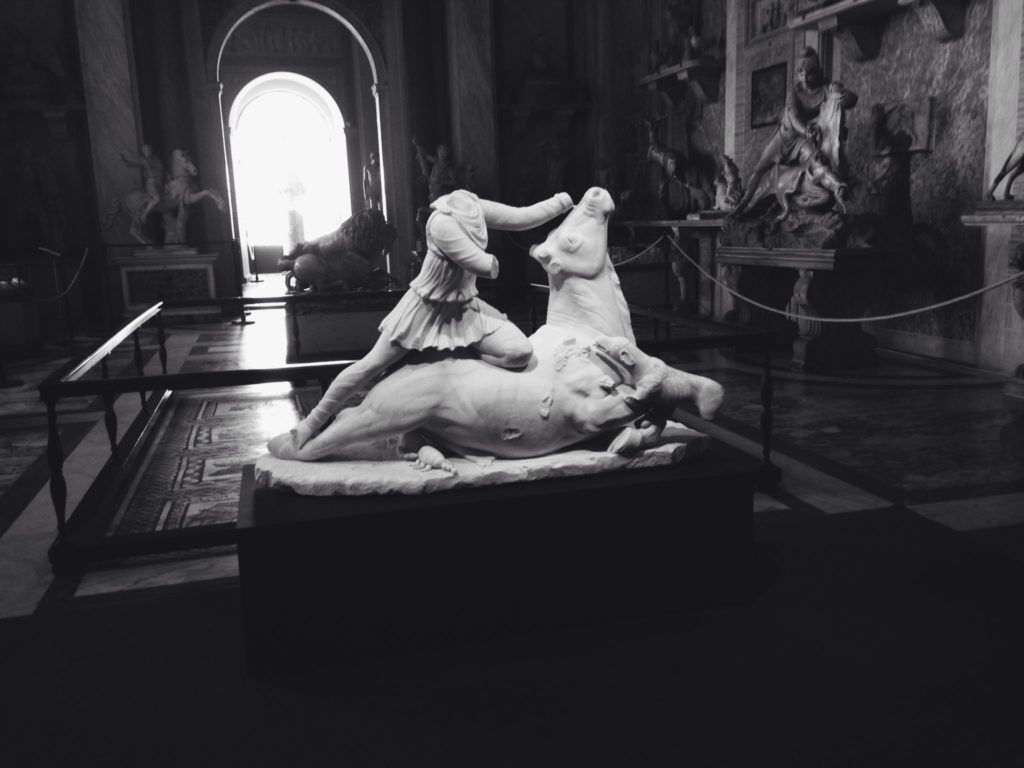
Votive sculpture of Mithras sacrificing the bull from the Mithraeum of Tarquinia.
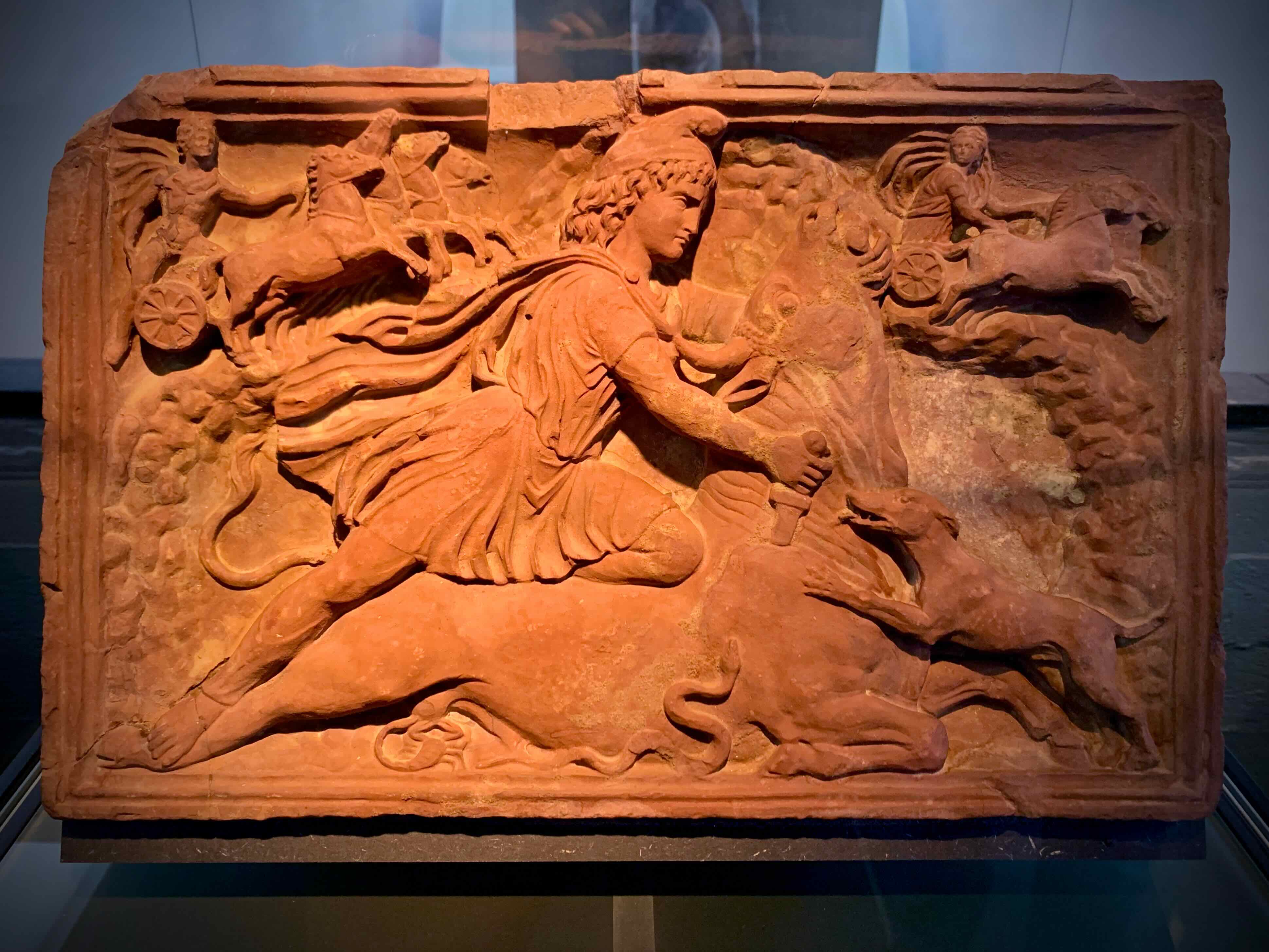
Maarten Vermaseren acquired this rosso antico marble of Mithras slaying the bull in 1961.
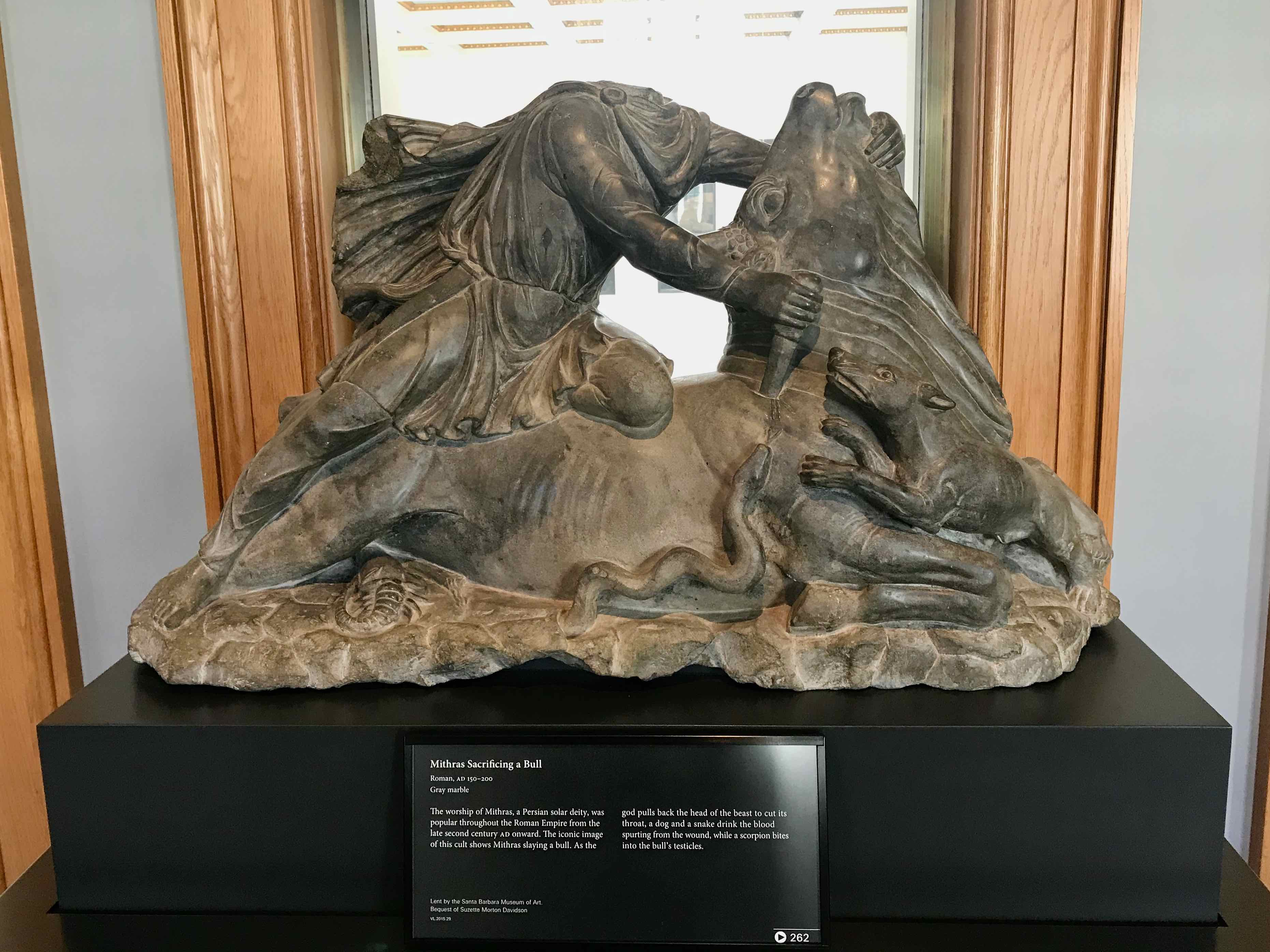
Tauroctony in black marble on display at the Santa Barbara Museum of Art, California.
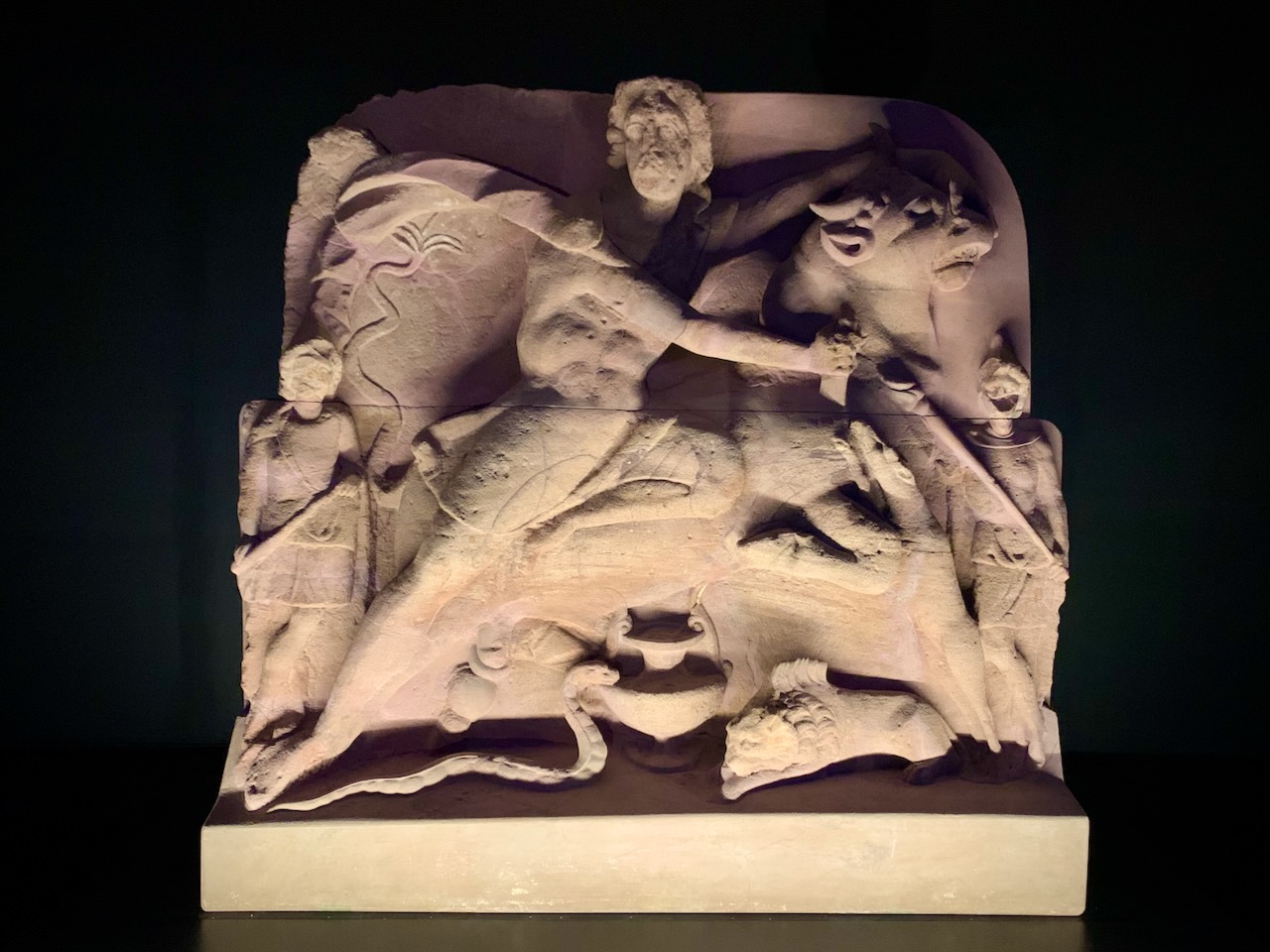
The relief of Mithras slaying the bull from Nida's Mithraeum III was found in two pieces in 1887, destroyed during an air raid on Frankfurt in 1944, and restored in 1986.
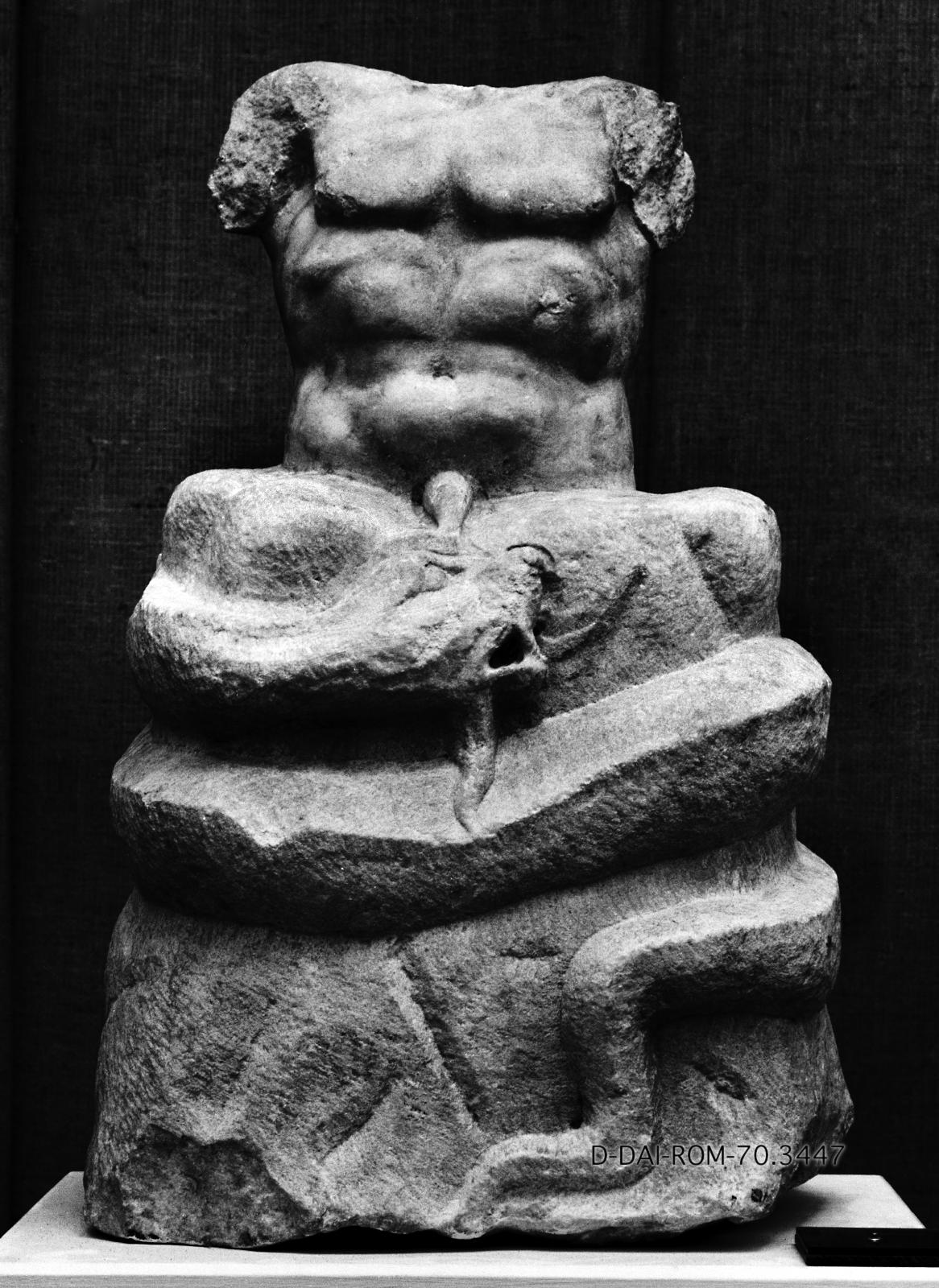
Mithras born from the rock with a snake raising in coils around it.
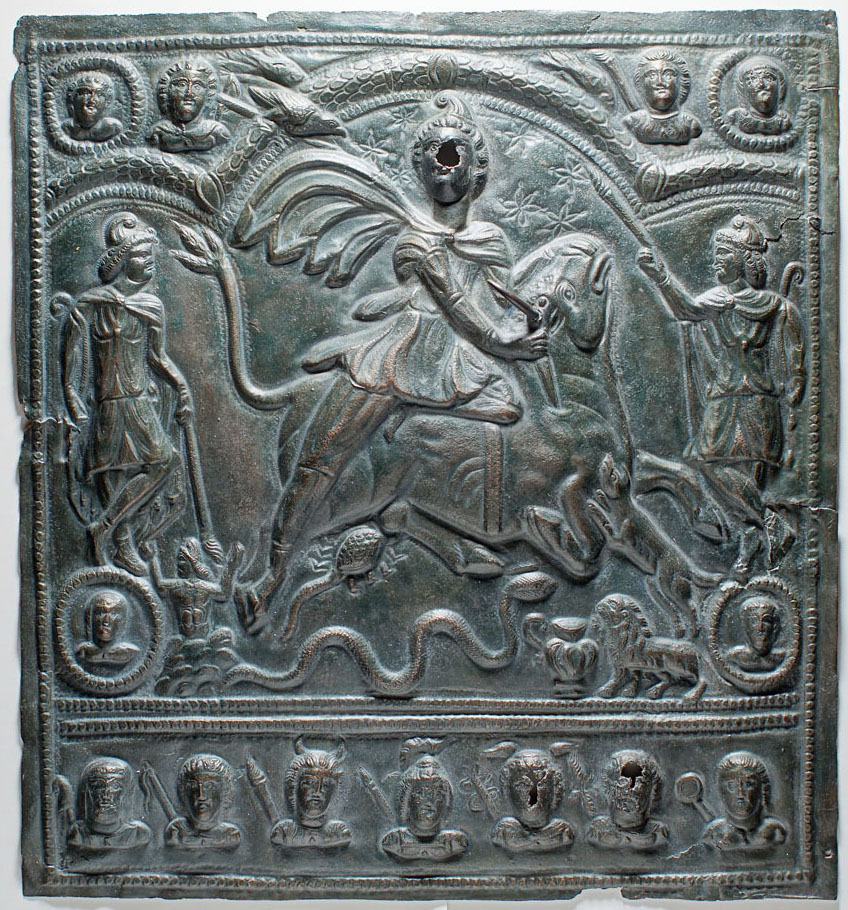
Szony's bronze plate shows Mithra slaying the bull and the seven planets with attributes at the bottom of the composition.

In Aquincum petrogenia, Mithras holds the usual dagger and torch as he emerges from the rock.
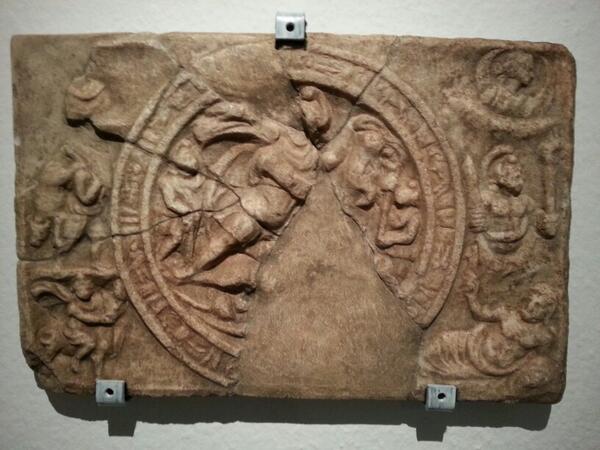
The relief of Mithras slaying the bull of Sisak includes the zodiac and multiple scenes from the myth of Mithras.
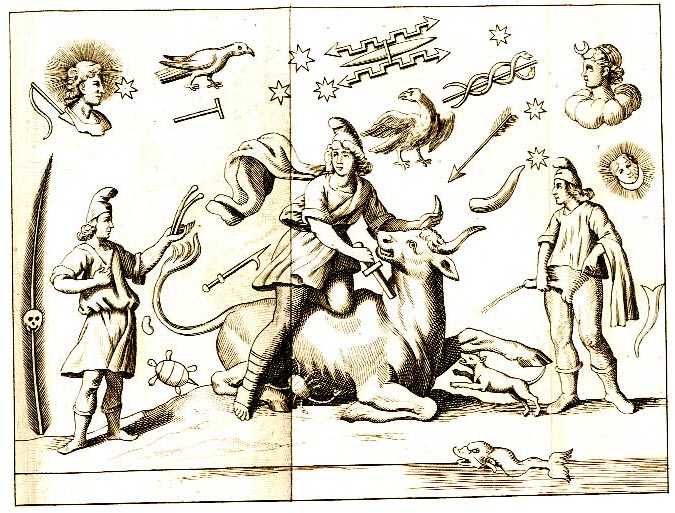
Engraving with cosmological and symbolic mithraic elements.

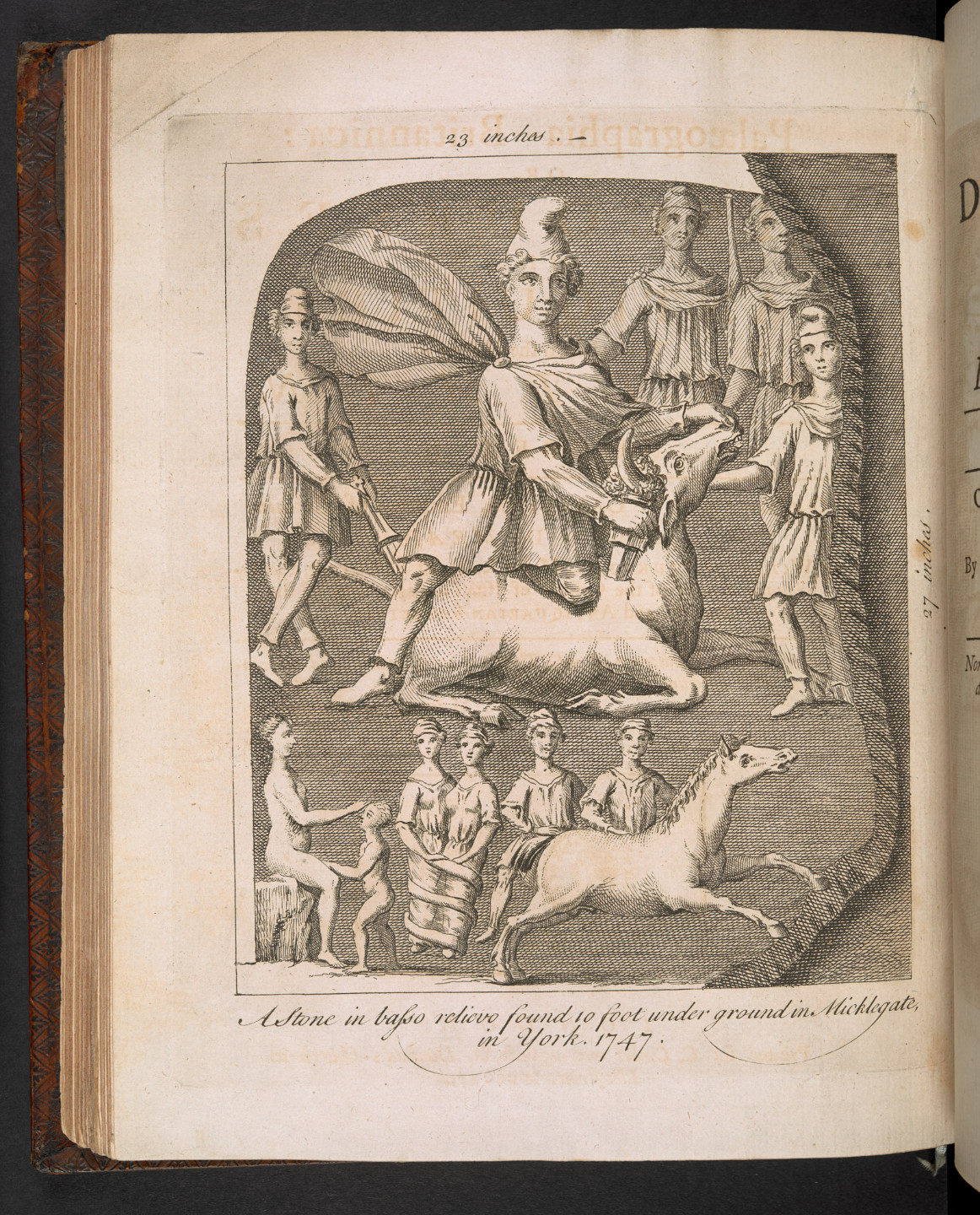
Palæographia Britannica: or, discourses on antiquities that relate to the history of Britain. Number III.
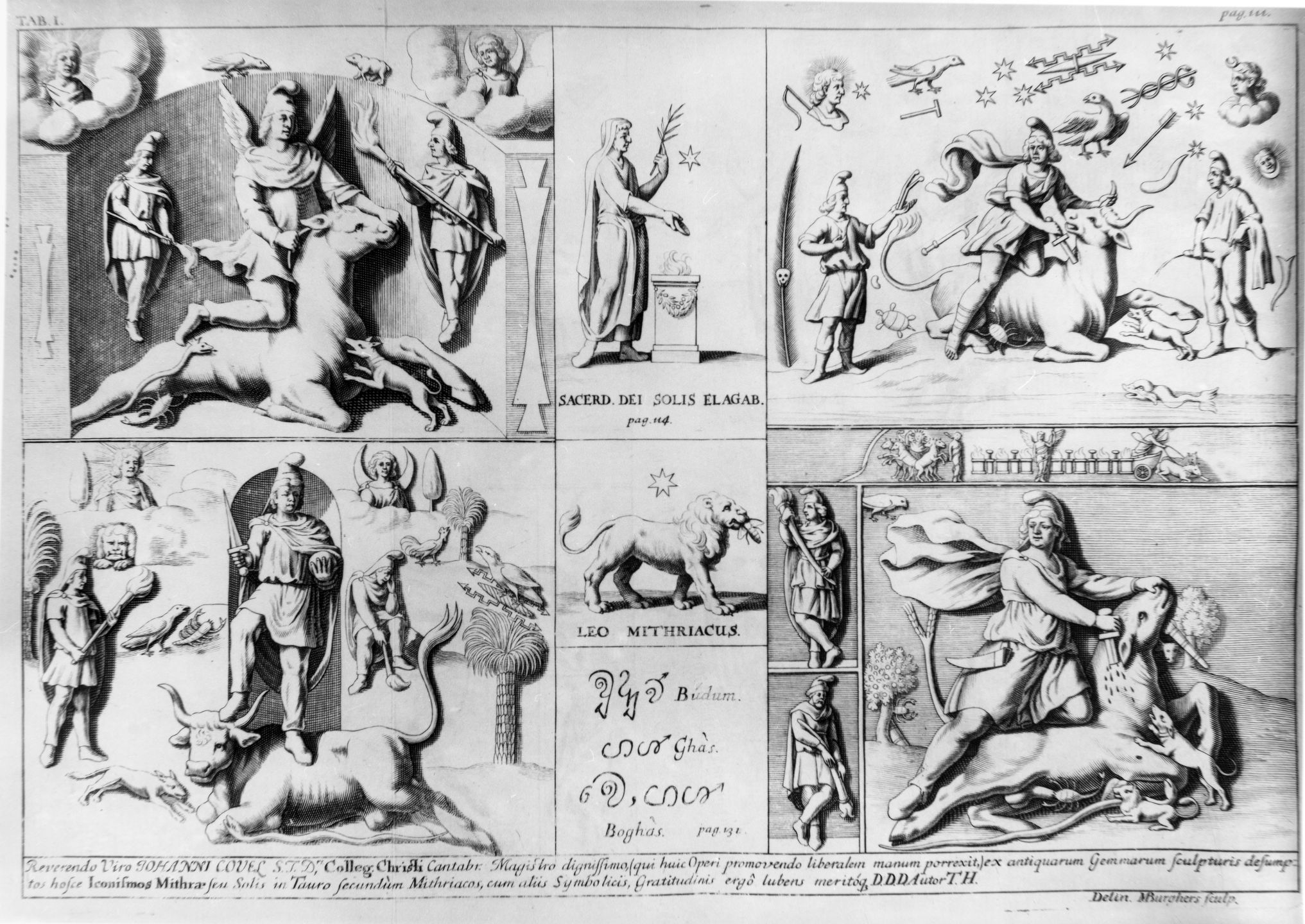
The folio depicts three tauroctonies and a Mithras Triumphantes standing on a bull with the globe in one hand and the dagger in the other.
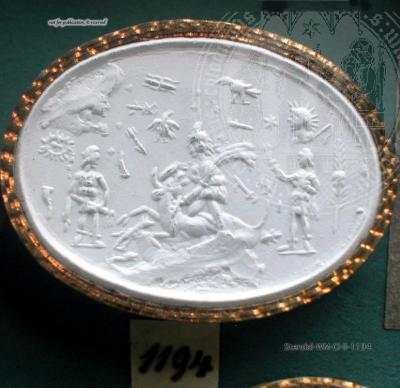
Glass paste imprint depicting the Tauroctony surrounded by symbolic figures.
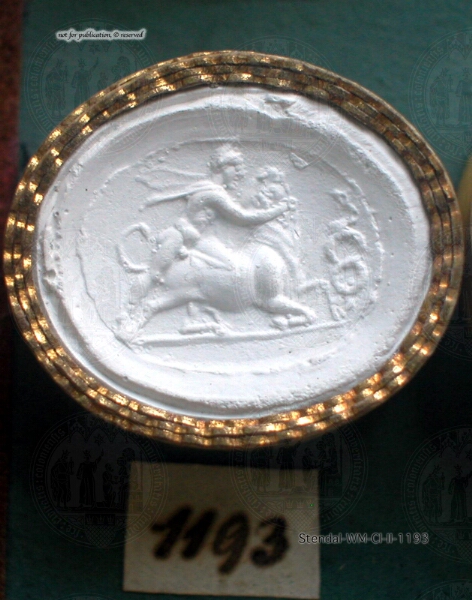
Imprint on glass of a Tauroctony exposed at Winckelmann Museum.
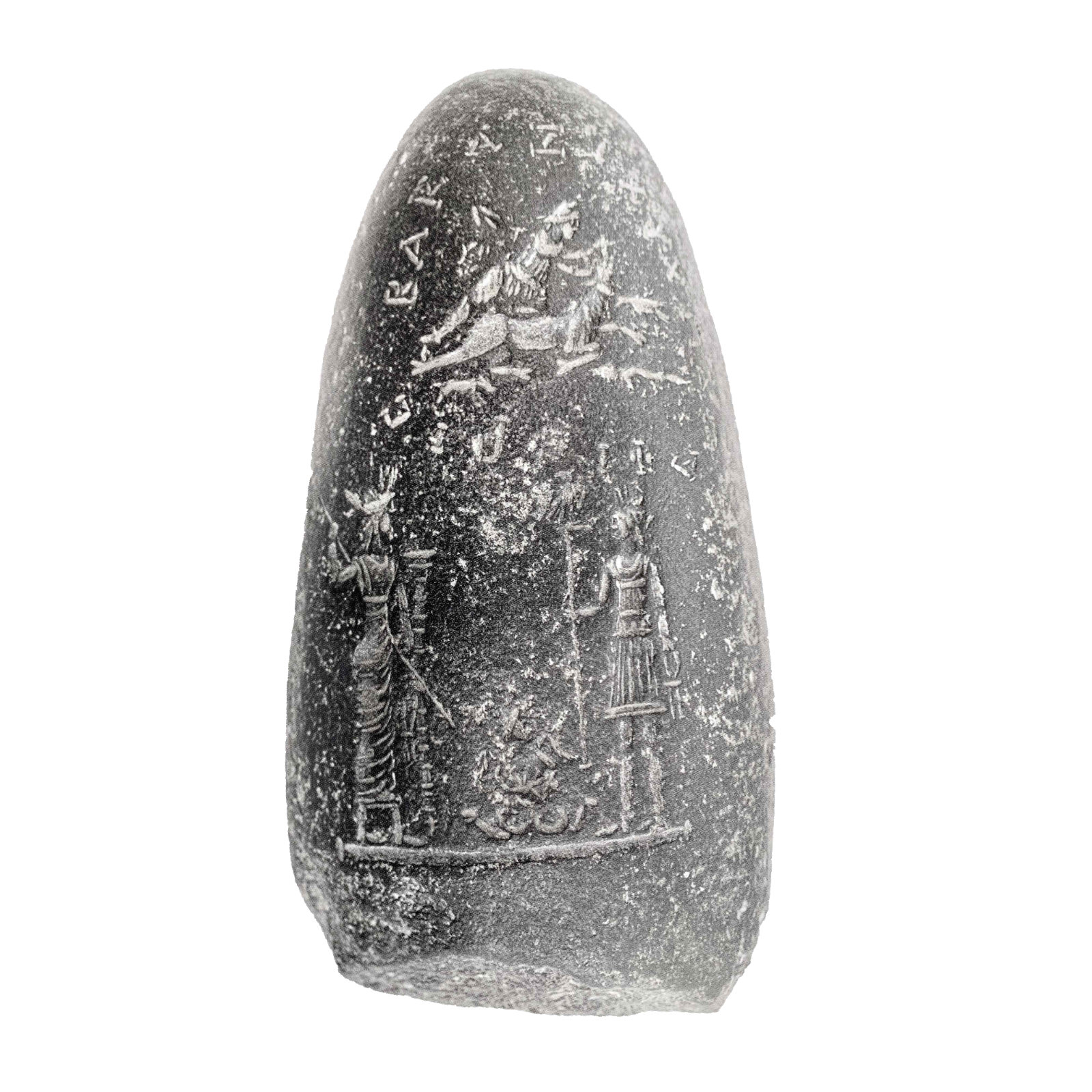
According to Christopher A. Faraone, the axe-head from Argos belong to a category of thunderstones reused as amulets.
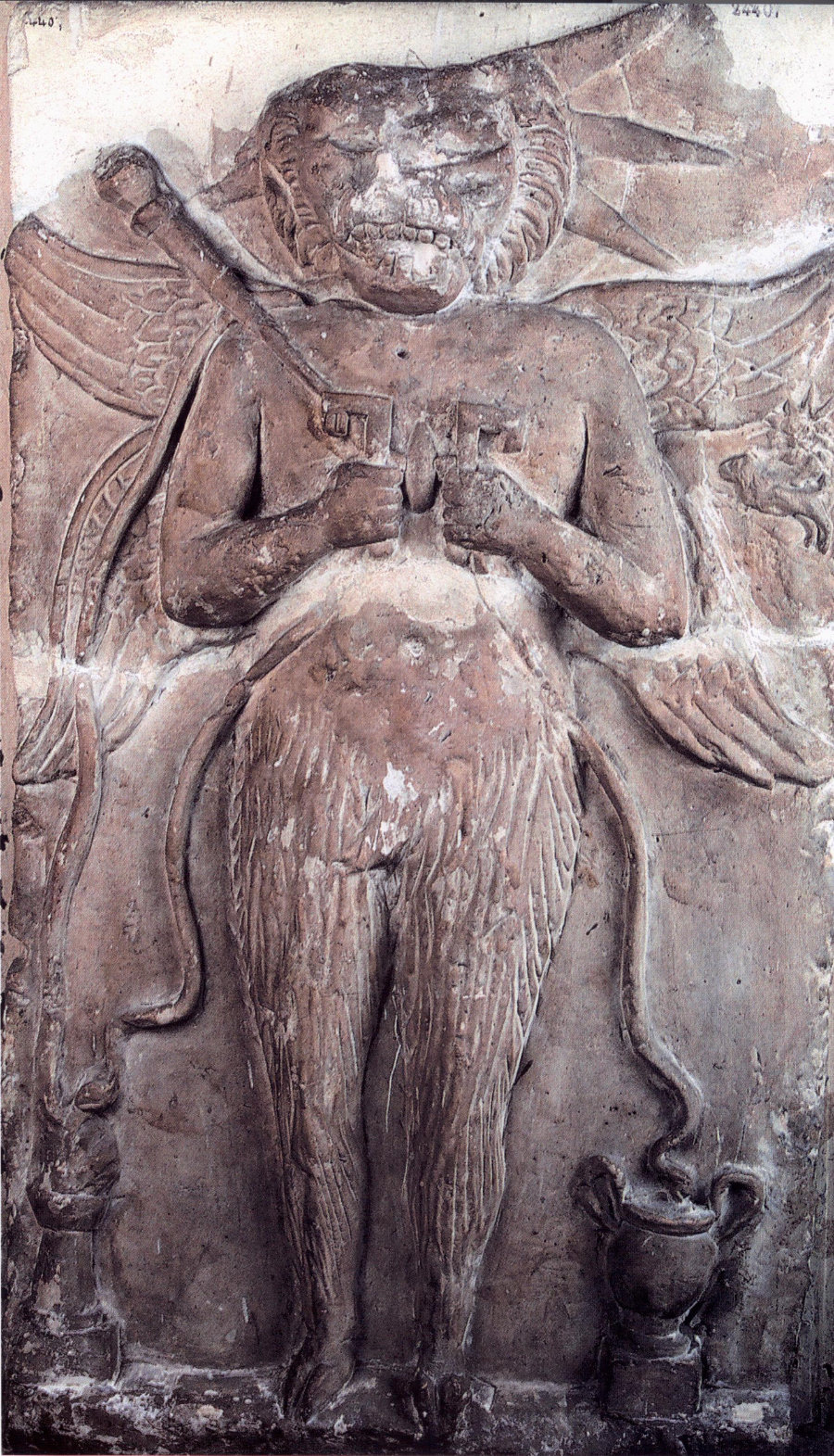
According to Pettazzoni Aion in general finds its iconographical origin in Egypt. Mithras must have been worshipped in Egypt in the third century B.C.
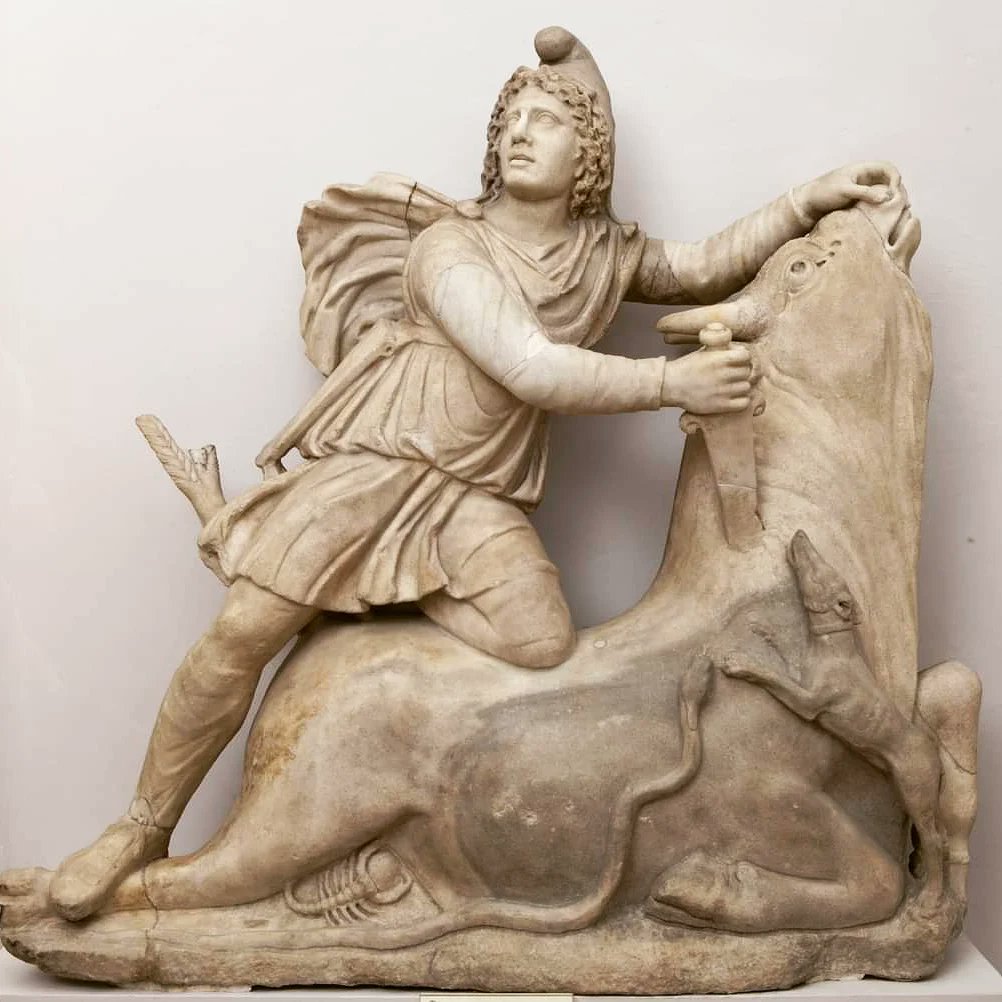
This sculpture of Mithras slaying the bull was bequeathed to the Republic of Venice in 1793 by Ambassador Girolamo Zulian.
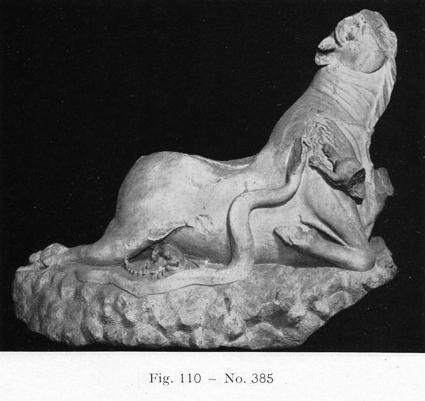
This sculpture of Mithras sacrificing the bull was found in the Quirinal and is now on display in the Musei Capitolini.
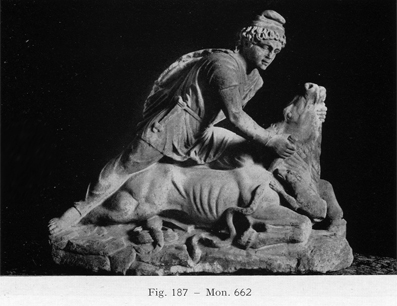
The marble Tauroctony of Asciano, Siena, was donated by Franz Cumont to the Academia Belgica, Rome.
