Your selection in monuments gave 306 results.
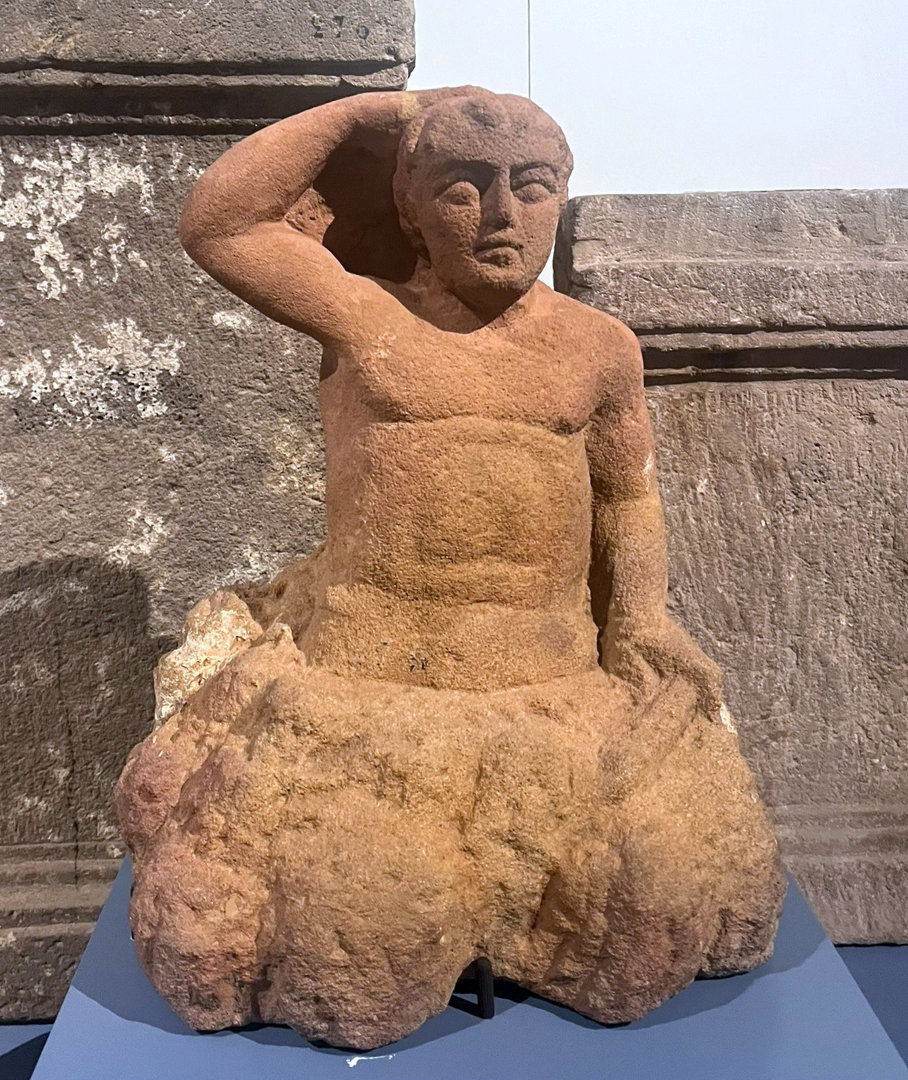
This sculpture of Mithras being born from a rock is unique in the position of the hands, one on his head, the other on the rock.
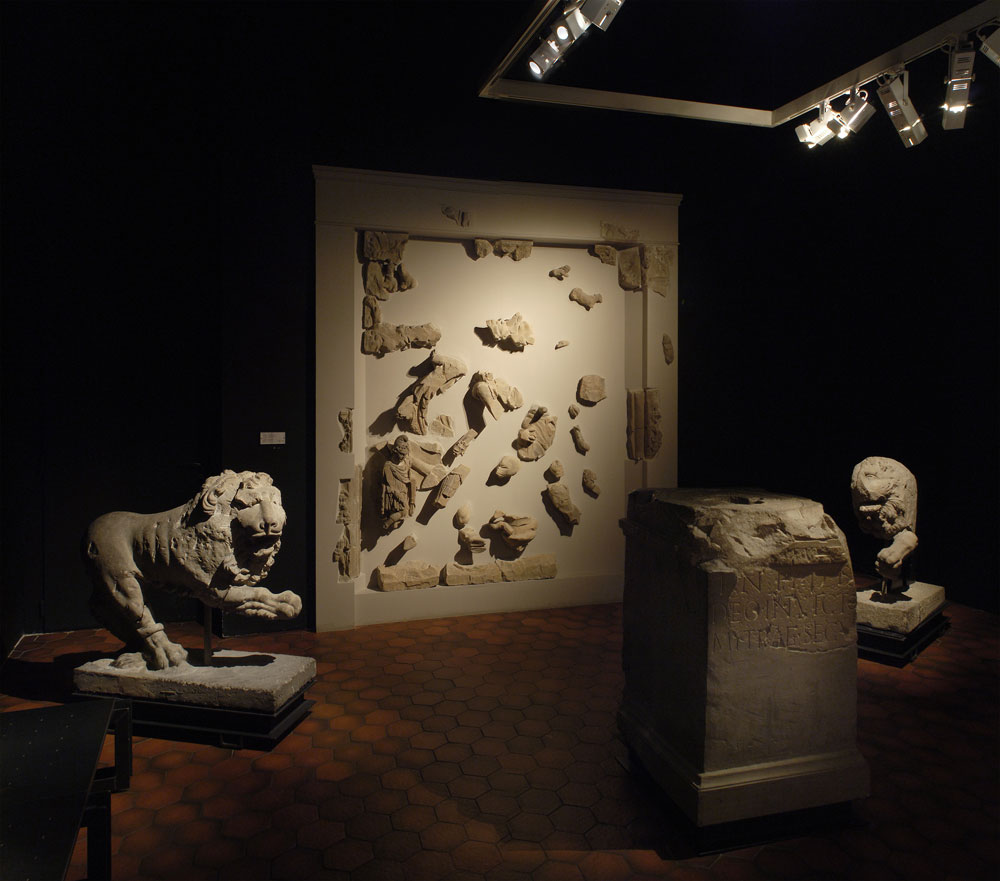
These fragments of a monumental relief of Mithras killing the bull from Koenigshoffen were reassembled and are now on display at the Musée Archéologique de Strasbourg.
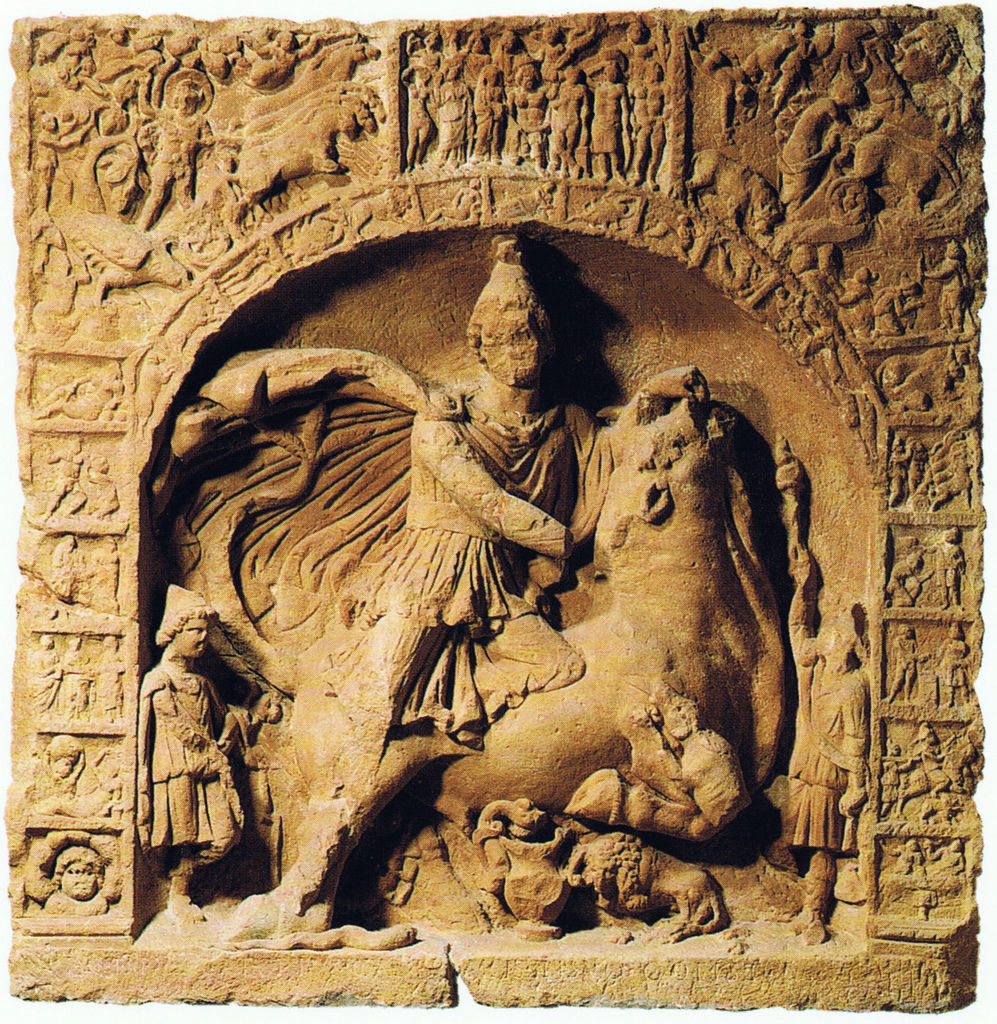
Franz Cumont considers the bas relief of Osterburken ’the most remarkable of all the monuments of the cult of Mithras found up to now’.
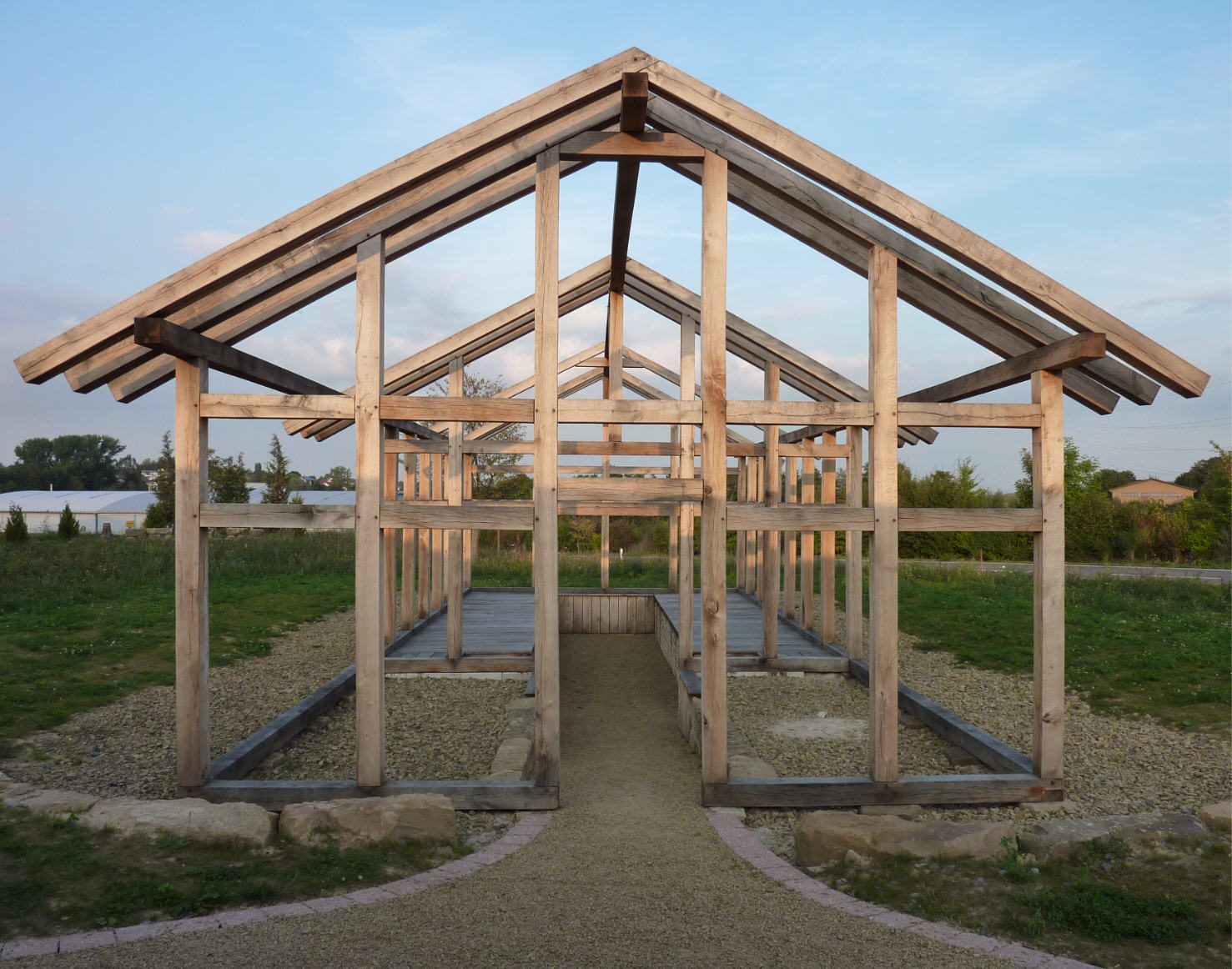
Two Mithras sanctuaries, which were located on the edge of the settlement, were excavated in Güglingen.
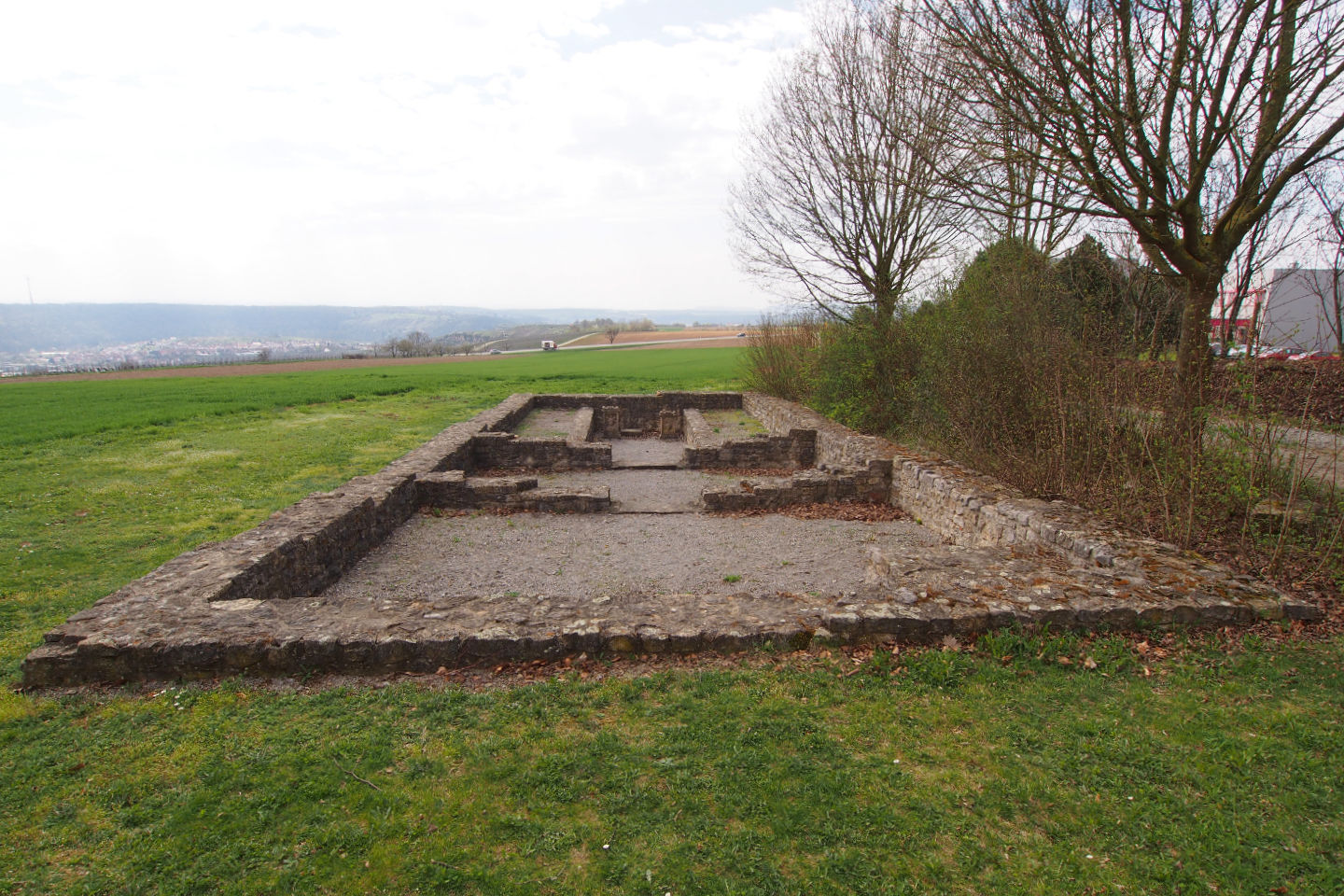
The two altars found in the Mithraeum of Mundelsheim one of Sol and the other of Luna, are exposed in situ.
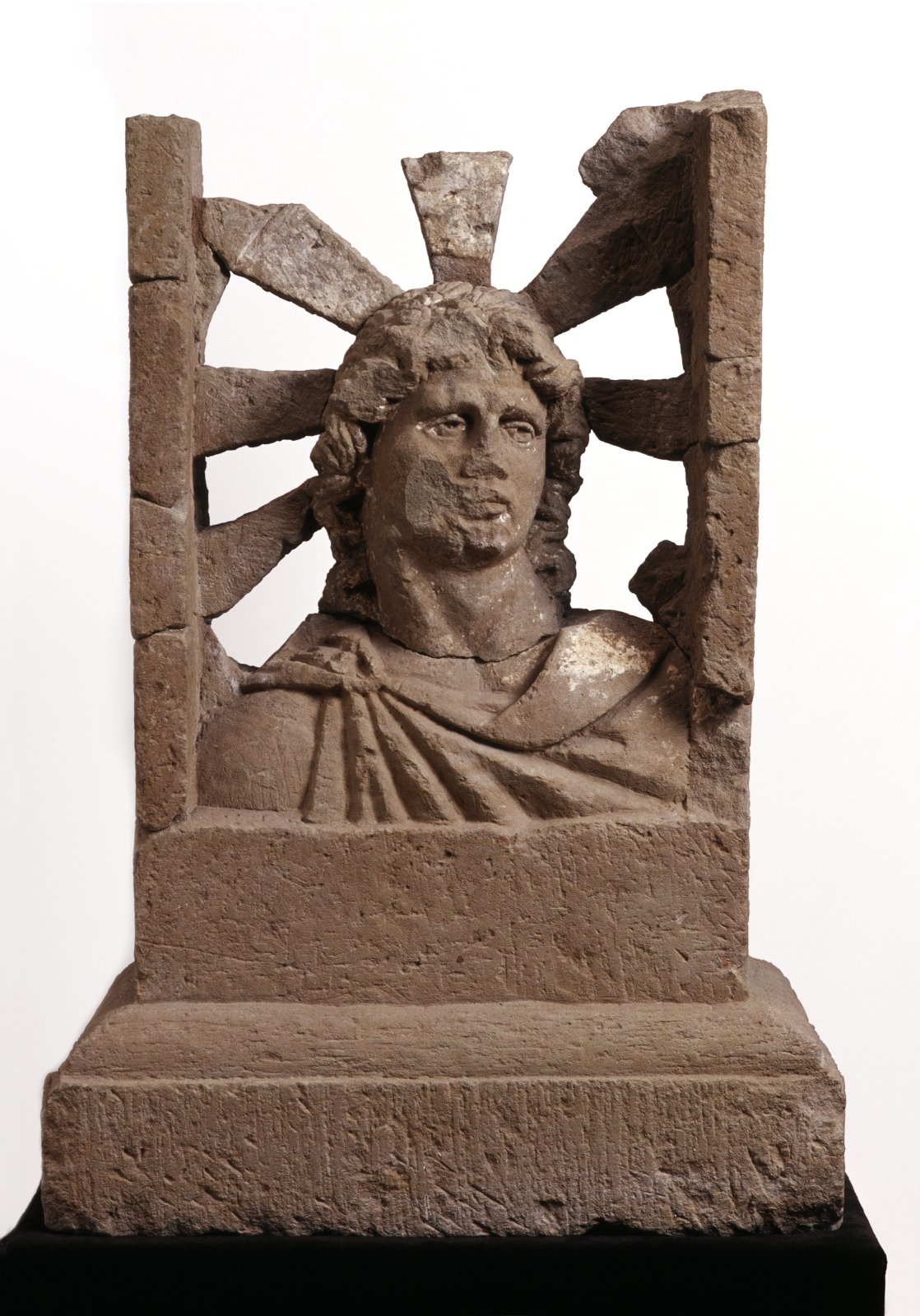
The altars of the gods of the Sun and Moon found in the Mithraeum of Mundelsheim wear openwork segments that could be lighten from behind.

The site of Orbe-Boscéaz, Switzerland, also known as Boscéay, is renowned for its mosaics and mithraic temple.
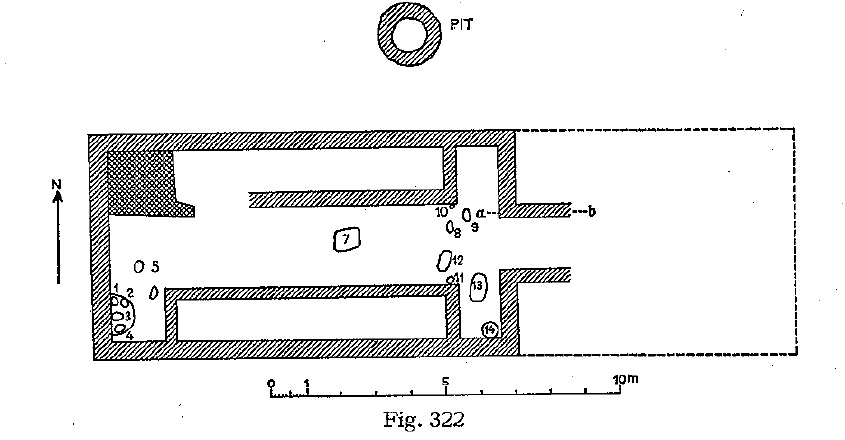
There are references to two places of worship from Dieburg, whereby the Mithraeum, discovered in 1926.

Mithraeum I in Güglingen, Landkreis Heilbronn (Baden-Württemberg).
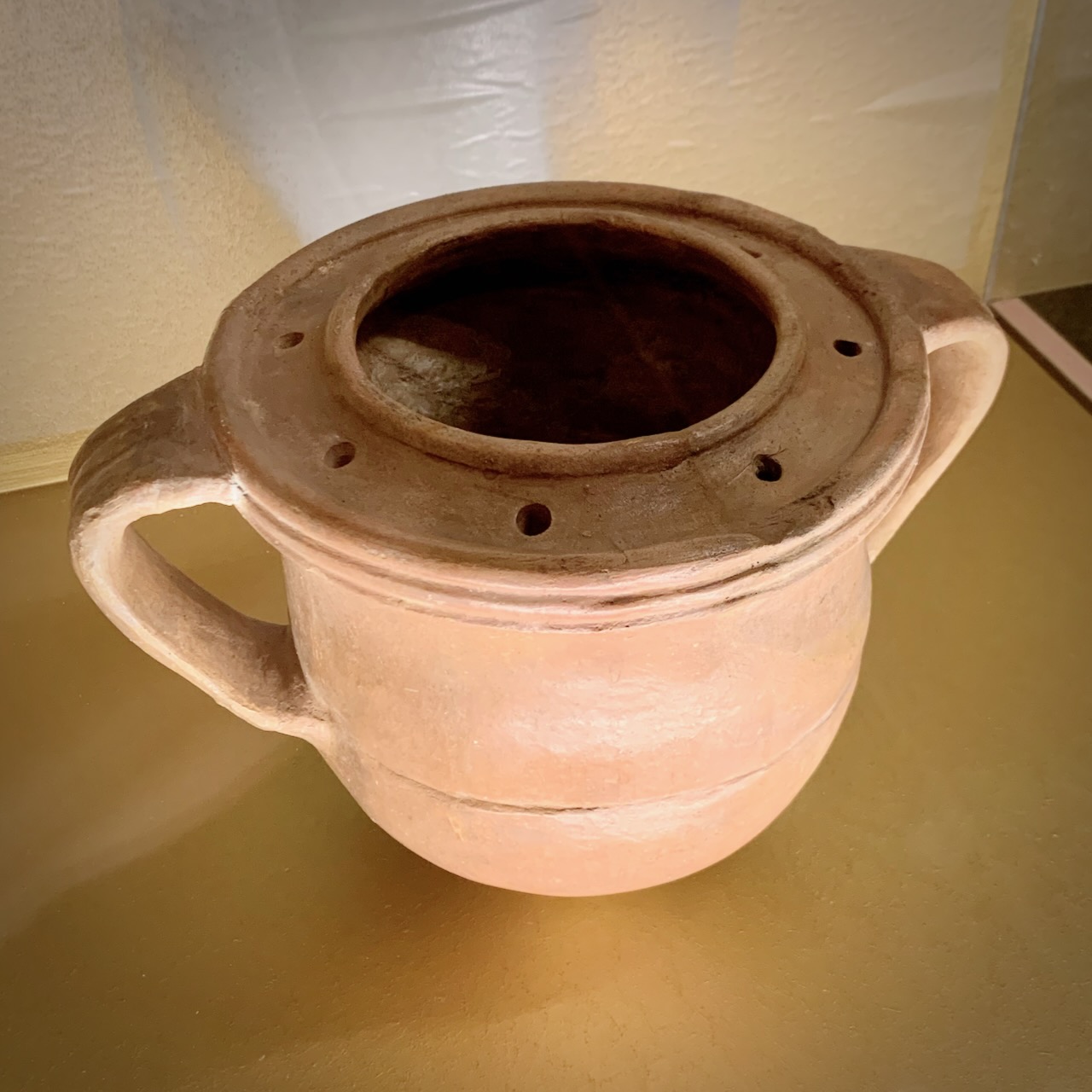
The vessel to burn incense from the Mithraeum of Dieburg is similar to those found in other Roman cities of Germany.
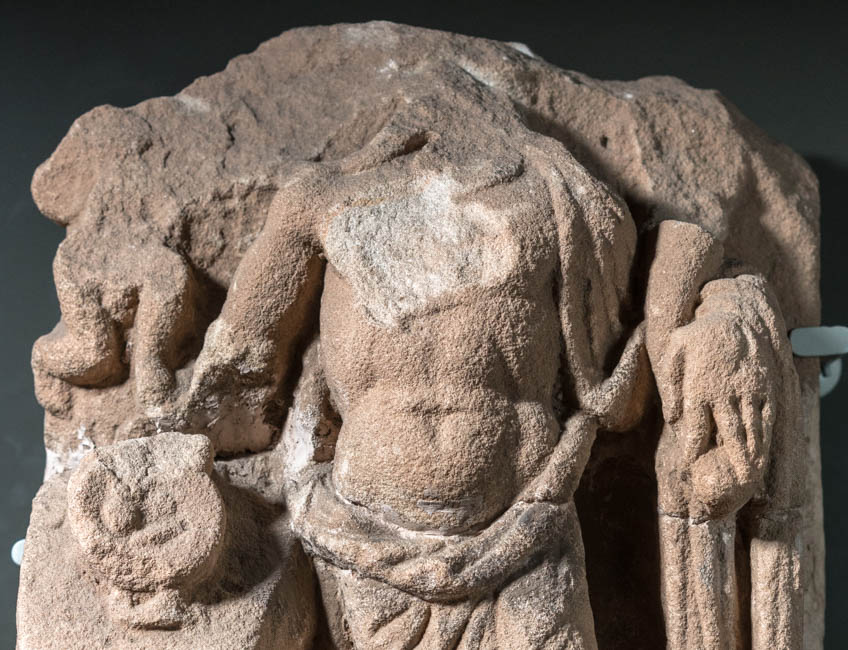
A standing half naked man makes offerings to an altar while holding a cornucopia in his other hand.
This small monument without inscription was found in Bingem, Germany.
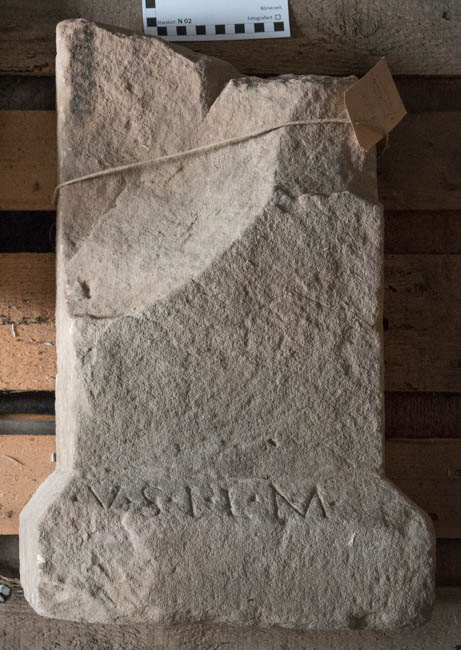
These fragmentary monuments, one with an inscription, were found in the Gimmeldingen mithraeum.
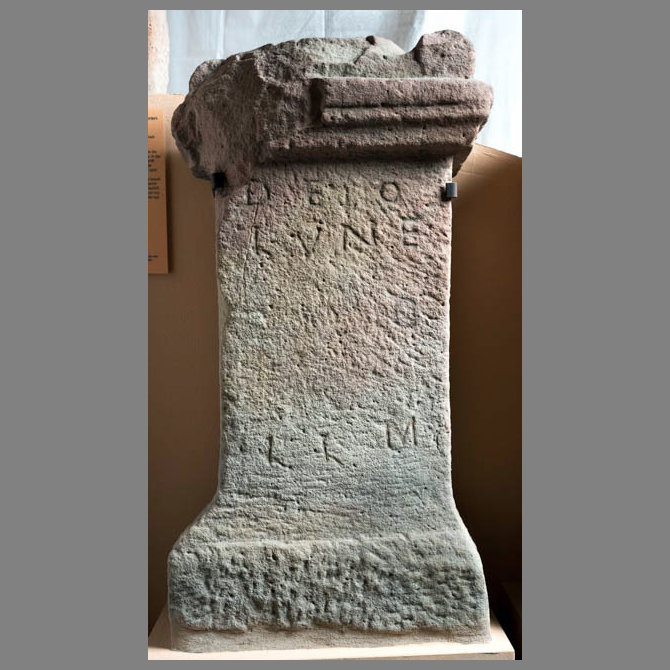
This sandstone altar was dedicated to Luna, who is mentioned as a male deity.
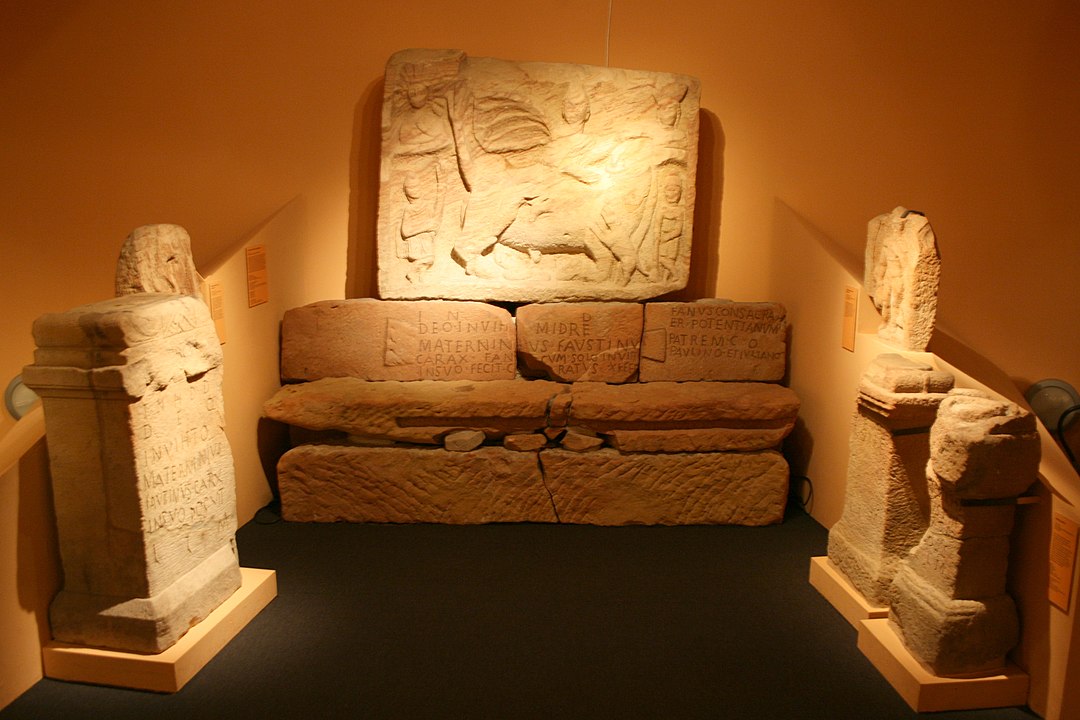
The few remains of the Mithraeum of Gimmeldingen are preserved at the Historical Museum of the Palatinate, in Speyer, Germany.
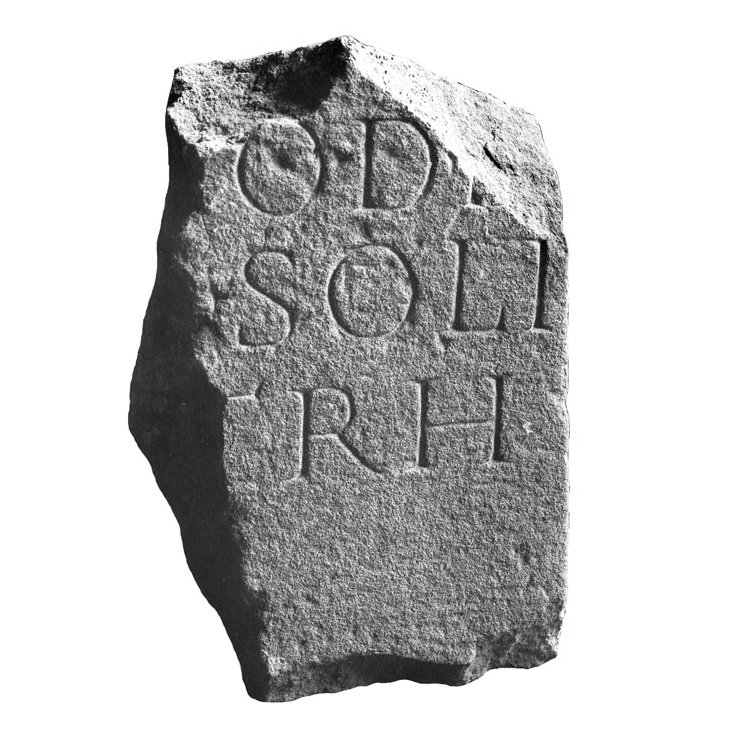
This monument with an inscription to the god Sol Mithras was found in front of the cathedral of Speyer during some sewer works.
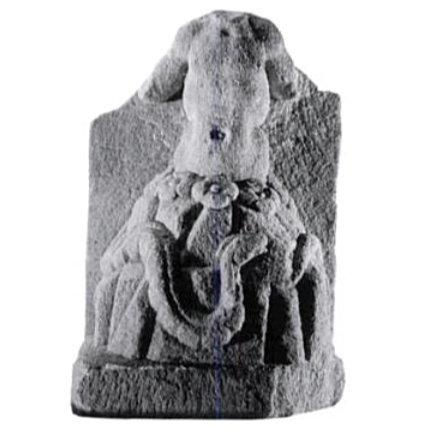
This sculpture of Mithras born from a rock was found in 1922 together with two altars in what was probably a mithraeum.
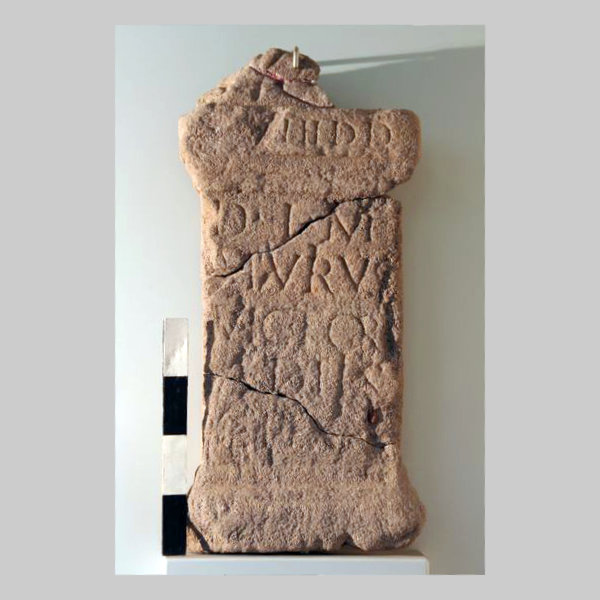
Marius Victor, according to the inscription on the monument, erected this monument to Mithras ’when Philip and Titianus were consuls’.
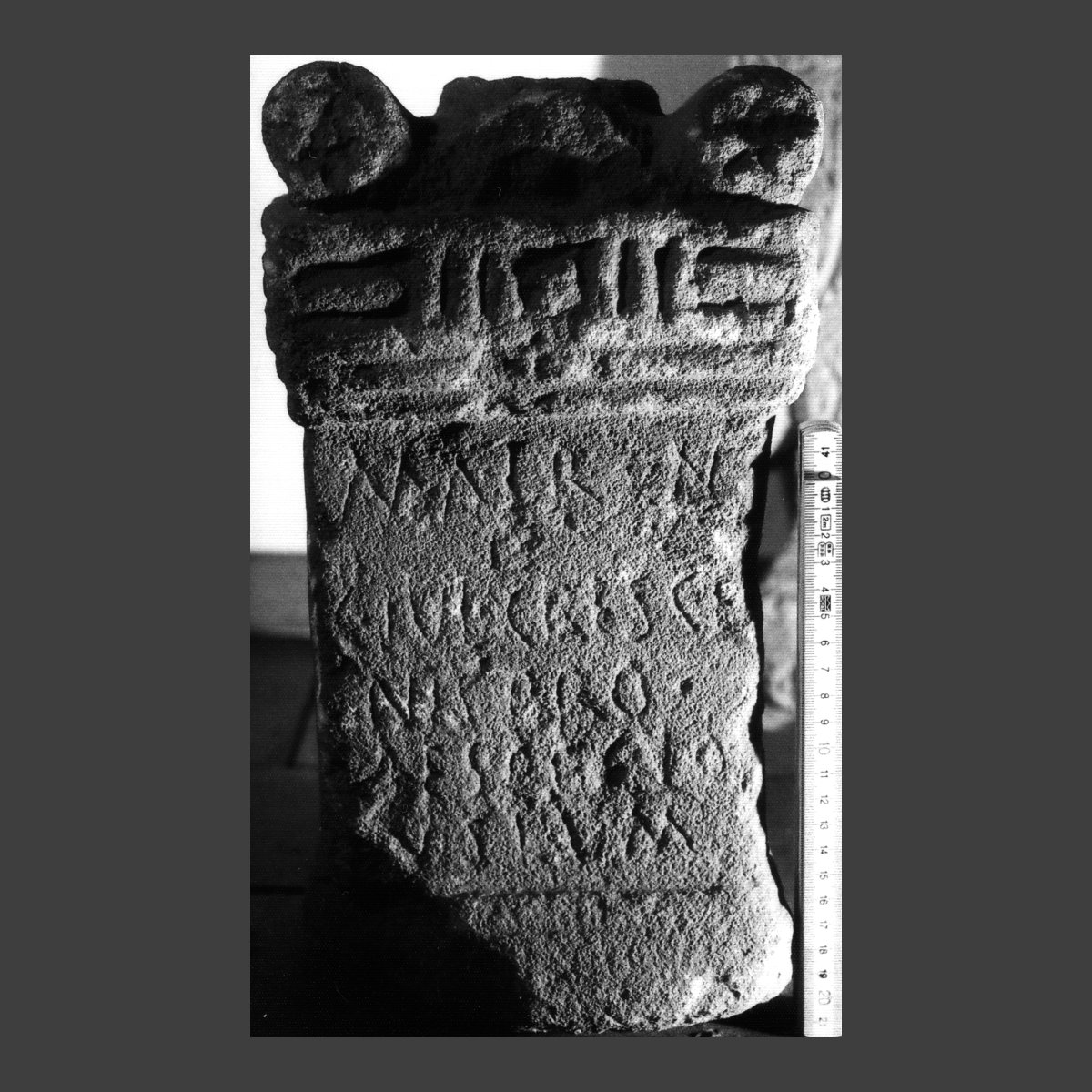
This fragmented altar of a certain Caius Iulius Crescens, found in the Mithraeum of Friedberg, bears an inscription to the Mother Goddesses.
In the Mithraeum of Gross Gerau, discovered in 1989, a statue of Mercury, a lion and an altar were found.
