Your selection in monuments gave 44 results.

A fragment from the Mithraeum at Pons Saravi (modern Saarburg) in Belgica, showing a standing naked man with a bird, possibly a cock, on his left arm, tentatively identified as Mercury, with the head, hands, and parts of the legs lost.
The upper part of a dressed male figure from the Mithraeum at Pons Saravi (modern Saarburg) in Belgica, holding a wreath or broad ring in the right hand and a round object in the other, tentatively identified as Aion but without sufficient evidence.
The right lower corner of a relief fragment from the Mithraeum at Pons Saravi (modern Saarburg) in Belgica, showing a standing naked man holding his hands crosswise on his breast, with the upper part and head lost.
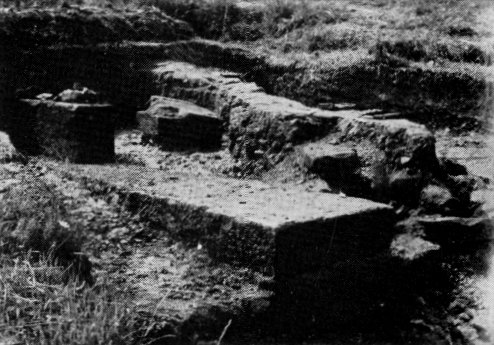
The Mackwiller Mithraeum was built in the middle of the 2nd century, during the reign of Antoninus the Pious, on the site of a spring already worshipped by the natives.
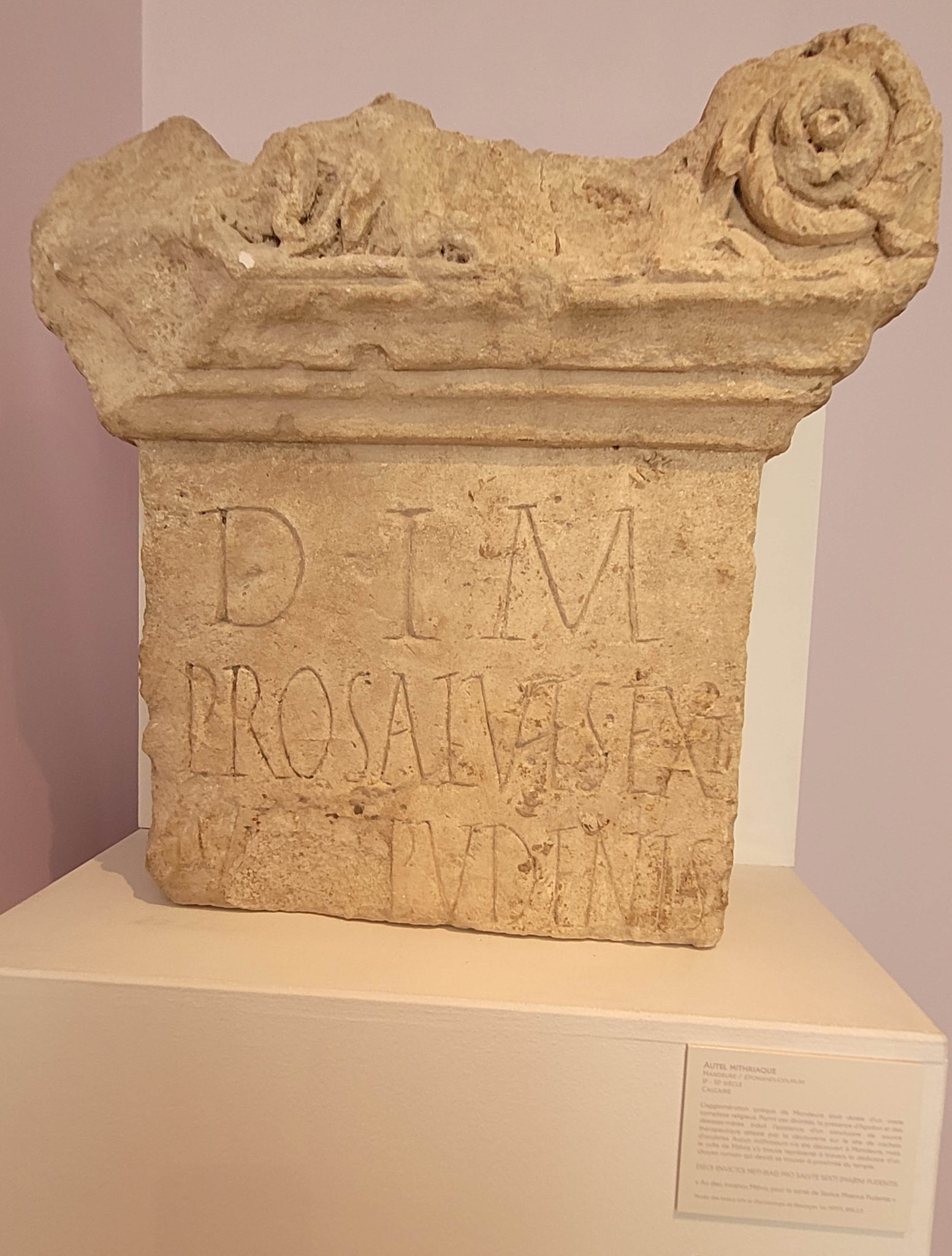
Stela dedicated to Mithras Invictus, found in 1895–1896 at Epamantodurum (modern Mandeure), in the territory of the civitas Sequanorum (Gallia Belgica). The inscription records a vow to Mithras Invictus made for the welfare of Sextus Maenius Pudens.
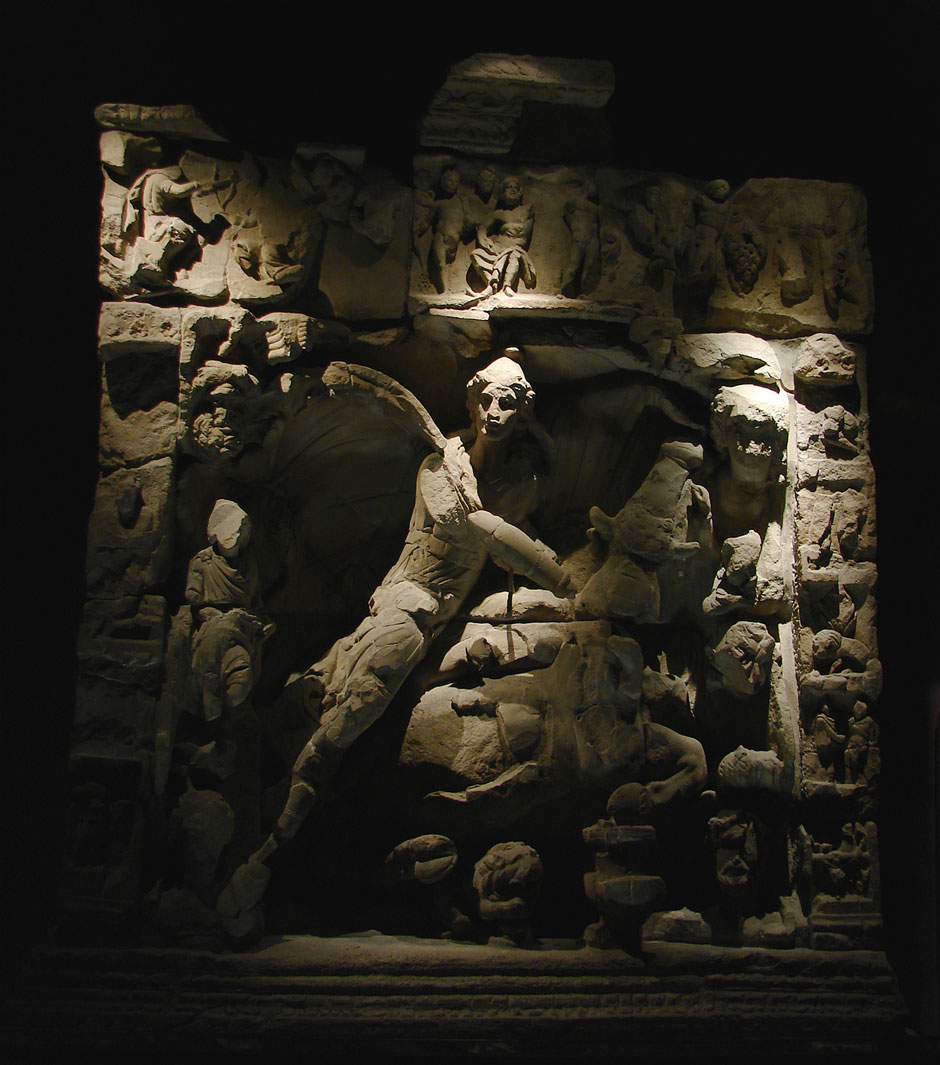
The Tauroctony of Saarbourg (Sarrebourg, ancient Pons Sarravi), France, contains most of Mithras deeds known in a single relief.
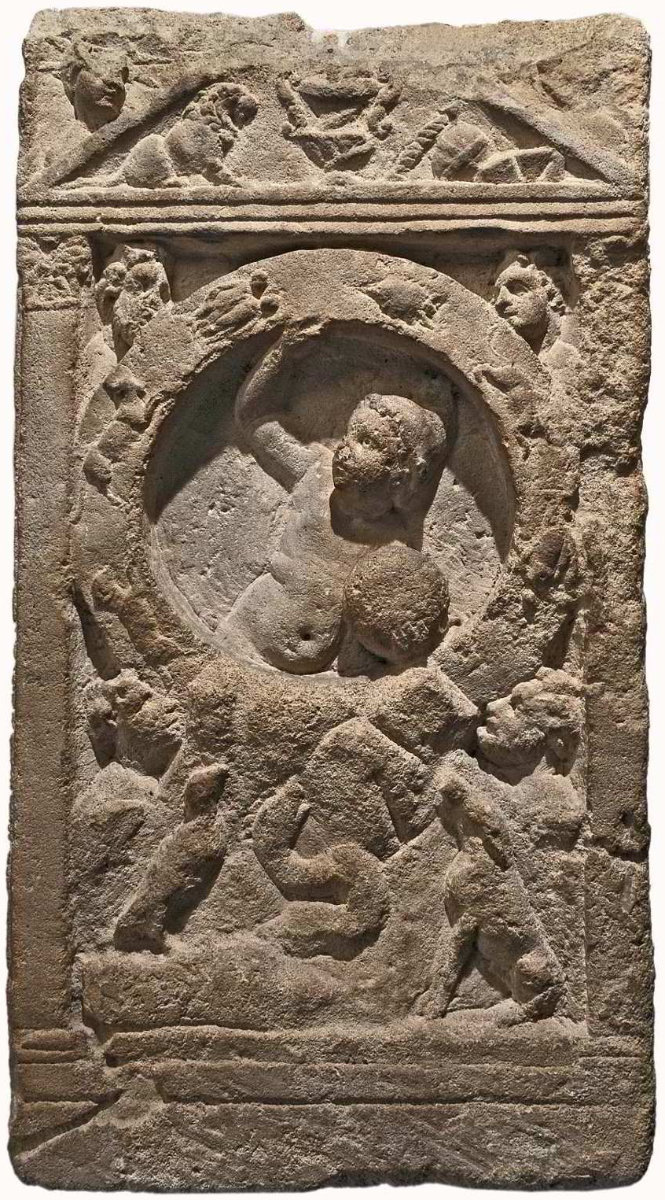
The relief depicts the birth of Mithras, holding a globe, surrounded by the zodiac.
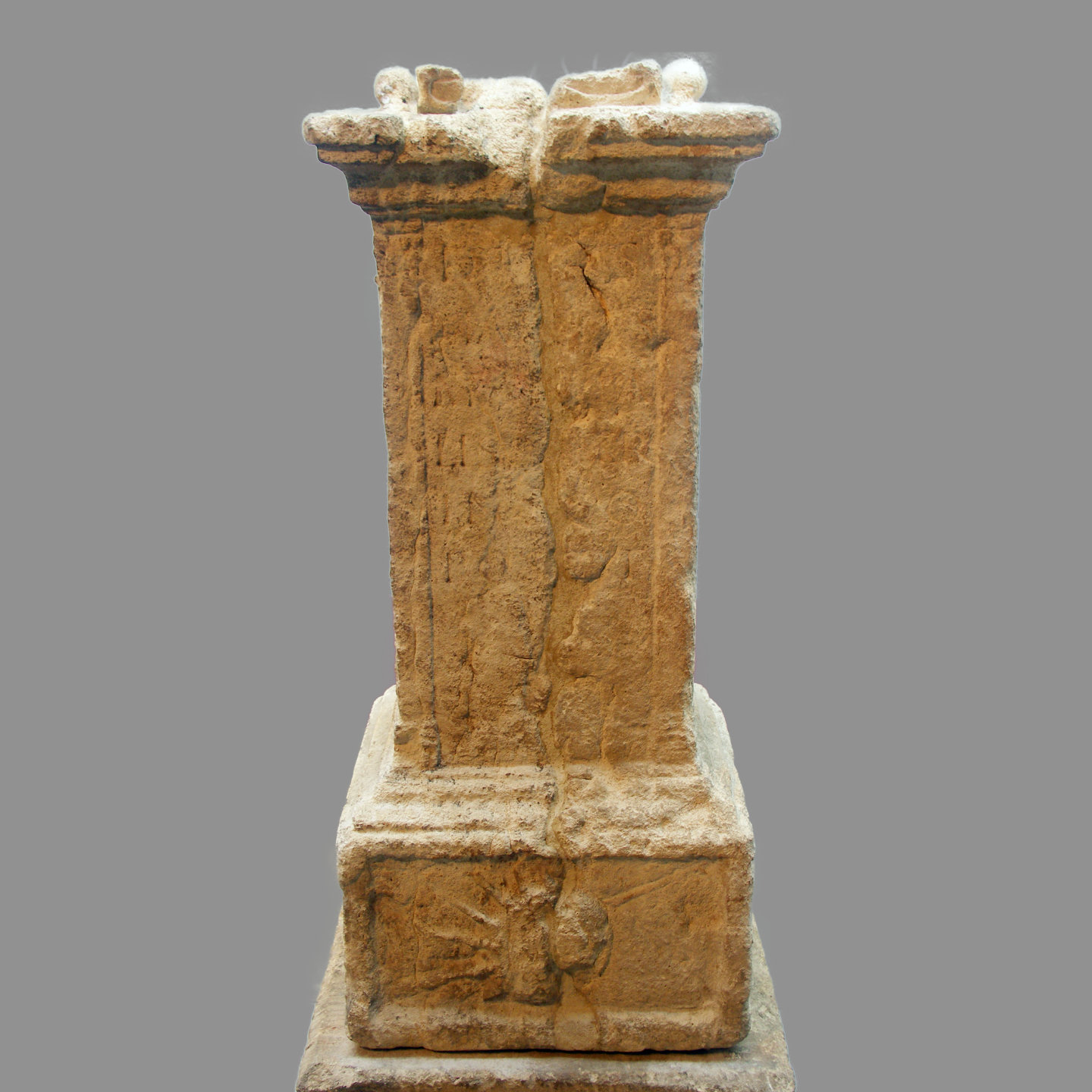
This stone altar fround in Altbachtal bears an inscription by a certain Martius Martialis.
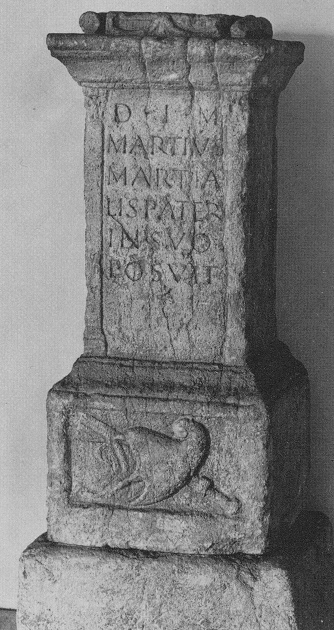
The altar with a Phrygian cap and a dagger from Trier was erected by a Pater called Martius Martialis.
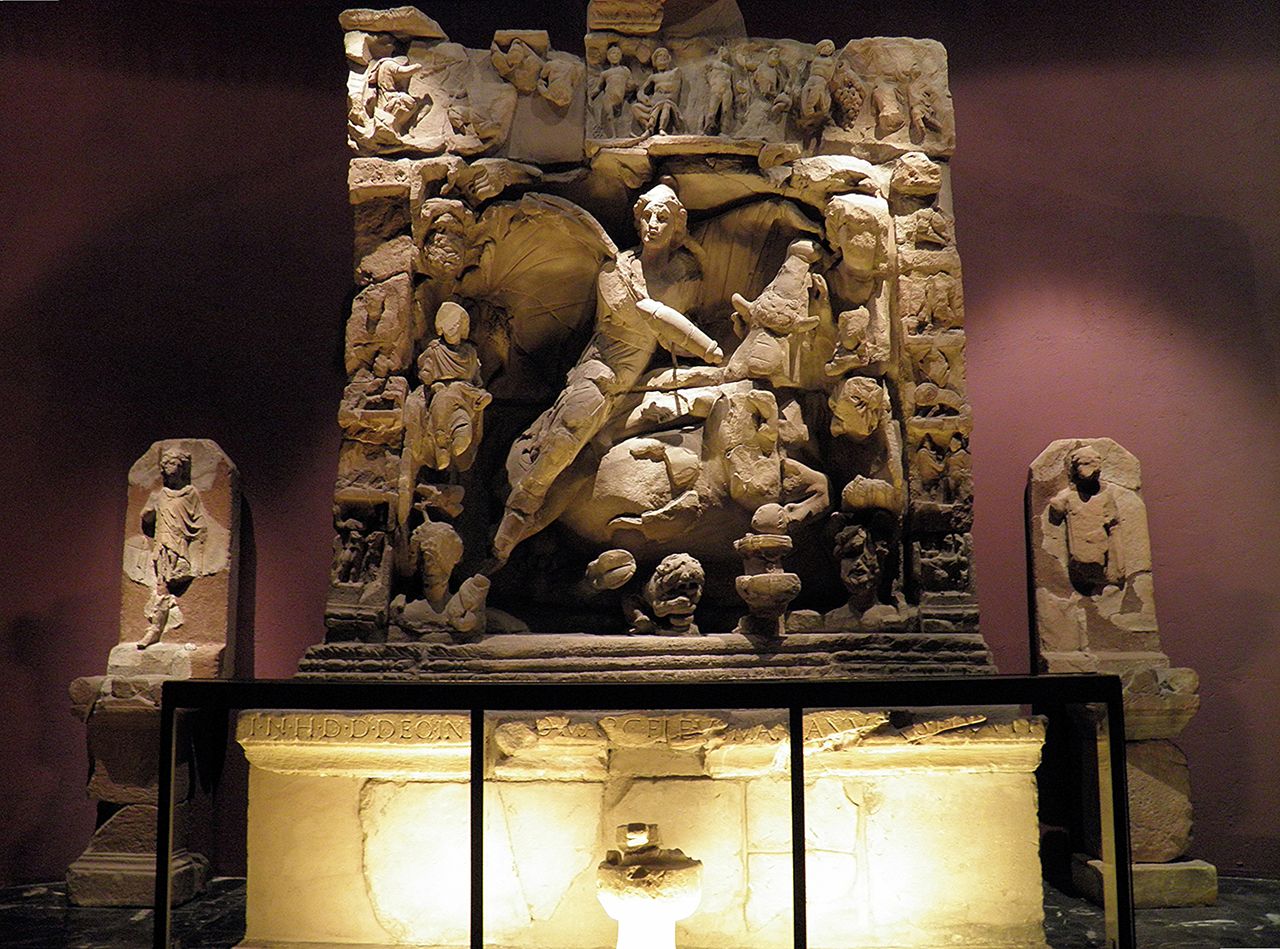
The base of these sandstone reliefs bears an inscription referring to a certain Marcellius Marianus.
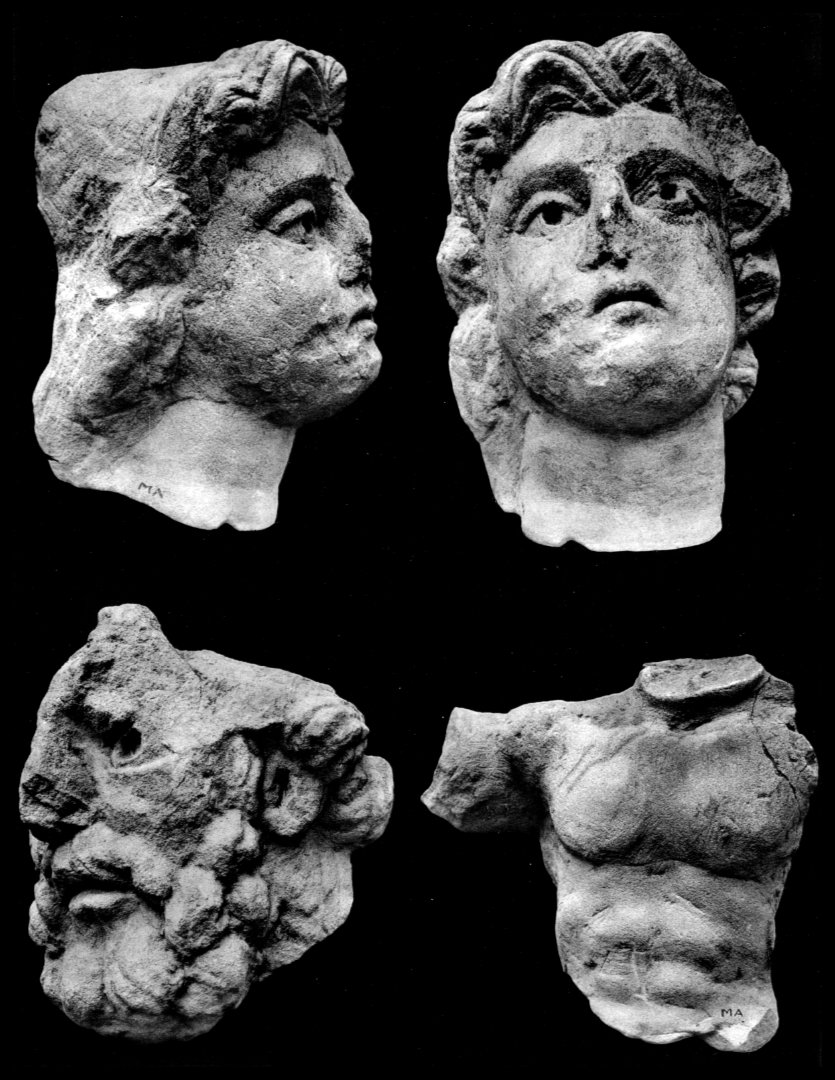
This fragment of the head of a young Mithras is one of the finds made during the excavations carried out by Jean-Jacques Hatt at Mackwiller, France, in 1955.

This rock-cut Mithraeum occupies the north-eastern slope of the Grand-Rebberg at Saarburg, featuring a stepped entrance, a sloping central aisle, lateral benches, and a spring-fed water conduit.
Two altars dedicated to Sucellus and Nantosvelta found near the Sarrebourg Mithraeum.

Limestone altar from the Trier baths, carved on four sides with a lion and serpent, flanked by Sol and Luna, and likely linked to a Mithraic context involving Hekate.
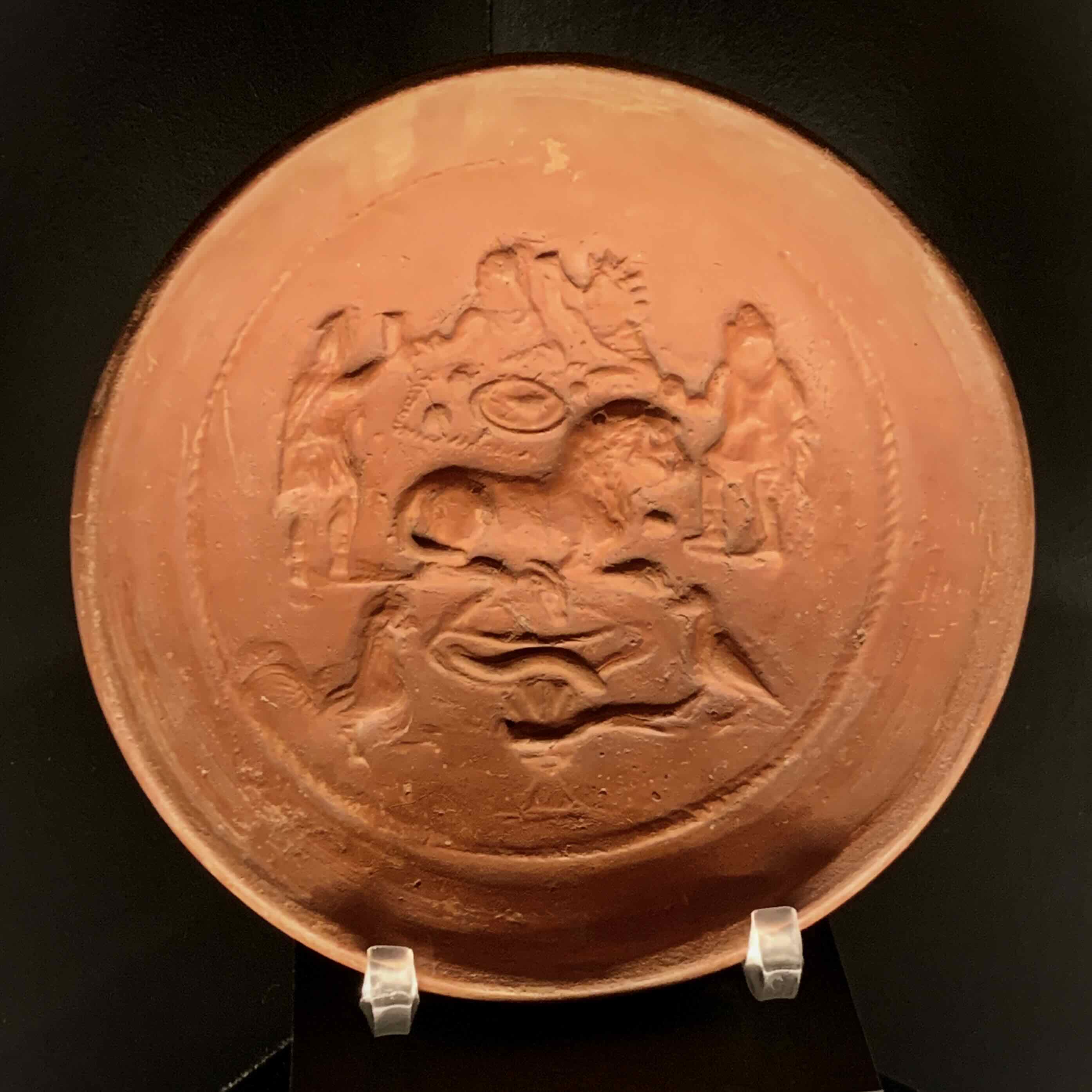
This terra sigillata was found in 1926 in a grave on the Roman cemetery of St. Matthias, Trier. An eyelet indicates that it could have been hung on a wall.
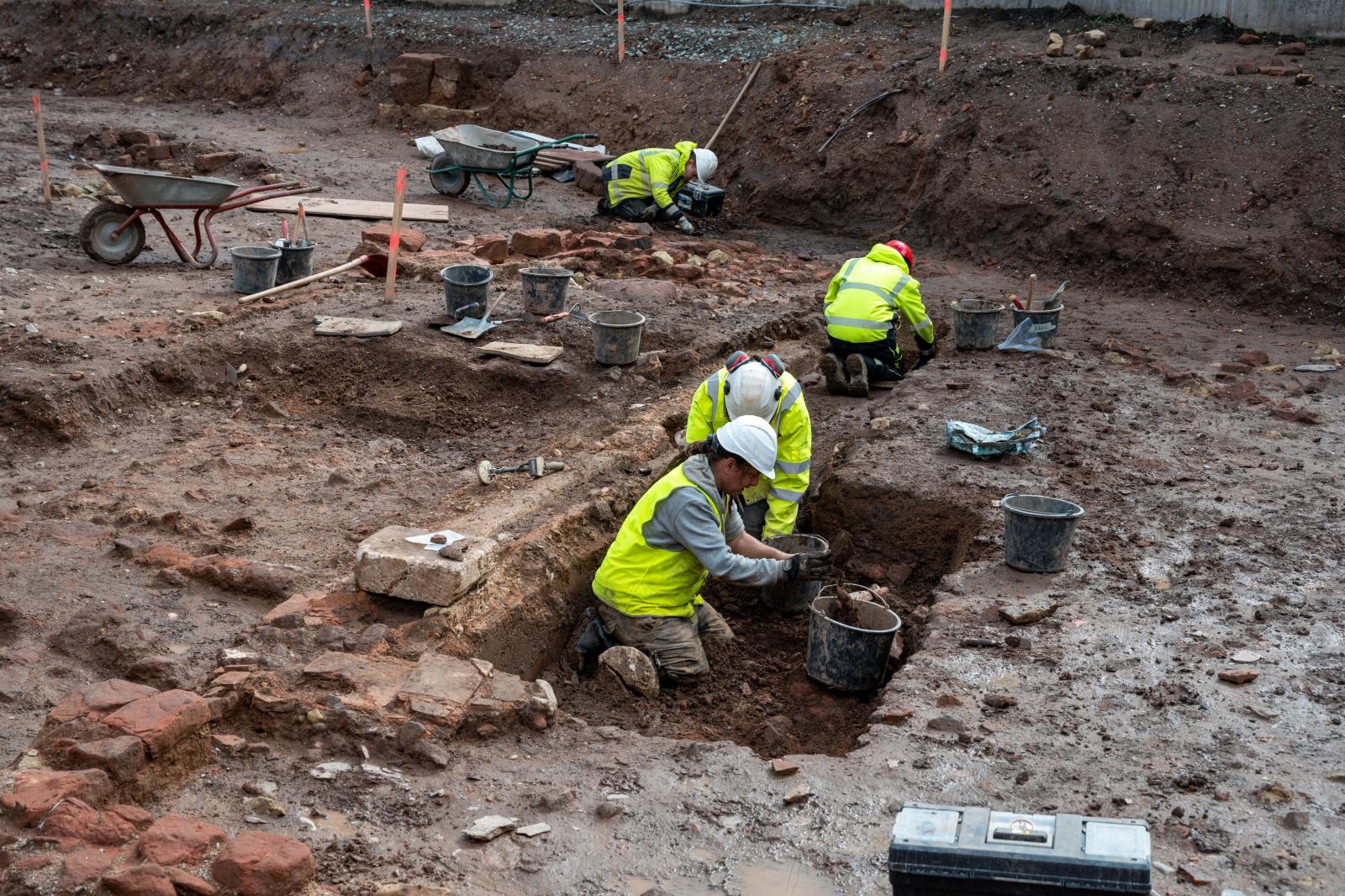
The Trier Mithräum was discovered during work on the city’s new fire station. The findings included a Cautes limestone relief.
This monument is too fragmentary to recod it definitely as a Mithras-monument.
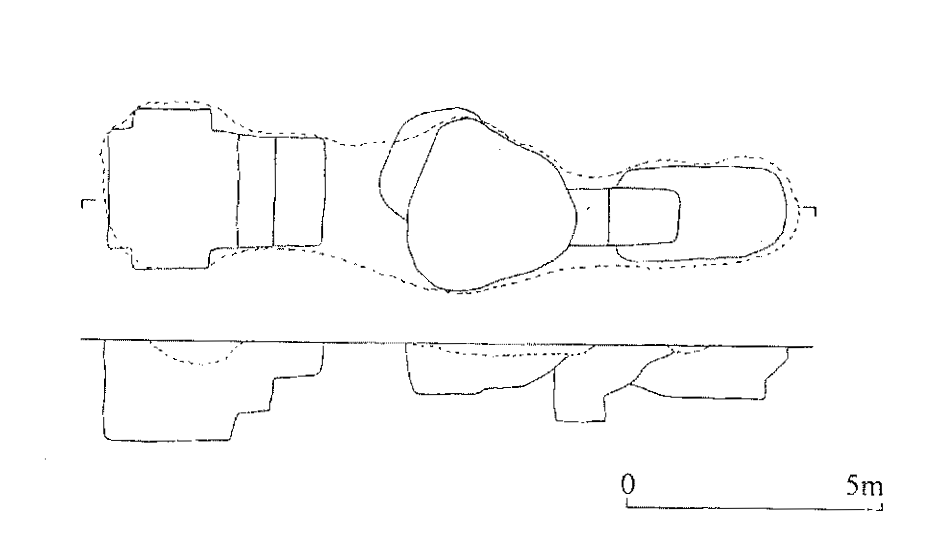
The temple contained hundreds of ceramic vessels and animal bones, which may indicated that a grand Mithraic feast was celebrated before its closing.
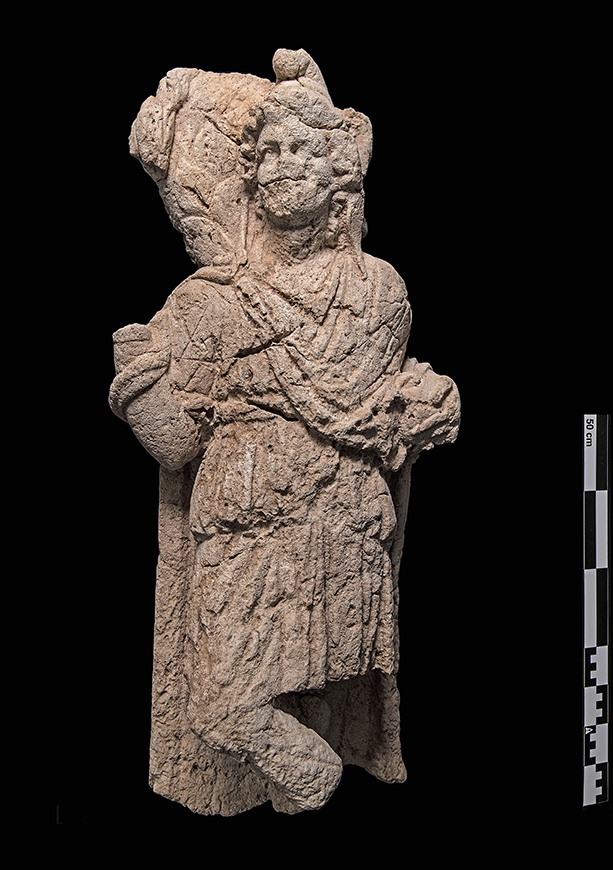
This remarkable relief by Cautes was found in what appears to be a mithraeum in Trier.
