Your selection in monuments gave 190 results.
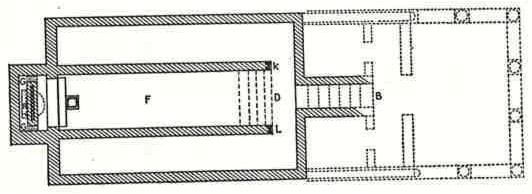
First Mithraic sanctuary discovered at Heddernheim (ancient Nida) in 1826, with finds preserved in the Städtisches Museum at Wiesbaden.

Large apsidal hall with podium discovered at Uruk-Warka, once interpreted as a possible Mithraic sanctuary.
The site of Ay-Todor in Crimea revealed a Roman camp, a temple with votive offerings, and a Mithraeum.
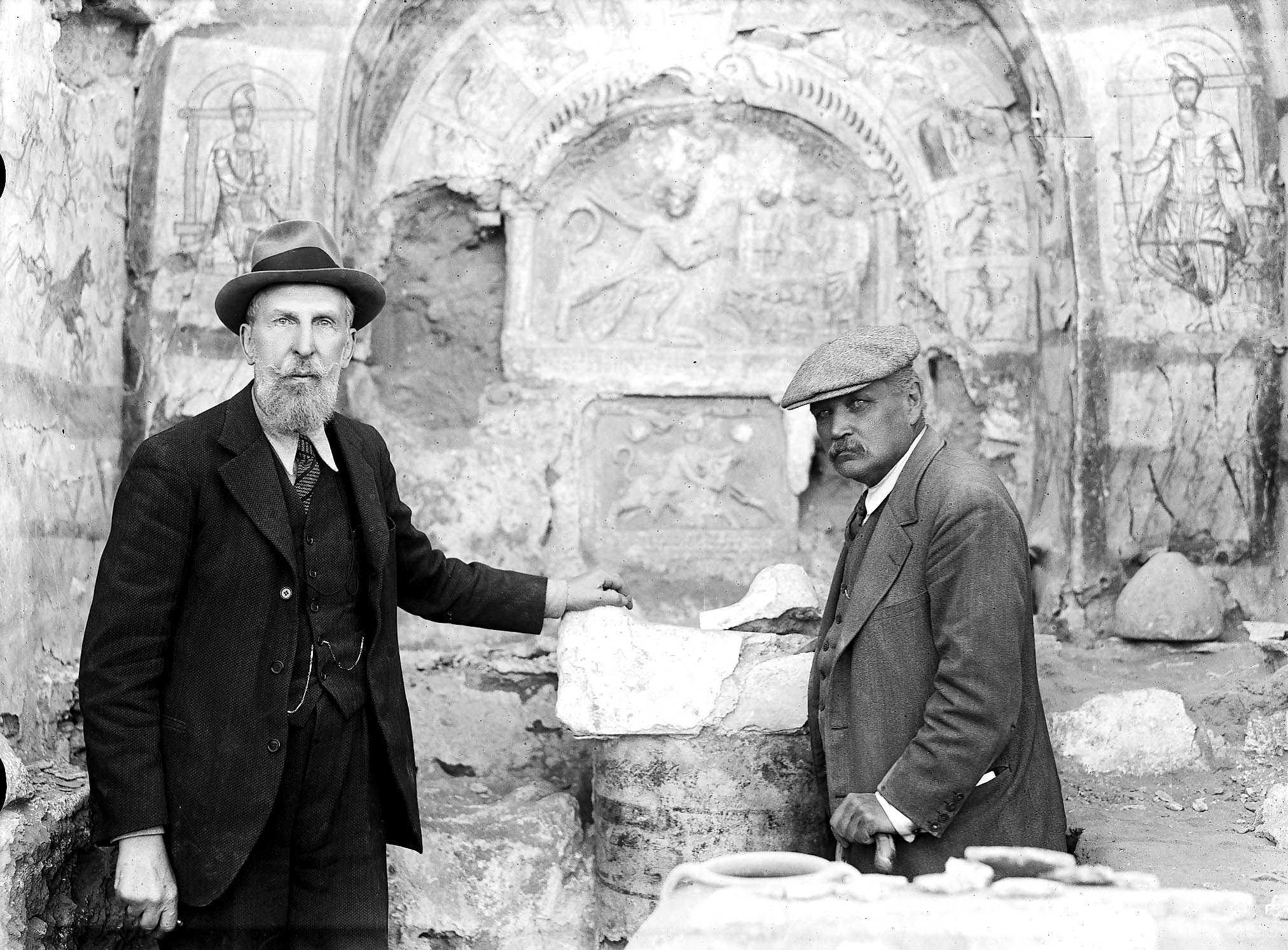
The most emblematic of the Syrian Mithraea was discovered in 1933 by a team led by the Russian historian Mikhaïl Rostovtzeff.
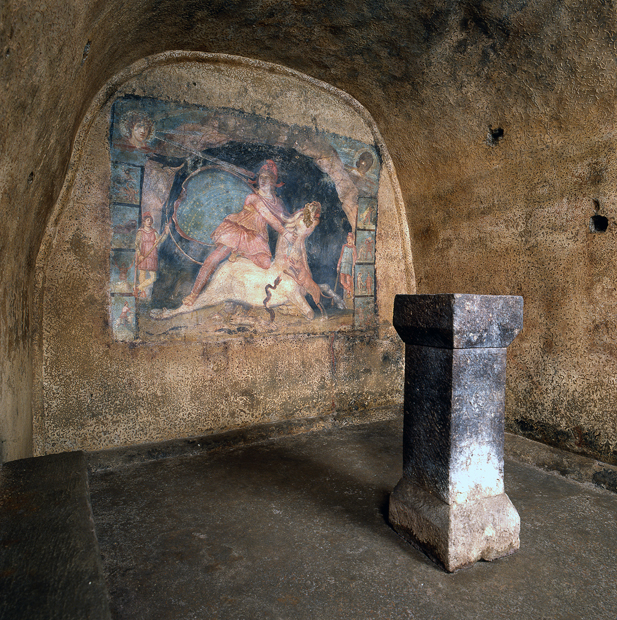
The Marino Mithraeum preserves one of the most elaborate painted cycles of Mithras’ myth, combining the tauroctony, planetary symbolism and scenes from the god’s sacred narrative.
A probable Mithraic sanctuary near Santa Maria in Domnica on the Caelian Hill, known from a group of dispersed reliefs formerly owned by Ottaviano Zeno.
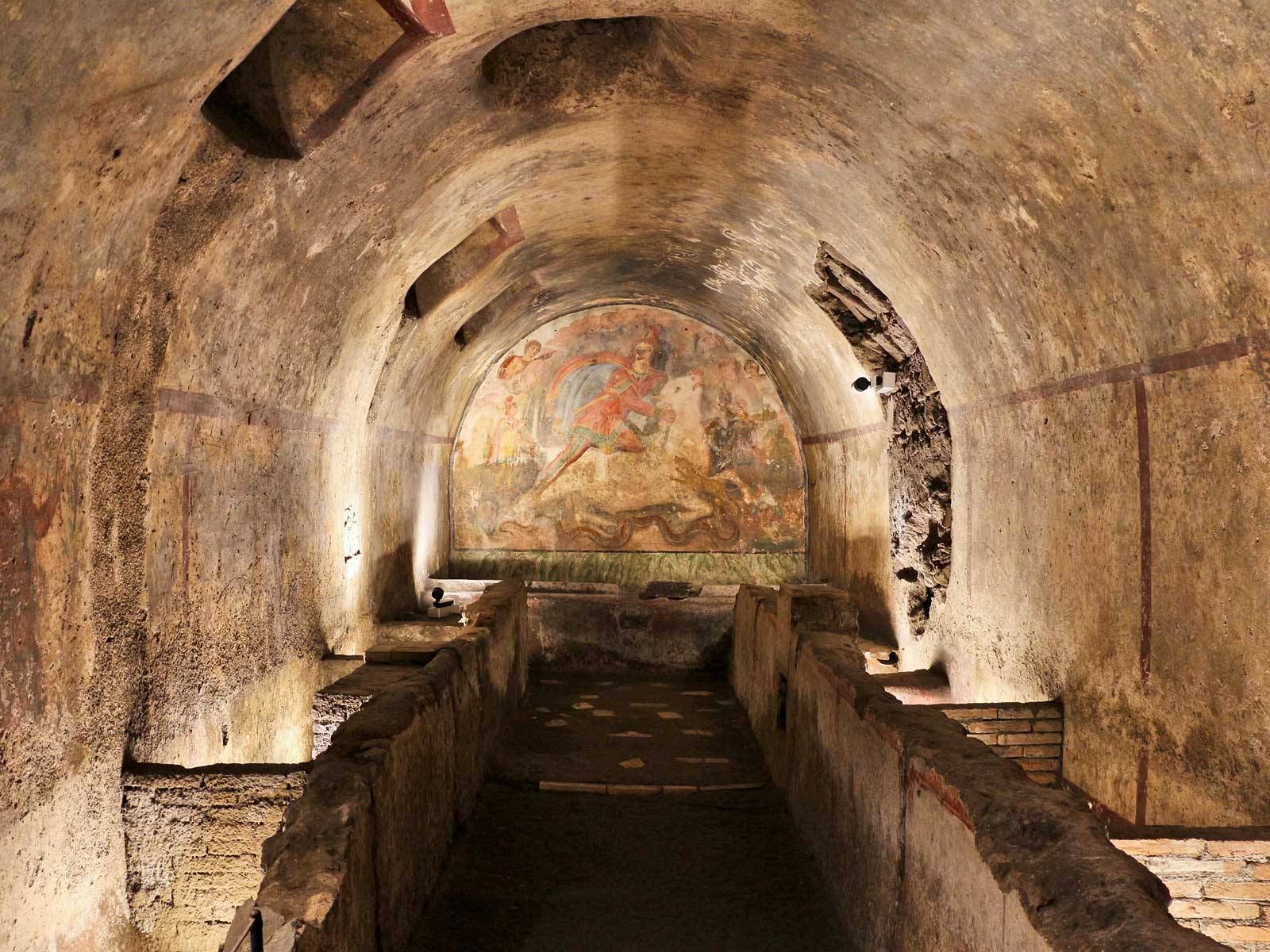
One of Roman Italy’s most important Mithraic sanctuaries, the Mithraeum at S. Maria Capua Vetere preserves a remarkable painted cycle of initiation scenes, offering rare visual evidence for the ritual life of Roman Mithaism.
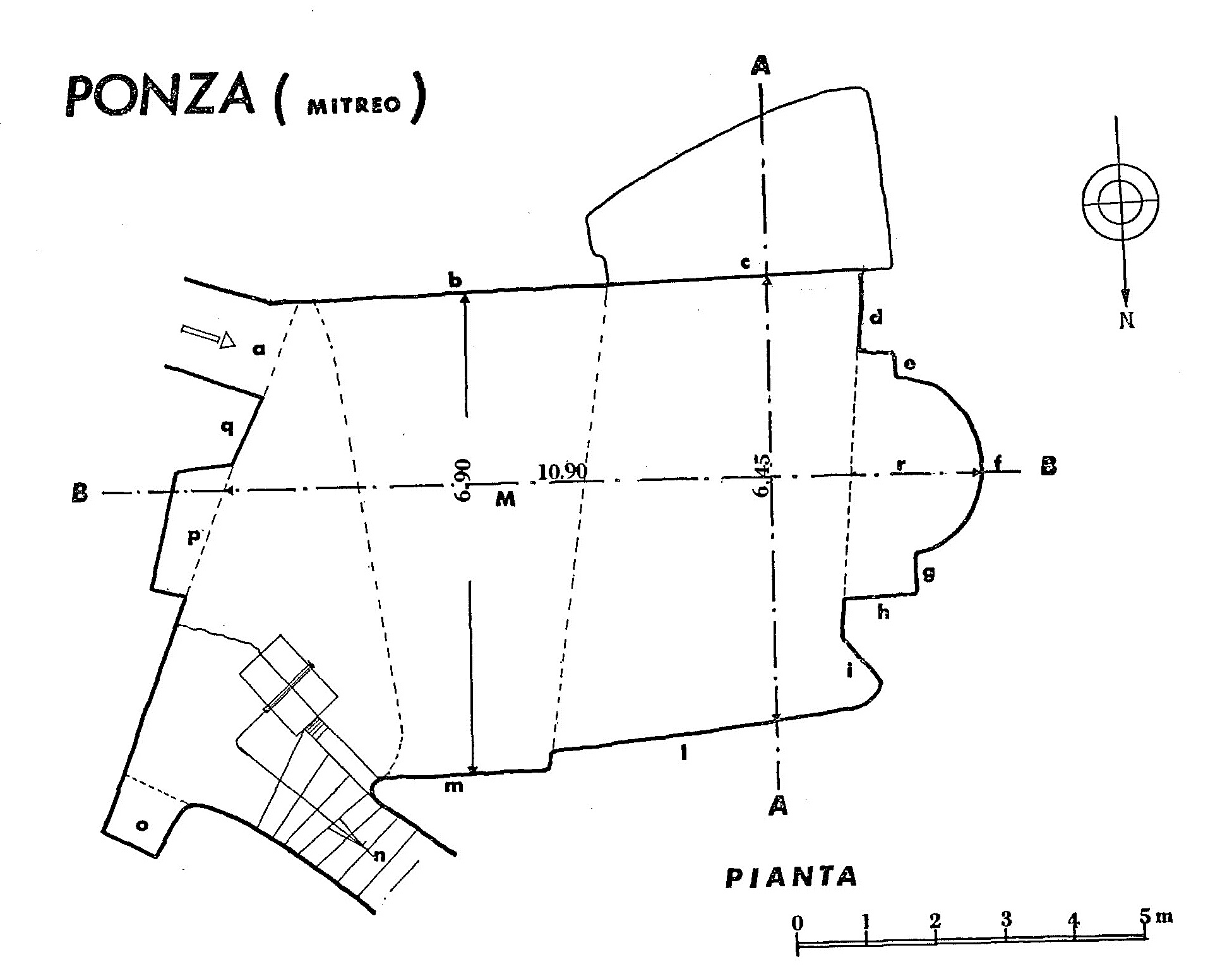
This Mithraic shrine on the island of Ponza is renowned for its exceptional stucco zodiac and astral symbolism linked to Roman Mithaism.
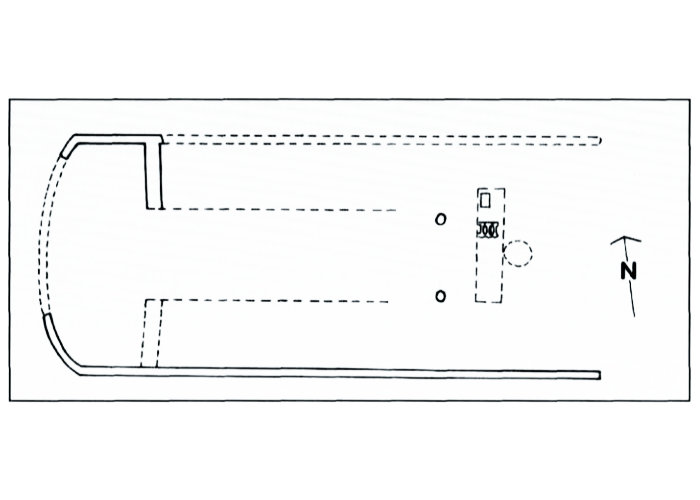
One of the largest known Mithraea in Pannonia, the sanctuary of Sárkeszi stood near the Roman road linking Herculia and Aquincum.
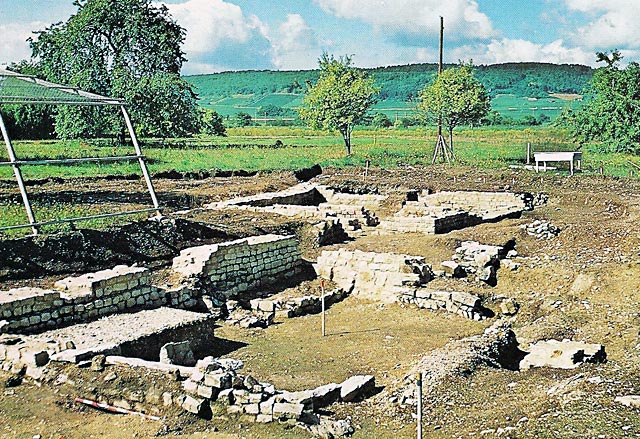
The Mithraeum des Bolards was integrated into a therapeutic cultural complex related to healing waters.
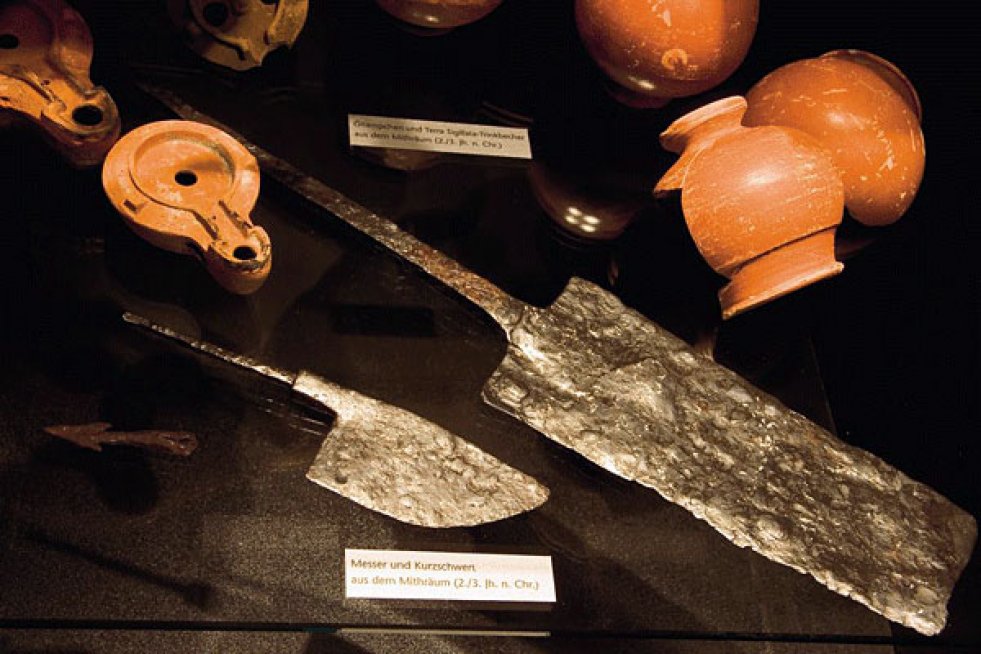
The Mithraeum of Kunzing was an underground building, oriented east-west. The entrance was probably on the east.
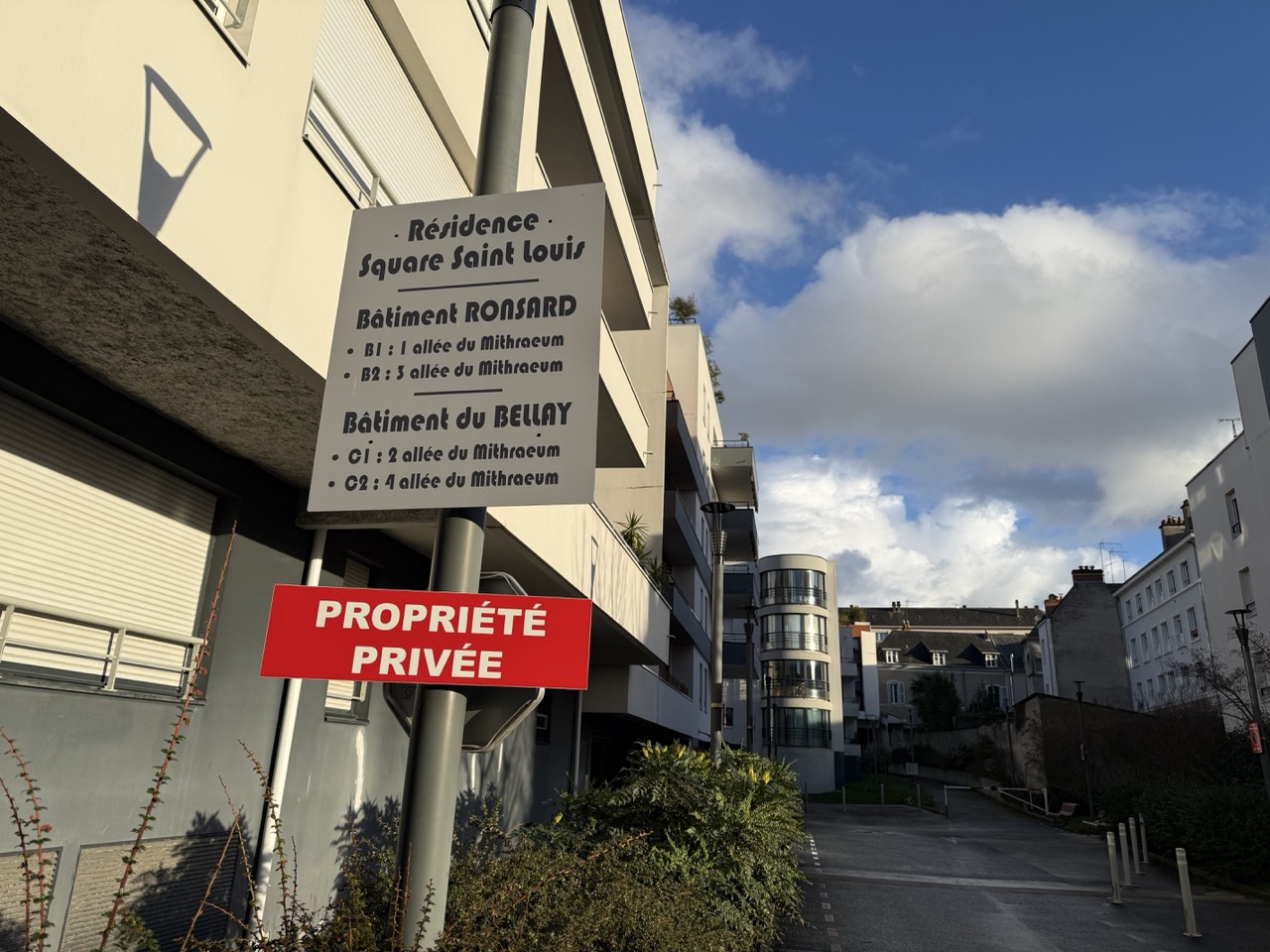
The Mithraeum of Angers, excavated during a preventive operation and subsequently dismantled in 2010, yielded numerous objects, including coins, oil lamps, and a ceramic vessel bearing a votive inscription to the invincible god Mithras.
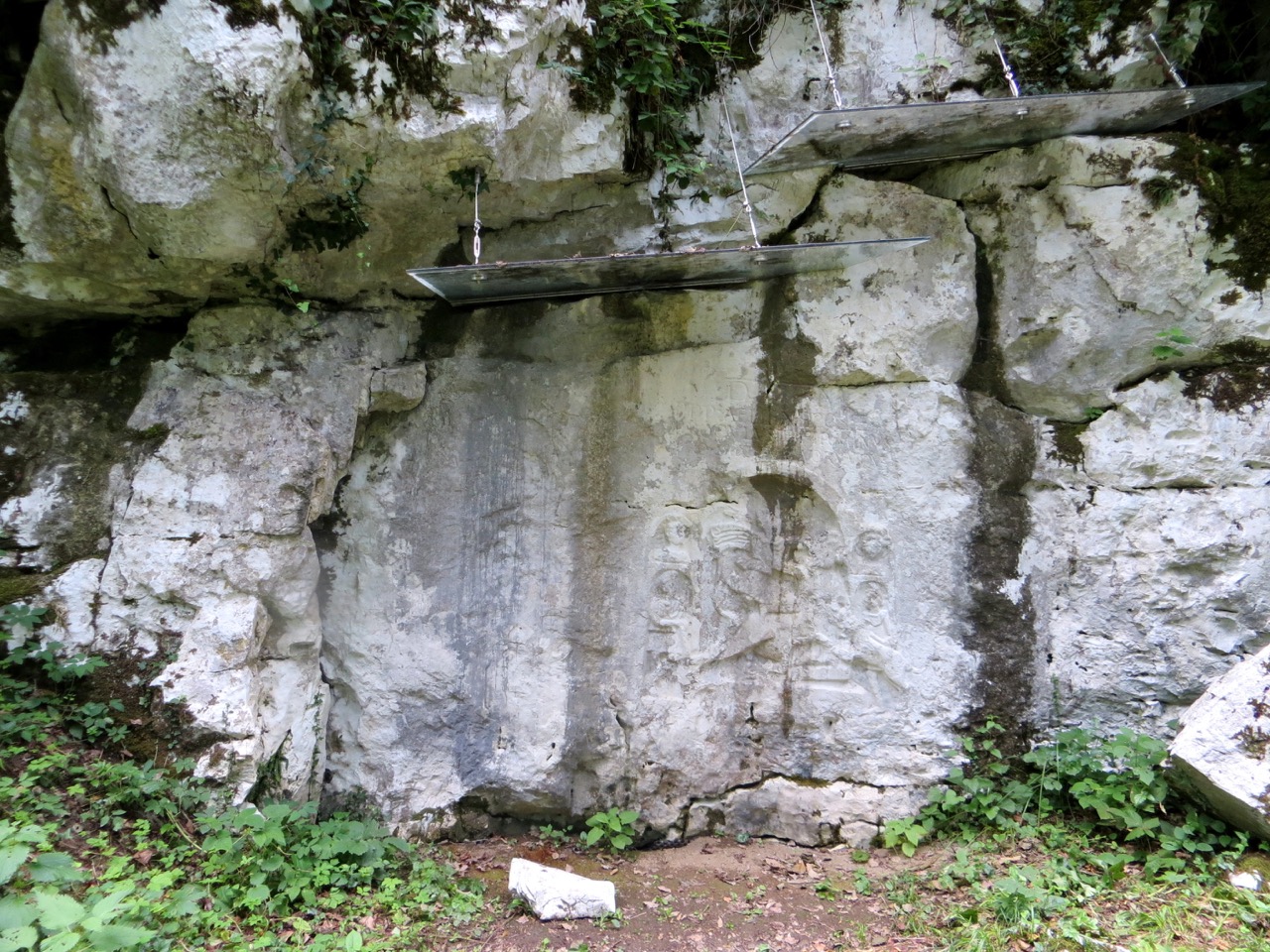
According to Hitzinger remnants of animal bones were found in front of the relief of the Mithraeum at Rozanec.
A probable Mithraic sanctuary at Poetovio, identified by Vermaseren as the so-called Mithraeum IV on the basis of four associated inscriptions.
The remains of this Mithraeum were discovered in 1930 in the Cetatea district of Alba Iulia, ancient Apulum.
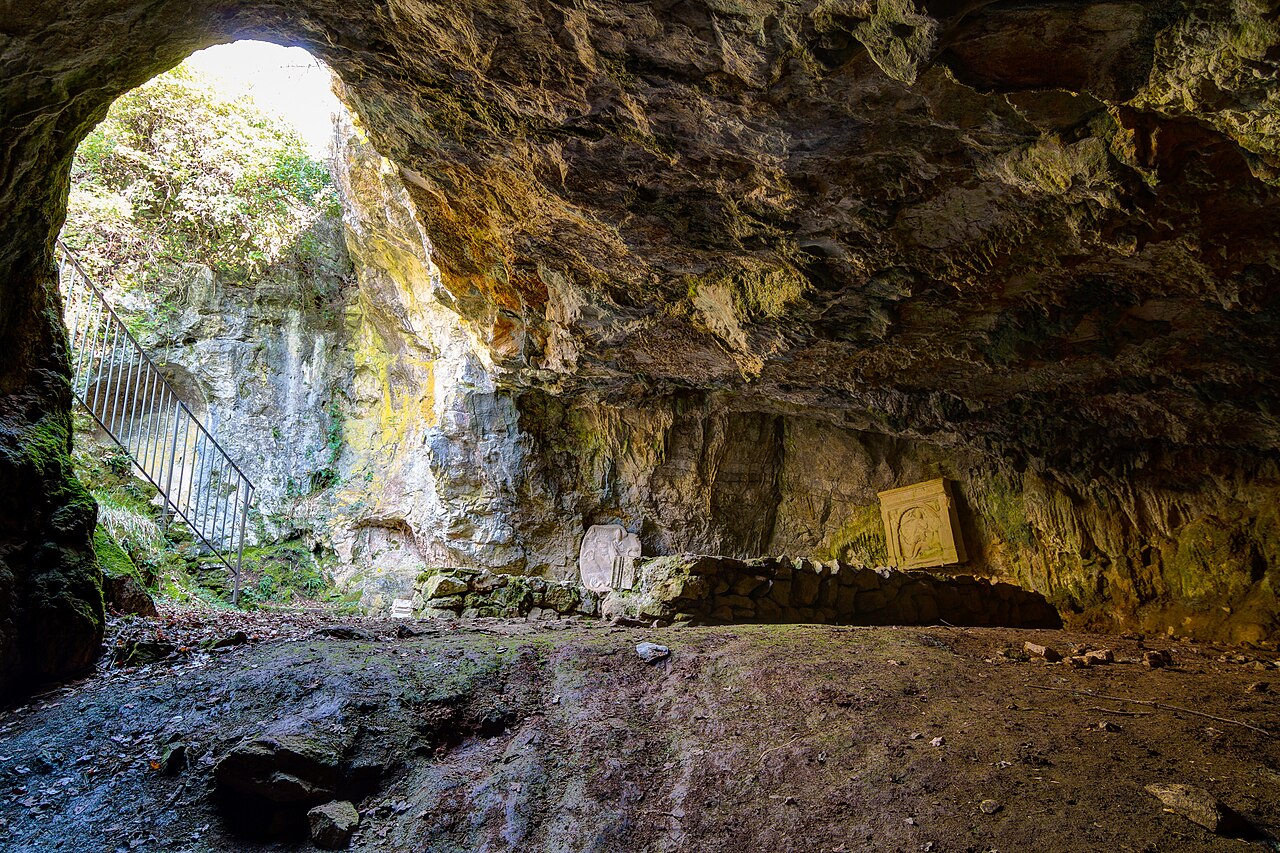
The site was destroyed in the 5th century but some elements, including the benches, can still been seen.
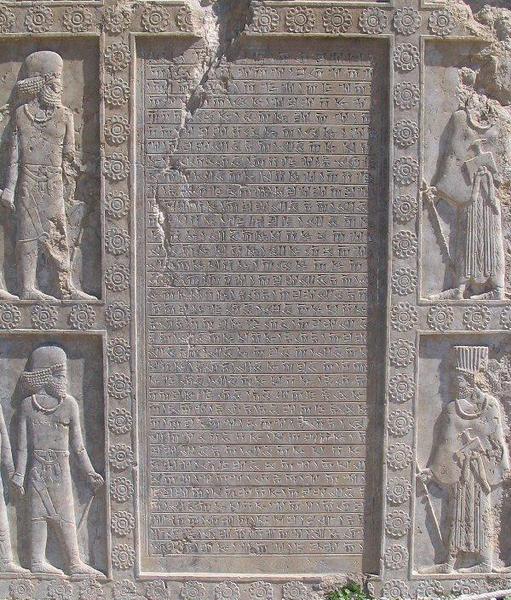
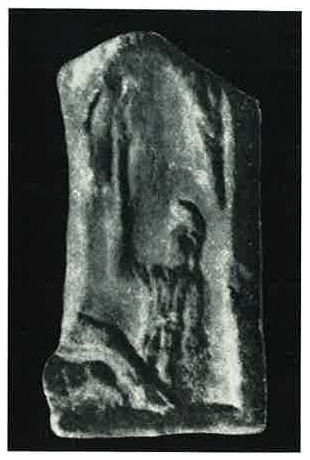
Located at the western entrance to the Palace of Darius in Persepolis, this tablet bears an inscription mentioning Ahuramazda and Mithra.
An inscription by a certain Aurelius Rufinus reveals the existence of a Mithraeum on the island of Andros, but it has not yet been found.
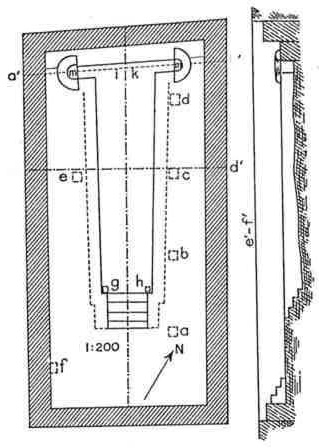
Mithraeum discovered in 1887–1888, located about 85 m north of the castellum at Ober-Florstadt, built on a hillside with a central aisle, benches, and an altar podium.
