Your selection in monuments gave 226 results.
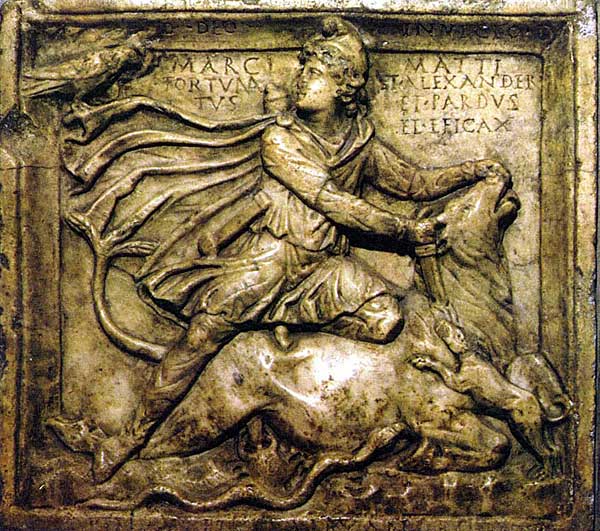
The relief marble of Mithras sacrifying the bull, exposed on the Hermitage Museum comes from Rome.
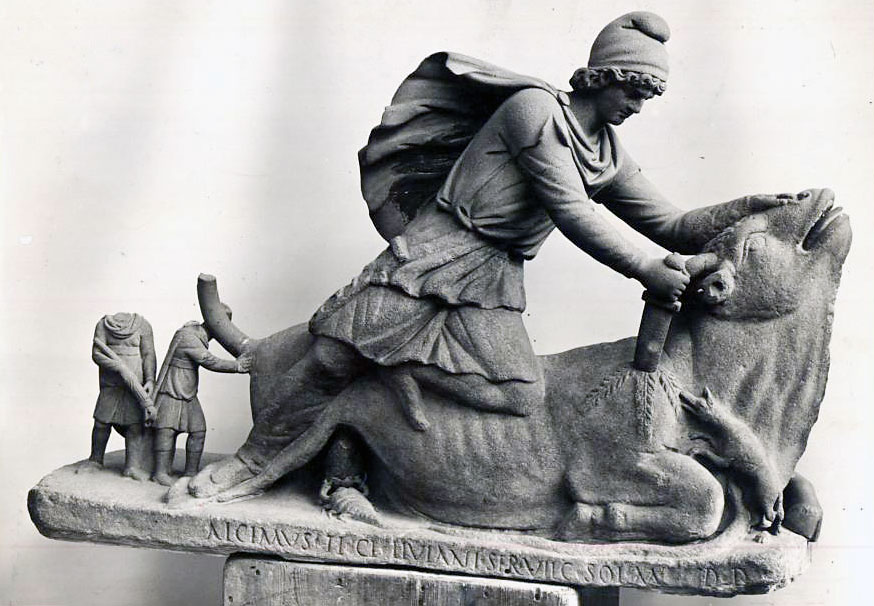
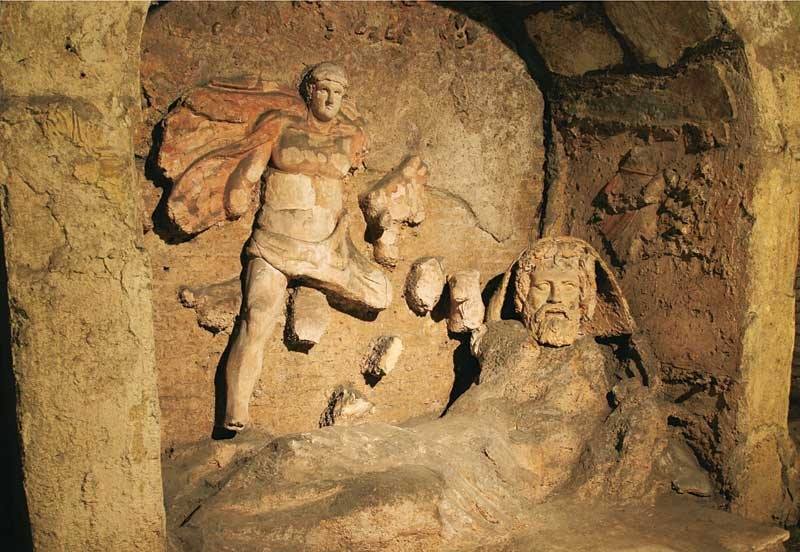
Even if only a few fragments remain, it is very likely that the main niche of the Mitreo di Santa Prisca contained the usual representation of Mithras killing the bull.

This remarkable Greek marble relief of Mithras killing the bull was discovered in 1705 and remained in private collections until it was bought by the Louvre.
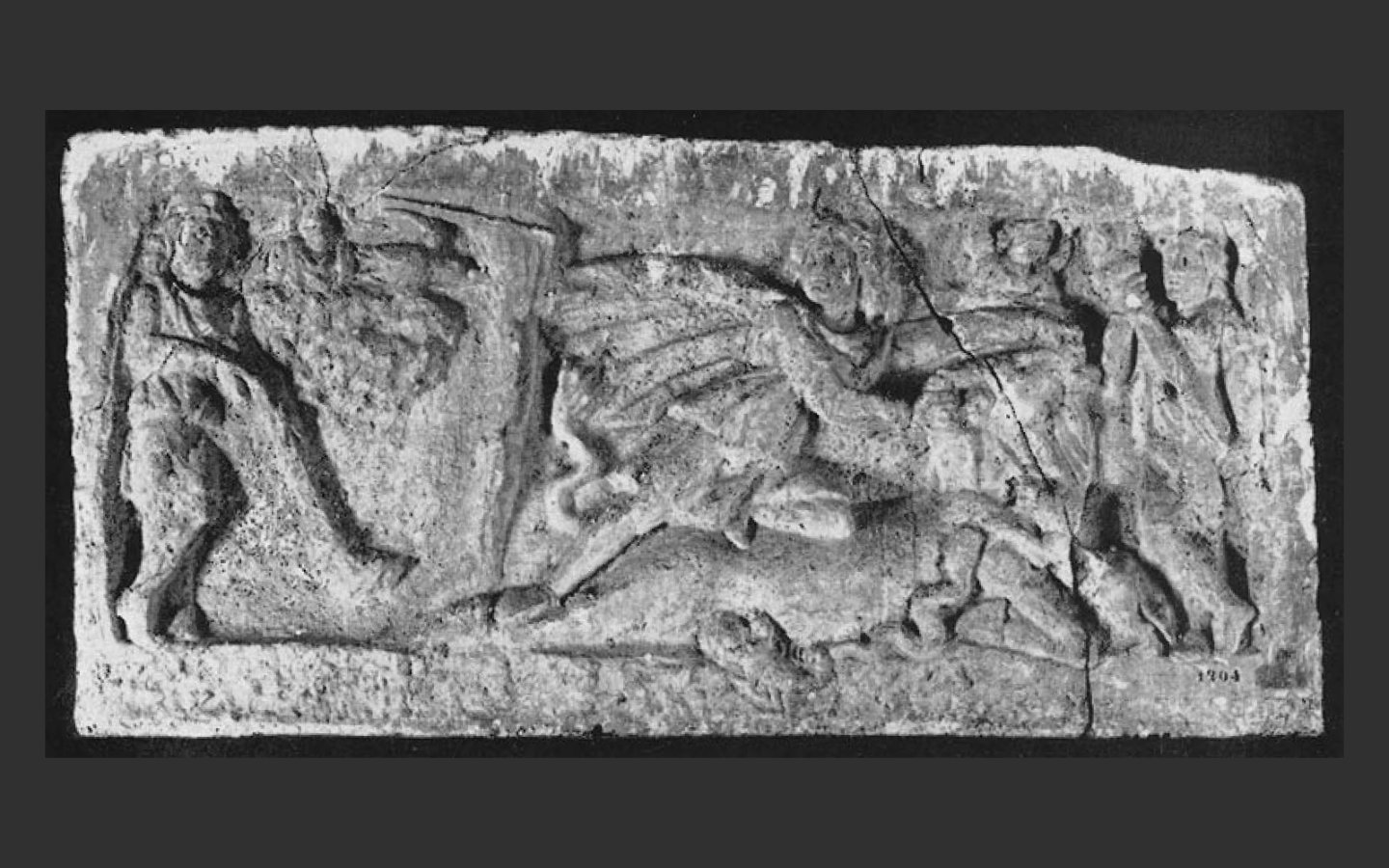
This relief of Mithras Tauroctonos from Rome bears the inscription of three brothers, two of them lions.

This unusual mural depicting Mithras killing the bull was found near the Colosseum in 1668.
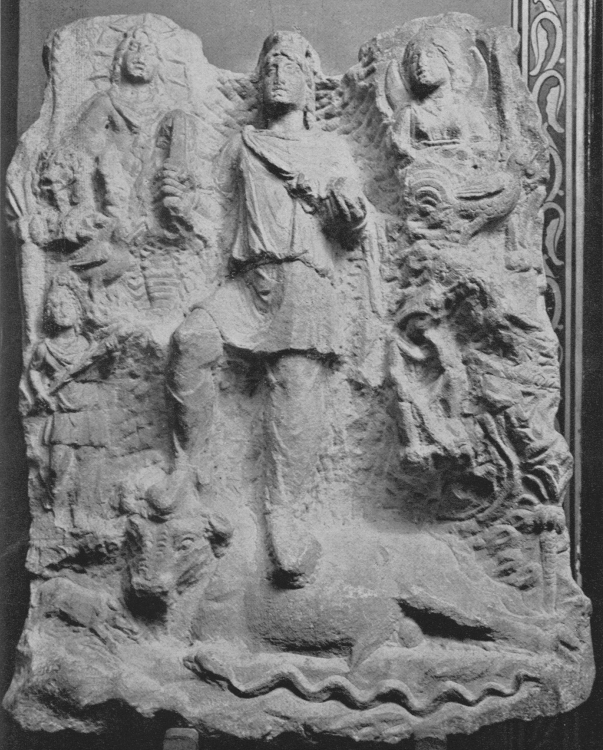
This unusual representation of Mithras standing on a bull was kept in the Casino di Villa Altieri sul Monte Esquilino until the 19th century.
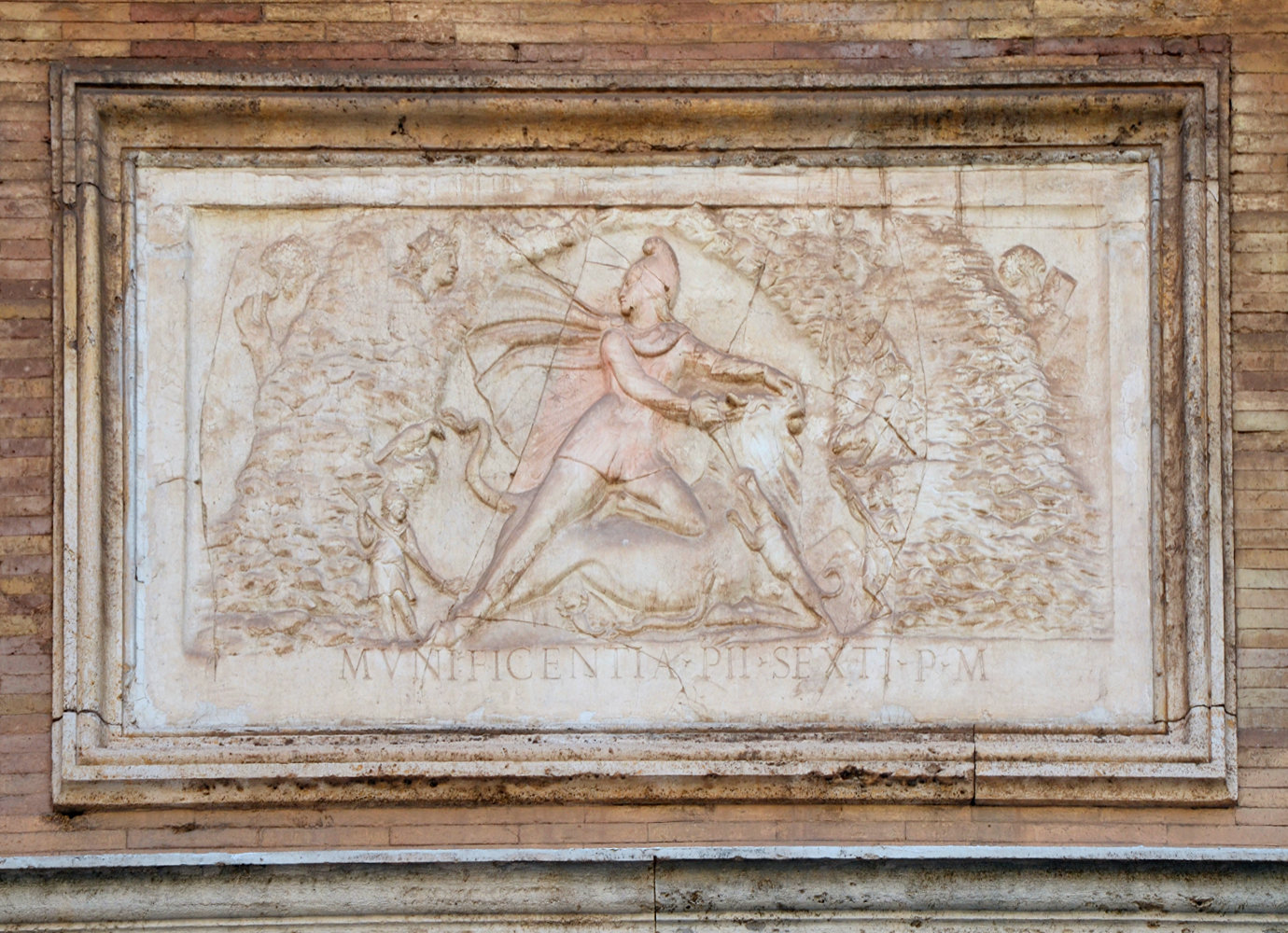
The Tauroctony relief of Mithras killing the bull walled in the Cortile of the Belvedered, Vatican City, was found by Fagan near Ostia.
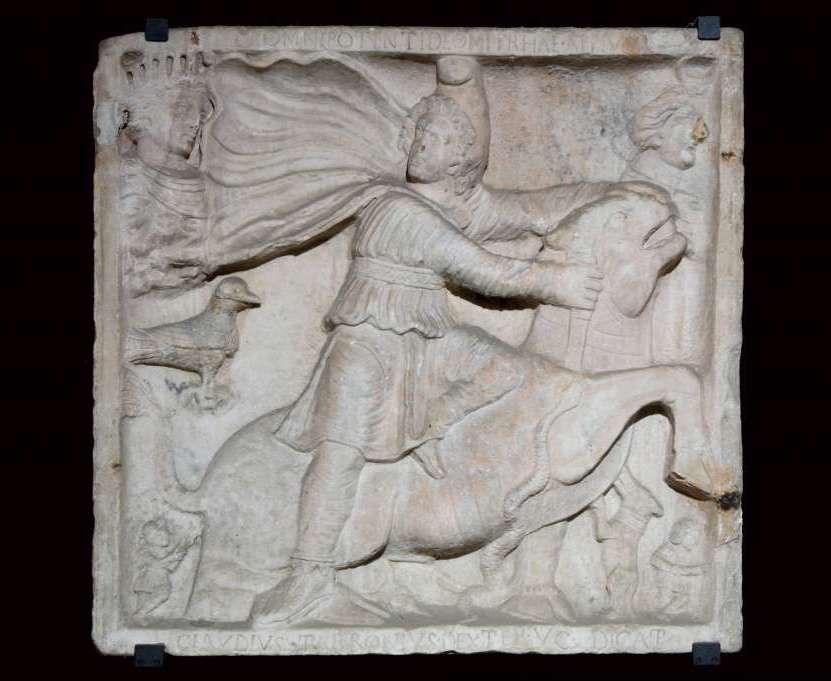
The marble relief of Mithras killing the bull in Naples bears an inscription that calls the solar god omnipotentis.
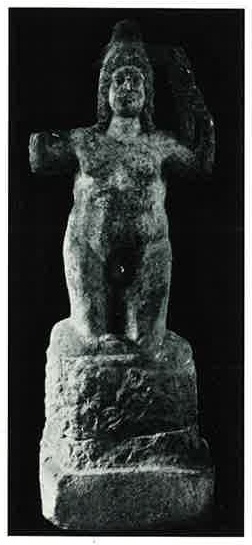
This white marble statue of the rock-birth from Cibinium in Roman Dacia is one of the largest known Mithraic sculptures from the Danubian provinces.

The tauroctonic relief from Dragus includes a naked flying figure that Vermaseren has identified as Phosporus or Lucifer.
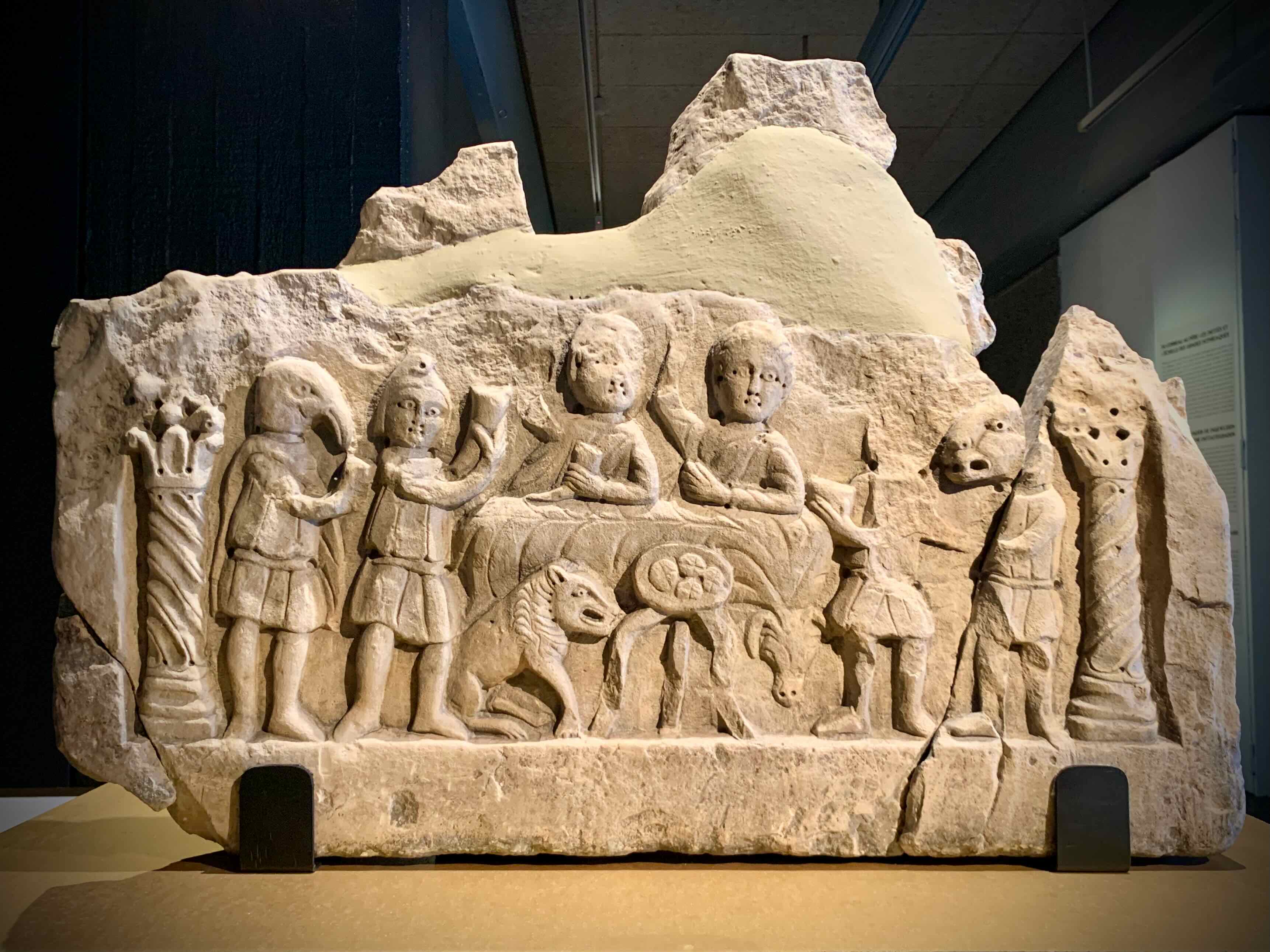
The mithraic relief of Konjic shows a Tauroctony in one side and a ritual meal in the other.
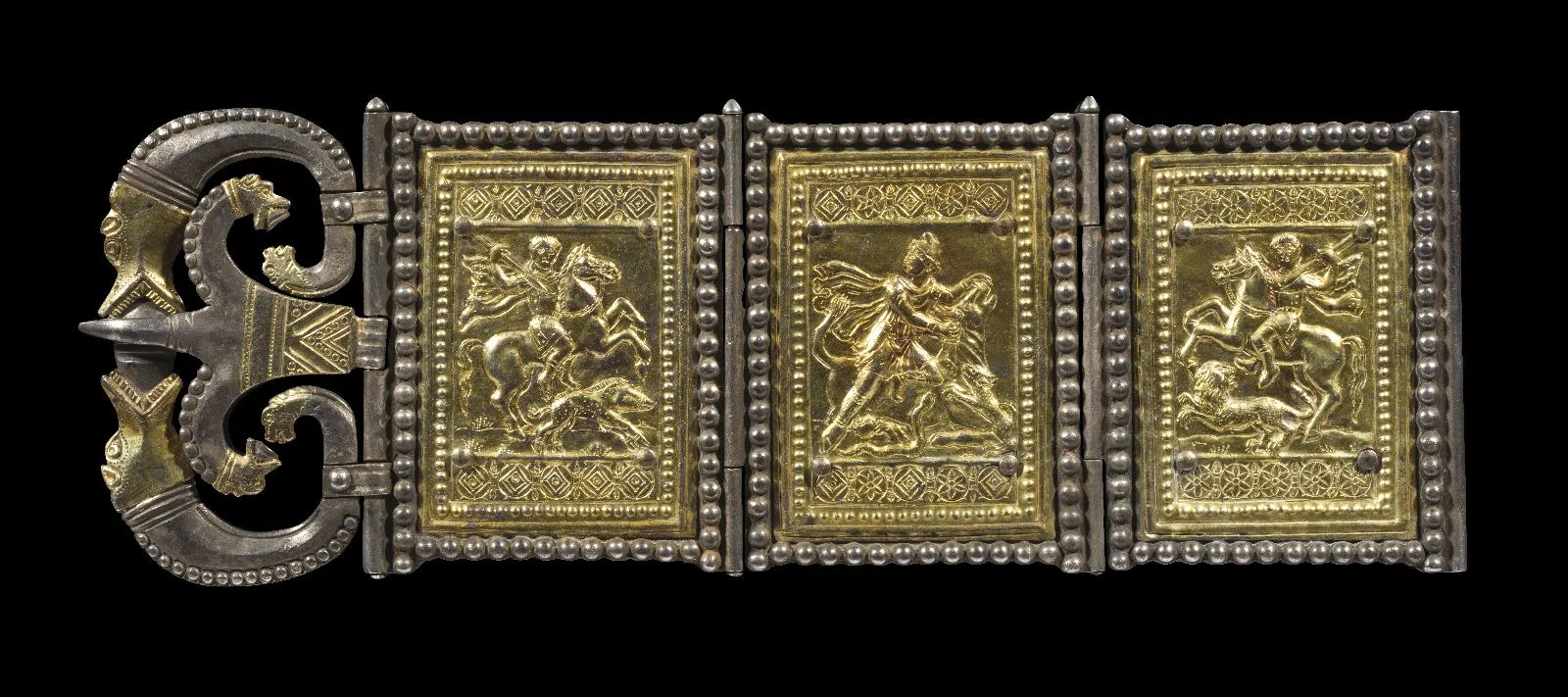
Silver belt fitting with Mithras tauroctony and aristocratic hunting horsemen, fourth century AD.
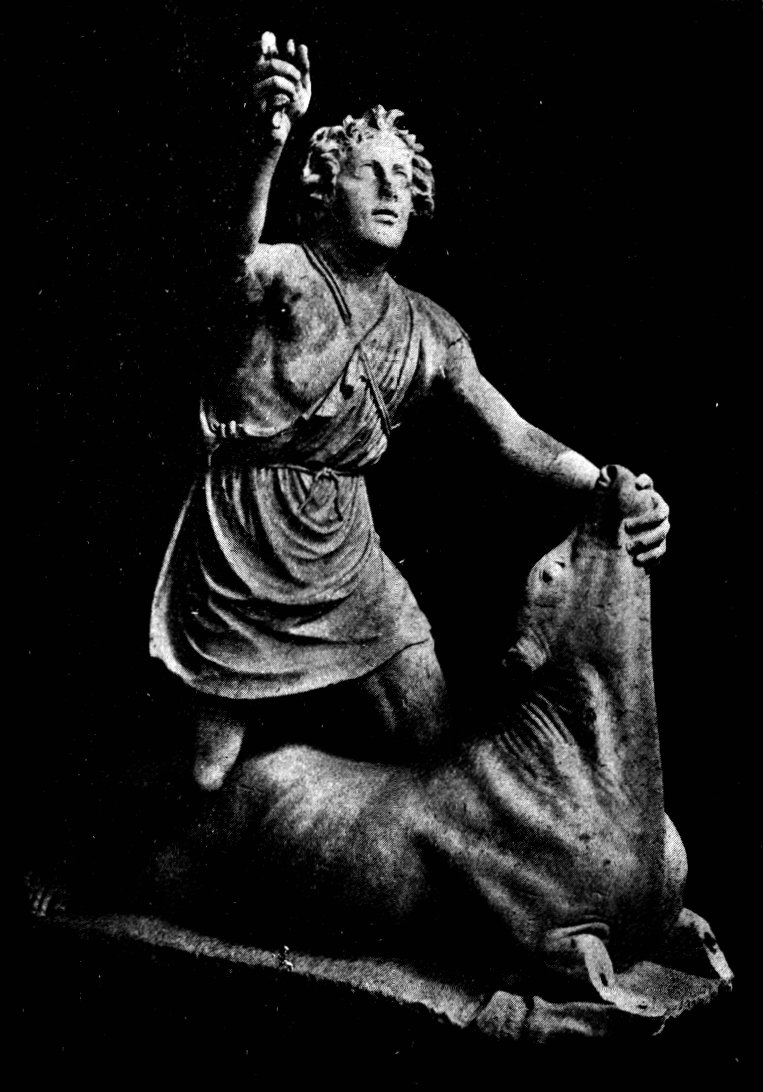
The person who commanded the sculpture may have been M. Umbilius Criton, documented in the Mitreo della Planta Pedis.
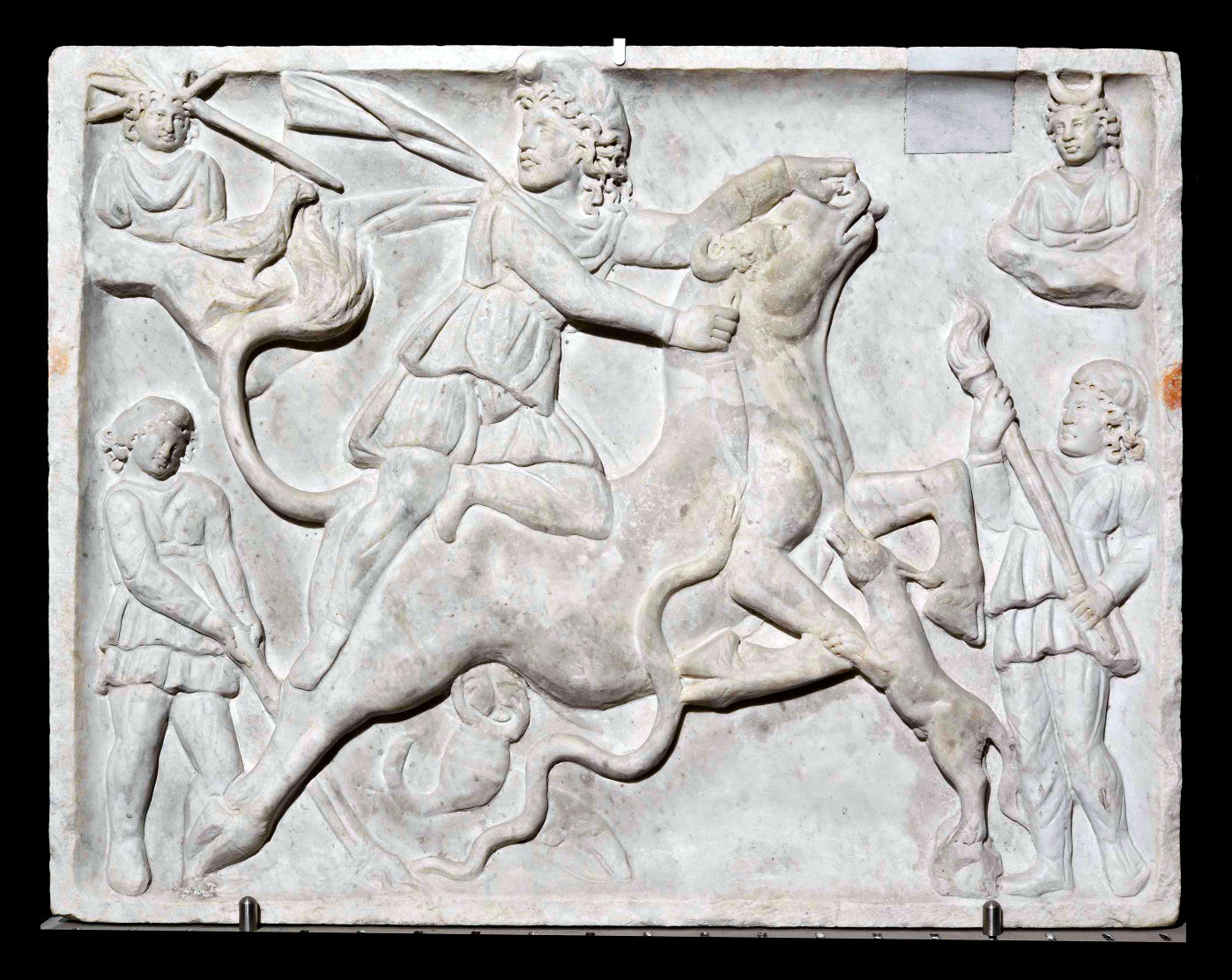
It is not certain that the marble relief of Mithras killing the bull was found on Capri, in the cave of Matromania, where a Mithraeum could have been established.
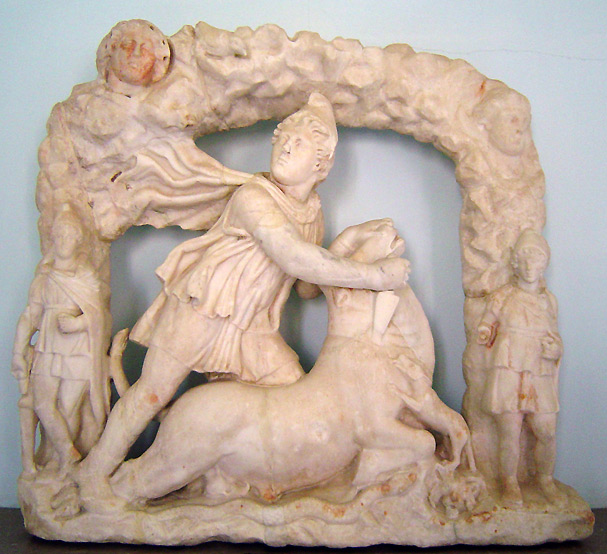
The assumed find-place of the Mithras Tauroctonus of Palermo is uncertain.
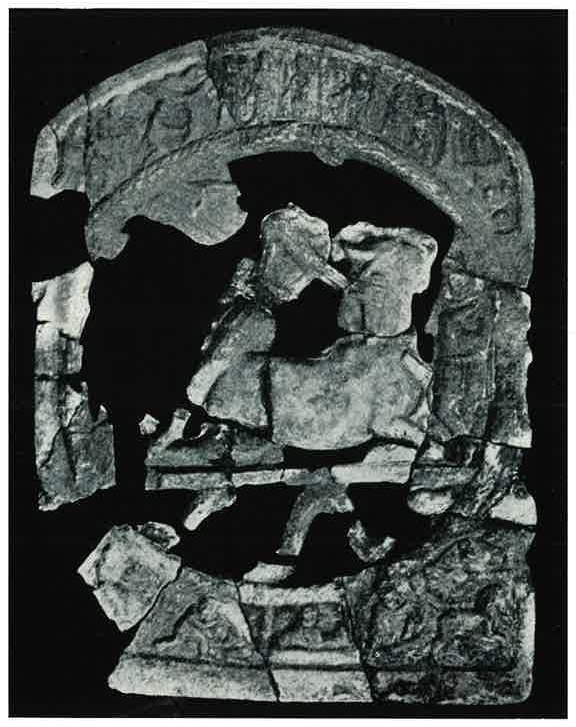
White marble tauroctony relief in several fragments from the Mithraeum at Biljanovac, Moesia Superior, depicting the standard bull-slaying with the full iconographic programme.
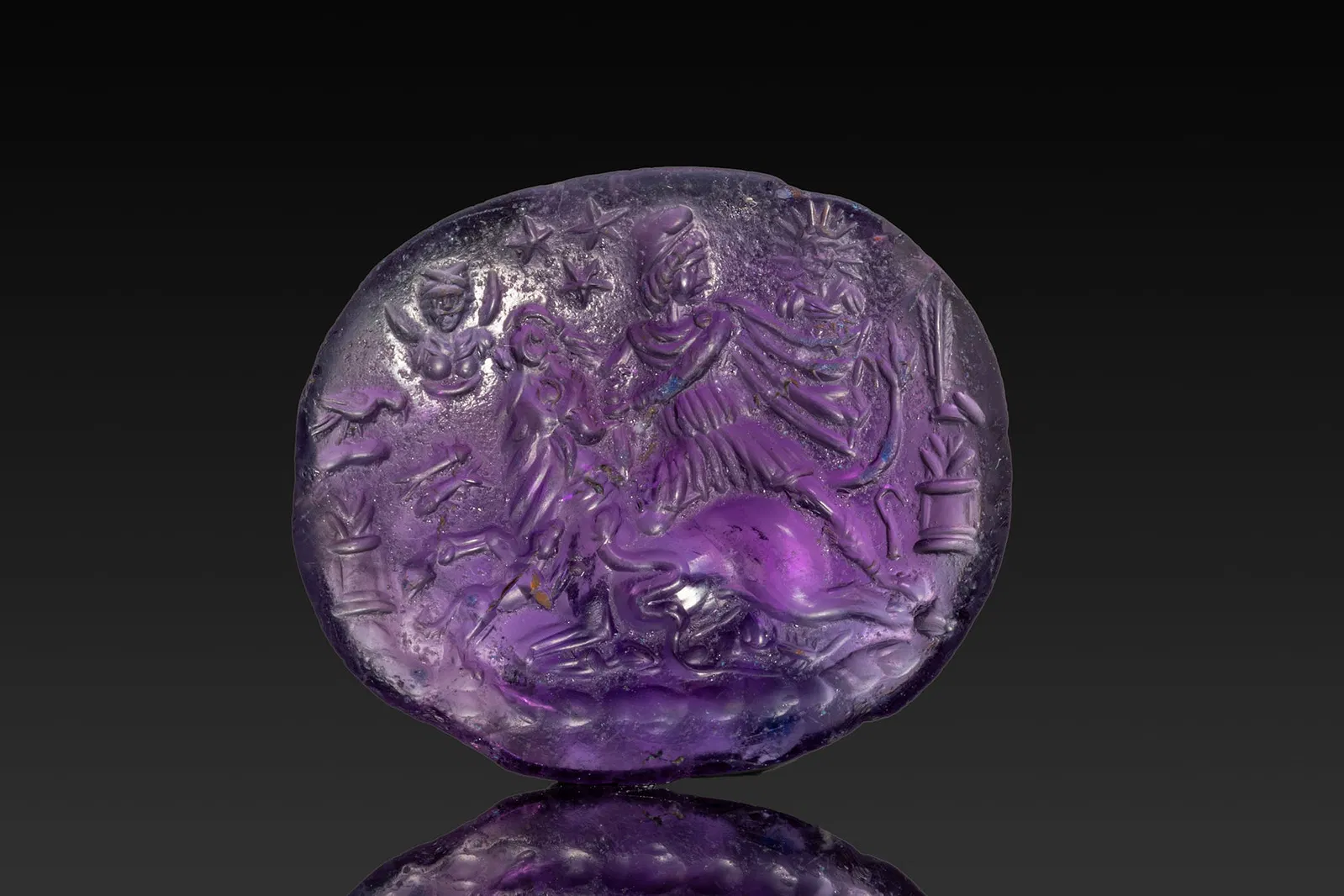
Amethyst intaglio engraved with Mithras slaying the bull, accompanied by Sol, Luna and other canonical Mithraic symbols.

Fragmentary tauroctony preserving Mithras, the torchbearers, Sol and Luna from the sanctuary at Aïtodor.
Small surviving fragment depicting Mithras as bull-slayer together with the torchbearer Cautes.
