Your selection in monuments gave 186 results.
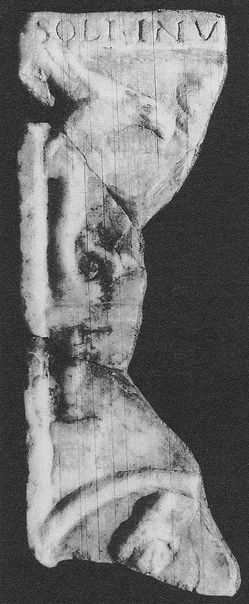
This marble fragment from Apulum preserves the head of Mithras beneath an arch together with a raven and the remains of Sol’s radiate crown.
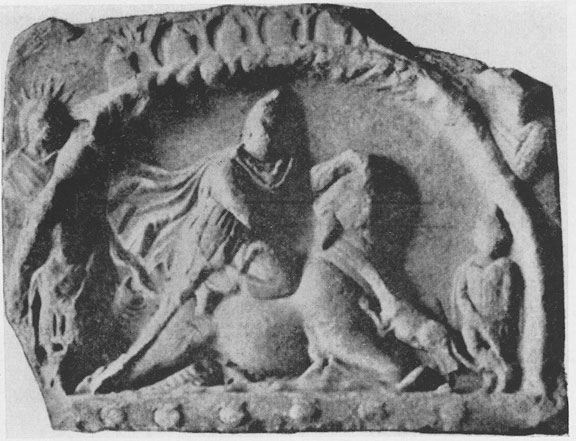
This finely carved marble tauroctony from Interamna features an unusual series of altars and ritual vases surrounding the scene.
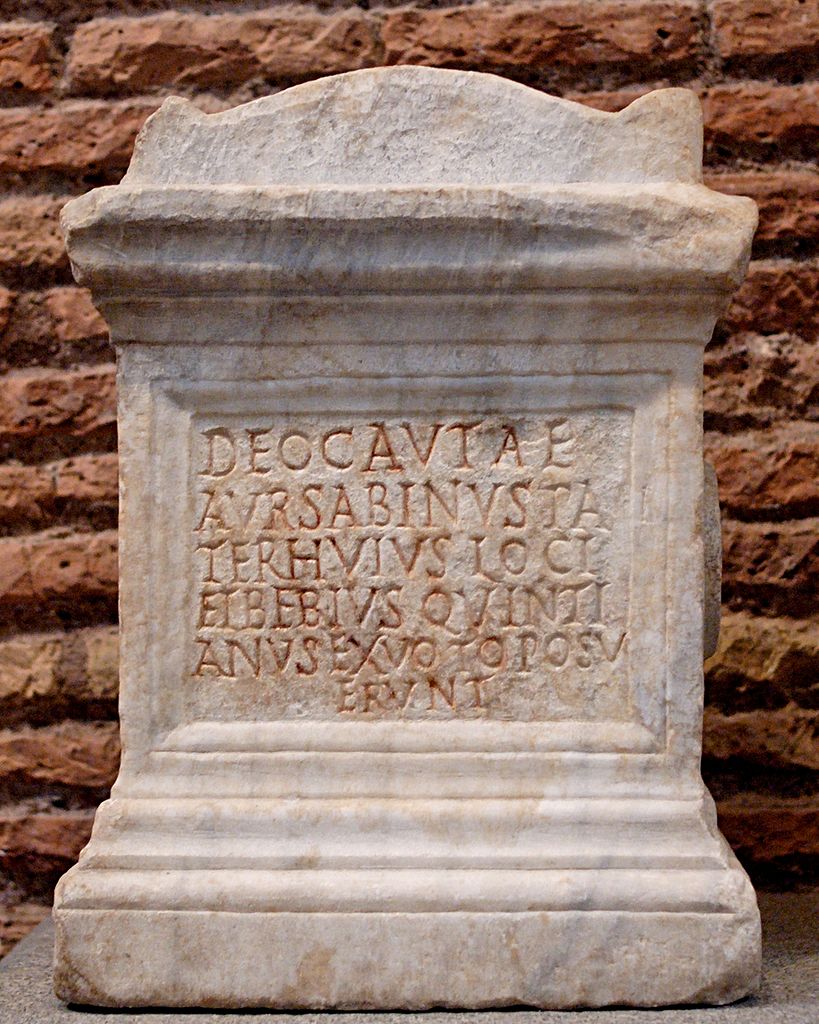
These two parallel altars to the diophores were dedicated by the Pater and a Leo from the Mithraeum of S. Stefano Rotondo.
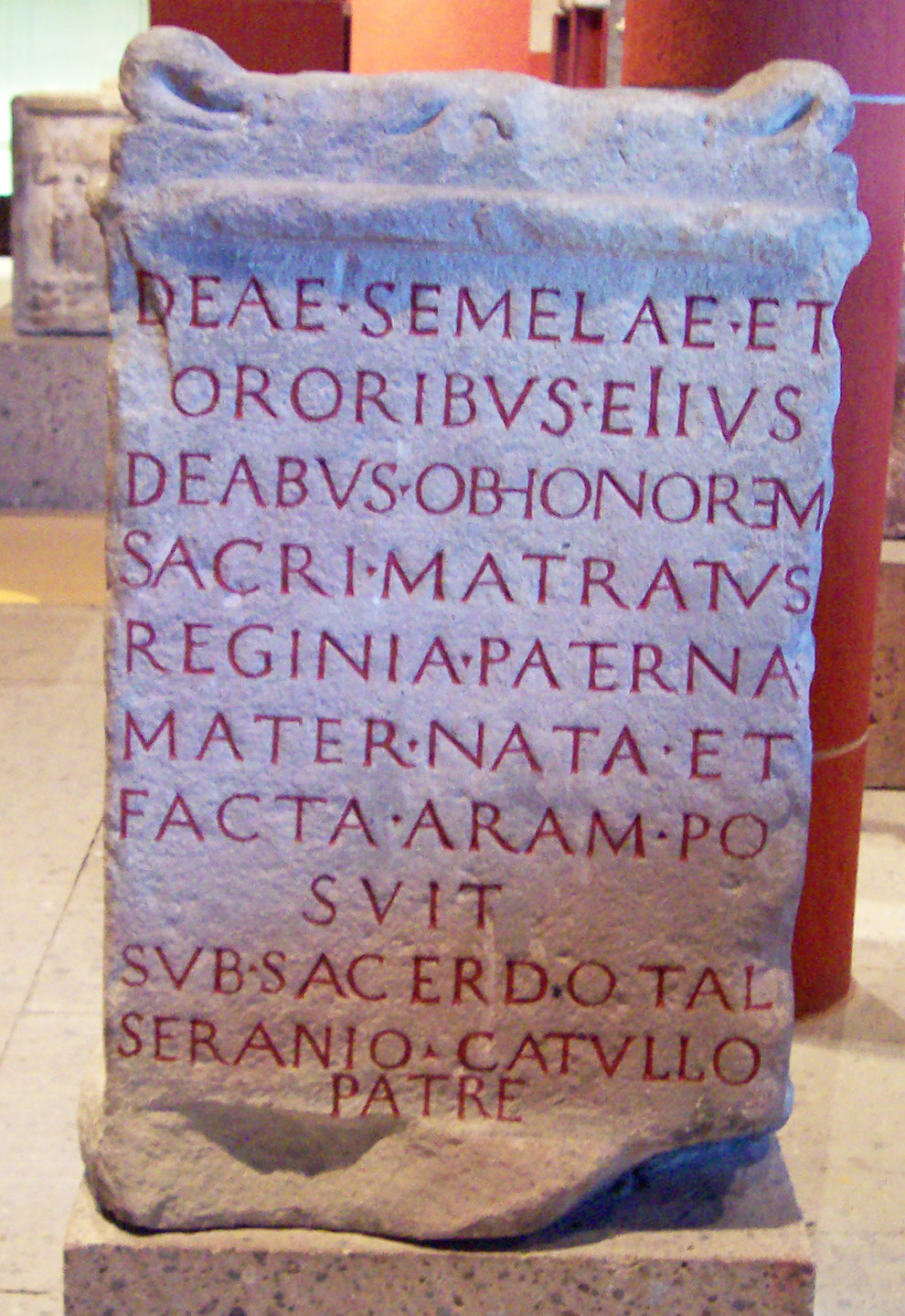
This sandstone altar found in Cologne bears an inscription to the goddess Semele and her sisters.
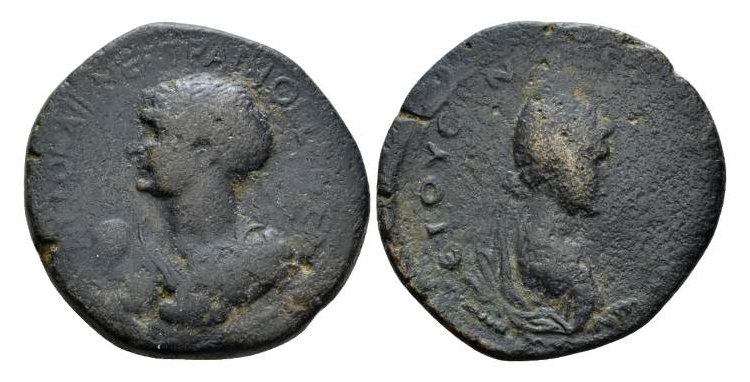
These bronze medallions associates the image of several Roman emperors with that of Mithras, usually as a rider, in the province Pontus.
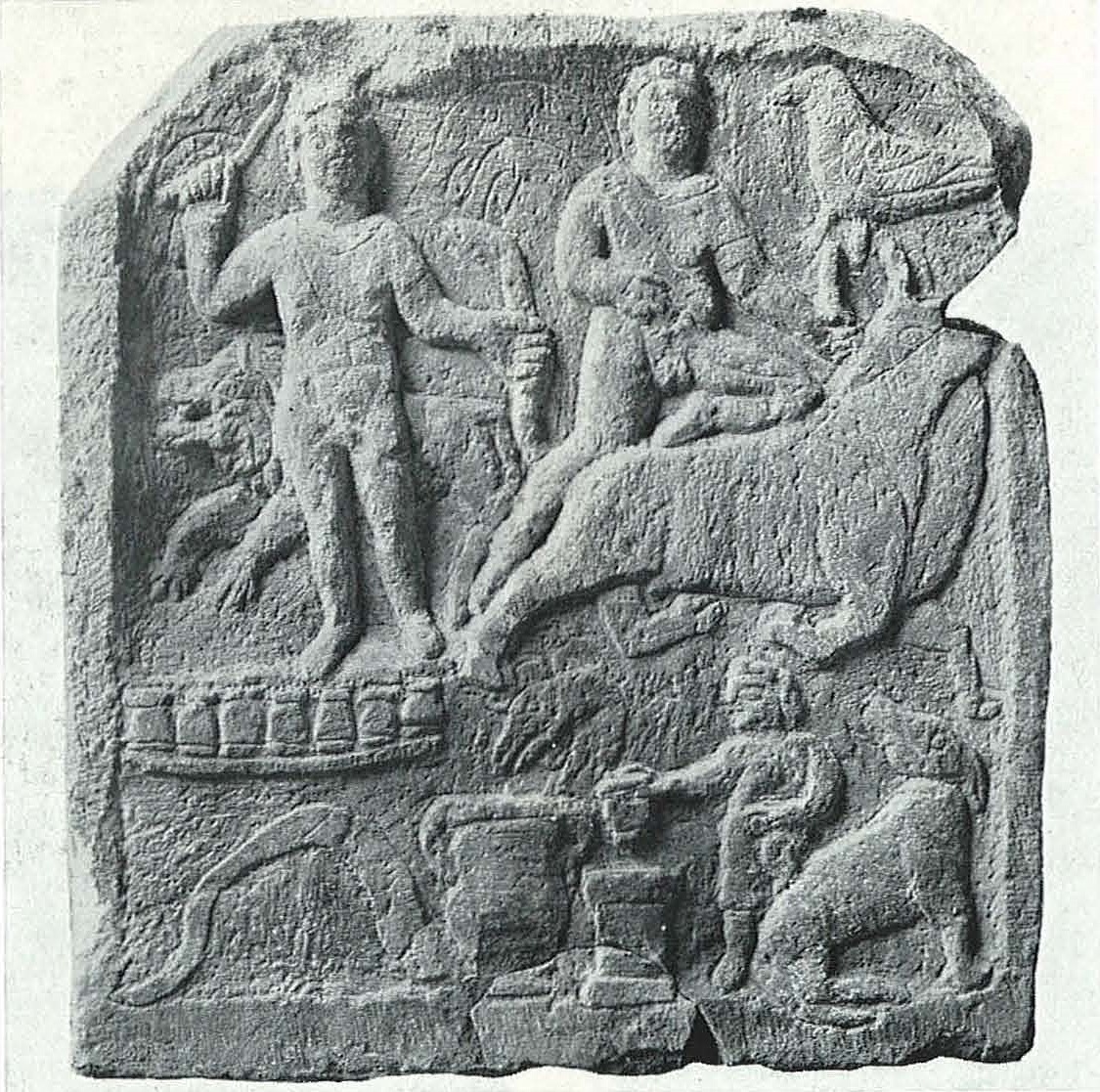
The Tauroctony from Landenburg, Germany, shows a naked Mithras only accompanied by his fellow Cautes.
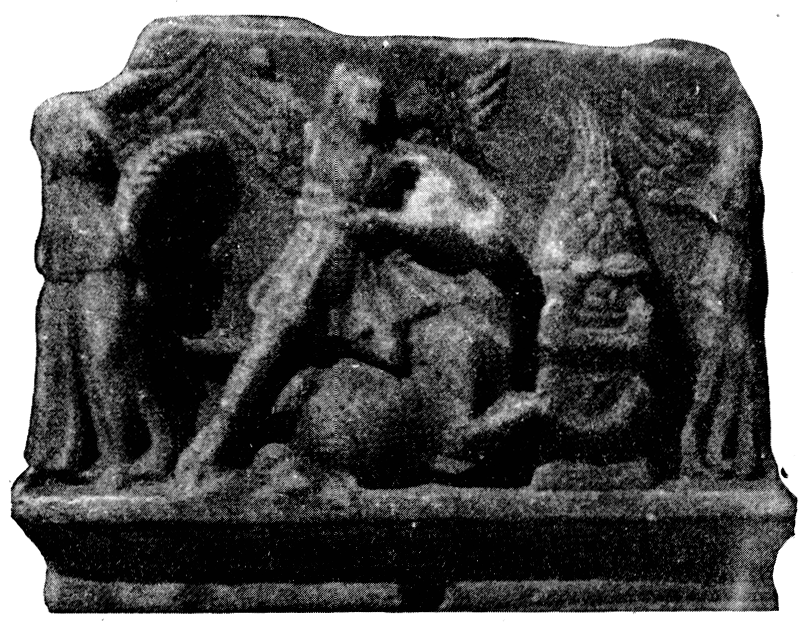
The Mithraic relief from Baris, in present-day Turkey, shows what appears to be a proto-version of the Tauroctony, with a winged Mithras surrounded by two Victories.
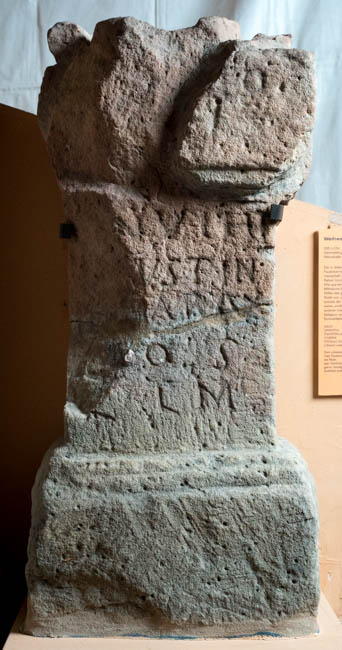
This sandstone altar was dedicated to the god Invictus by a certain Faustinus from Gimmeldingen.
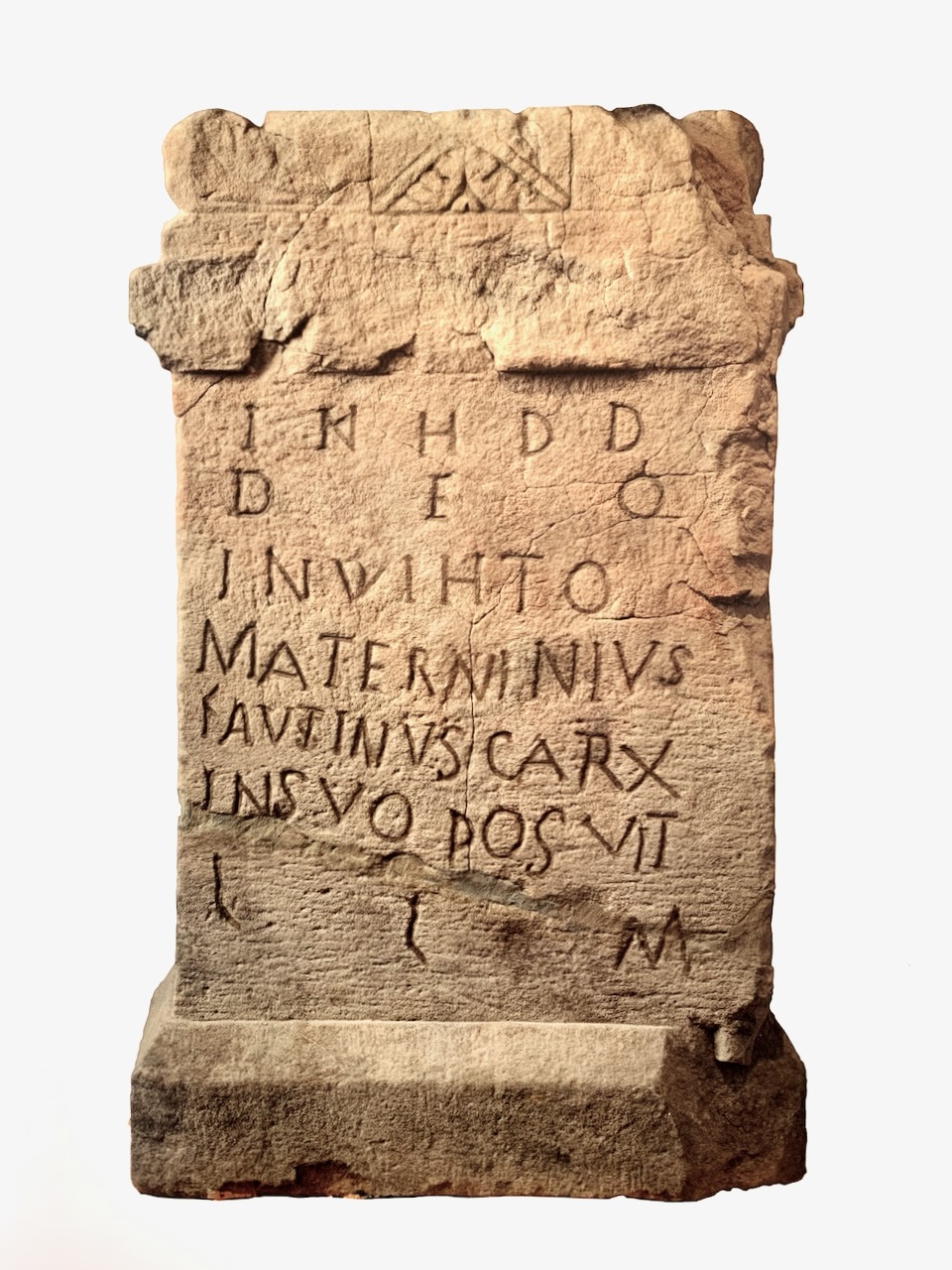
Corax Materninius Faustinus dedicated other monuments found in the same Mithraeum in Gimmeldingen.
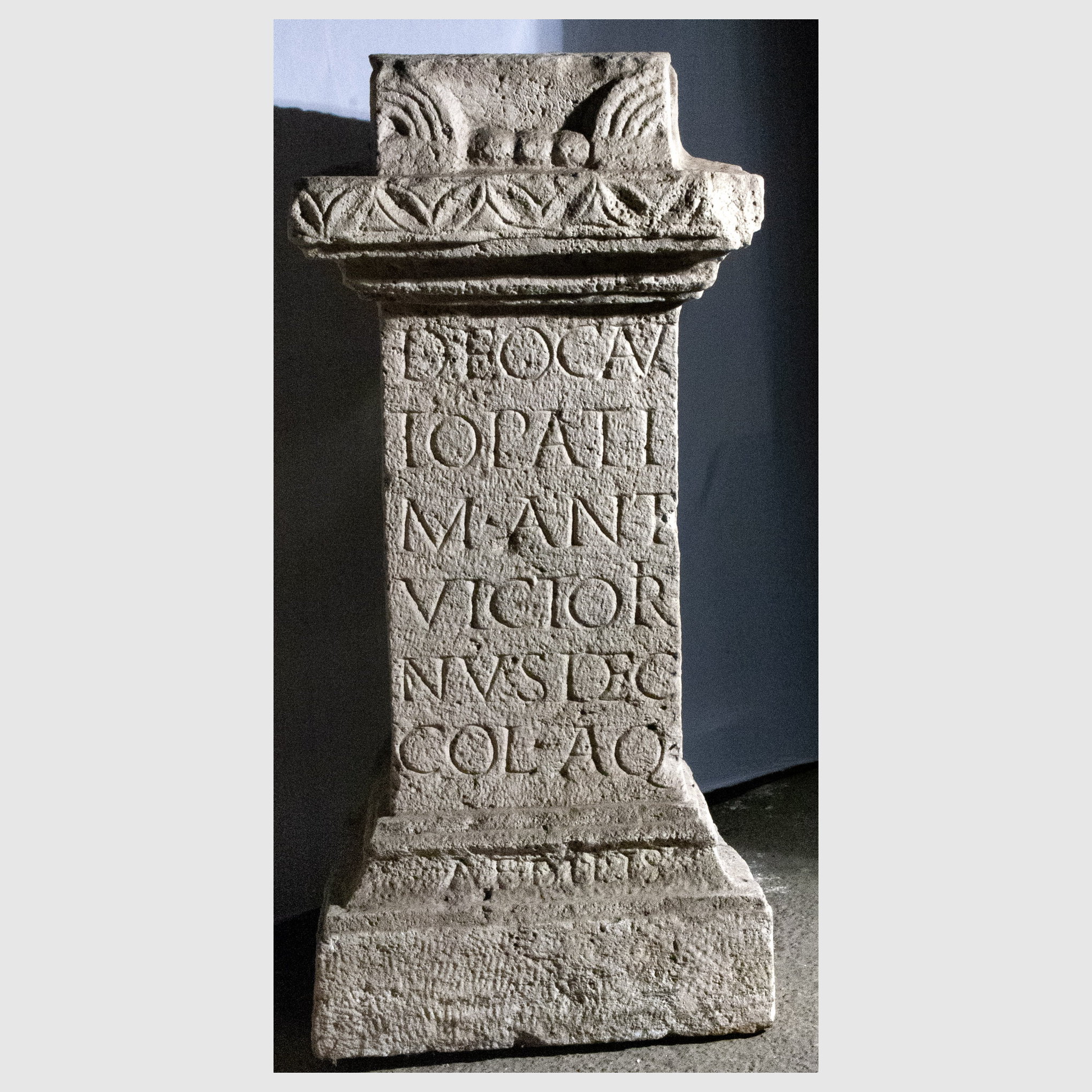
These two altars, erected by a certain Victorinus in the mithraeum he built in his house, bear inscriptions to Cautes and Cautopates.
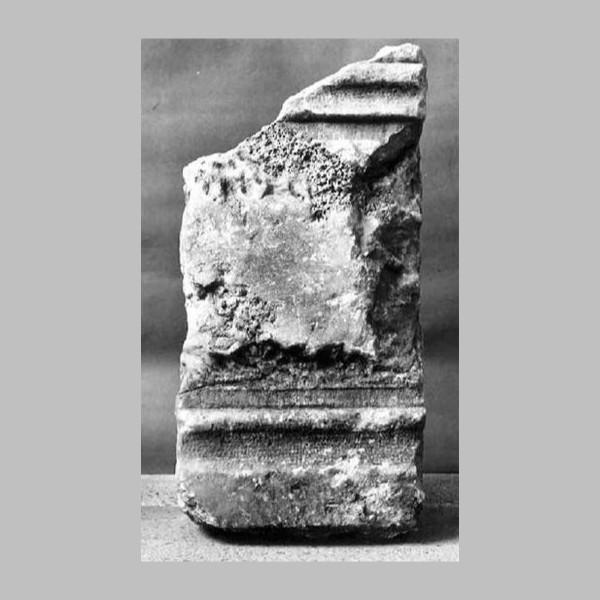
A certain Blastia or Blastianus made a dedication to Mithras and Silvanus on an altar in Emona, Italy.
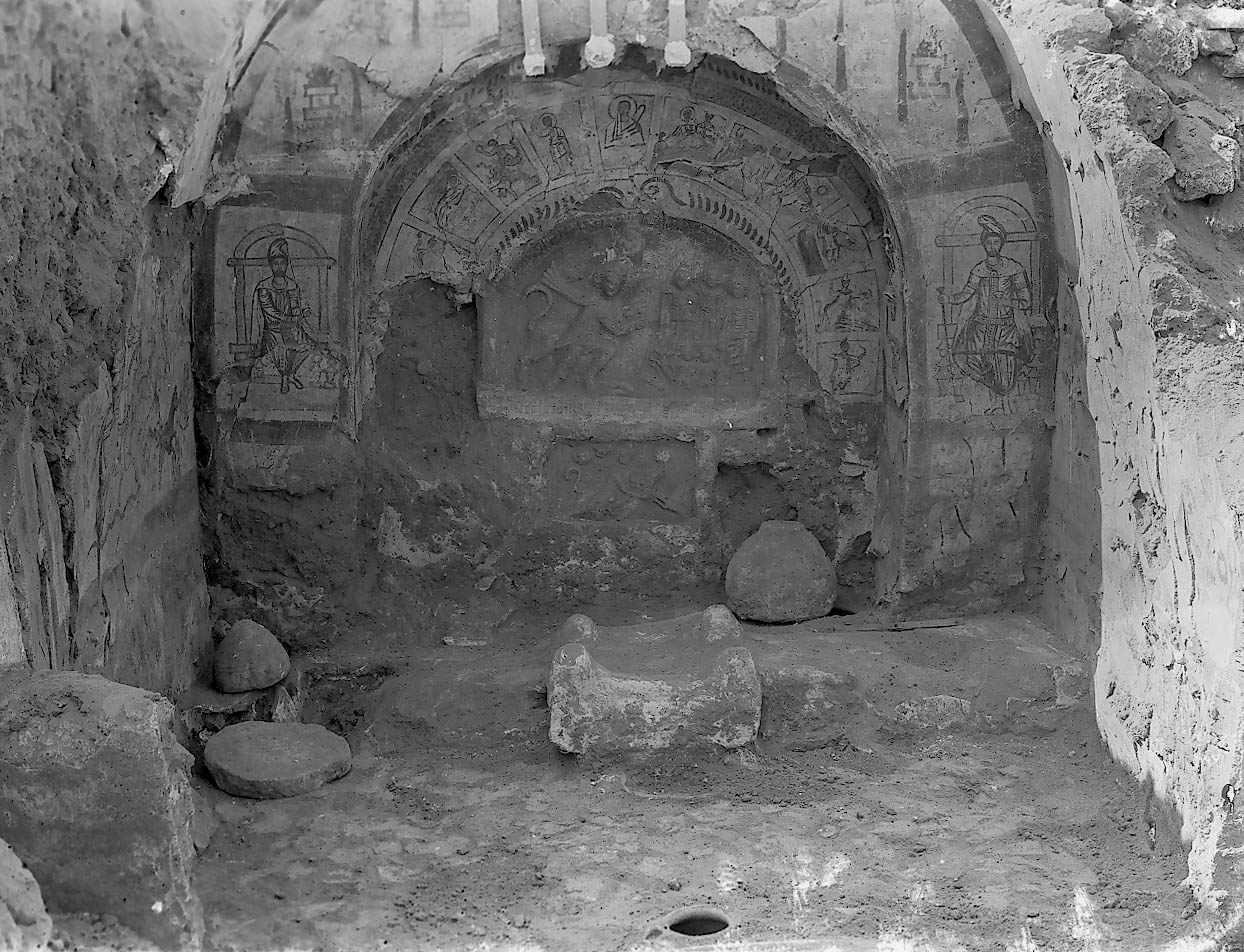
Three plaster altars within the main altar of the Mithraeum of Dura Europos, two of them with traces of fire and cinders.
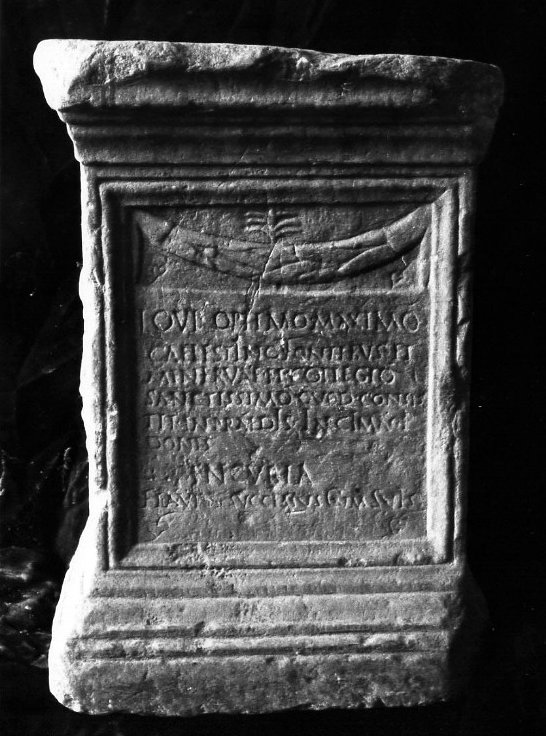
According to the inscription on it, this altar probably supported a statue of Jupiter.
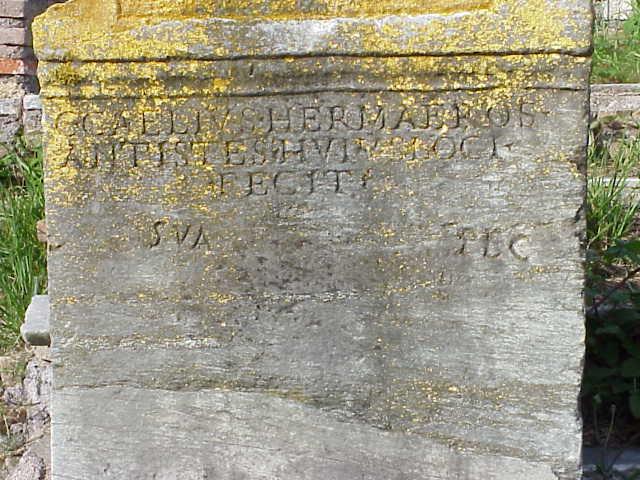
This is one of several marble inscriptions made by a certain Caelius Ermeros, who was the antistes of the Mithraeum of the Imperial Palace.
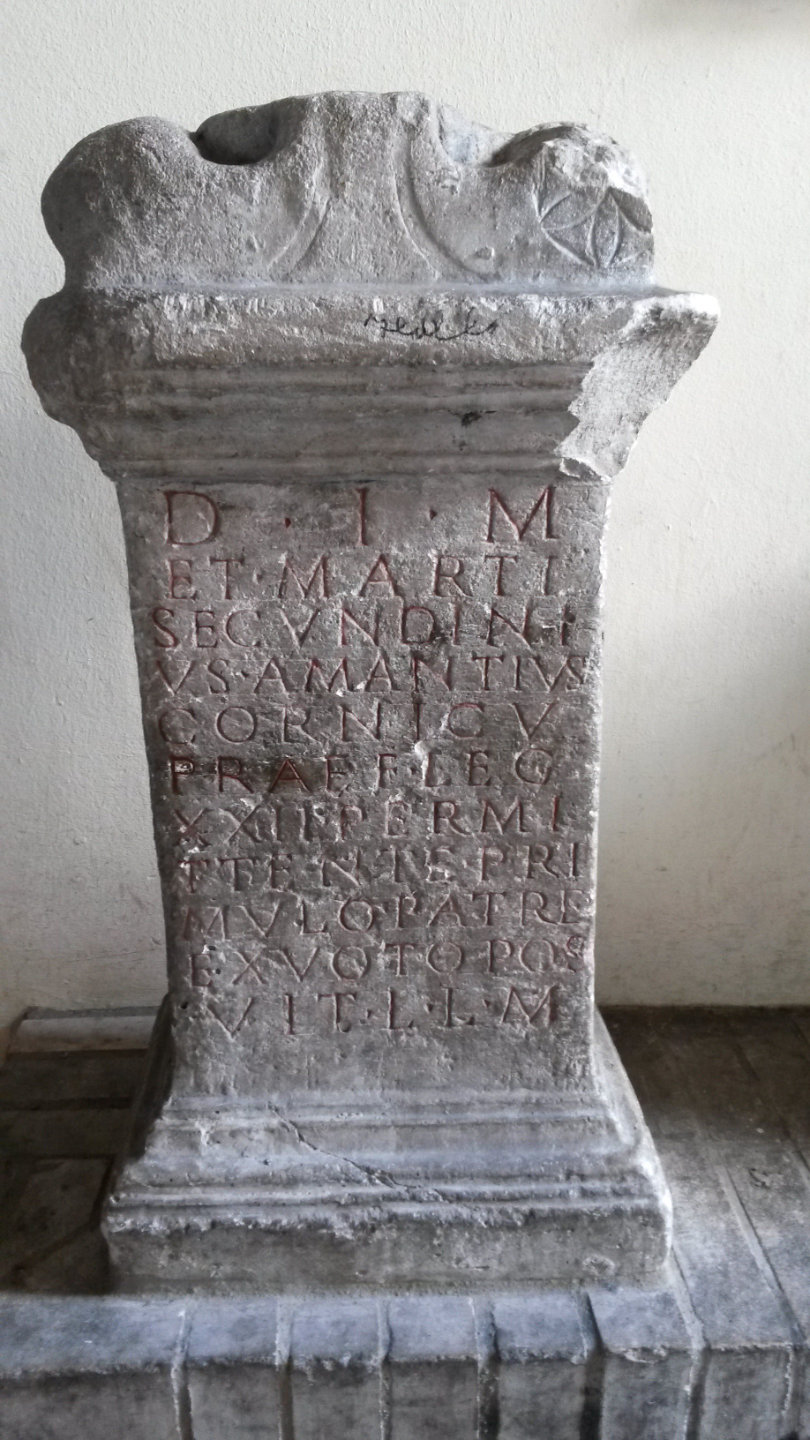
This altar has been unusually dedicated to both gods Mithras and Mars at Mogontiacum, present-day Mainz.
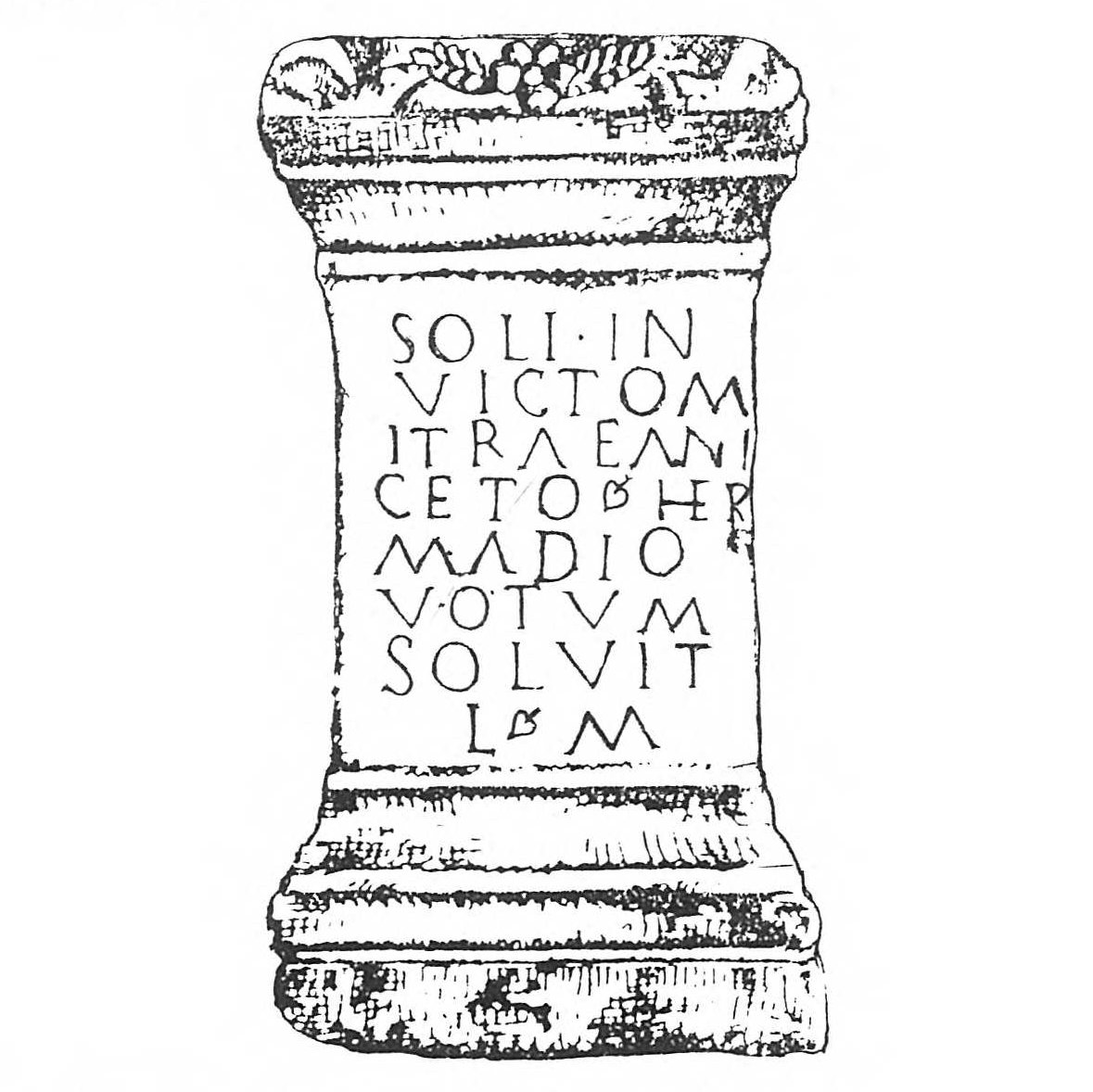
This altar was erected by Hermadio, who also signed other monuments in Dacia and even in Rome.

This marble altar was found ’in the street called di Branco’, behind the palace of the Cardinal of Bologna, in Rome.
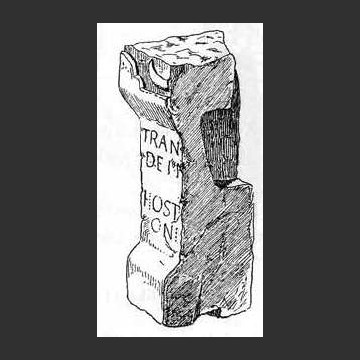
This damaged monument of a certain Hostilius from Malvesiatium, now Skelani, bears an inscription apparently to Mithras transitus.
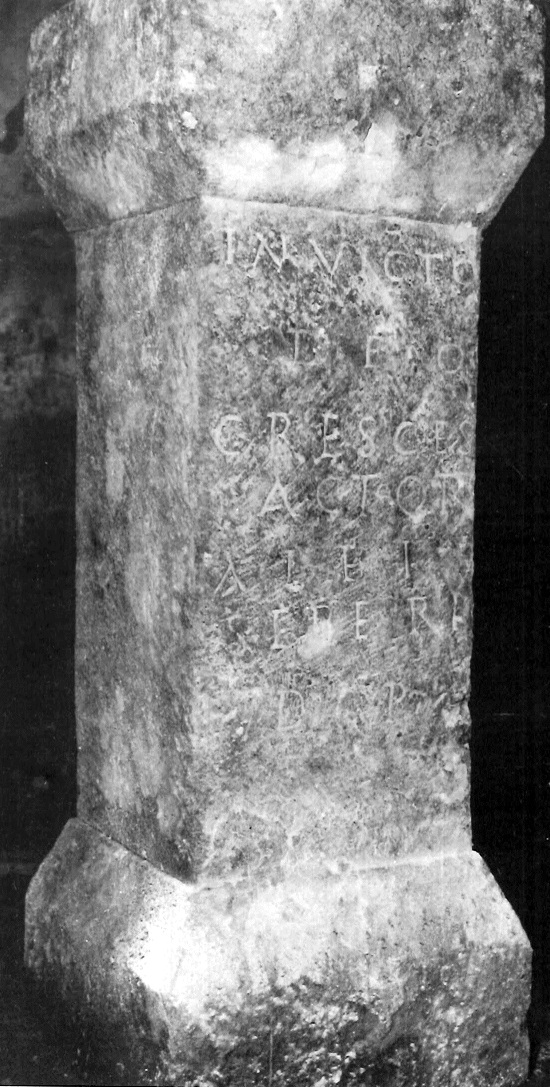
The monument is engraved with an inscription by Cresces, the donor.

This altar, found in Tazoult تازولت, Algeria, was dedicated to the god Sol Mithras by a certain Florus.
