Your selection in monuments gave 263 results.
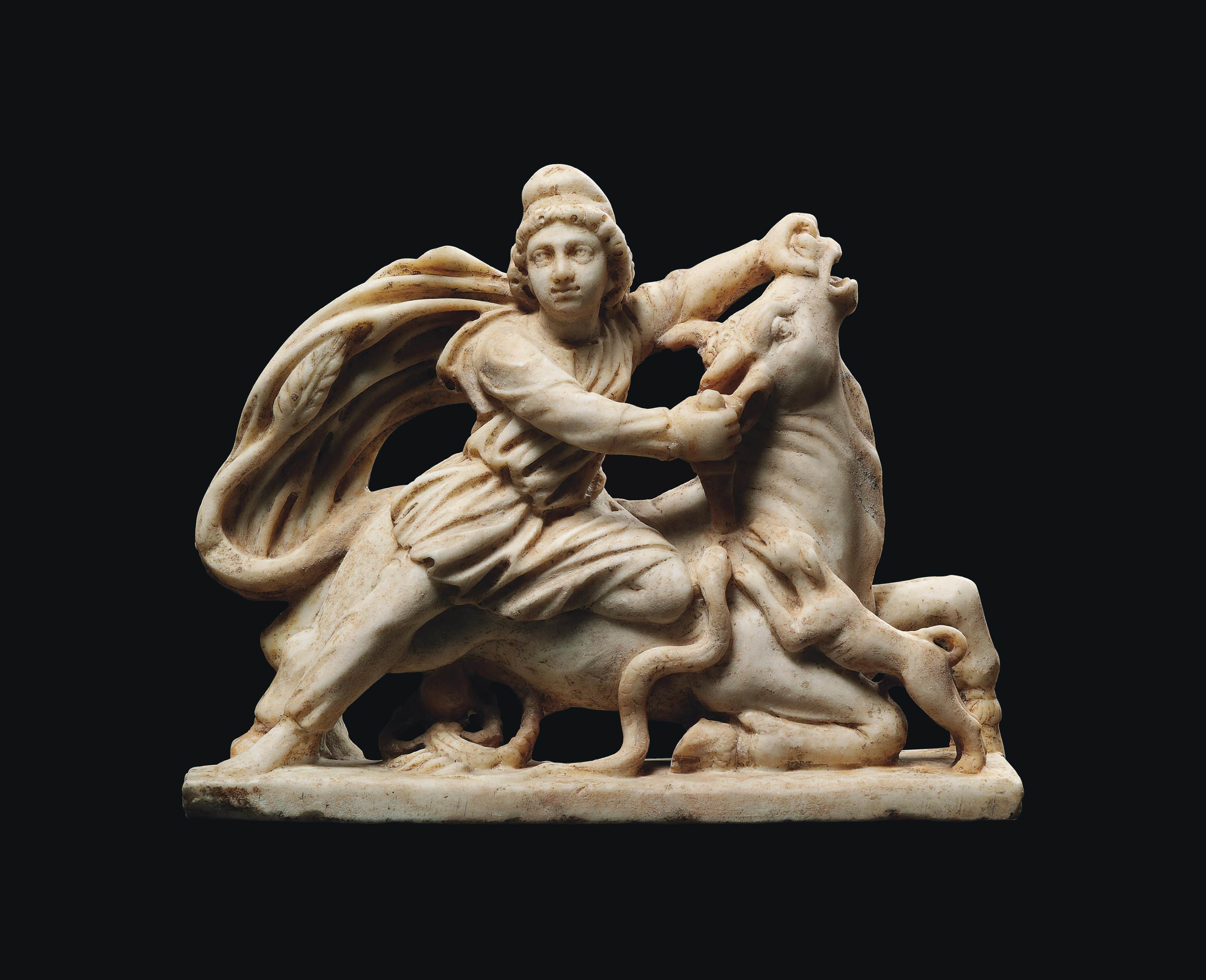
Marble group of Mithras slaying the bull, formerly sold by Antiquarium Ltd., New York.
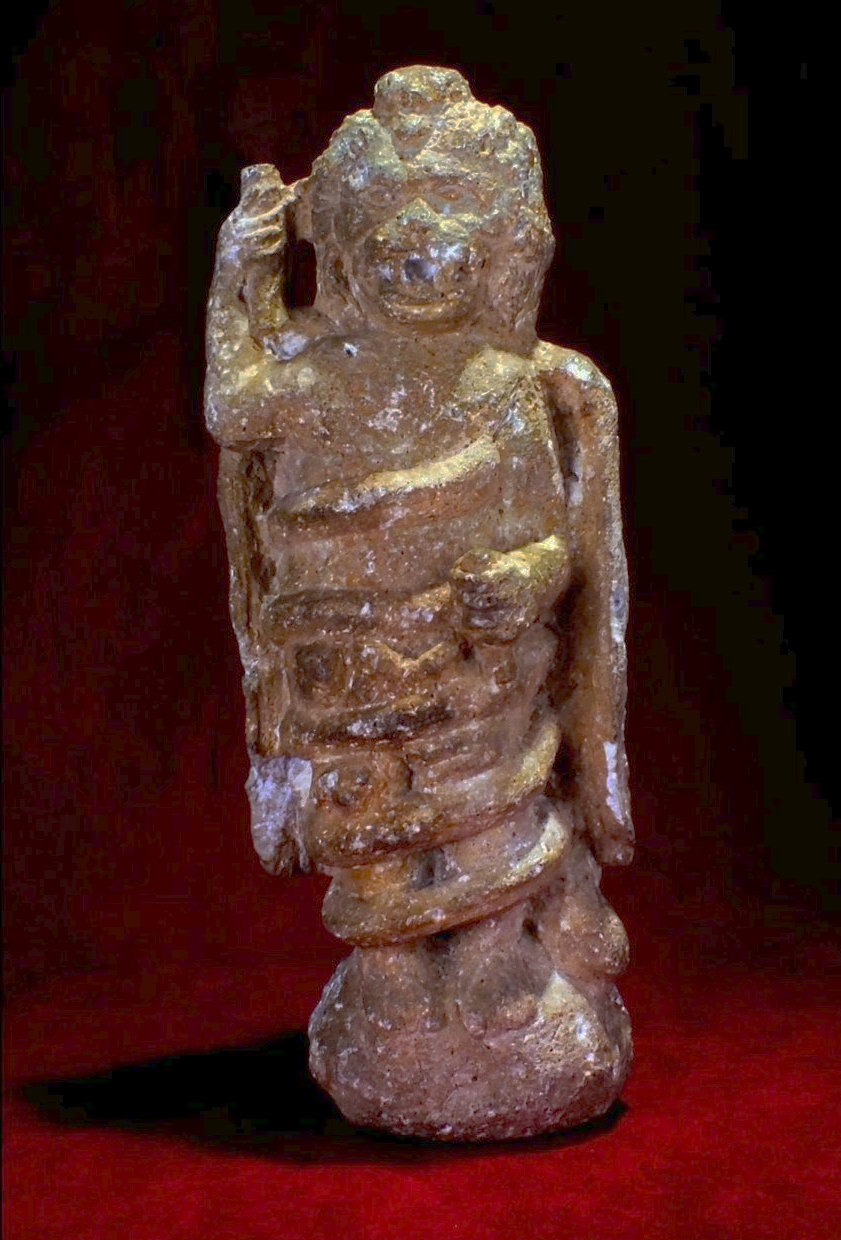
Its base is partially broken, so it is unclear if the figure was standing on a globe, an expected position, or not.
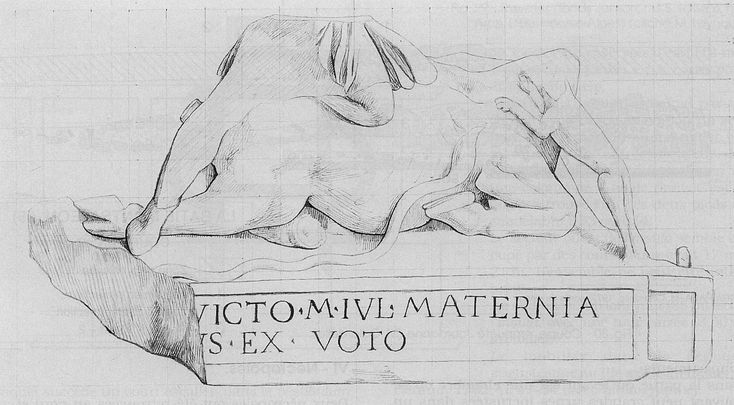
This damaged relief of Mithras killing the bull found in 1804 and formerly exposed at Gap, is now lost.
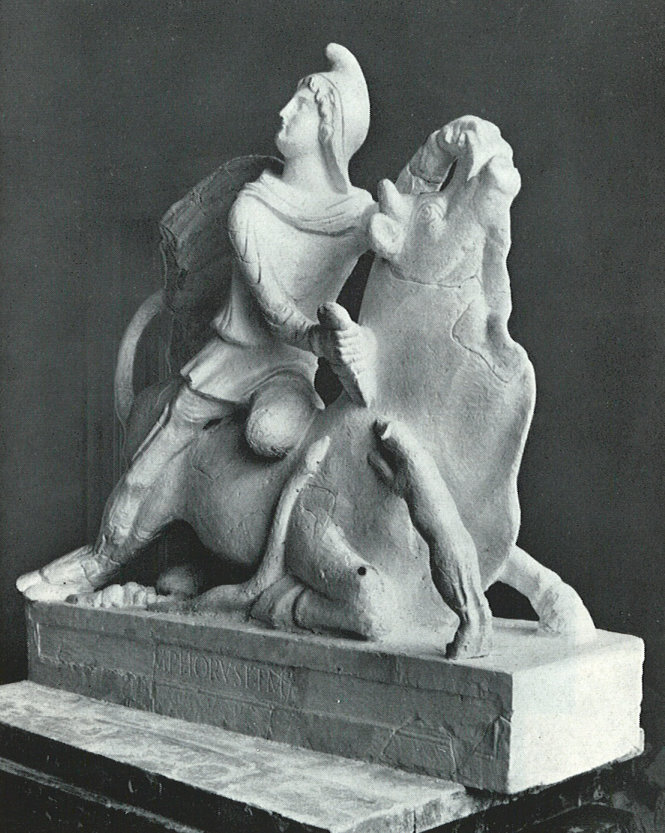
This sculpture of Mithras killing the sacred bull bears an inscription that mentions the donors.
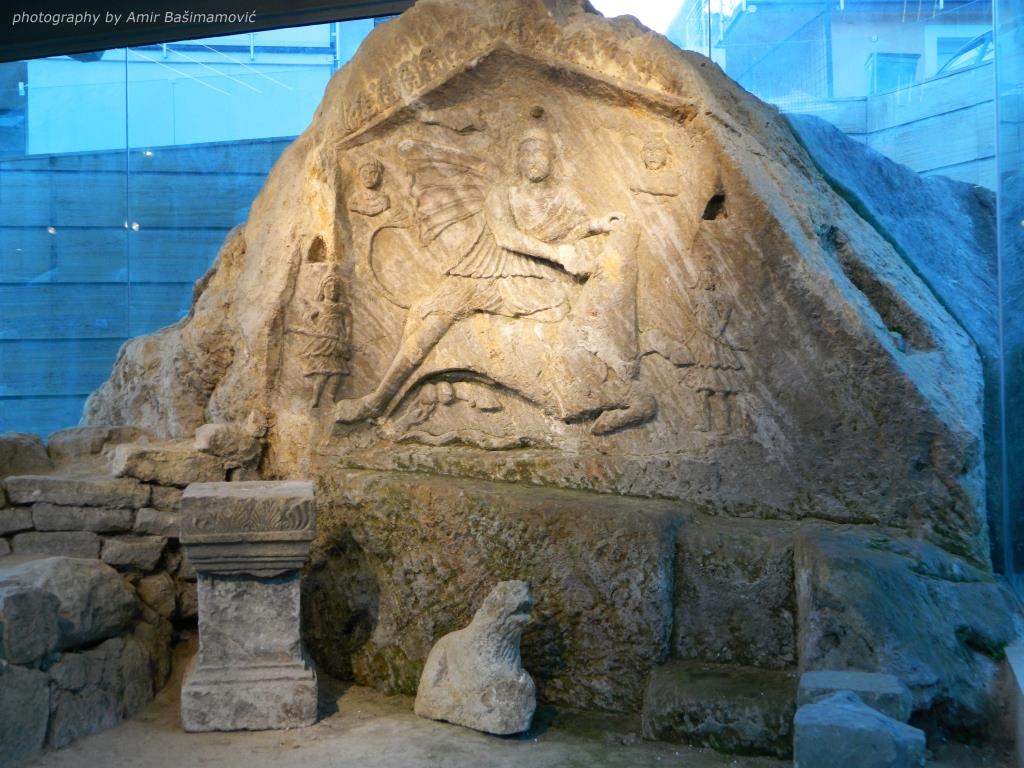
The relief of Mithras killing the bull from the Jajce Mithraeum is walled into the cult niche and surmounted by a roof.
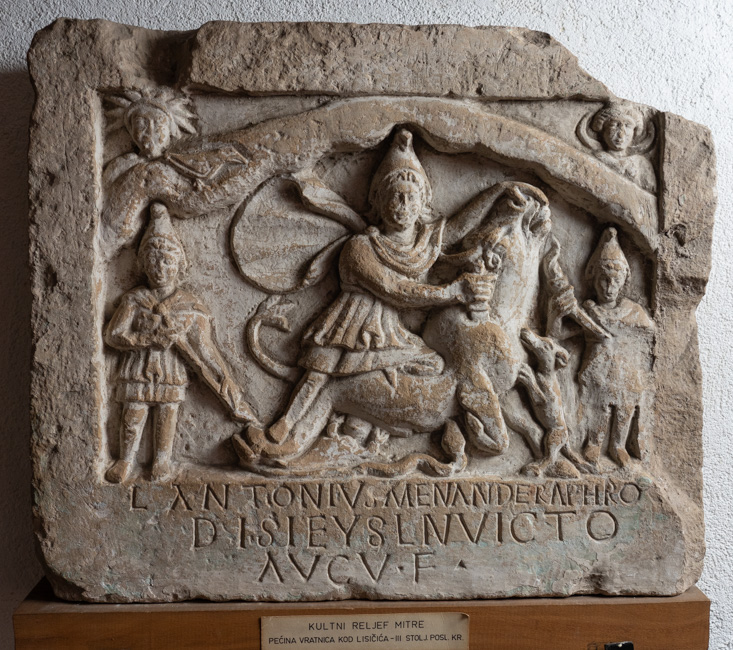
This relief of Mithras as a bullkiller found at Vratnitsa, near Lisicici in northern Macedonia, was signed by a certain Menander Aphrodisieus.
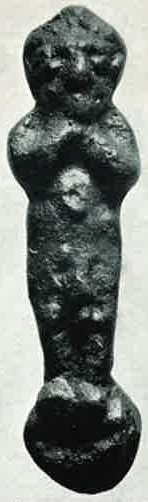
Bronze fibula from Petronell-Carnuntum, depicting a standing lion-headed Aion.
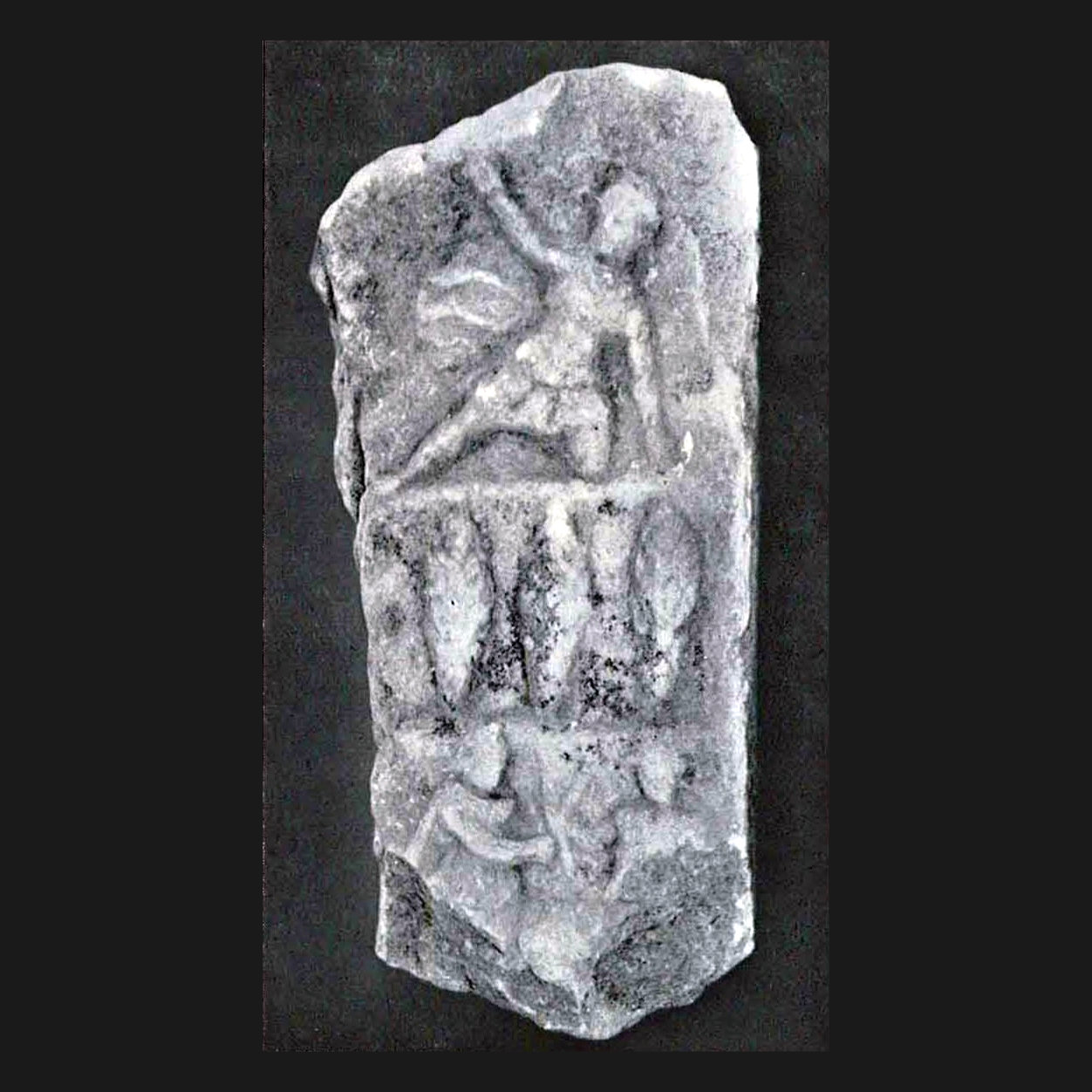
These fragments of a cult relief of Mithras were found at the Mithraeum II of Ptuj, Slovenia.
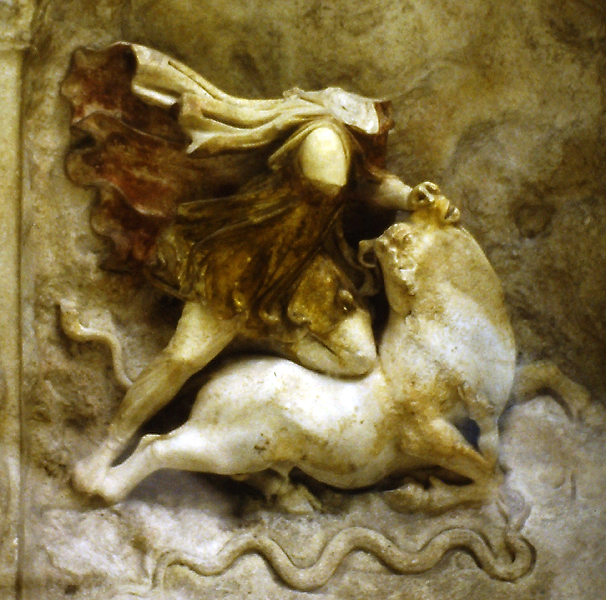
In the Tauroctony of Hermopolis, Cautes and Cautopates are placed over two columns at each side of the sacrifice.
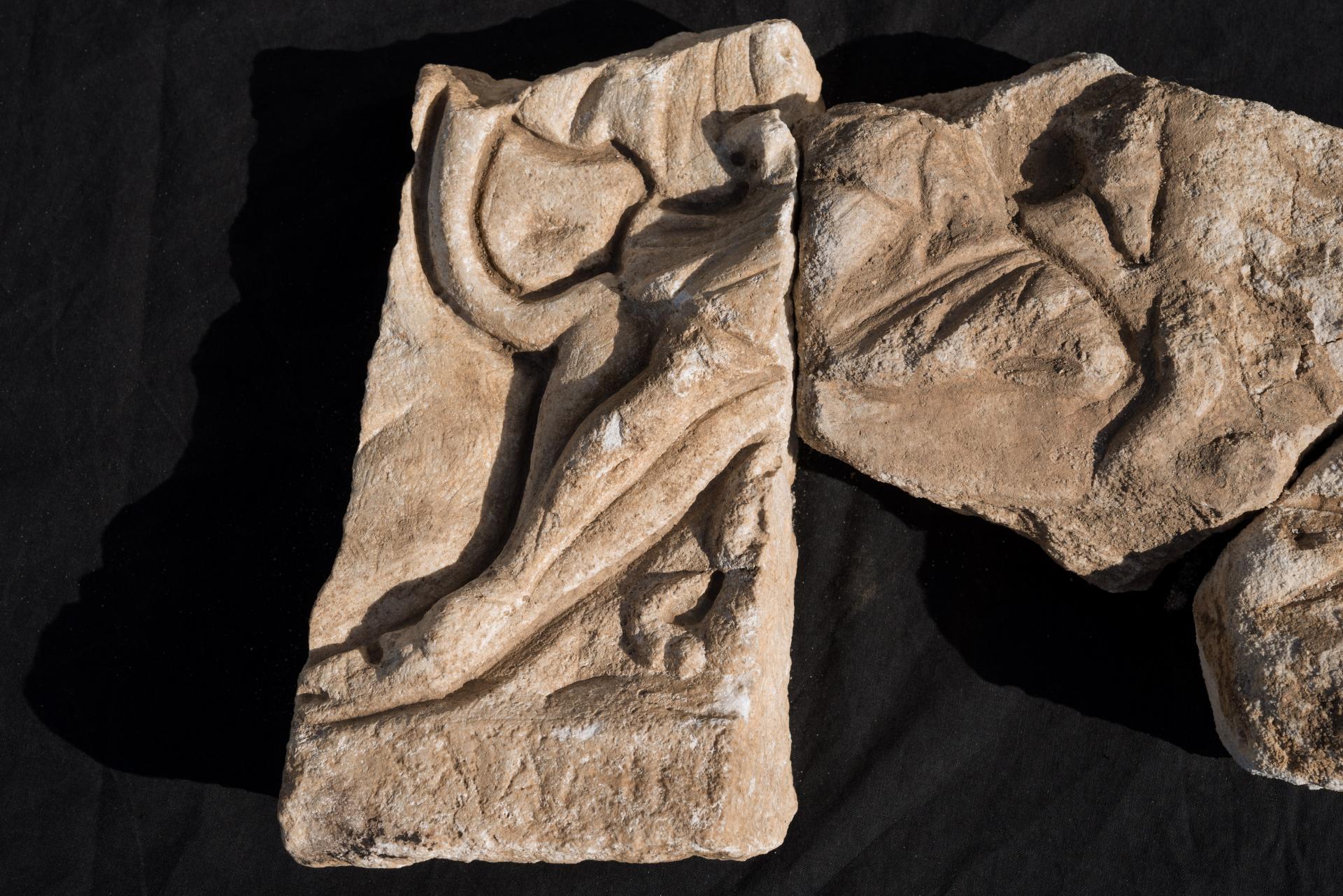
The archeologists have found three fragments of the Tauroctony of Lucciana, which includes Cautes and Cautopates.
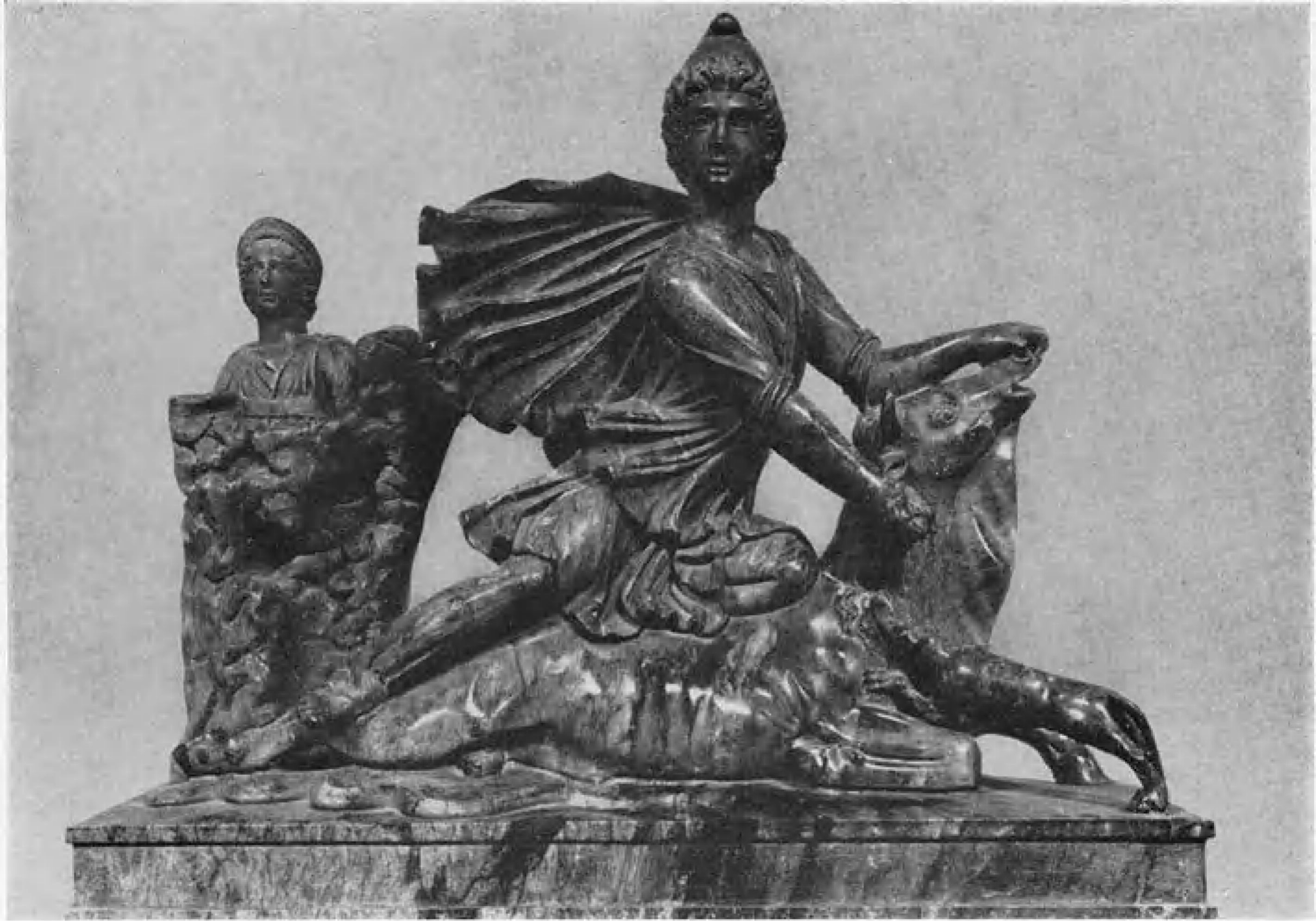
This black marble of Mithras killing the Bull has belonged to the sculptor Carlo Albacini.
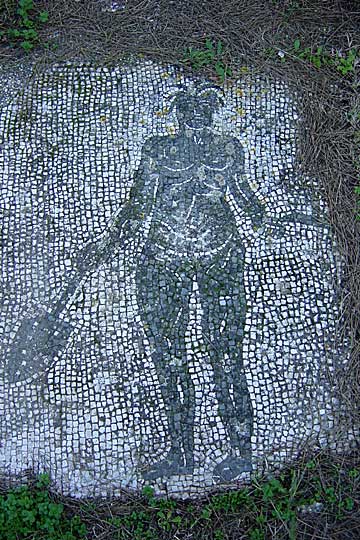
Several figures related to the Mysteries of Mithras are depicted on the mosaics of the Mithraeum of the Animals.

Relief of Mithras killing the bull with an inscription from a certain Aurelius Macer who dedicates it to Sol Invictus Mithras.
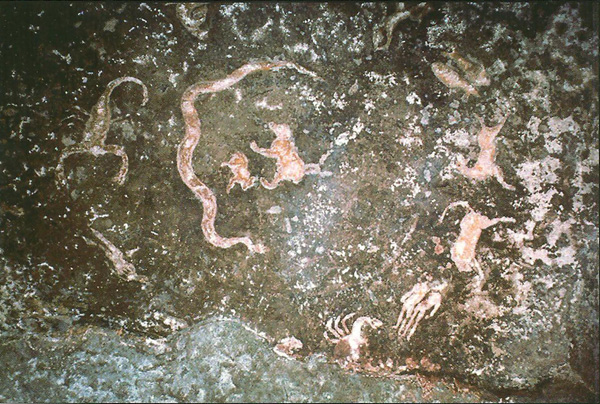
Solis invicti Mithrae studiosus astrologiae who was at the same time ’caelo devotus et astris’.
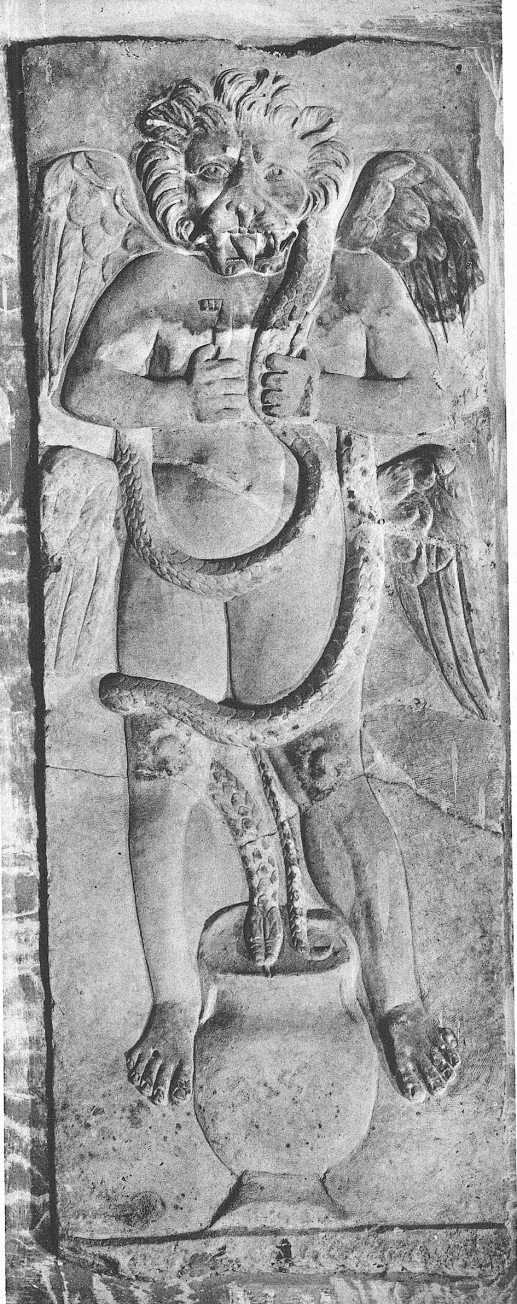
This white marble relief depicting a lion-headed figure from Ostia is now exposed at the Musei Vaticani.
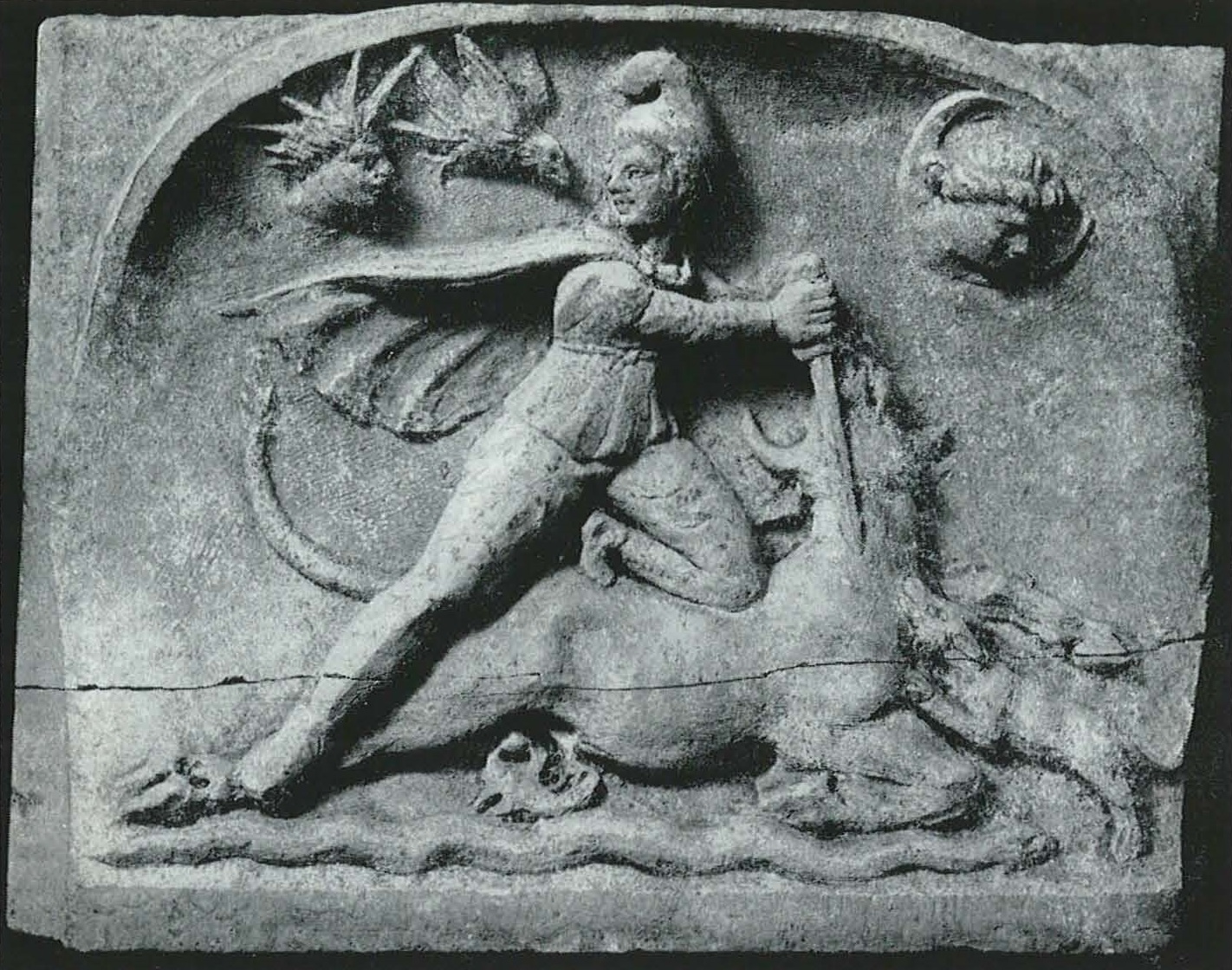
This simple relief of Mithras killing the bull without his companions Cautes and Cautopates was found in the so-called Mithraeum of the Esquilino, Rome.


White marble statue of Mithras killing the sacred bull preserved in the Museo Nacional Romano.

Partial relief of a Giant with snake-feet found in the Mithraeum of Santa Prisca.
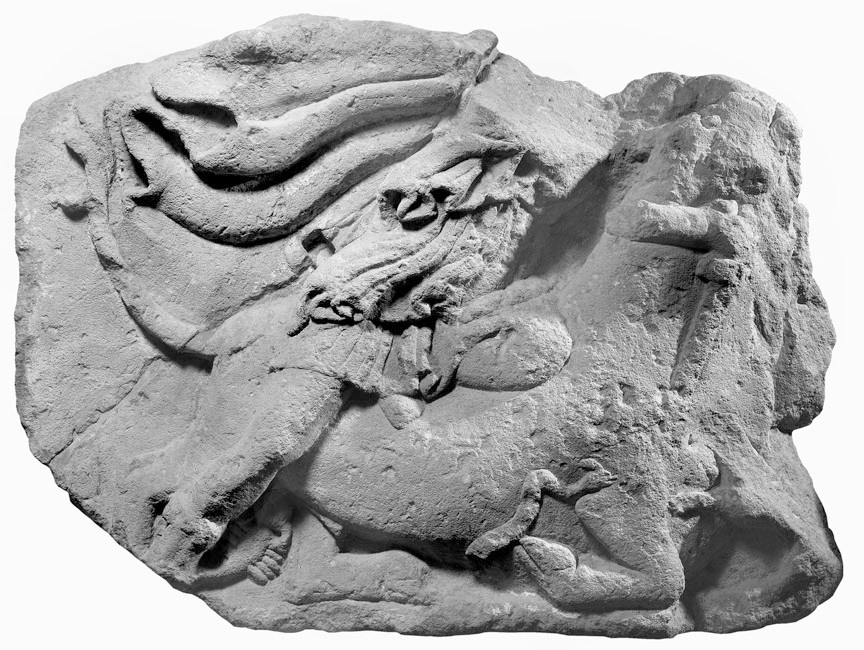
Sandstone relief of Mithras killing the bull, broken in two parts and partly restored, with dog, serpent and scorpion preserved; formerly in Vienna, now on loan to the Museum Carnuntinum.
