Your selection in monuments gave 176 results.

Fragment of a white statue depicting a naked god entwined by a serpent with its head on his chest, found in the River Tiber.
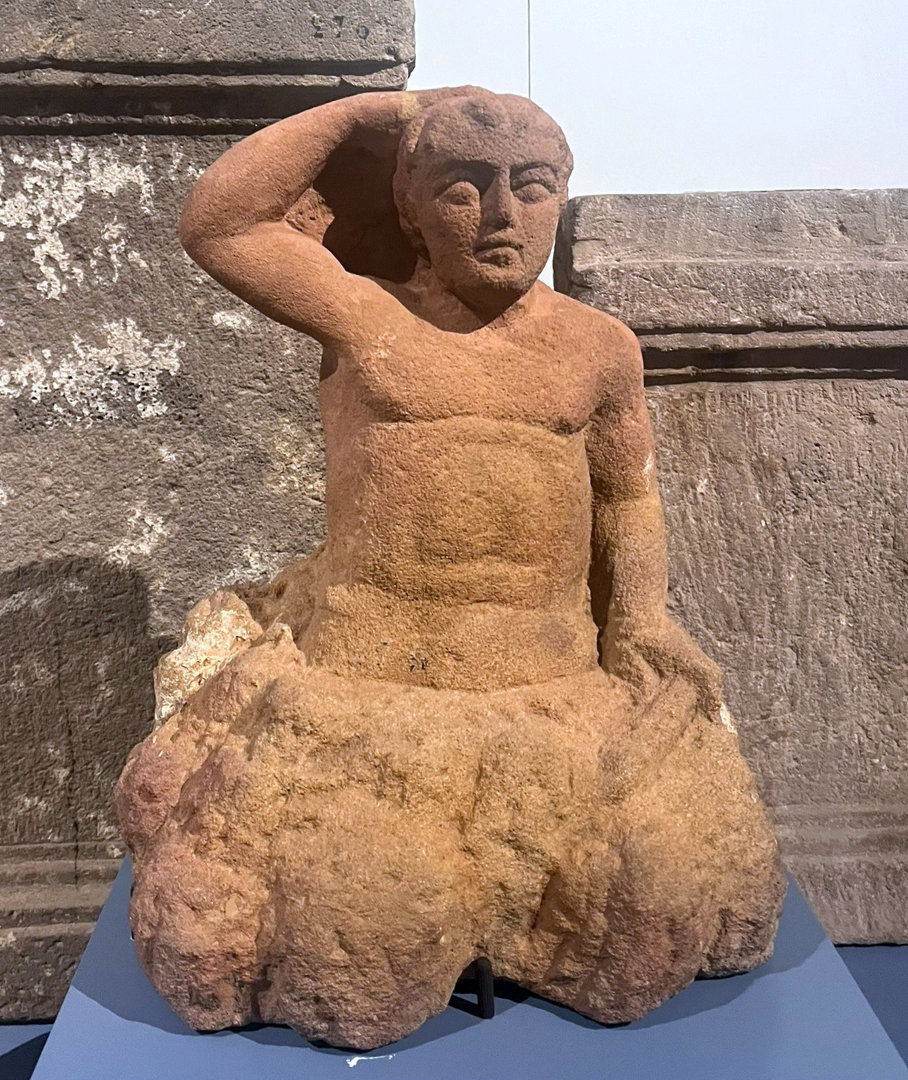
This sculpture of Mithras being born from a rock is unique in the position of the hands, one on his head, the other on the rock.
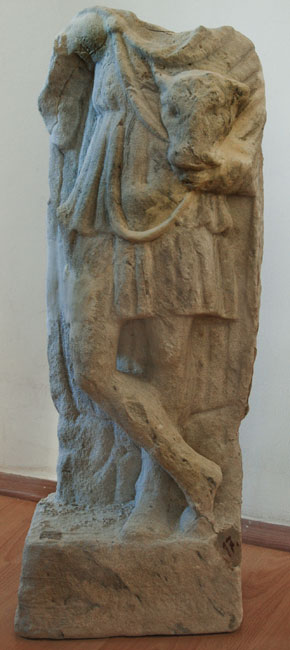
This sculpture of Cautes holding a bull’s head was found in 1882 in Sarmizegetusa, Romania.

This fragment of a sculpture depicting the birth of Mithras from a rock, intertwined with a chaotic mass of serpent coils, was discovered in Aquileia, Italy.

This unusual bronze bust of Sabazios features multiple symbolic elements, with Mithras depicted in his characteristic pose of slaying the bull, positioned just below Sabazios’ chest.

This remarkable marble statue of Mithras killing the bull from Apulum includes a unique dedication by its donor, featuring the rare term signum, seldom found in Mithraic contexts.

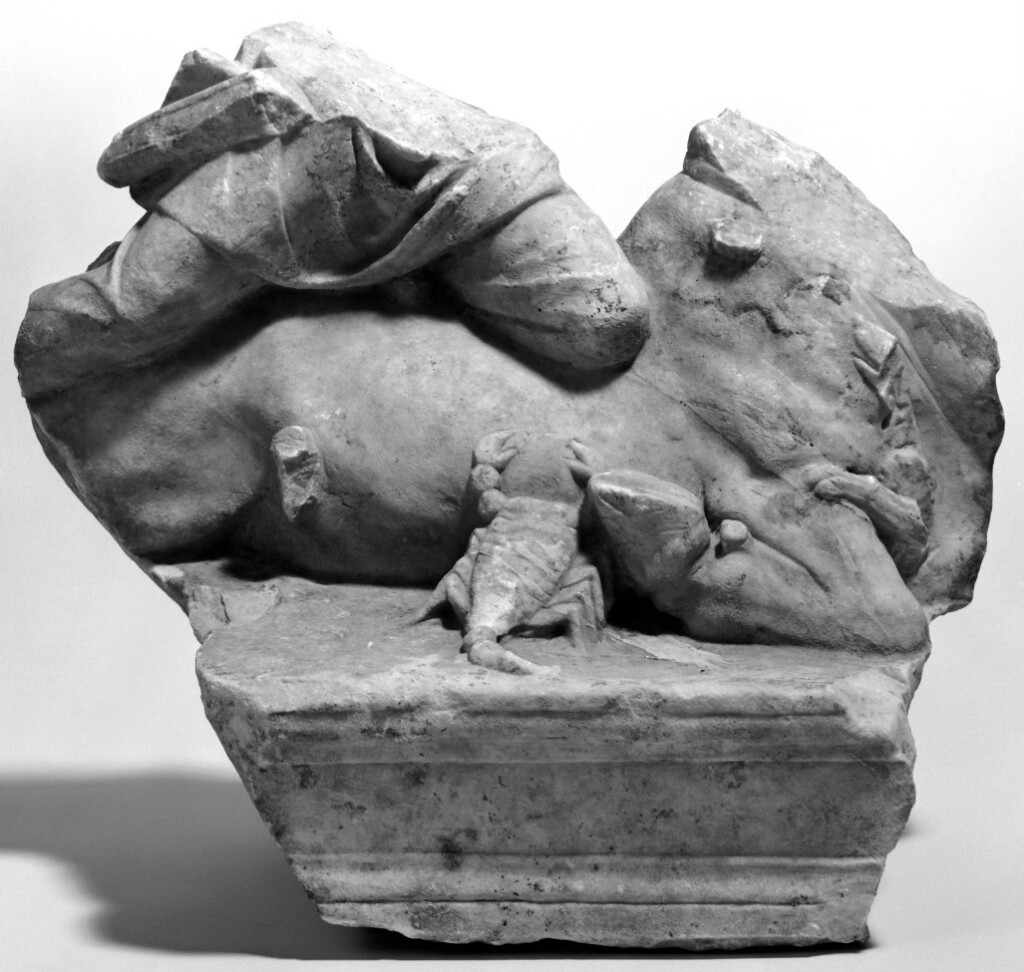
This fragmentary scupture of Mithras killing the bull belongs to the Getty Museum, Los Angeles, USA.
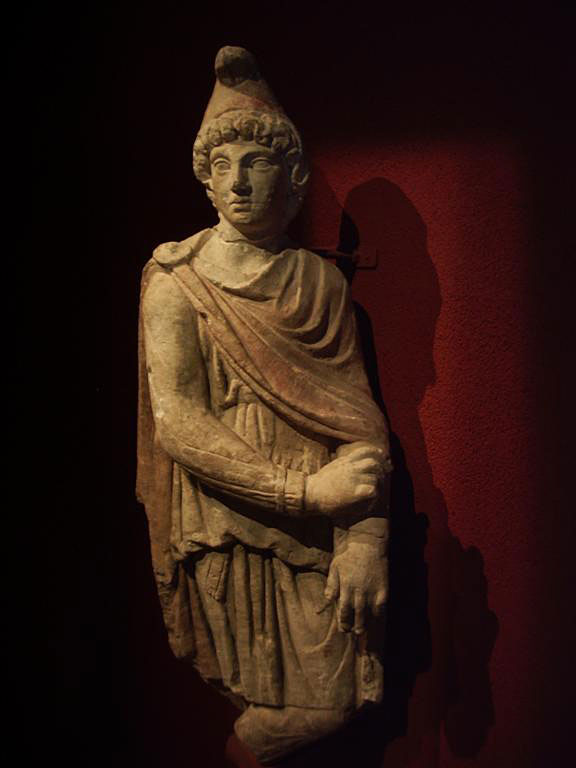
The Cautopates of Bordeaux stands as usual with his legs crossed and arms down.
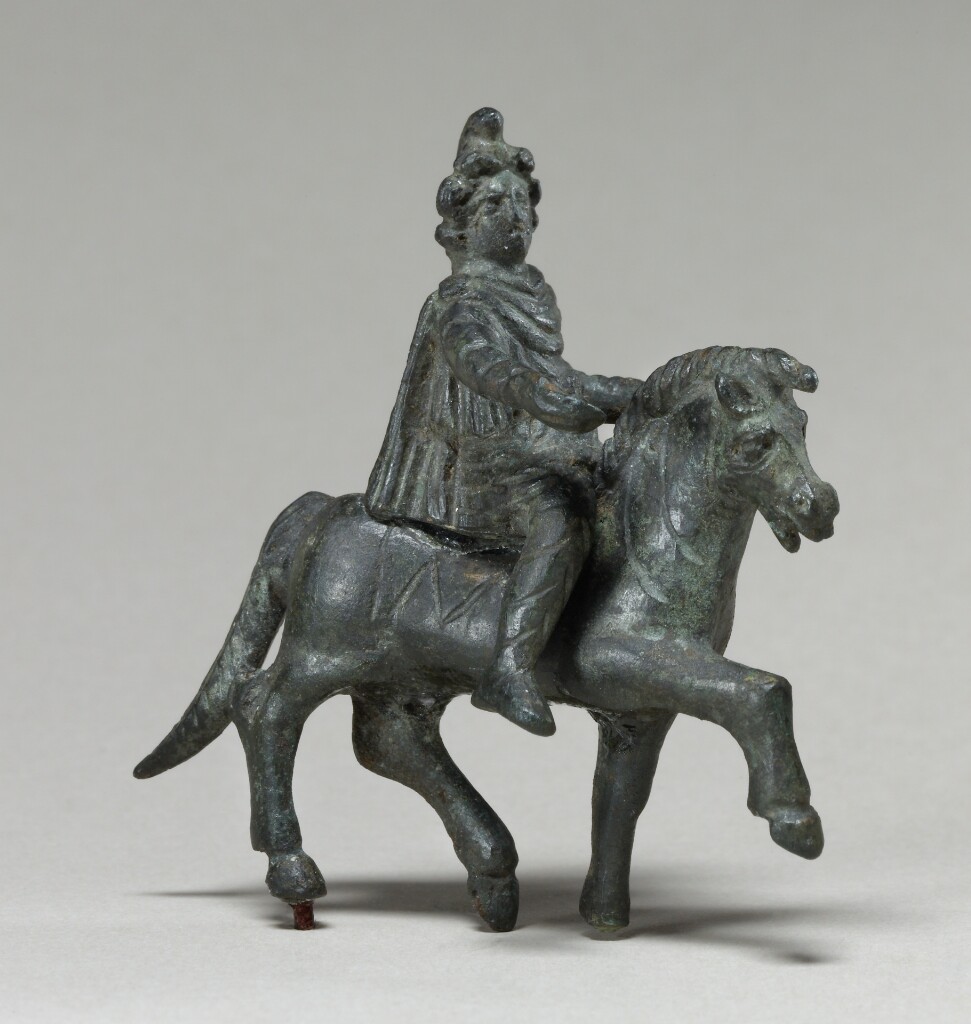
This small bronze statuette of Mithras riding a horse is composed of two pieces.
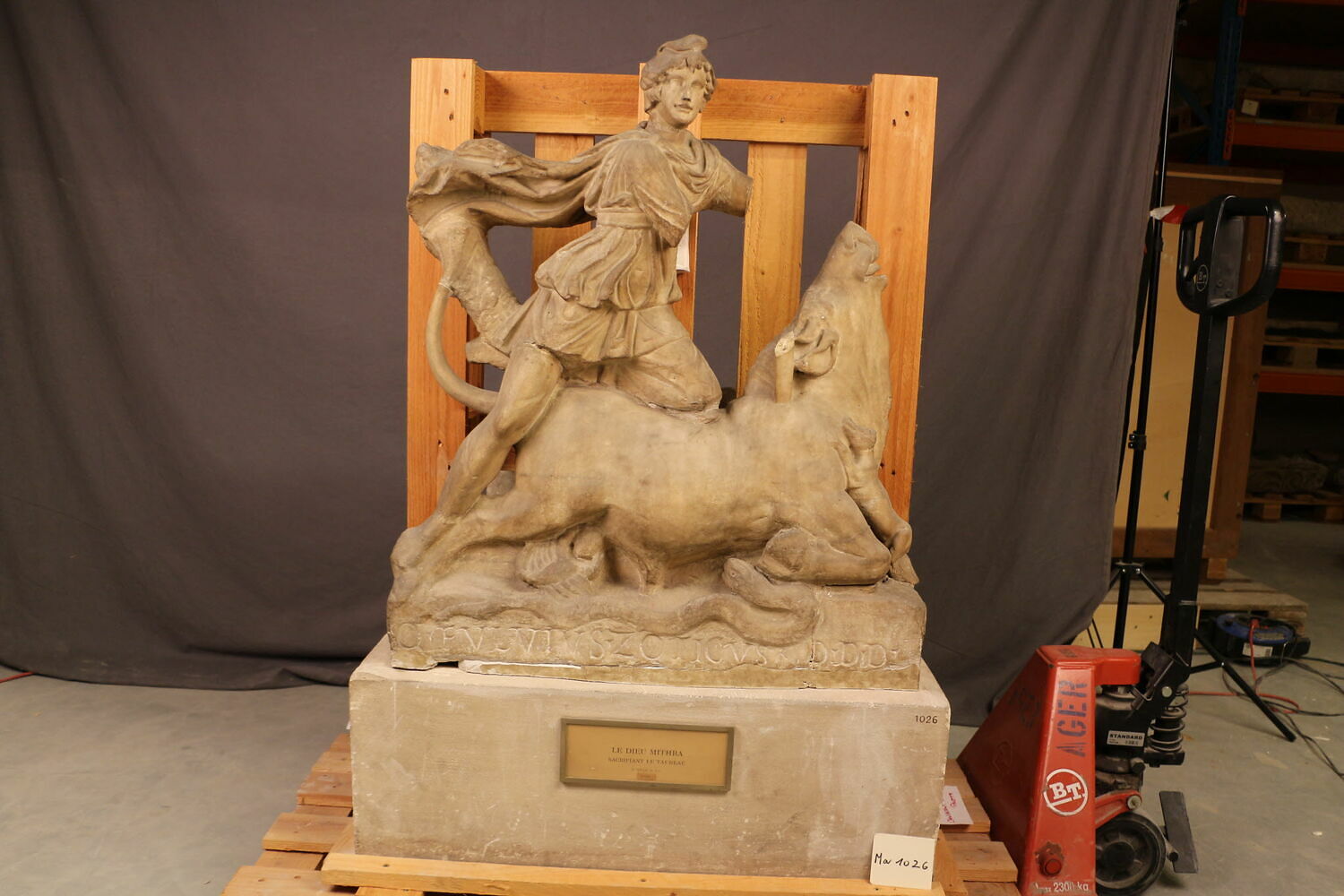
The Tauroctony found in Velletri, Rome, bears an inscription from its owner and donor.

This marble sculpture from Sicily, known as the Randazzo Vecchio or Rannazzu Vecchiu, contains some essential elements of the Mithraic Aion, the lion-headed god.
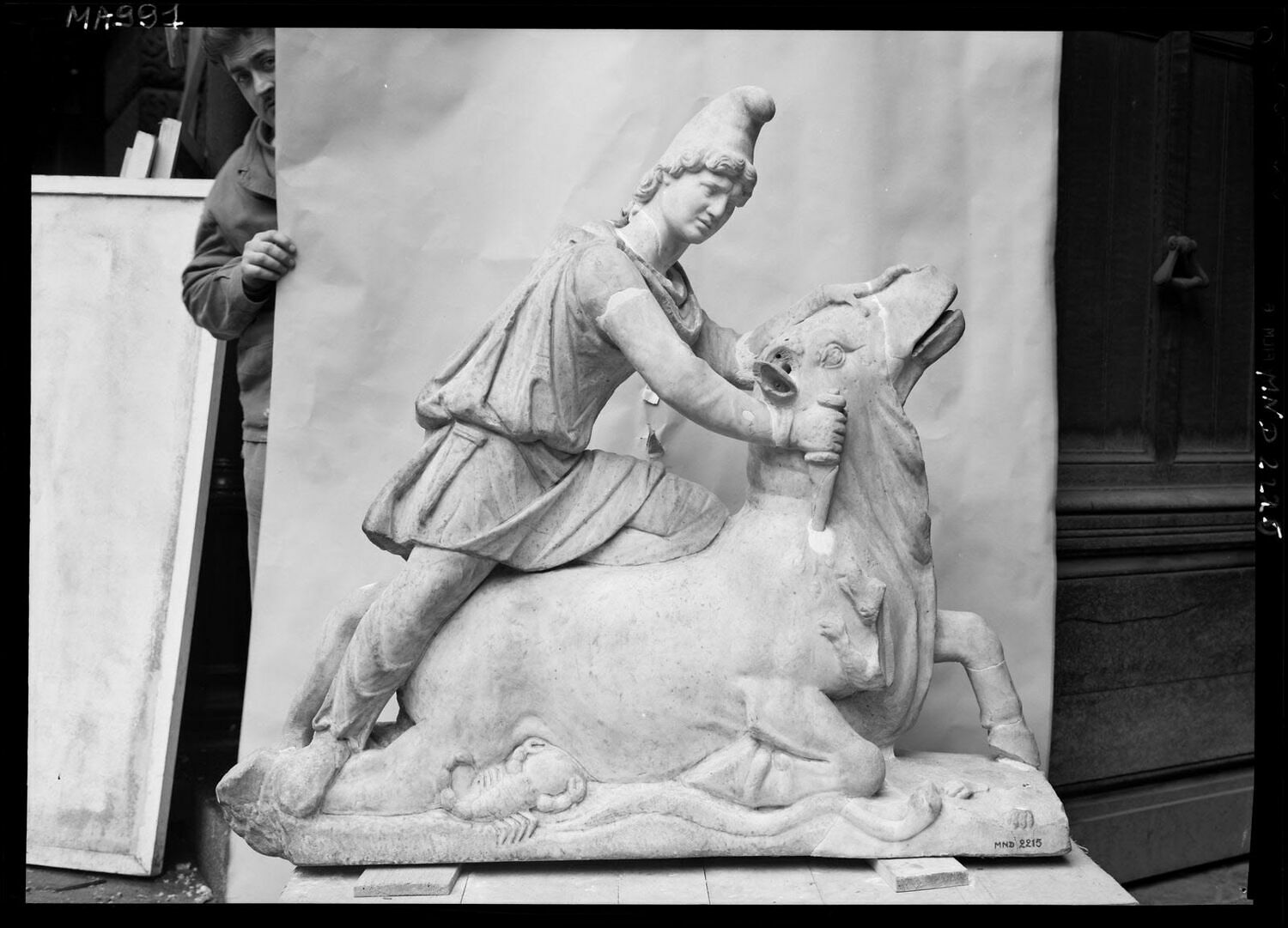
This sculpture of Mithras killing the bull, which belongs to the Louvre Museum, is currently on display in Varsovia.
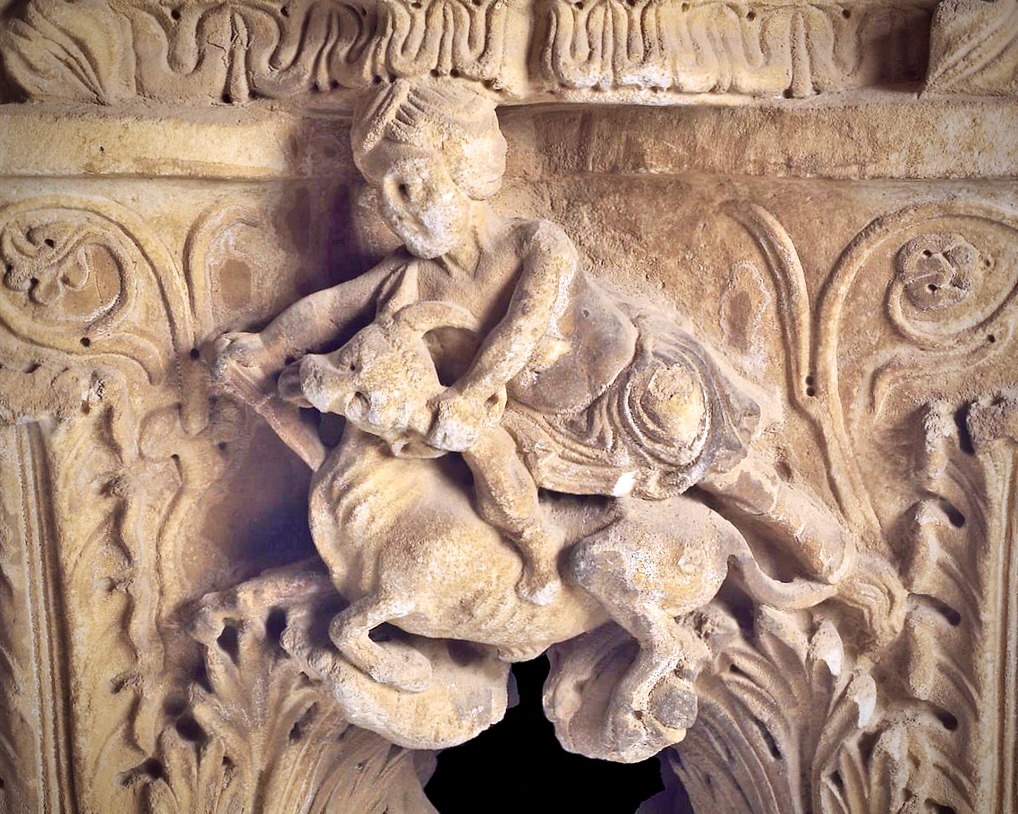
On one of the capitals of the cathedral of Santa Maria Nuova in Monreale, Sicily, an unusual turbaned bull-slaying Mithras has been recorded.
.jpg)
The controversial Italian journalist Edmon Durighello discovered this marble statue of a young naked Aion in 1887.
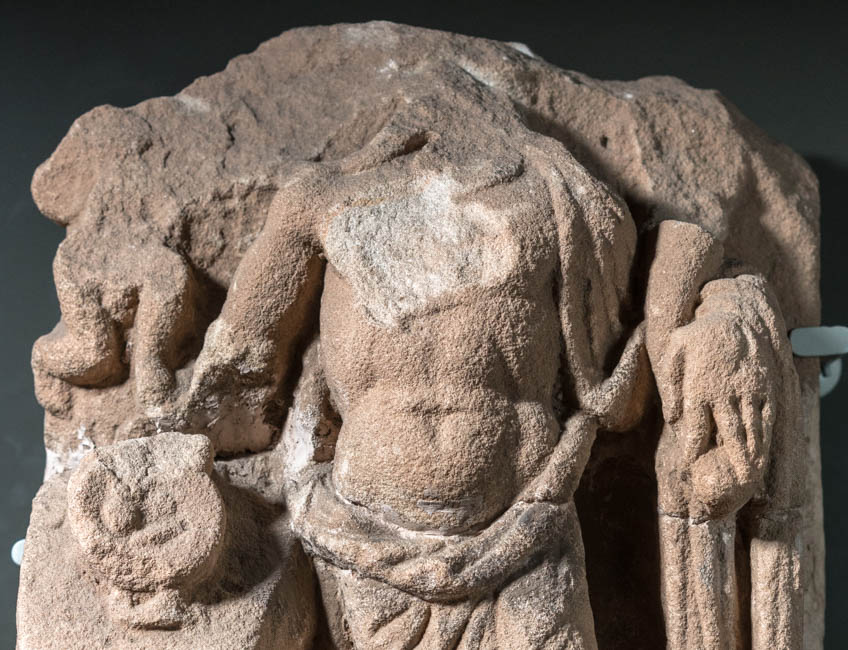
A standing half naked man makes offerings to an altar while holding a cornucopia in his other hand.

This sandsotne head with a Phrygian, found in Fürth in 1730, probably belonged to a torach-bearer.
This marble bust of Sol, found in the Mitreo di San Clemente, had five holes in the head where rays had been fixed.
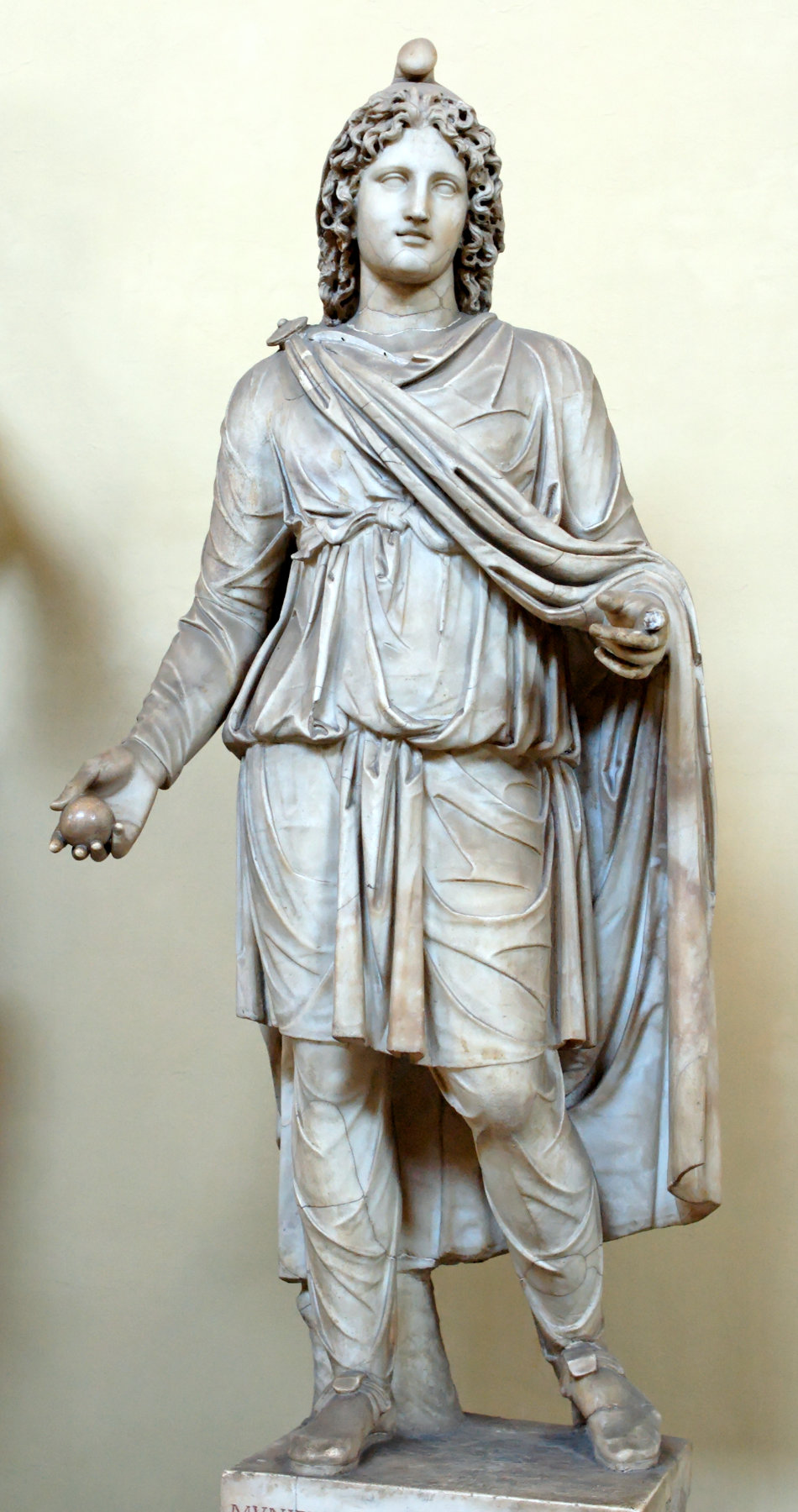
This sculpture, probably of Cautopates, now in the Musei Vaticani, was transformed into Paris.
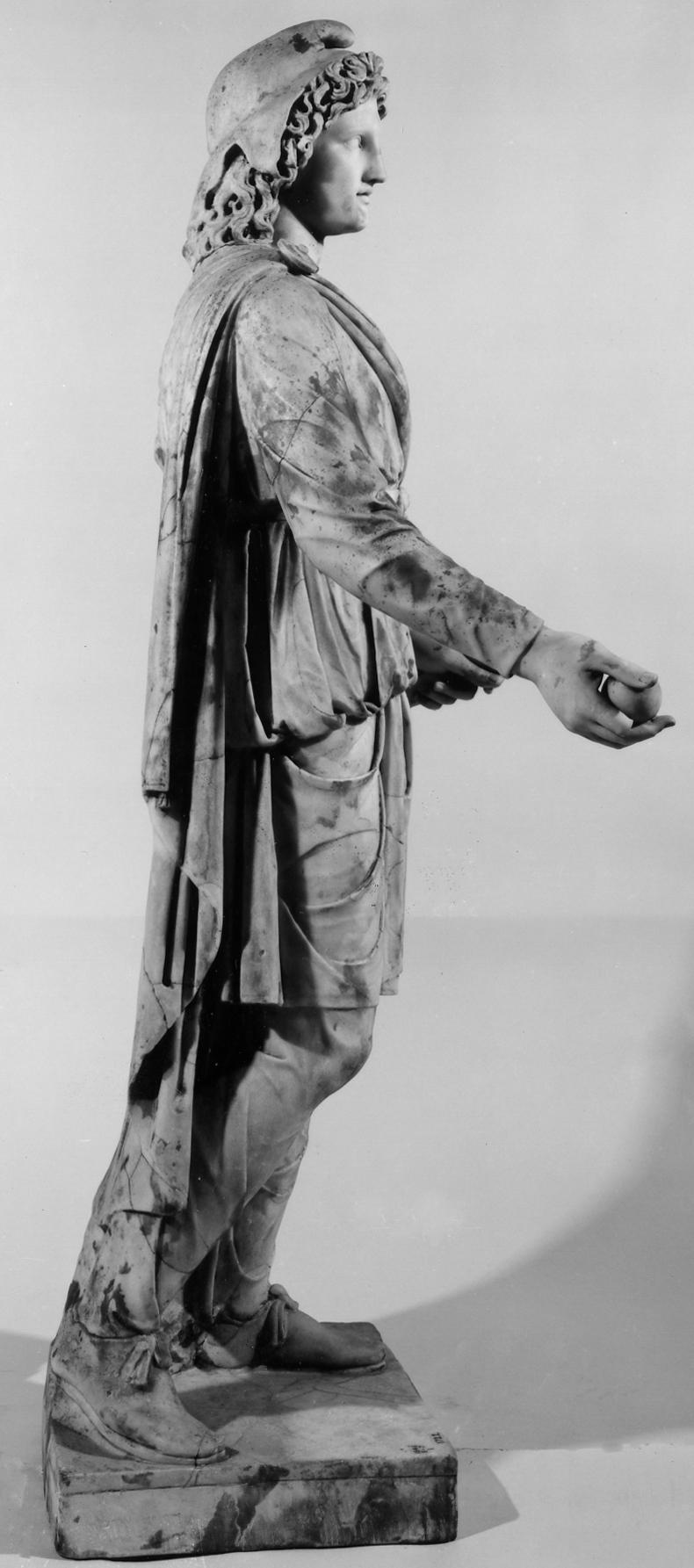
This is one of the two torchbearers, probably Cautes, transformed into Paris, now in the British Museum.
