Your selection in monuments gave 28 results.

Mosaic-paved floor of the central aisle of the Mitreo delle Sette Porte at Ostia, with a krater flanked by serpent and eagle, standing Jupiter and Saturn, torchbearers at the podia, and planetary gods Mars, Luna, Venus, and Mercury.
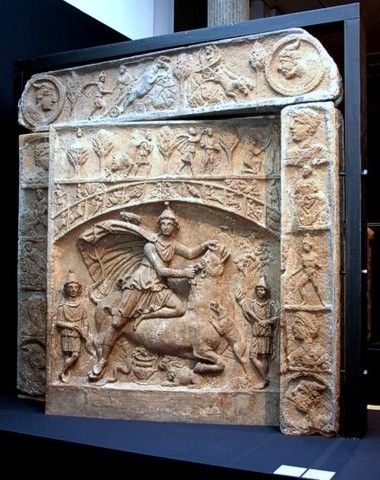
This relief is so well-known that it has been reproduced in nearly every handbook of archaeology and of history of religions.
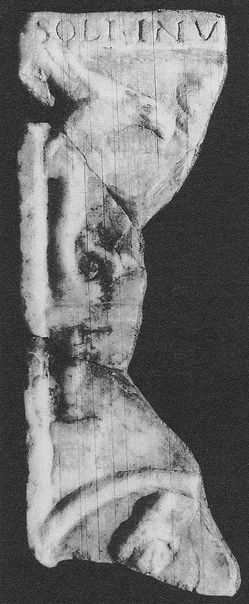
This marble fragment from Apulum preserves the head of Mithras beneath an arch together with a raven and the remains of Sol’s radiate crown.
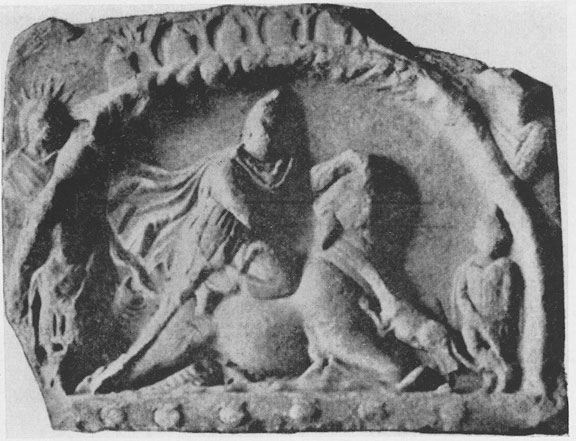
This finely carved marble tauroctony from Interamna features an unusual series of altars and ritual vases surrounding the scene.
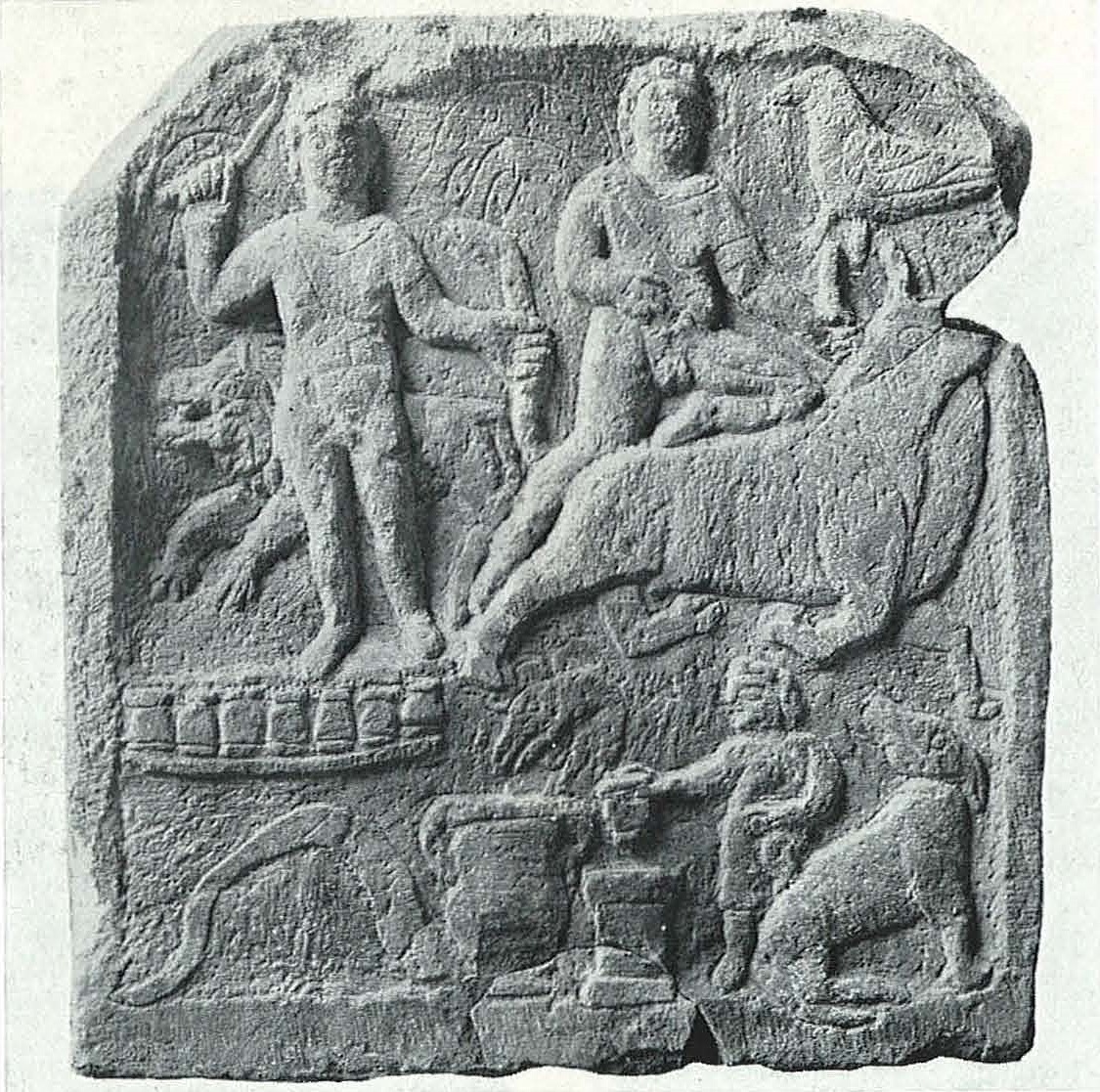
The Tauroctony from Landenburg, Germany, shows a naked Mithras only accompanied by his fellow Cautes.
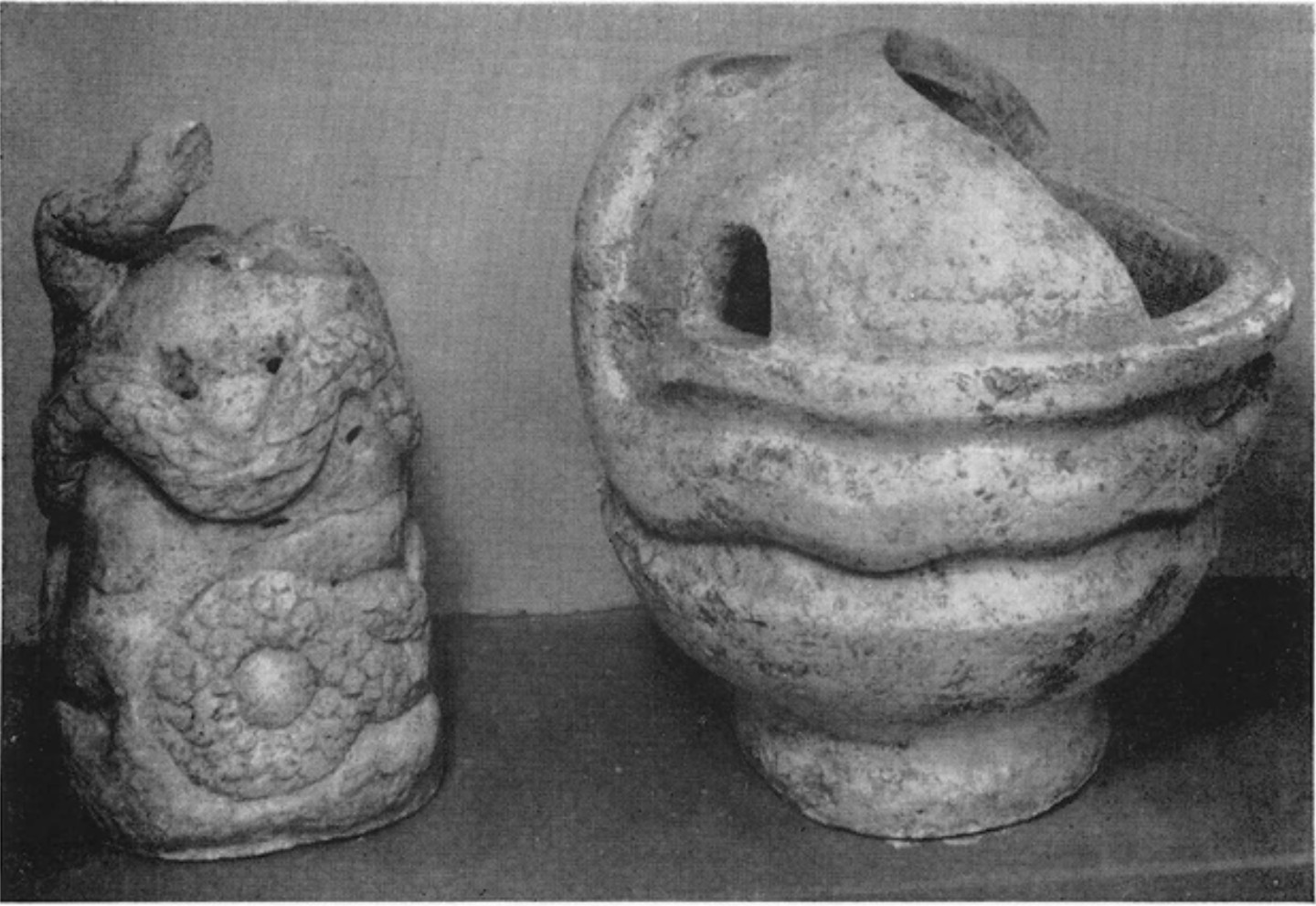
Both objects have a snake winding itself around them.
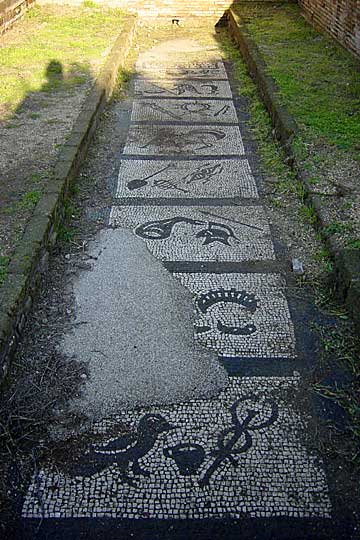
The Felicissimo Mithraeum has a floor mosaic depicting the seven mithraic grades.
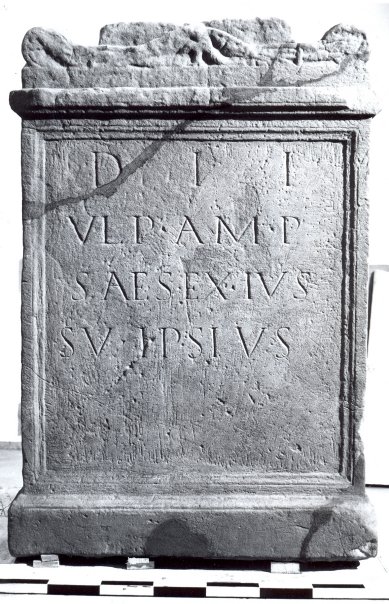
This altar found at ancient Burginatum is the northernmost in situ Mithraic find on the continent.
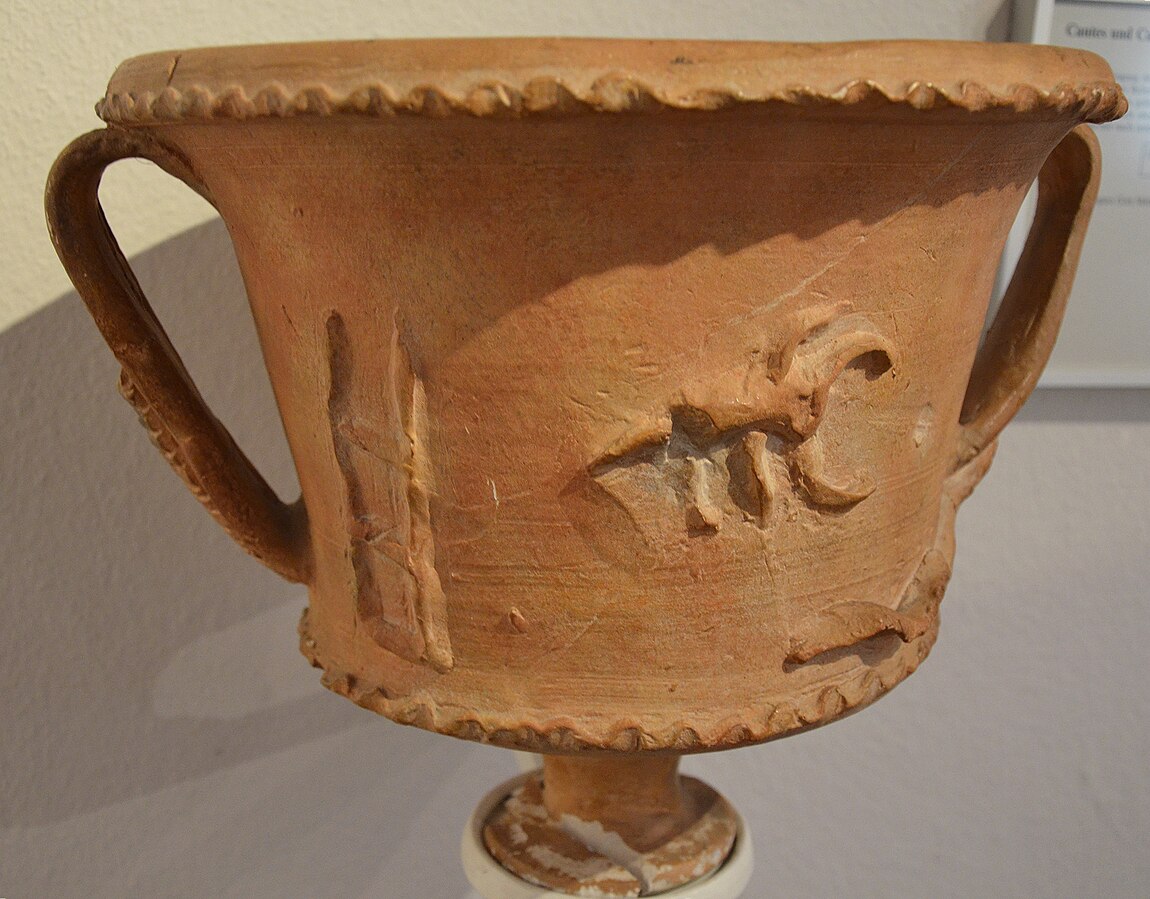
Terracotta krater from the southern part of the Friedberg Mithraeum, discovered in 1849. The vessel is decorated in relief with serpents, a scorpion and a ladder-like motif.
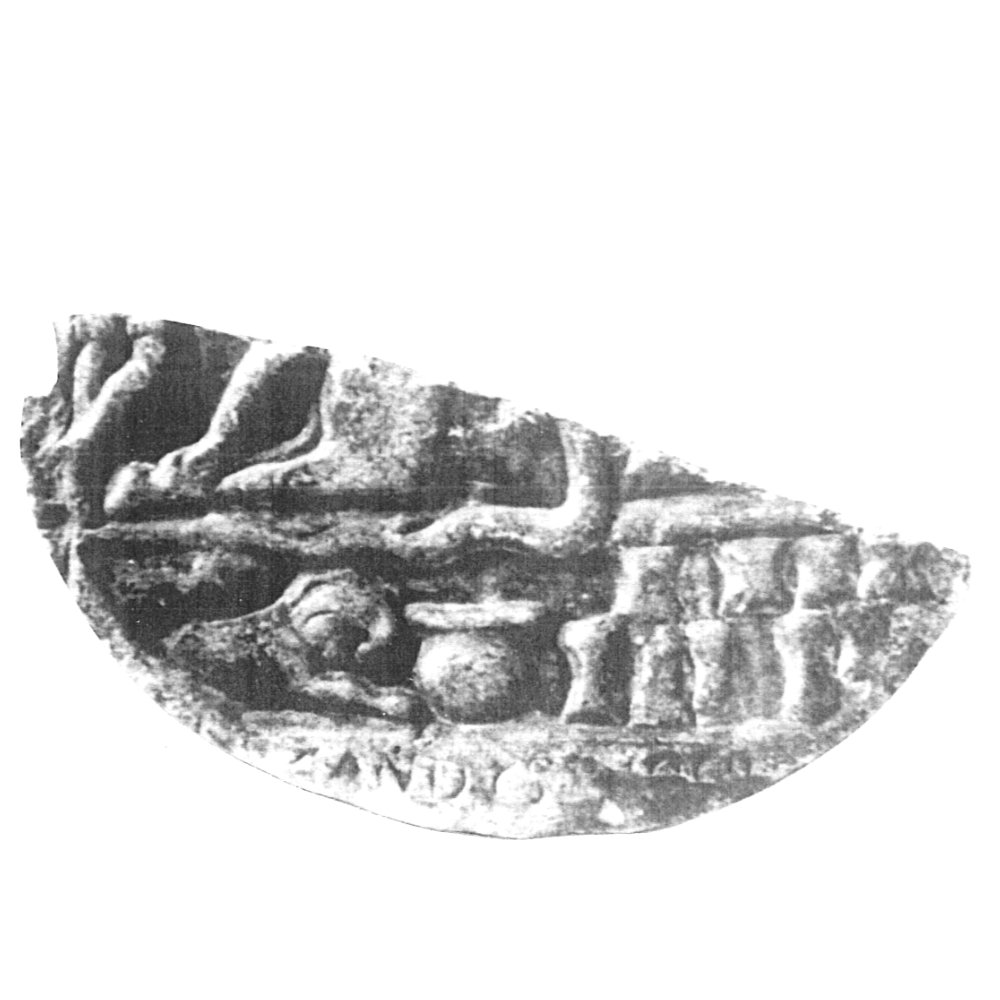
This tauroctony may have come from Hermopolis and its style suggests a Thraco-Danubian origin.
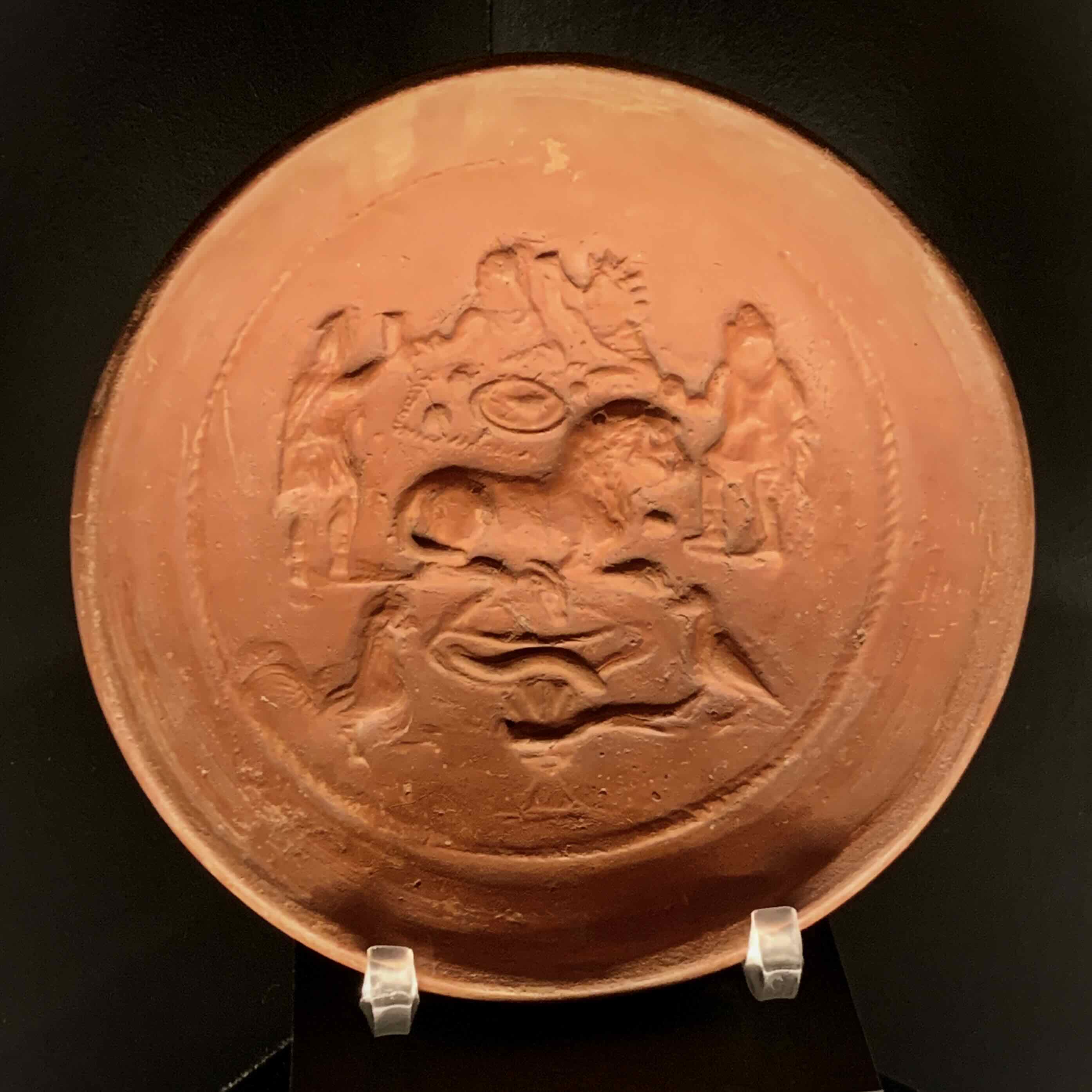
This terra sigillata was found in 1926 in a grave on the Roman cemetery of St. Matthias, Trier. An eyelet indicates that it could have been hung on a wall.

This unusual bronze bust of Sabazios features multiple symbolic elements, with Mithras depicted in his characteristic pose of slaying the bull, positioned just below Sabazios’ chest.
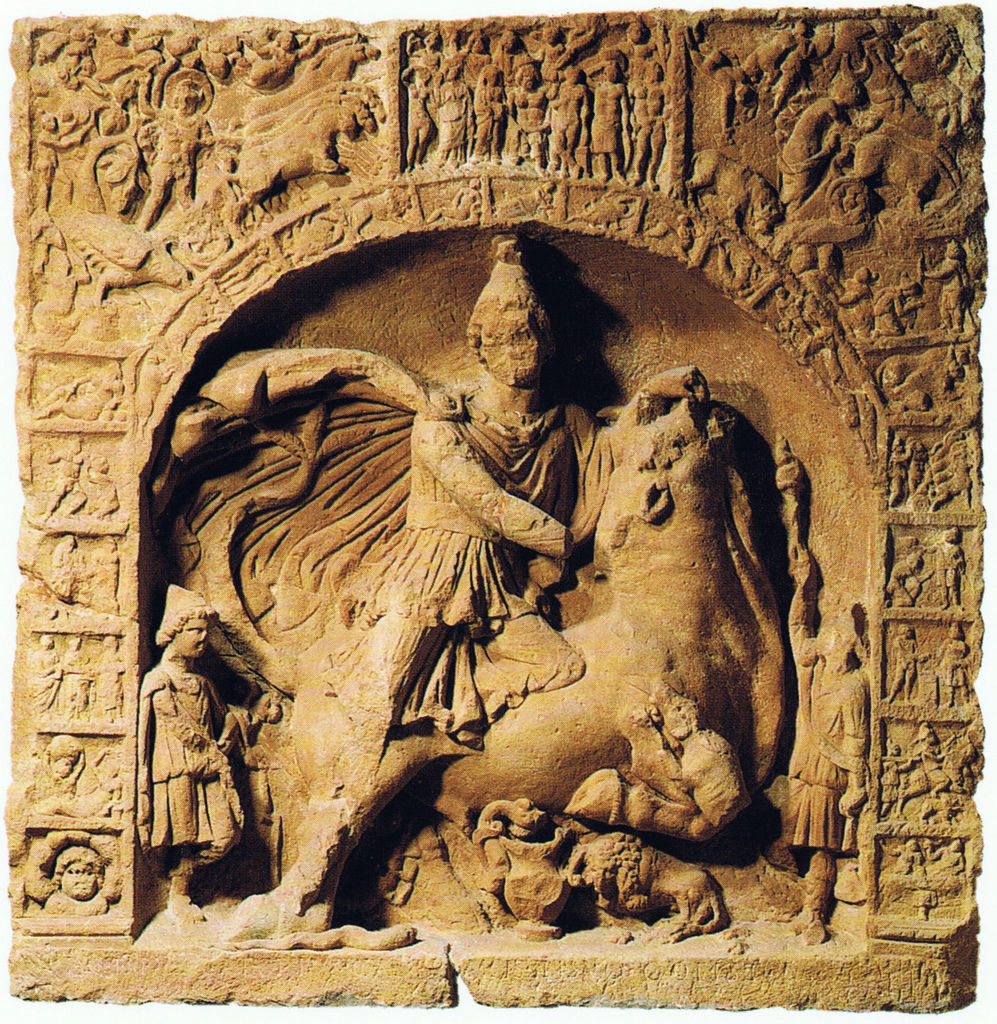
Franz Cumont considers the bas relief of Osterburken ’the most remarkable of all the monuments of the cult of Mithras found up to now’.

The relief of Palazzo Colonna, Rome, depicts a lion-headed figure holding a burning torch in his outstretched hands.
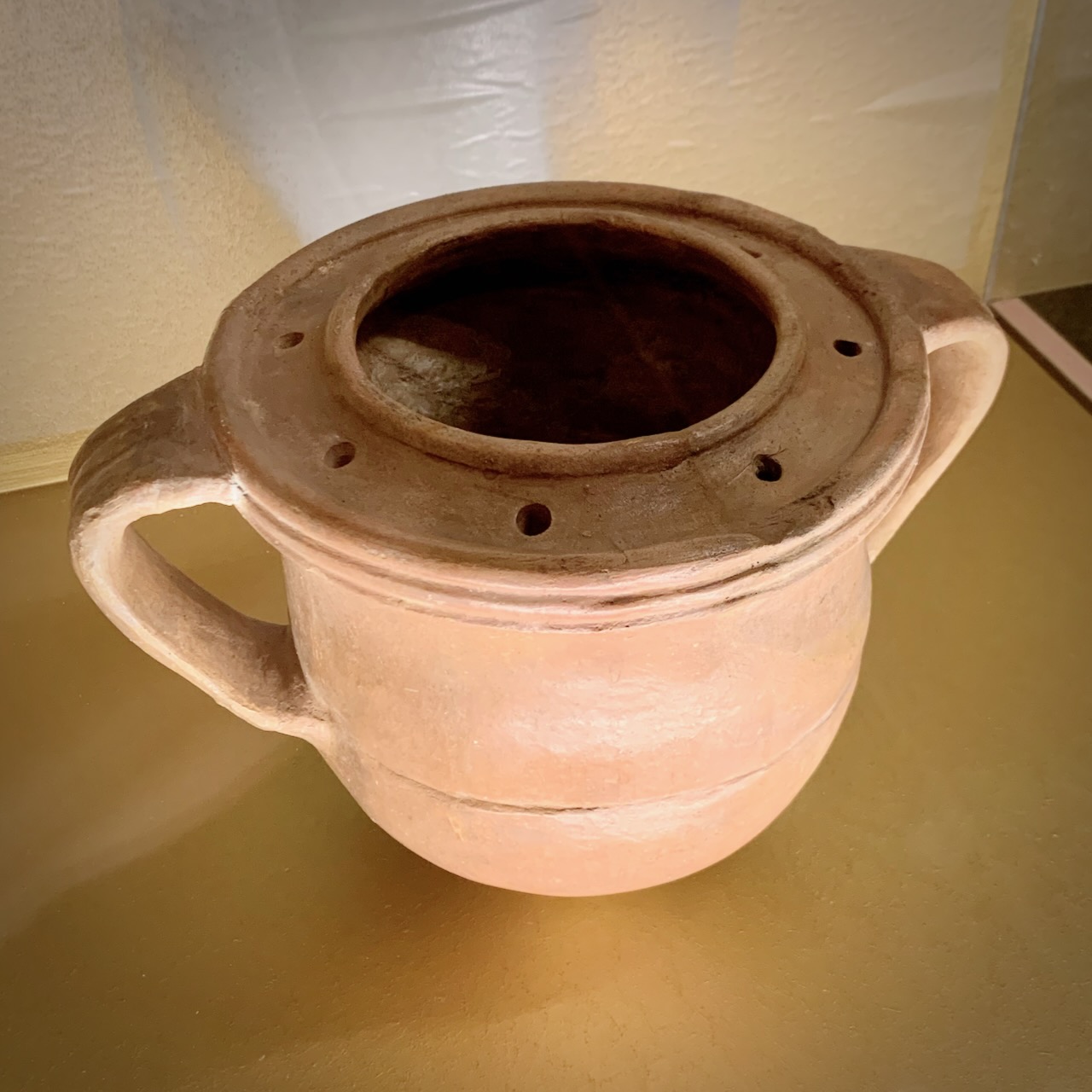
The vessel to burn incense from the Mithraeum of Dieburg is similar to those found in other Roman cities of Germany.
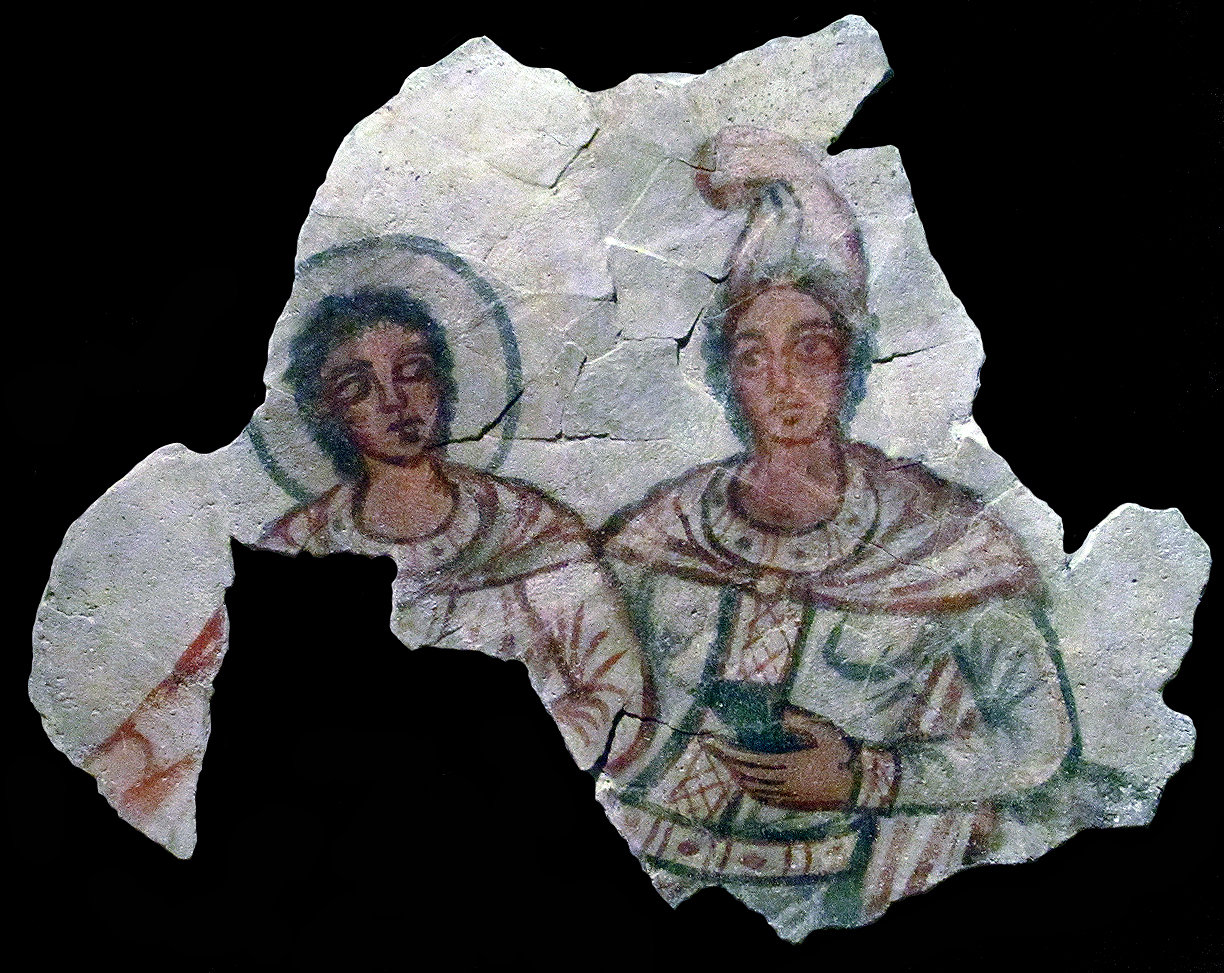
Sol watches Mithras as he gazes Mithras gazes up to heaven while sharing the sacred meal.
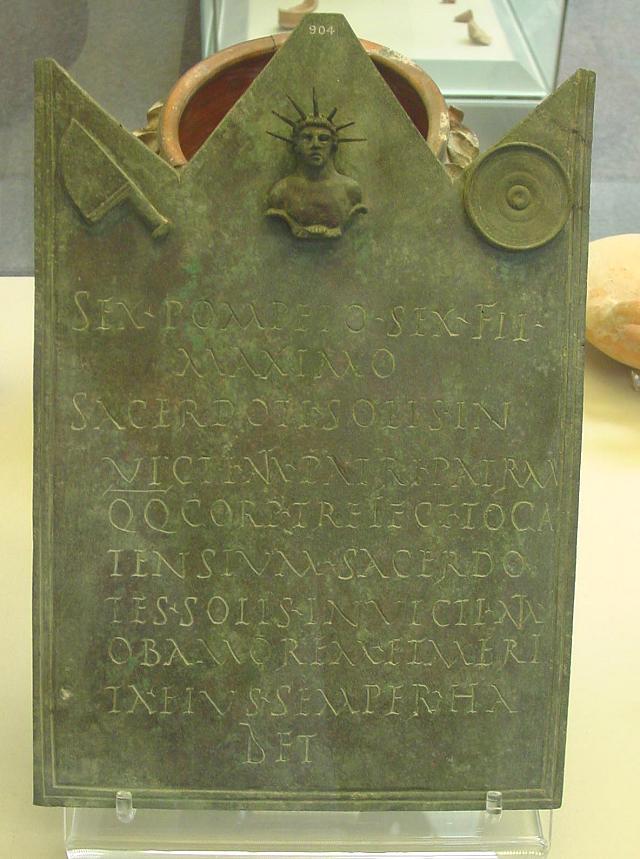
This plaque, now on display in the British Museum, may have come from the Aldobrandini Mithraeum in Ostia.
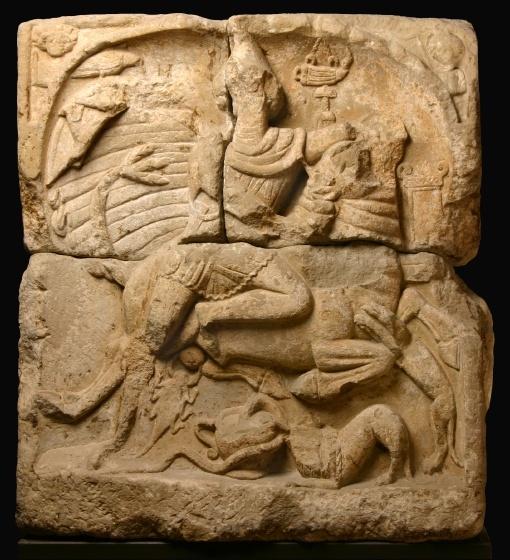
This relief of Mithras killing the bull, now on display in Stuttgart, includes a small altar with a sacrificial knife and an oil lamp.
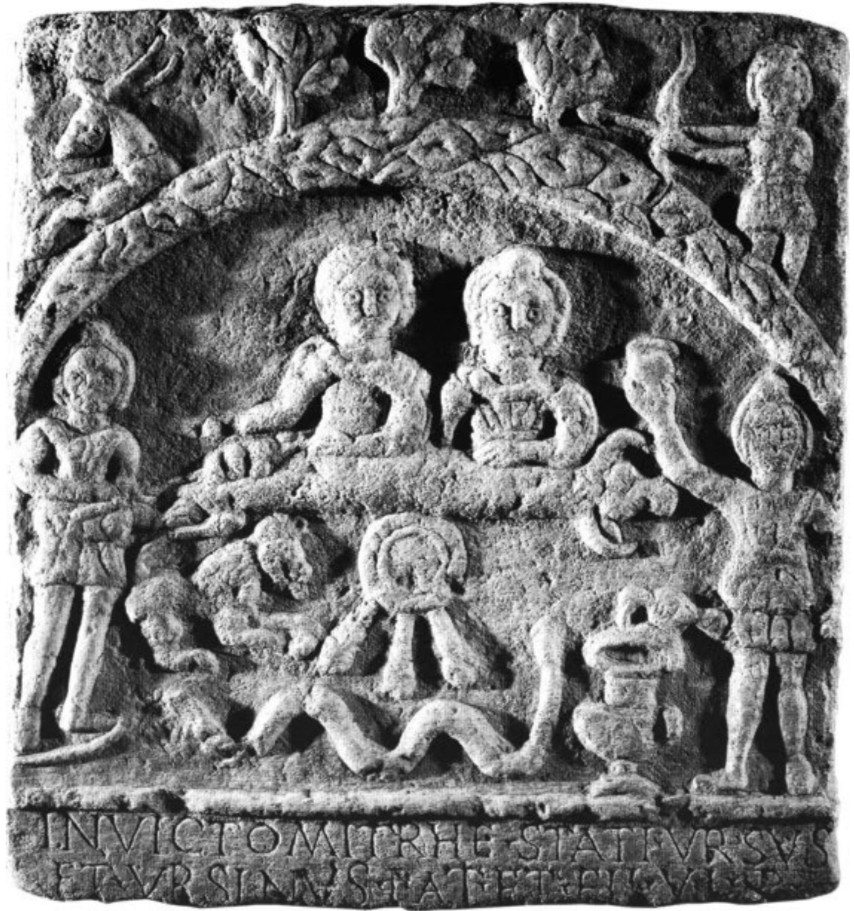
Mithras and Sol share a sacred meal accompanied by Cautes and Cautopates on a relief found in a cemetery from Croatia.
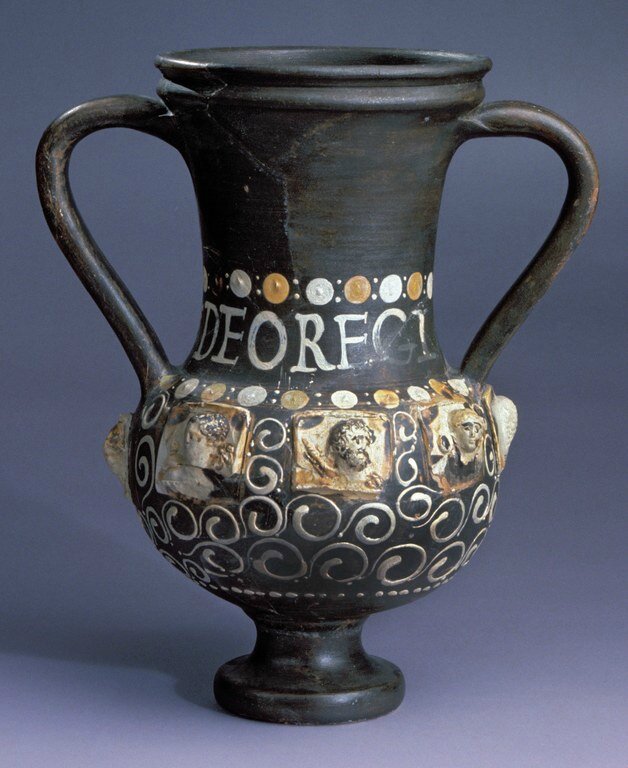
The vase bears an inscription to the god but also 'king' Mithras.
