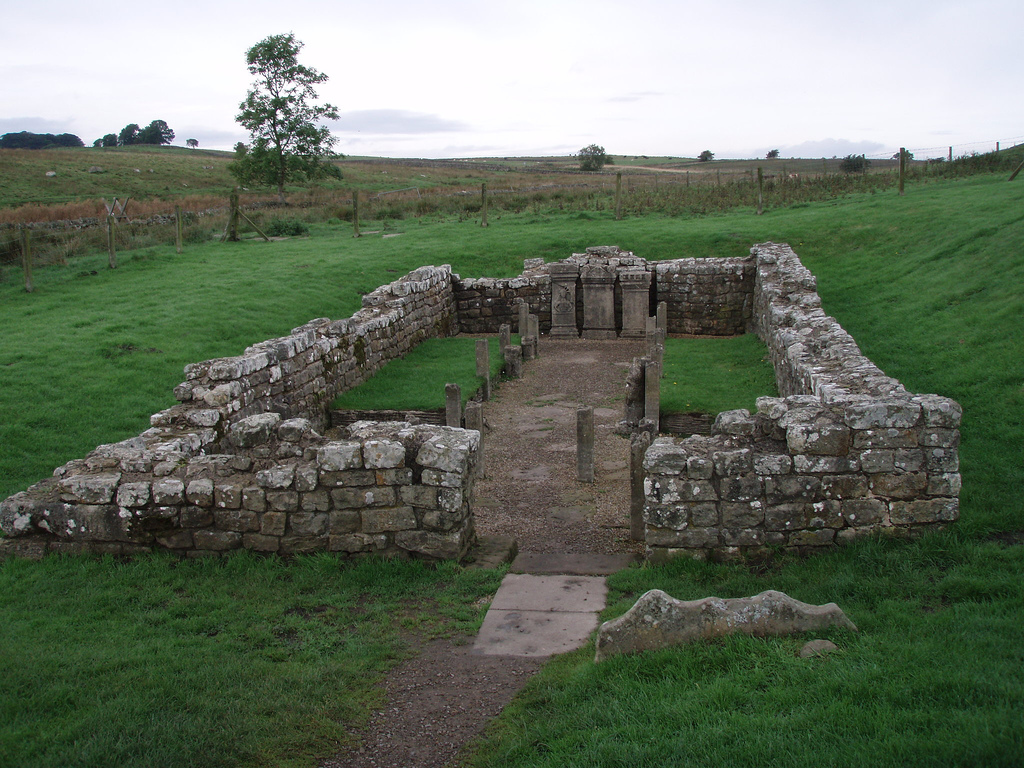
The temple of Mithras of Carrawburgh, Brocolita, disclosed three main stages of development, the second exhibiting two reconstructions.
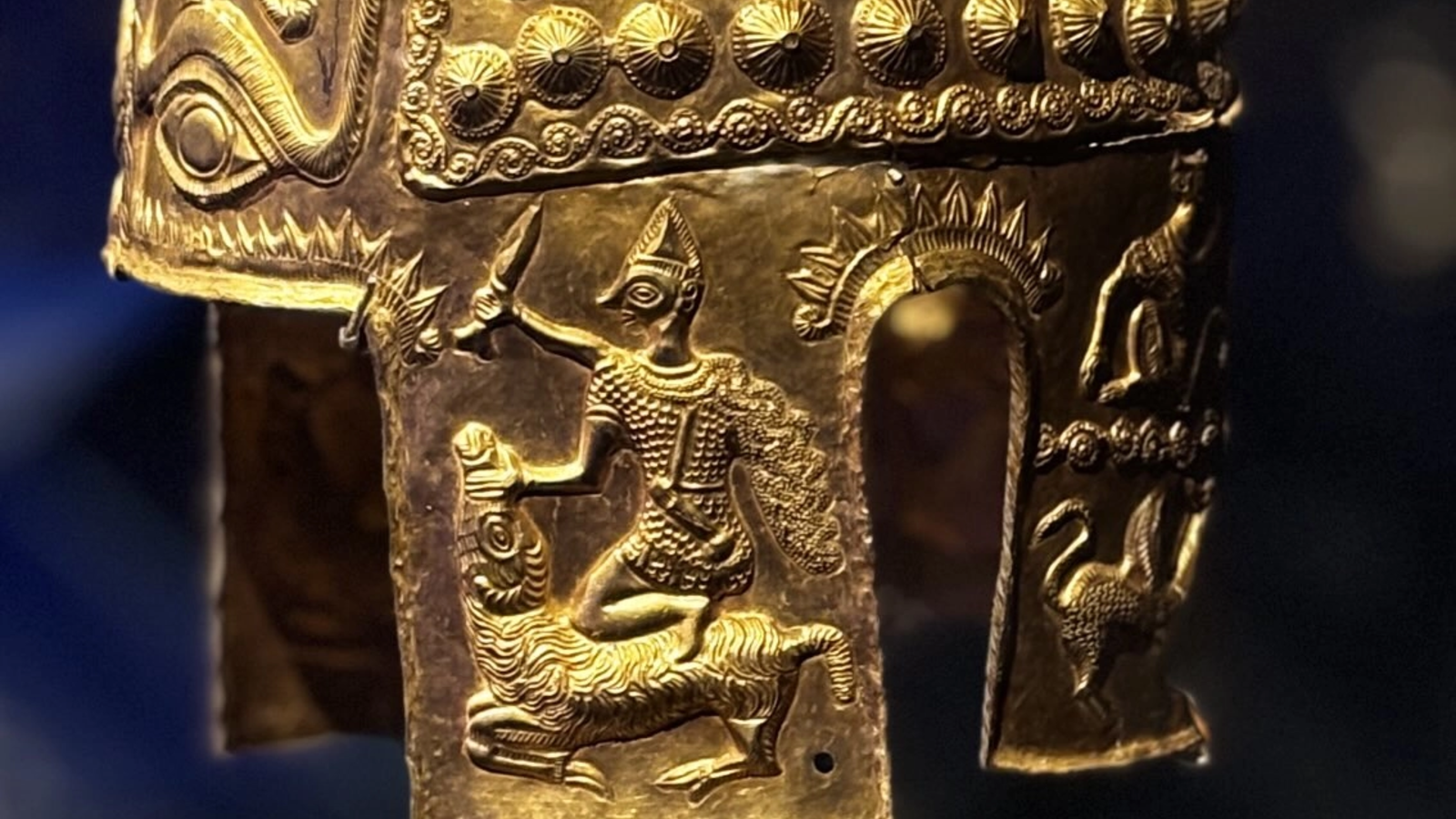
A Getic ceremonial gold helmet bearing a ram-sacrifice scene proposed by some scholars as a possible iconographic precursor to the Mithraic tauroctony.
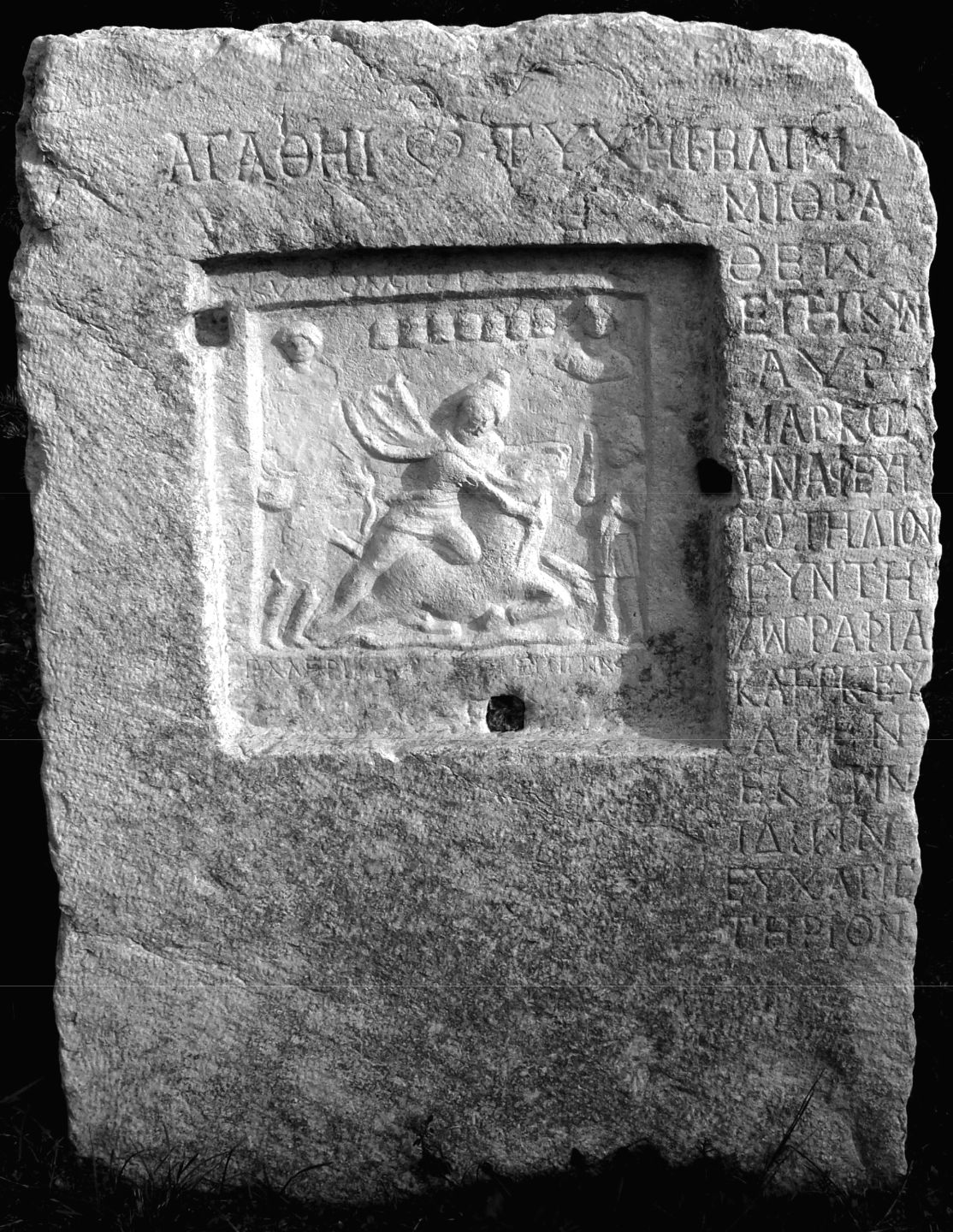
The Tauroctony of Nicopolis ad Istrum is a rare Mithraic stele bearing two Greek dedications from different phases of its use.
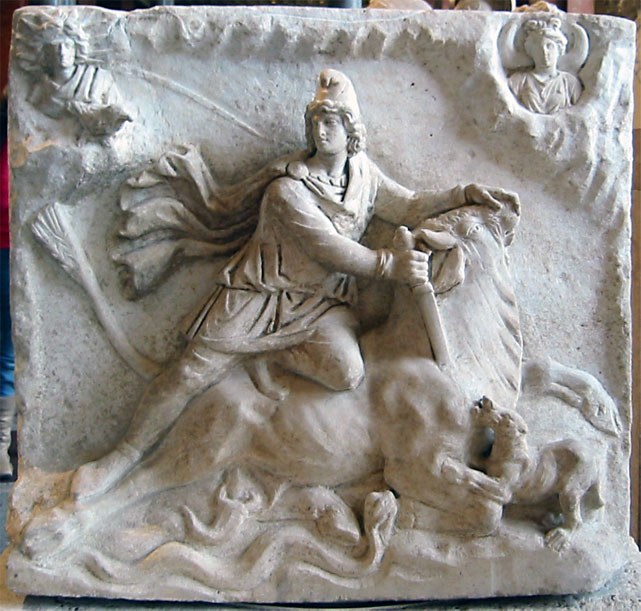
The marble shows Mithras slaying the bull, on one side, and Sol and Mithras feasting on a bull skin, on the other.

Altar dedicated to Mithras by the imperial slave Iucundus, recording his construction of a portico and apparatorium for the Mithraeum at Siscia.
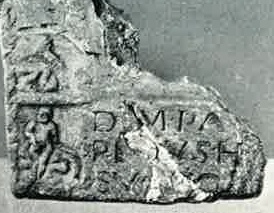
Fragmentary two-sided Mithraic relief depicting the rock-birth, Zodiac and other mythological scenes from Stockstadt.
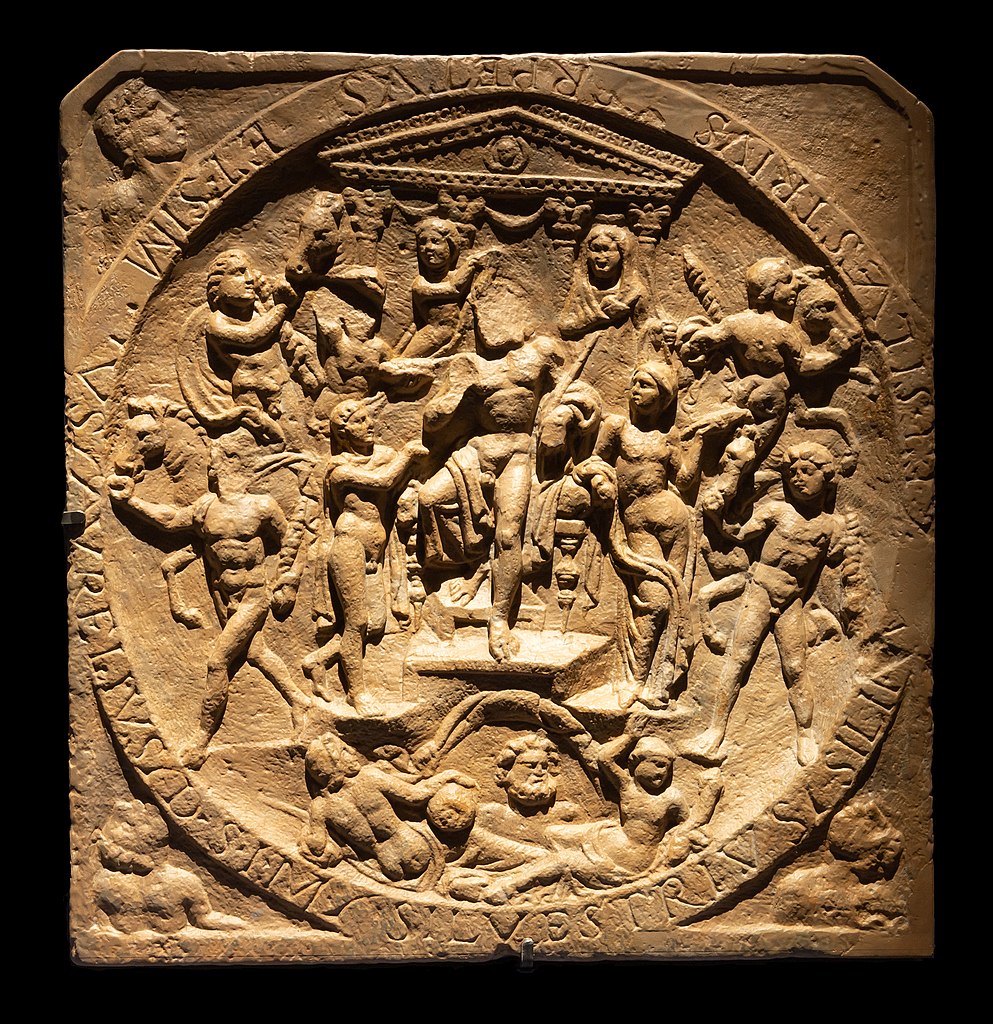
The relief of Dieburg shows Mithras riding a horse as main figure, surrounded by several scenes of the myth.
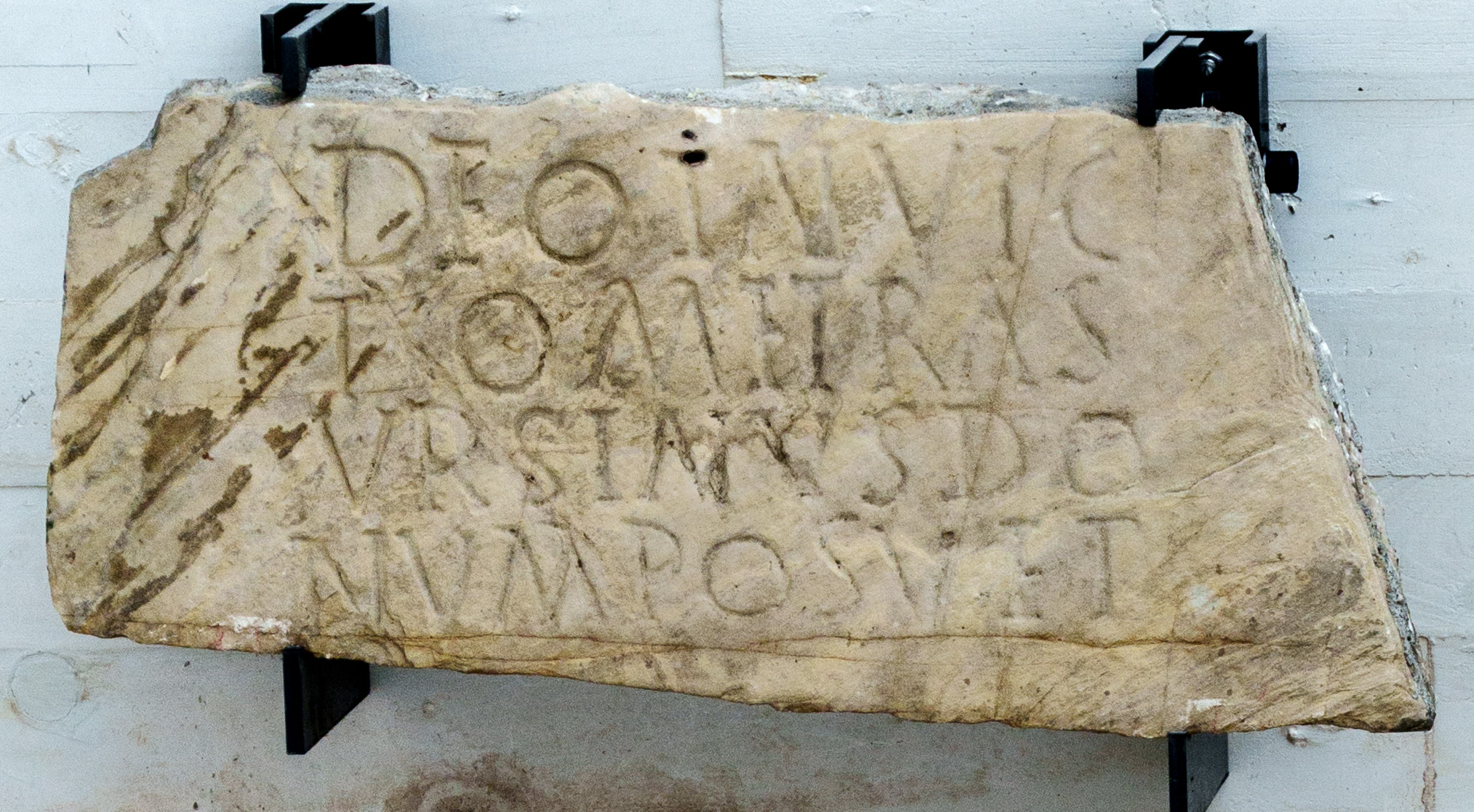
Marble plaque with inscription by a certain Ursinus found in Virunum in 1838.
Ritual terracotta offering plate decorated with a serpent and traces of white paint from the Friedberg Mithraeum.
Relief of bluish marble in the Casino of the Villa Doria Pamphili showing Mithras slaying the bull with the usual animals, cross-legged torchbearers, and Sol in a quadriga and Luna in a biga in the upper corners.
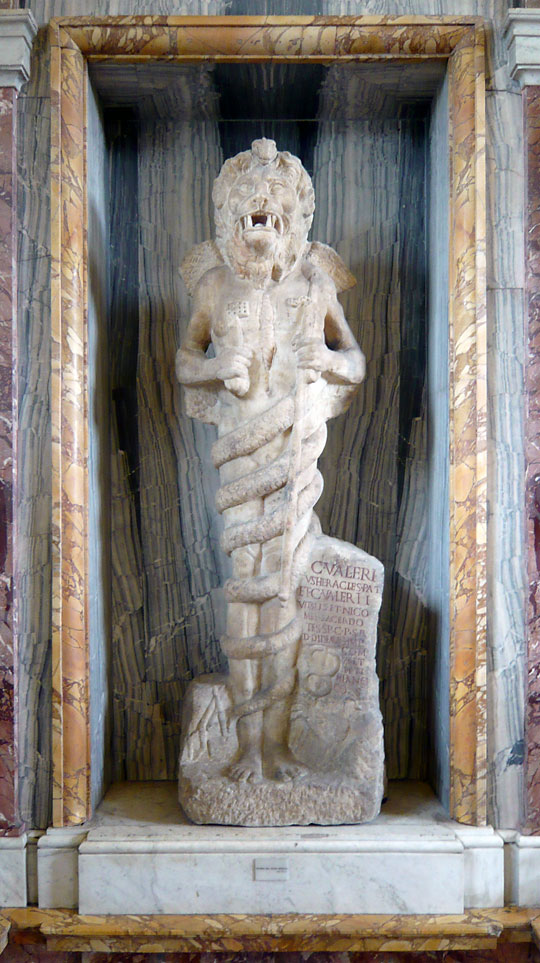
Marble leontocephalic Aion/Arimanus from the now-lost Fagan Mithraeum at Ostia, dedicated in AD 190 by three members of the local Mithraic priesthood.
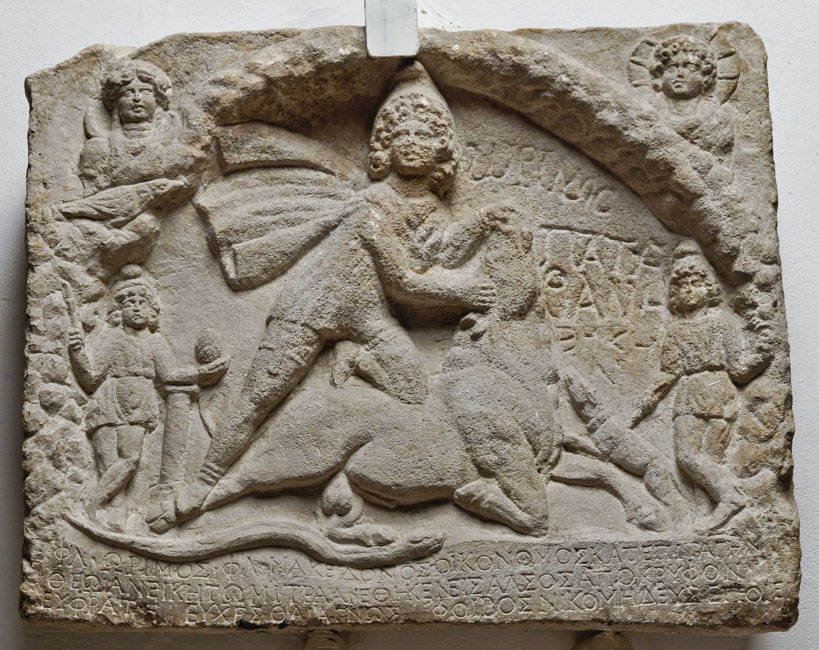
This limestone relief of Mithras killing the bull bears an inscription by a certain Flavius Horimos, consecrated in a ’secret forest’ in Moesia.
This monument records the transmission of the patrica and the presentation of the cryfii, ritual acts associated with Mithraic initiation.
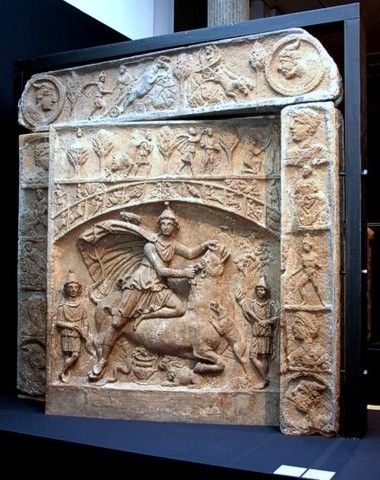
This relief is so well-known that it has been reproduced in nearly every handbook of archaeology and of history of religions.
One of the earliest securely dated Mithraic inscriptions, documenting the cult’s early presence within the imperial household.

The Mithraeum of Pamphylia was cut back into the rock to form a cave, with a separate relief of Mithras killing the bull.
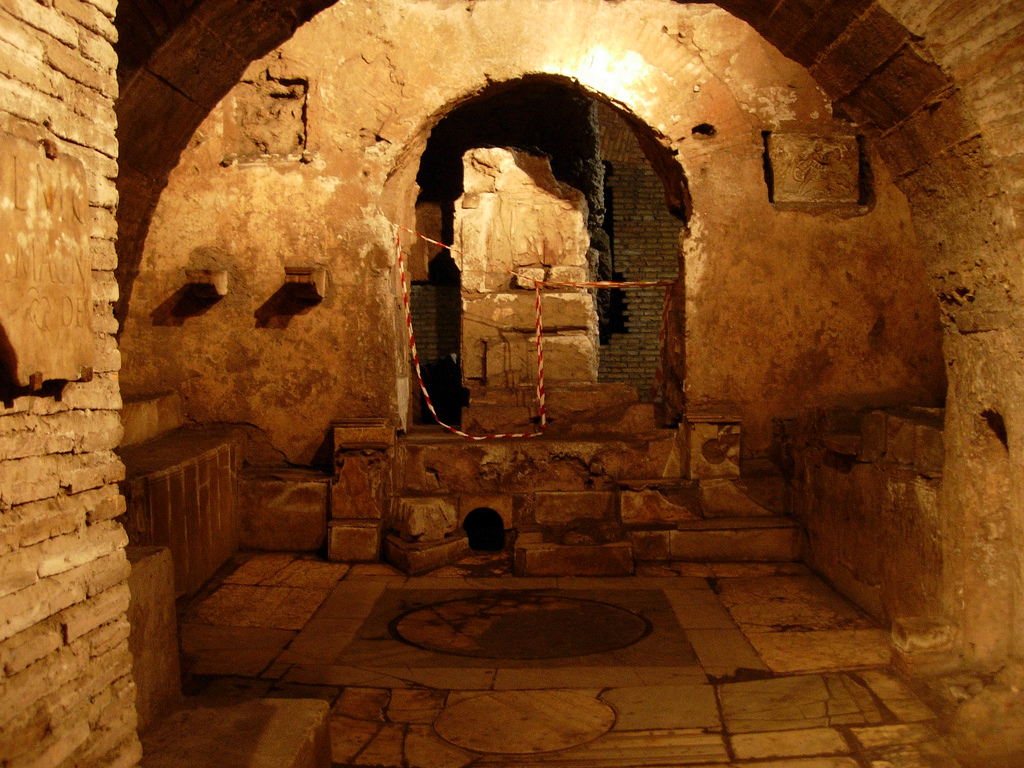
The Mithraeum near the Circus Maximus was discovered in 1931 during work carried out to create a storage area for the scenes and costumes of the Opera House within the Museums of Rome building.
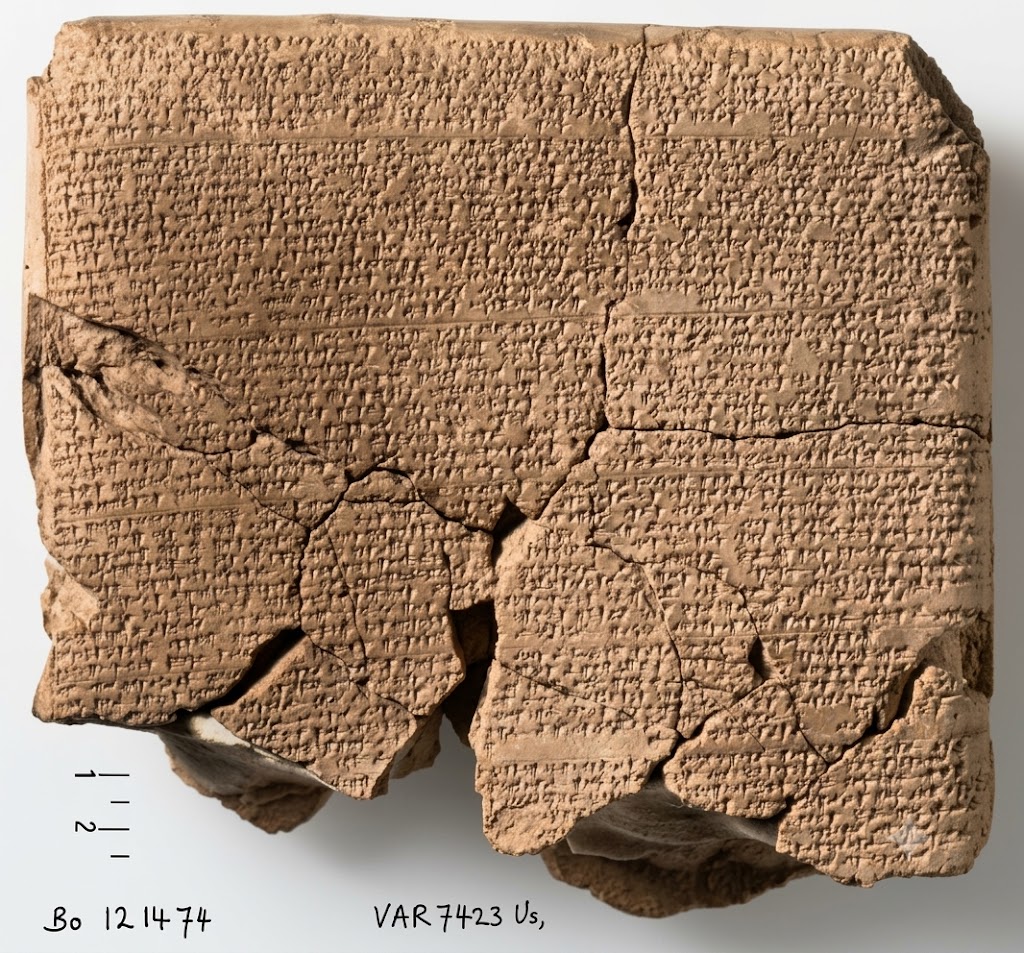
Late Bronze Age treaty from Ḫattuša invoking Mitra, Varuna, Indra and the Nāsatyas among the divine witnesses of the Hittite-Mitanni oath.
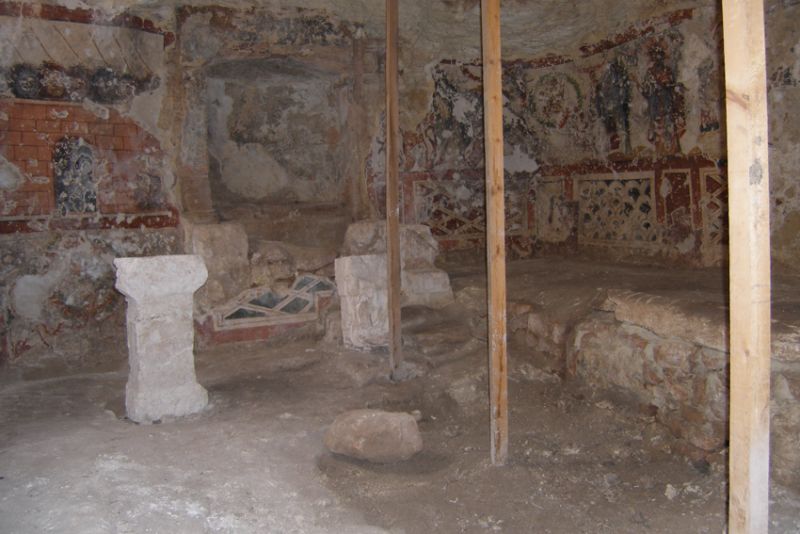
Late Roman Mithraeum beneath a fourth-century church, preserving one of the most extensive cycles of Mithraic wall paintings ever discovered.
,_found_in_Rome,_2nd_century_AD,_British_Museum_(15545876047).jpg)
The sculpture of Mithras slaying the bull was transported from Rome to London by Charles Standish in 1815.
