Regarding the “Persian” nature of Mithras and Mithraism
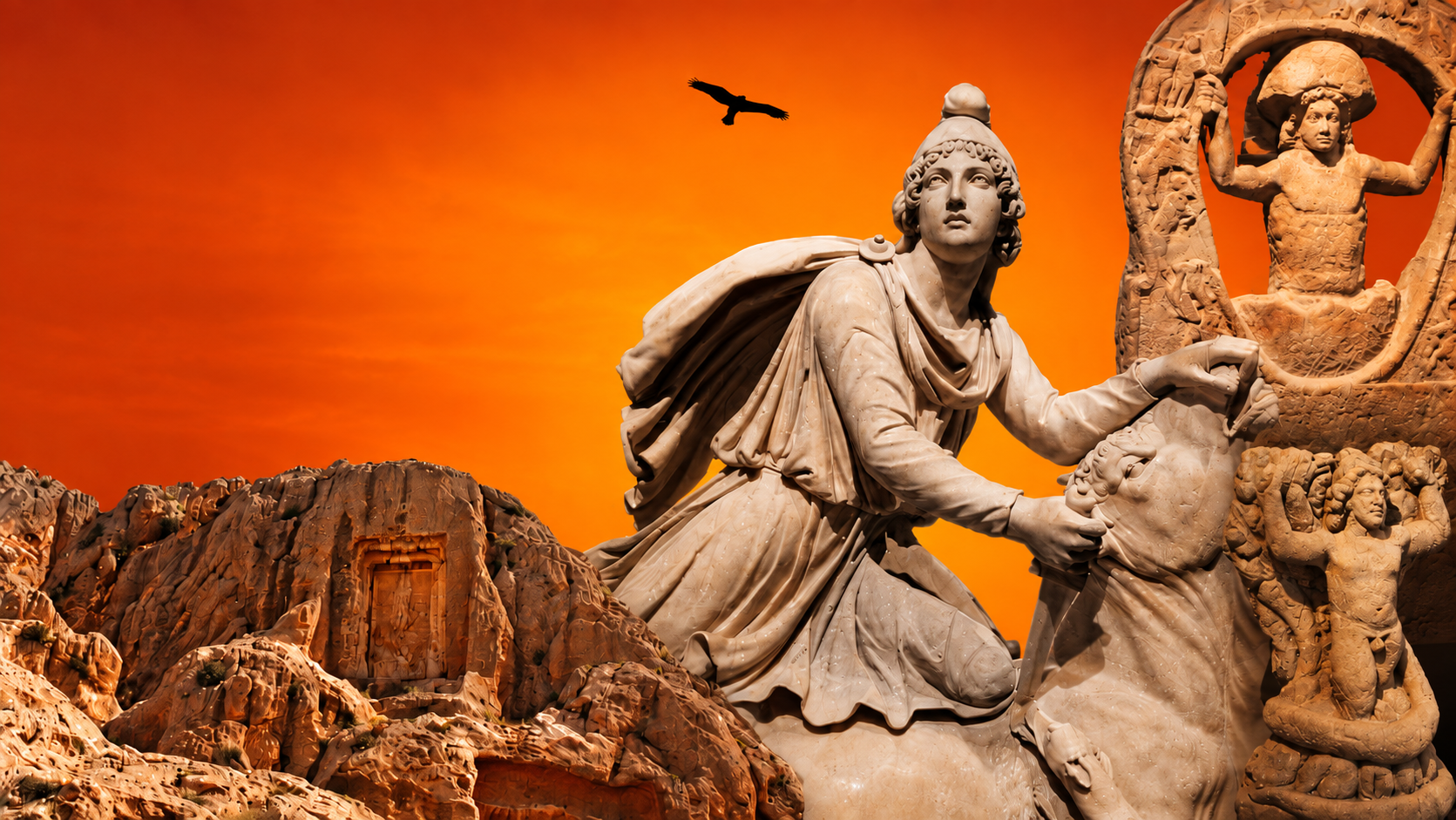
The origins of Mithraism that people usually don't know about.
Hetanos Argonavord a.k.a BoNDeX
Although the Persian version of the origins of Mithraism (particularly due to the early works of Franz Cumont and his cosmological speculations) and the portrayal of Mithras’s bull-slaying scene as tied to ancient Zoroastrianism dominate public consciousness, several important points should be taken into account:
Although the god’s name is indeed Iranian, the cult of Mithras in Persia did not contain any elements familiar to us from the Roman mystery cults. For Zoroastrians, the very act of Mithras killing a bull constitutes extreme blasphemy, since Ahriman did this act — the absolutely pure force of evil. If we take the literal approach to tauroctony, the ritual of killing the bull Kalu was apparently also performed in honor of Mithras in the Near East.
One of the most important contemporary scholars, Manfred Clauss, attributed the decline in research on Mithraism to an excessive focus on linking the cult to Persian roots, which ultimately proved impossible.
In 1976, a journal dedicated exclusively to the study of Mithras and his cult was founded: the “Journal of Mithraic Studies” […] Numerous articles have addressed the question of Mithraism’s alleged Persian or Iranian connections, which, ultimately, cannot be proven.
At the same time, other researchers have noted significant astrological and mythological connections to Greek, Mesopotamian, and Armenian beliefs. In particular, Michael Speidel observed a crucial connection between Mithra and Orion, both through astrology and through myth.
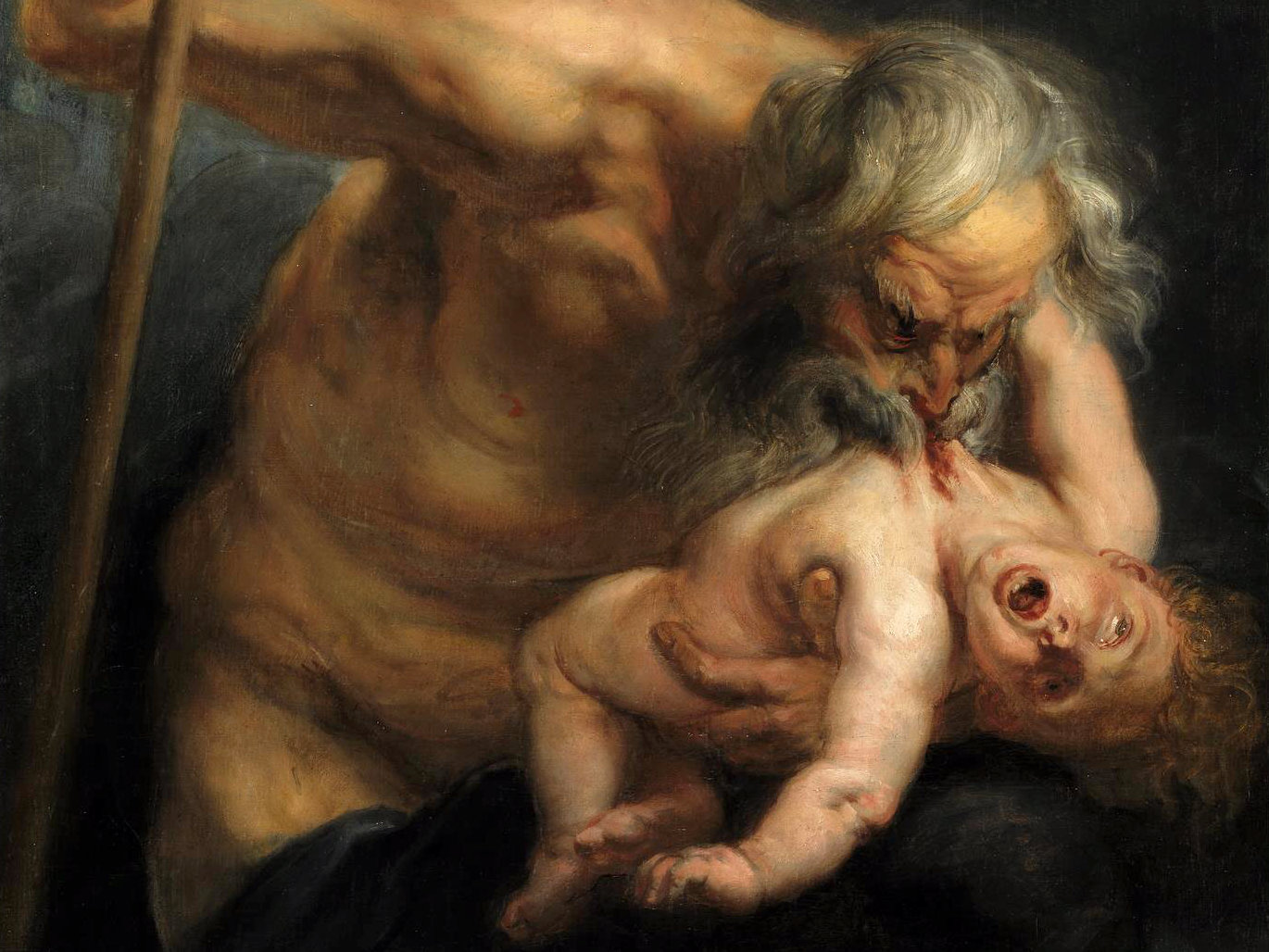
As we know, the earliest references to Mithra come from the Indo-Aryan elite of the Hurrian kingdom of Mitanni, where the constellation Orion was supposedly associated with the earth-born god Ulikummi, who was created by Kumarbi (the counterpart of Saturn). Mithra’s prominence among the Mitanni elite does not mean his cult directly spread from there to the Urartians. Depictions of Mithra from the Mitanni period suggest syncretism with Ulikummi (academic sources mention a possible connection between Ulikummi and the Roman Mithras).
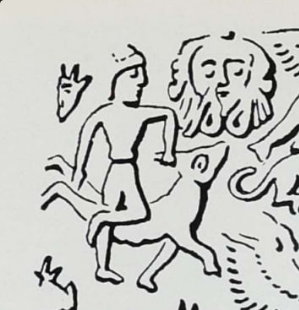
Possible depiction of Mithra on the seal of Saussatar.
Jacques Duchesne-Guillemin, Le Dieu de Cyrus (1974)
Later, the Hurrians and Urartians — who formed the core of the state of Urartu — worshiped the god Khaldi, whose origins are unclear. As a god of light, etymologically he may derive from a Proto-Armenian source (this potentially could link Khaldi to the Greek Helios or Phanes). Khaldi is a God born from a rock and was portrayed as an archer with fire rays around him, which corresponds with Hayk, Apollo, and an image from a Mithraic vessel from Mainz.
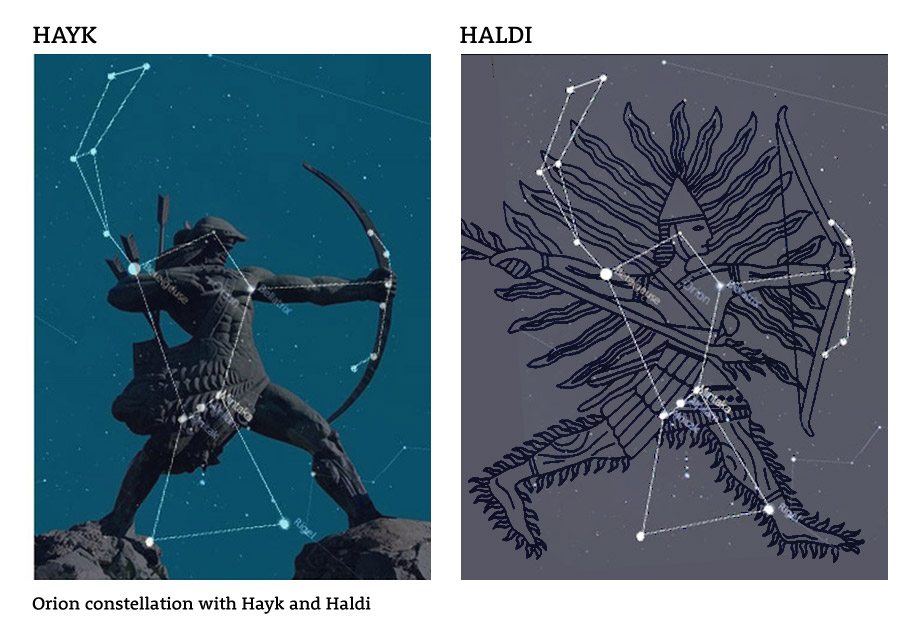
Hayk and (K)Haldi with constellation of Orion
PeopleOfAr
At the same time, the point of ascent and “reign” of Khaldi was Aquarius (associated with the god Haya-Ea, who is also linked to Saturn), that is, the Winter Solstice (which already suggests a connection to the conventional December 25). In essence, the Urartians’ conception of their pantheon corresponded to an even more ancient Mesopotamian system, which may provide a more complete explanation for pre-precession knowledge of the heavens than David Ulansey’s hypothesis.
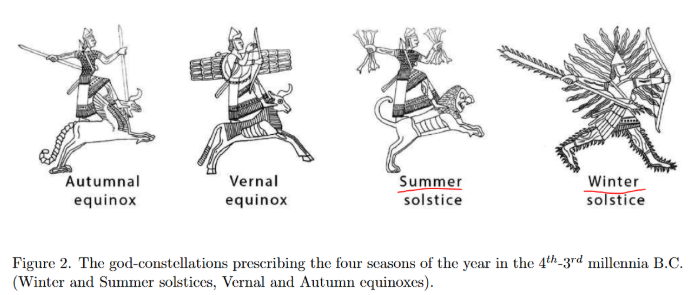
Sequence of Urartian Gods on Anzaf Shield.
https://doi.org/10.52526/25792776-25.72.1-169
I assume that all versions of the origin story of Khaldi’s cult contain some truth and rather illustrate a pattern of multilayered syncretism among Hurrian-Urartian, Indo-Iranian, and Proto-Armenian beliefs. The cult of Khaldi, however, did not disappear with the fall of Urartu. On the one hand, with the arrival of the Iranian Orontid elite, another layer of Iranian influence was added; however, it is important to note that this influence was seemingly pre-Zoroastrian. The Iranian Mithra was once again syncretized with local beliefs, extending the cult worship from Cilicia and Commagene to the far reaches of eastern Armenia. The pre-Zoroastrian nature of the Orontid religion did not replace the cult; on the contrary, it incorporated local high-level concepts into the royal cult (as Obukhov partially described in his study of the Orontid pantheon of Commagene). This practice continued under the Artaxiads and the Arsacids as well.
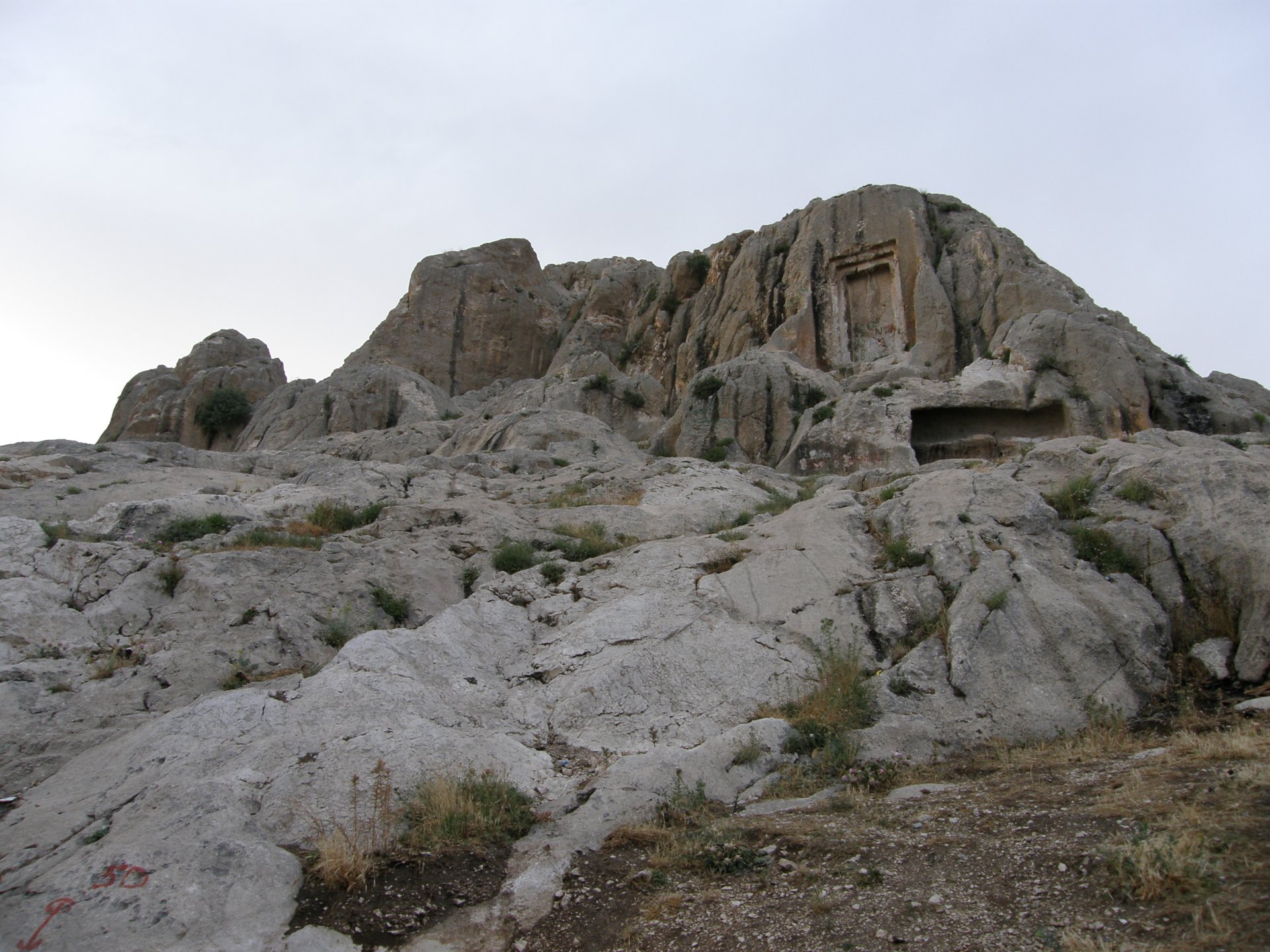
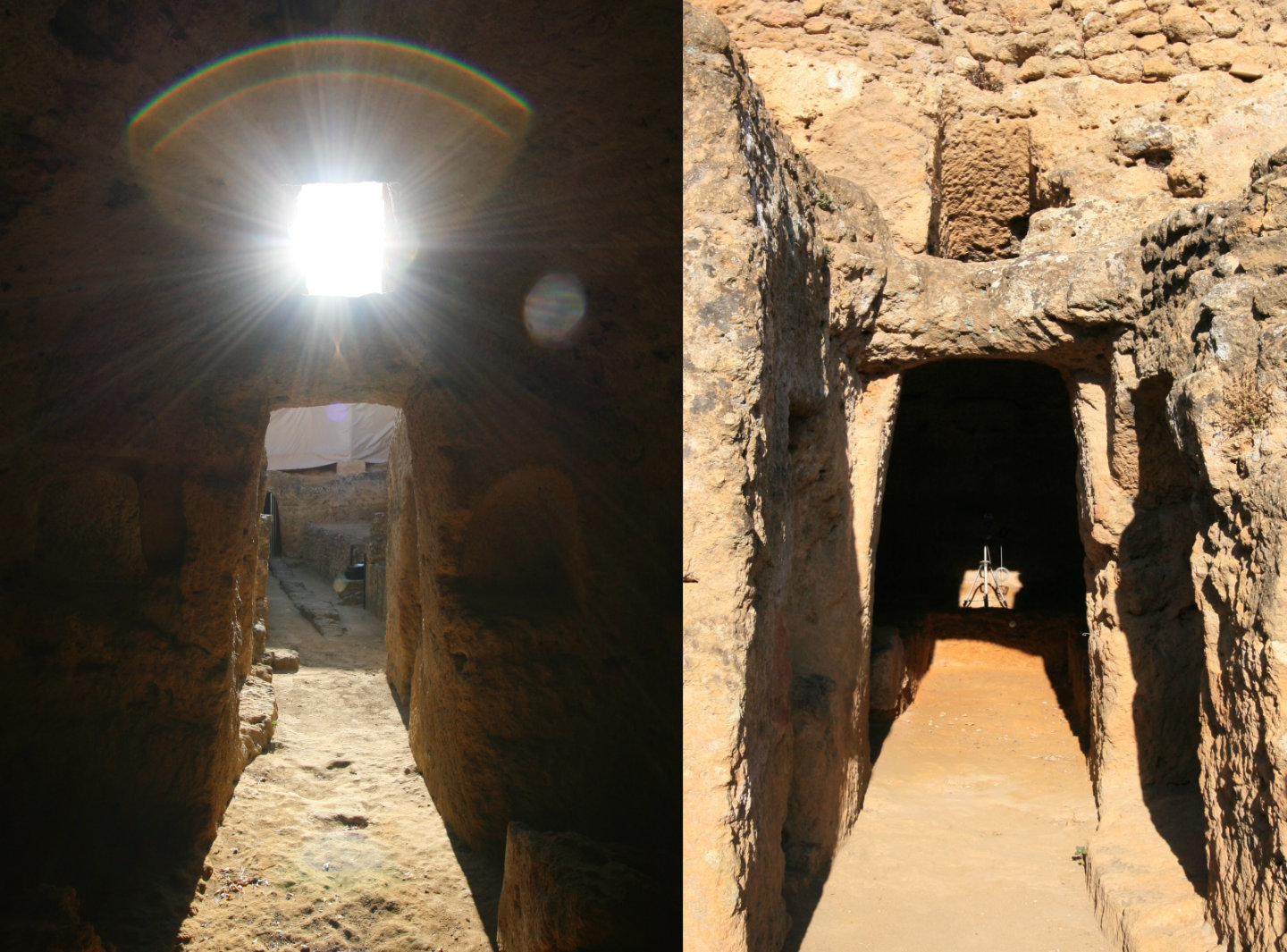
One of the two “Gate of (K)Haldi” or “Door of Mher” near Lake Van. Perhaps Porphyry was referring specifically to these caves when he spoke of the caves near Persia.
Proudbolsahye
It is precisely for this reason that the iconic Gates of Khaldi came to be perceived as the Gate of Mher (Mithra). And the myth, though later distorted by the passage of time and Christianization, nevertheless retained important elements (which we can see in the Roman Mithraea) and was passed down via folk oral tradition in the form of an epic. Another part of the myth of Khaldi, however, was transformed into the legend of archer Hayk, the progenitor of the Armenians, after whom the Armenians named the constellation Orion.
In the Armenian epic, we observe some rather significant echoes of the original Mithraic myth: two divine twins, the lion-like Mithra the Elder whose description resembles that of Leontocephalus from the Mithraea, David the father of Mithra the Younger who embodies the archaic image of the god of war and the bringer of thunder; and finally, Mithra the Younger, imprisoned within the raven stone, awaiting the time to establish justice in the world. Although the mythological story does not reproduce every scene from the Mithraea exactly, it does contain important elements of the divine narrative and a connection to Saturn. Furthermore, in the epic’s narrative, we can see clear parallels to Ulikummi or a distorted account of Mithra’s story, as recorded by Pseudo-Plutarch.
To summarize, Mithras does indeed have Iranian roots. But not exclusively Iranian ones. Mithras as a God and his later mystery cult represent a vast accumulation of various fundamental beliefs of the peoples of the Near East - the Hurrians, Urartians, Proto-Armenians, Greeks, Hittites, and so on. And it was precisely the Zoroastrian beliefs of the Persians that, if not a minor influence, had absolutely no effect on the cult of Mithras — a cult into which Nero was initiated by the Parthian King of Armenia, Tirdates, and which was spread by Cilician pirates, as well as Armenian and Commagenian priests.
As stated in Andrew Fear, Mithras (2022) pp. 62-63:
In the frst century BC Armenia briefy became a serious power in the eastern Mediterranean and it is here and in this period that the genesis of Mithraism is best sought. Te kingdom is the obvious place for the intermixing of Greek and Near Eastern culture in a sympathetic intellectual milieu. Greek infuences can be seen at the Armenian court, but Eastern, “Persian” religious practices were not discarded. In Mithraism we can see the melding of the two. Greek mystery cults, notably that at Eleusis, themselves infuenced by the East, are likely to have been part of this process. Firmicus’s Greek-speaking prophet of Mithras is best seen as an Armenian intellectual. Perhaps he wrote in Greek from the beginning, though it is possible that his works were translated into Greek from Armenian. It is even possible he was the “founder” of this new synthesised religion or at least close to its founders. Armenia’s moment of political power in the Mediterranean was to wane quickly, but in the genesis of Mithraism it appears to have left a much more lasting mark on that world.
It’s quite possible that in the future I’ll try to write an academic article to explain all the connections and meanings in greater detail. For a long time, there was no academic “synthesis” of all the information, even though Andrew Fear’s work came very close to achieving this. However, as far as I’m concerned, we must acknowledge a certain stagnation in the public perception of Mithraism — either as something completely incomprehensible that appeared out of nowhere, or as an entirely Iranian doctrine of hidden Zoroastrianism. In my humble opinion, this needs to change by consolidating the findings of recent research and avoiding the repetition of old narratives.
Sources:
- Cumont, F. (2000). Мистерии Митры (С. О. Цветкова, Trans.). Евразия.
- Fear, A. (2022). Mithras. Routledge.
- Beck, R. (2006). The religion of the Mithras cult in the Roman Empire: Mysteries of the unconquered sun. Oxford University Press.
- Лелеков, Л. А. (1983). К семантике и типологии храмовых сооружений армянского язычества. Պատմա-բանասիրական հանդես (Historical-Philological Journal), (1), 58–64.
- Обухов, С. В. (2023). Пантеон и царский культ в Коммагене. Эпоха Митридата I Каллиника и Антиоха I Теоса: историко-археологическое исследование. Альма Матер
- Clauss, M. (2000). The Roman cult of Mithras: The god and his mysteries. Edinburgh University Press.
- Speidel, M. P. (1980). Mithras-Orion: Greek hero and Roman army god. E. J. Brill.
- Ulansey, D. (1989). The origins of the Mithraic mysteries: Cosmology and salvation in the ancient world. Oxford University Press.
- Petrosyan, A. (2006). Haldi and Mithra/Mher. Aramazd: Armenian Journal of Near Eastern Studies, 1, 222–238.
- Armin, A. (2020). Gates of Haldi: The stellar and numerical structure of the ancient pantheon. Yerevan.
- Grekyan, Y., Badalyan, M., Tiratsyan, N., & Petrosyan, A. (2018). Biainili-Urartu: Gods, temples, cults. Institute of Archaeology and Ethnography Press.
- Zimansky, P. (2012). Imagining Haldi. In H. D. Baker, K. Kaniuth, & A. Otto (Eds.), Stories of long ago: Festschrift für Michael D. Roaf (pp. 713–723). Ugarit-Verlag.
- Yeleshin, A. V. (2012). Formirovanie mitraizma v Kilikii i Kommagene [Формирование митраизма в Киликии и Коммагене]. Obshchestvo. Sreda. Razvitie (Terra Humana), 2(23), 31–35.
- Hakobyan, H. (2019). On the origin of Roman Mithreums. Fundamental Armenology, 2 (10).
- Armin (Babayan), A. (2025). The Door of Mher: The Urartian deities as constellations. Communications of the Byurakan Astrophysical Observatory, 72 (1), 169–180. https://doi.org/10.52526/25792776-25.72.1-169
- Vardumyan, G. (2025). Hayk Nahapet – Epic hero and cosmic god. Communications of the Byurakan Astrophysical Observatory, 72 (1), 181–188. https://doi.org/10.52526/25792776-25.72.1-181
- David Sasunsky: Armyansky narodny epos [David of Sasun: Armenian folk epic]. (1982). Sovetskii pisatel.