The New Mithraeum
7 Nov 2023
Updated on May 2026
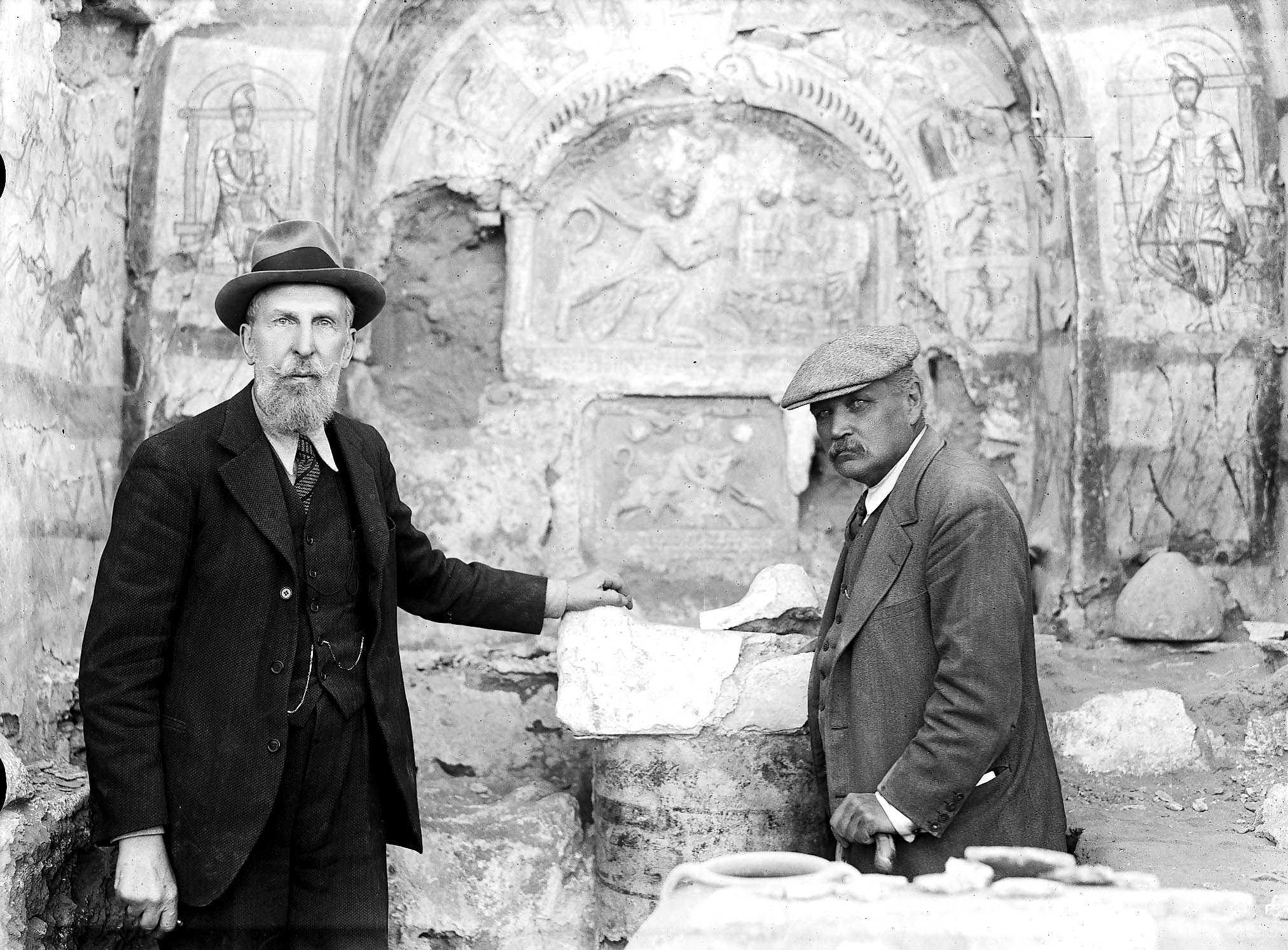
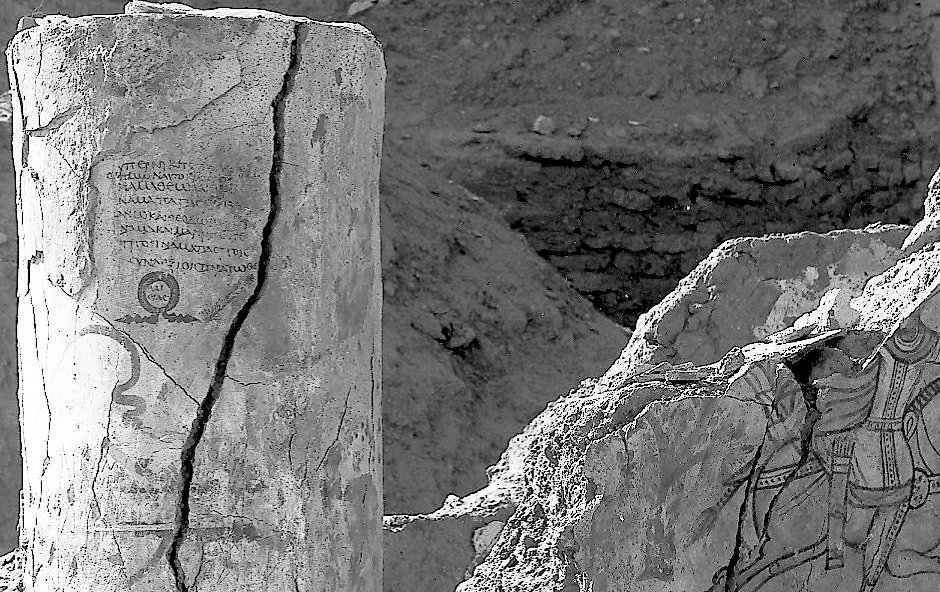
The main altar (see fig. 12, I).
ILN 1934, fig. 4; Report, 66, 75 and fig. 31; Pl. III, 2.
"All of plaster, the main altar had a square base topped by a quarter-round molding from which sprang the columnar engaged shaft. The top, 0.73 square with a molded point at each corner, projected for one third of its width over the altar table. The central depression was blackened and contained cinders.
To the left of this large altar, 0.08 lower than the altar table and attached to it, were two smaller altars of molded form. Their bases and tops were square, changing in an unbroken surface to a rounded central shaft…
ILN 1934, fig. 4; Report, 66, 75 and fig. 31; Pl. III, 2.
"All of plaster, the main altar had a square base topped by a quarter-round molding from which sprang the columnar engaged shaft. The top, 0.73 square with a molded point at each corner, projected for one third of its width over the altar table. The central depression was blackened and contained cinders.
To the left of this large altar, 0.08 lower than the altar table and attached to it, were two smaller altars of molded form. Their bases and tops were square, changing in an unbroken surface to a rounded central shaft…
The full article is reserved for our members.
Log in or create a free account to access the entire site.