Your selection gave 488 results.

The Mithraeum I of Cologne is situated amid a block of buildings. It was impossible to narrowly determine its construction and lay-out.
This small monument without inscription was found in Bingem, Germany.
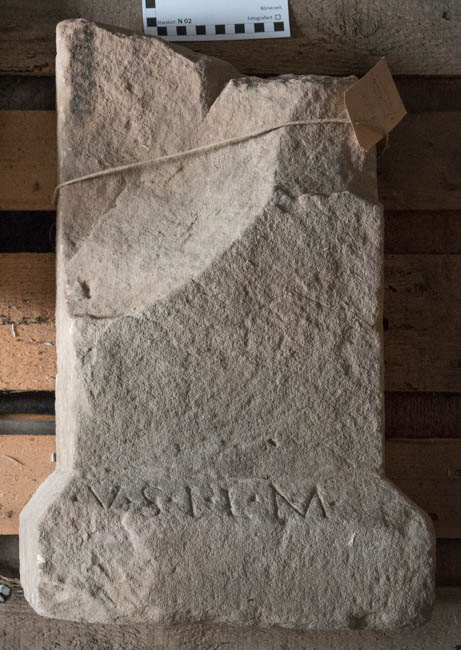
These fragmentary monuments, one with an inscription, were found in the Gimmeldingen mithraeum.
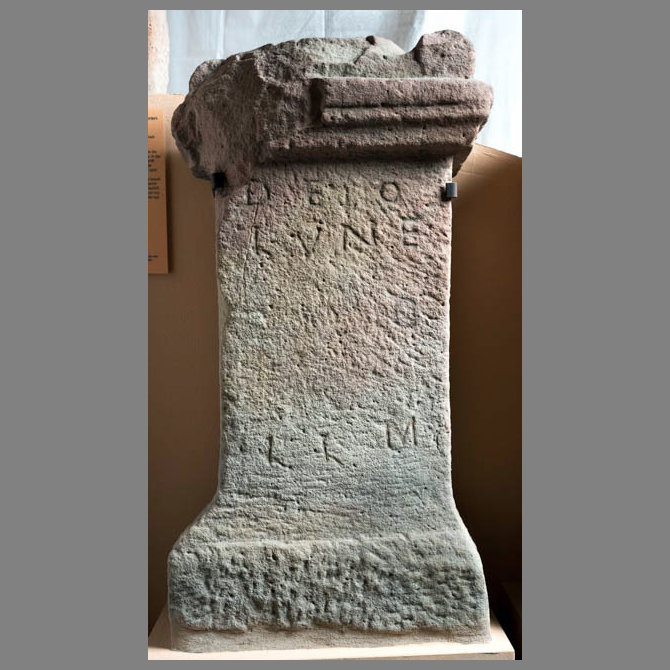
This sandstone altar was dedicated to Luna, who is mentioned as a male deity.
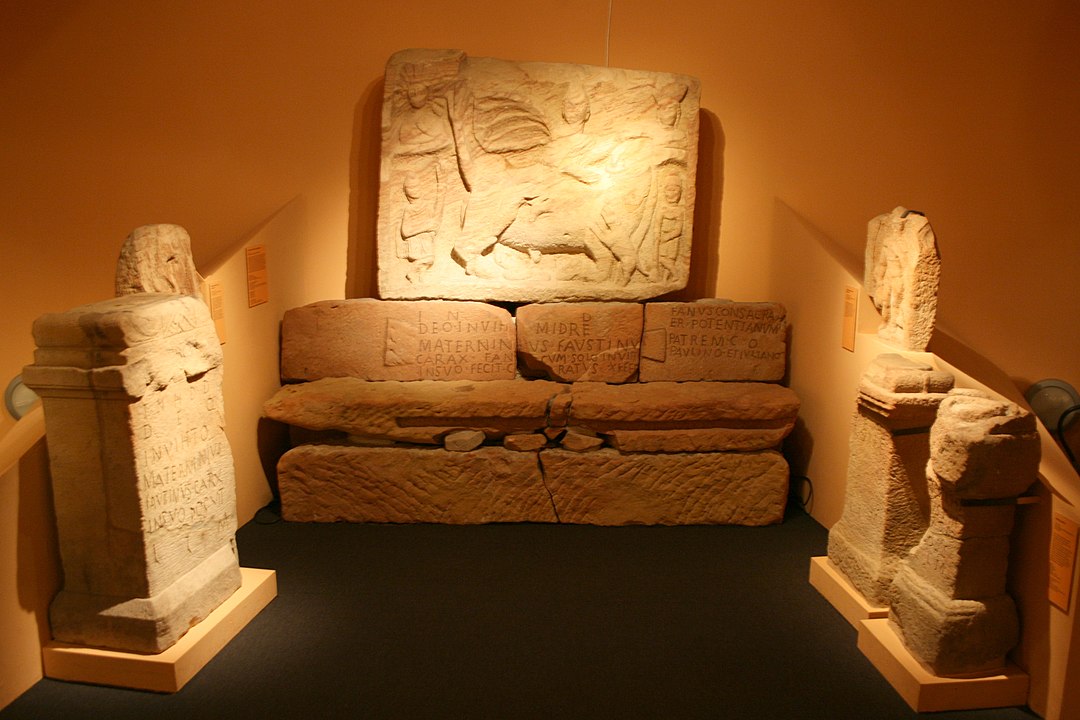
The few remains of the Mithraeum of Gimmeldingen are preserved at the Historical Museum of the Palatinate, in Speyer, Germany.
The provenance of this fragment of a white marble relief depicting Mithras as a bullkiller is unknown.
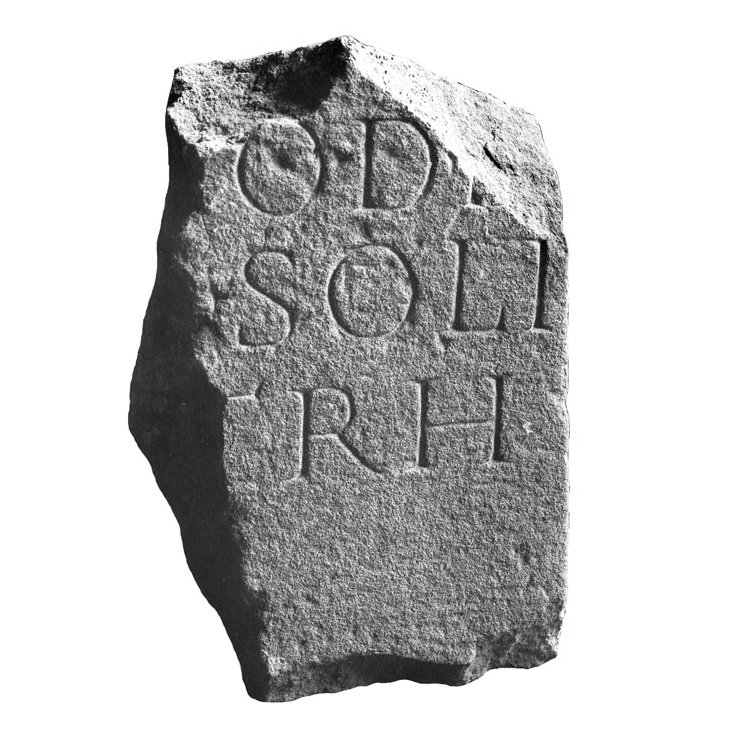
This monument with an inscription to the god Sol Mithras was found in front of the cathedral of Speyer during some sewer works.
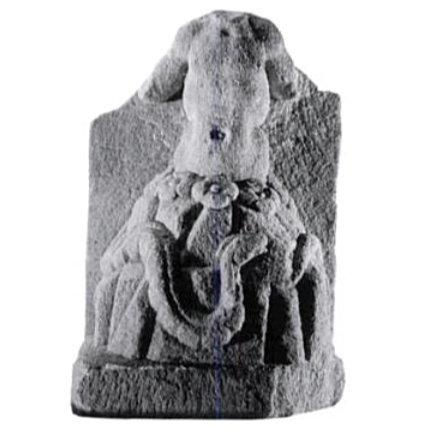
This sculpture of Mithras born from a rock was found in 1922 together with two altars in what was probably a mithraeum.
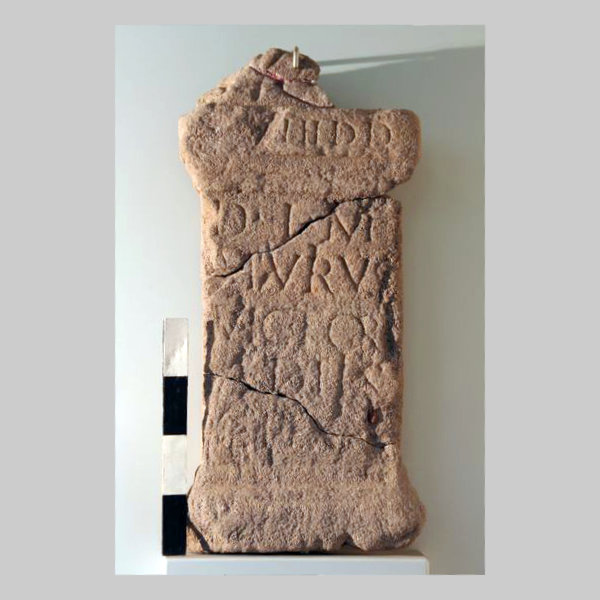
Marius Victor, according to the inscription on the monument, erected this monument to Mithras ’when Philip and Titianus were consuls’.
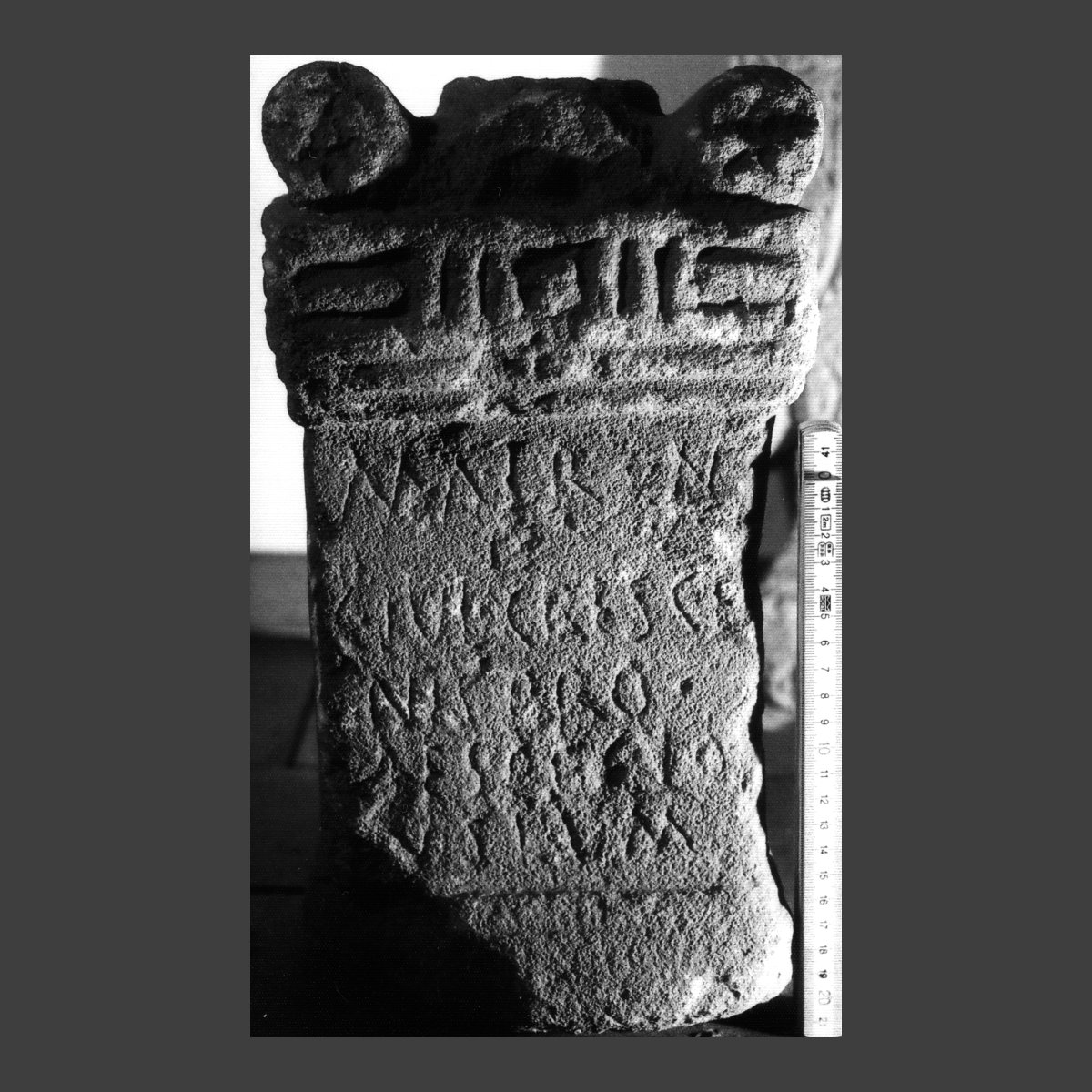
This fragmented altar of a certain Caius Iulius Crescens, found in the Mithraeum of Friedberg, bears an inscription to the Mother Goddesses.
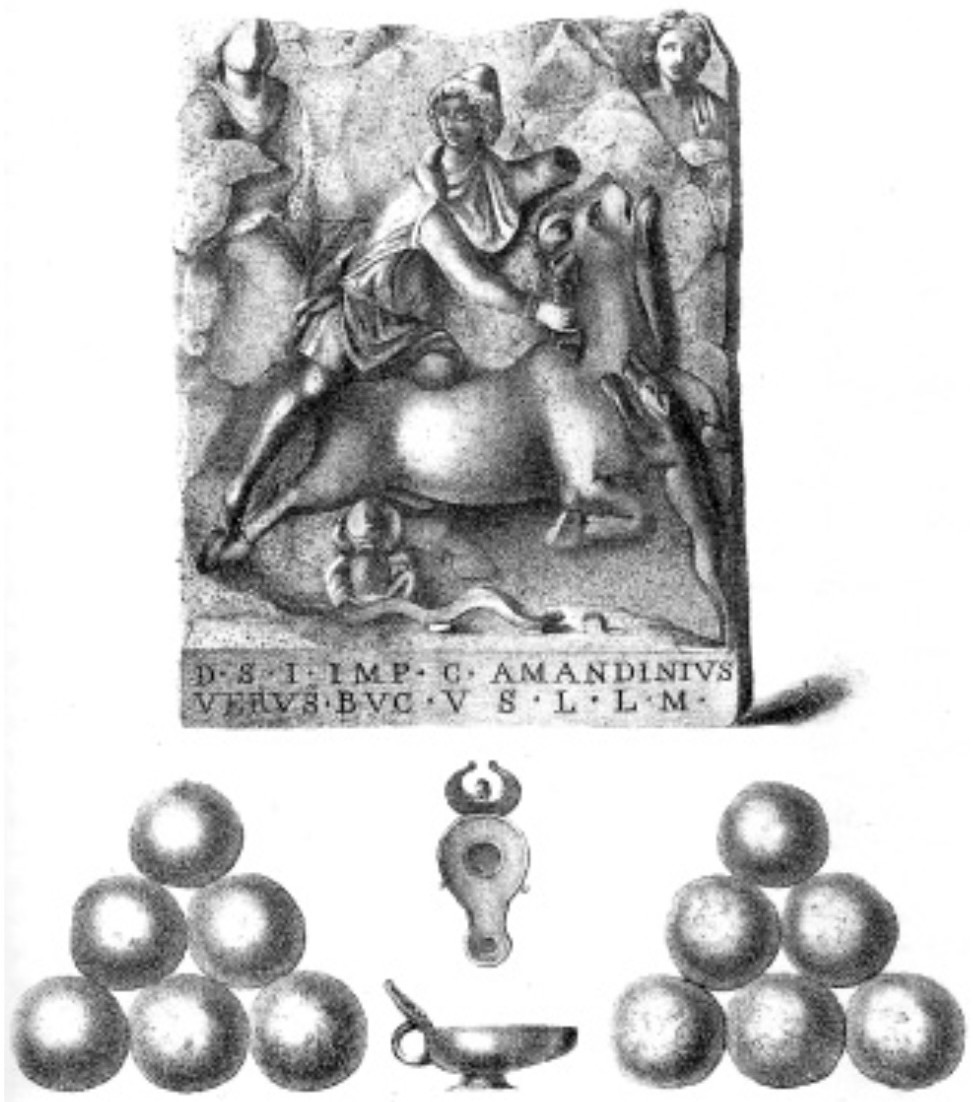
Workman digging in a field near Dormagen found a vault. Against one of the walls were found two monuments related to Mithras.
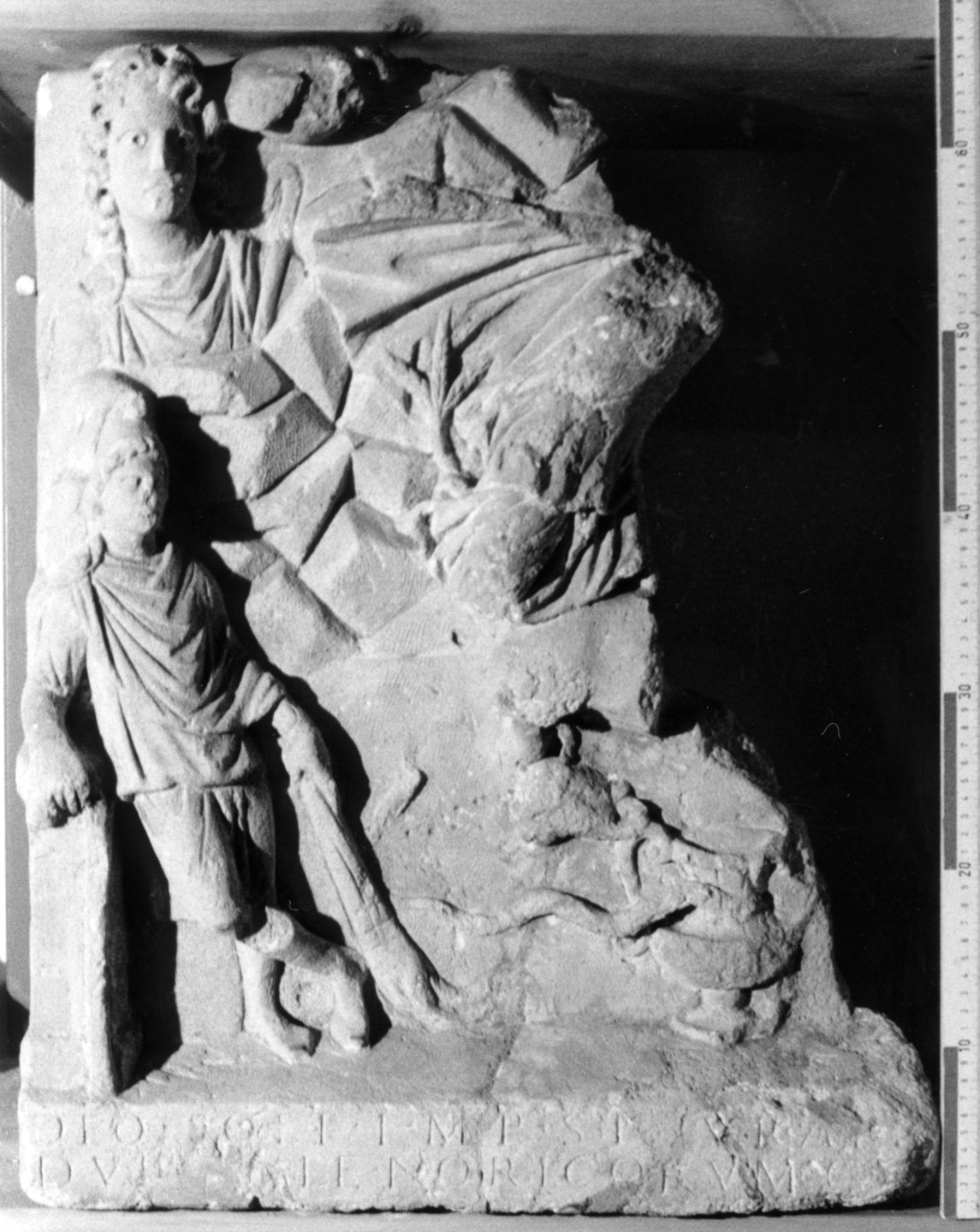
This second tauroctony, found in the Mithraeum of Dormagen, was consecrated by a man of Thracian origin.
In the Mithraeum of Gross Gerau, discovered in 1989, a statue of Mercury, a lion and an altar were found.
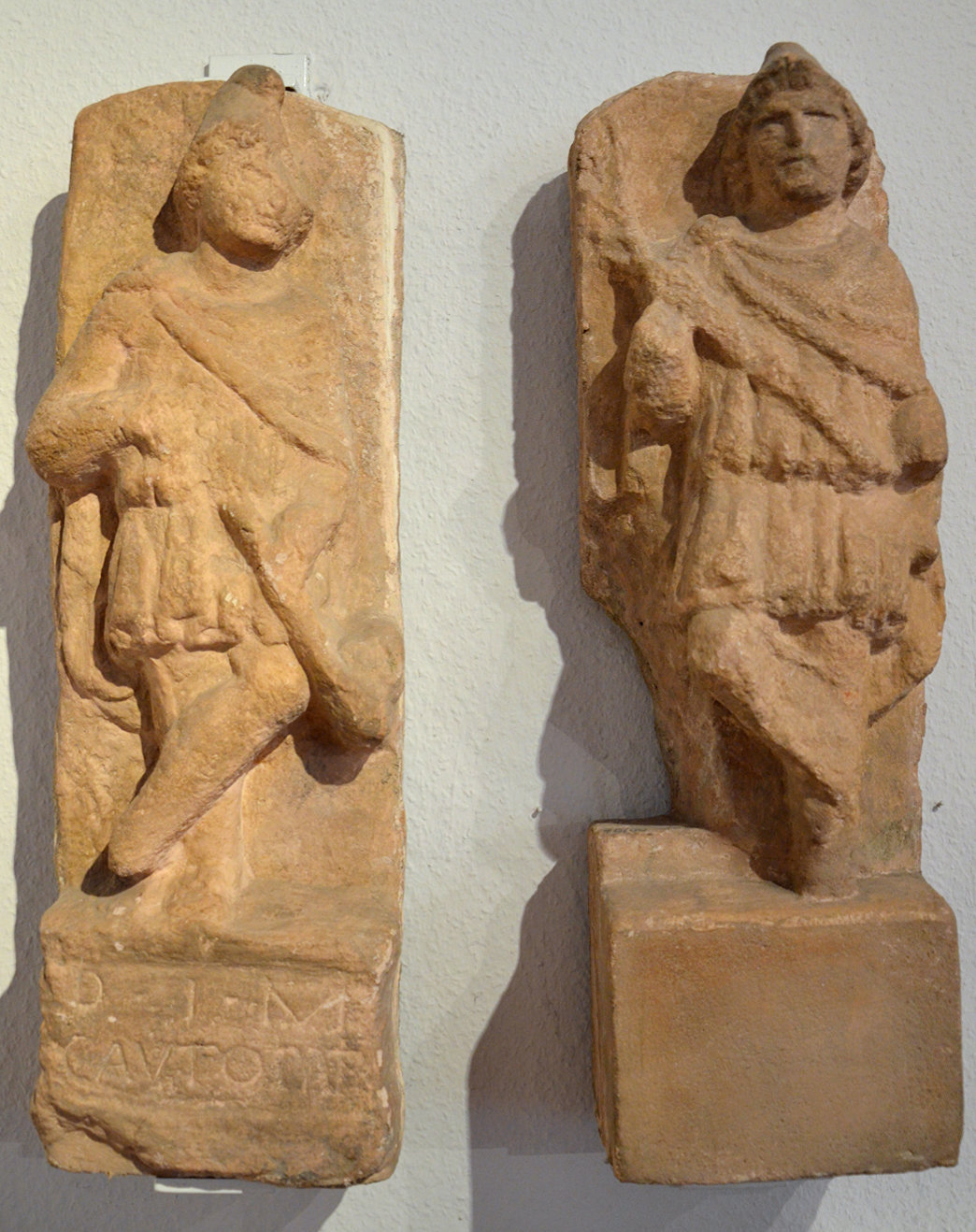
These two reliefs of Cautes and Cautopates where found in the south corner of one of the Mithraea of Friedberg, Hesse.
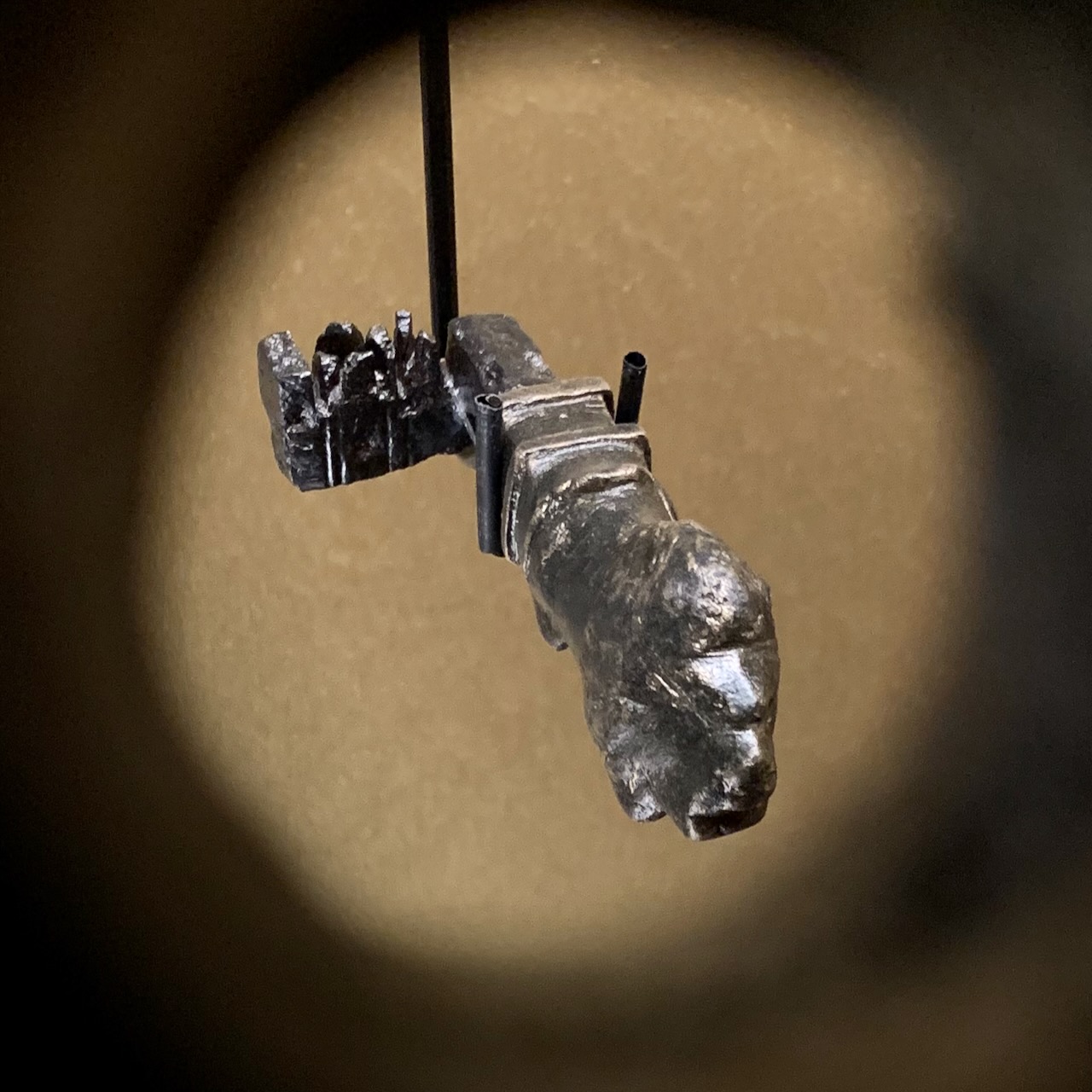
The key of Nida's Mithraeum III was decorated with a lion's head.
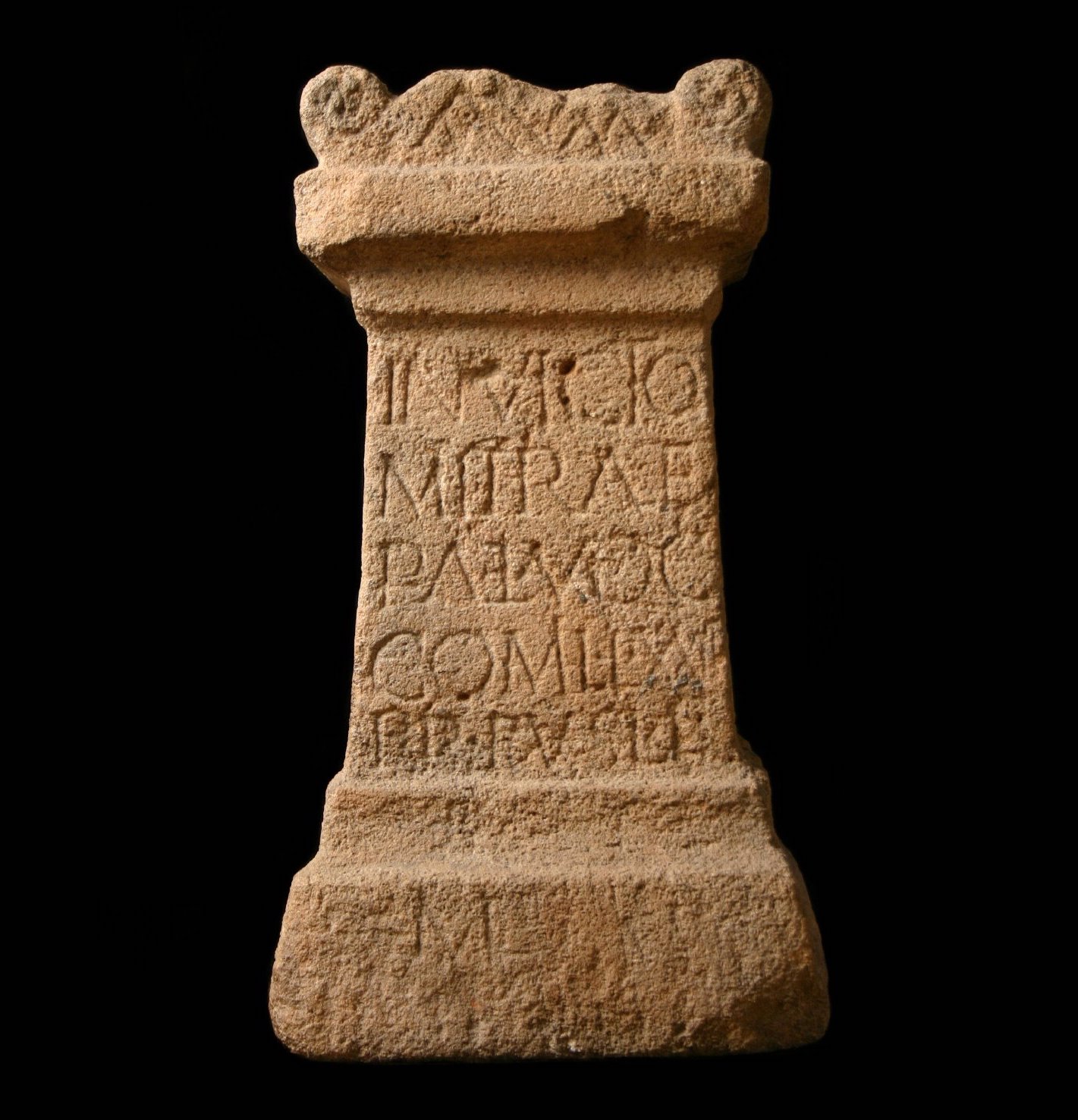
This monument was erected by a certain Publius Aelius Vocco, a solider of the Legio XXII Primigenia Pia Fidelis stationed in Mainz.
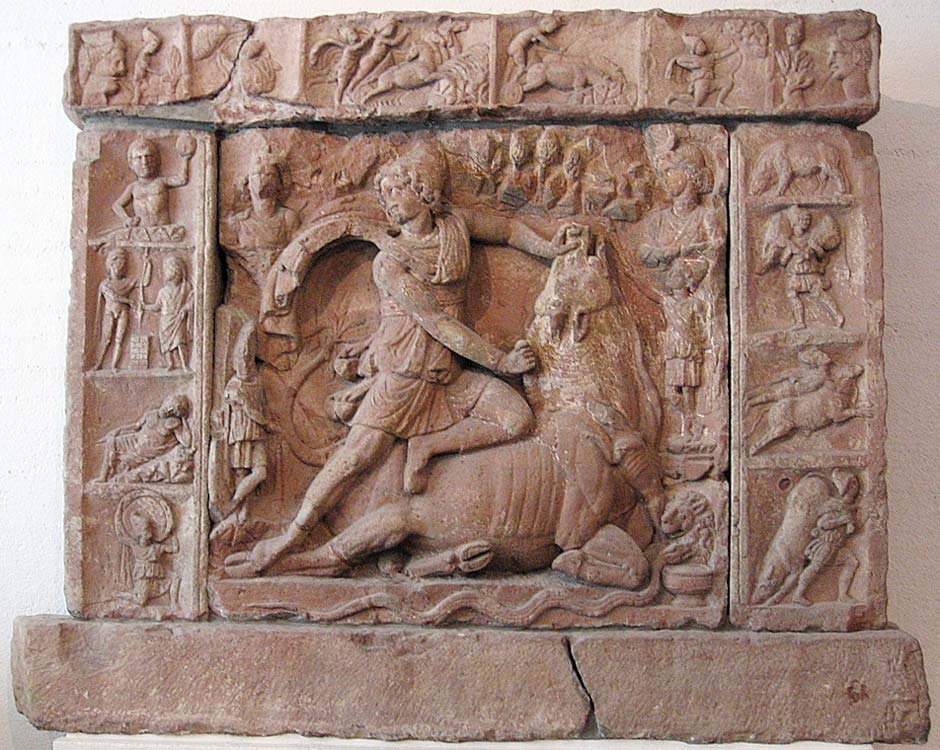
The Tauroctony relief of Neuenheim, Heidelberg, includes several scenes from the deeds of Mithras and other gods.
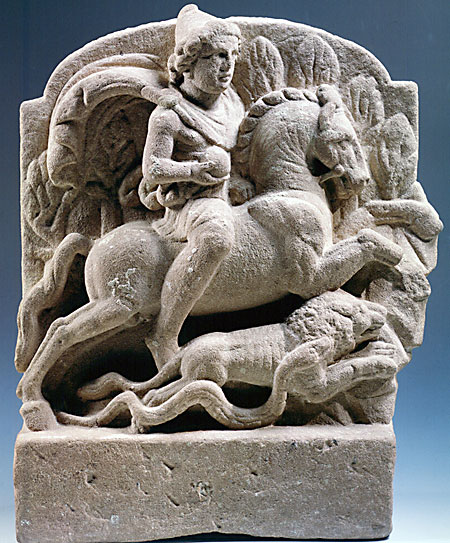
Mithras galloping, in a cypress forest, carrying a globe in one hand and accompanied by a lion and a snake.
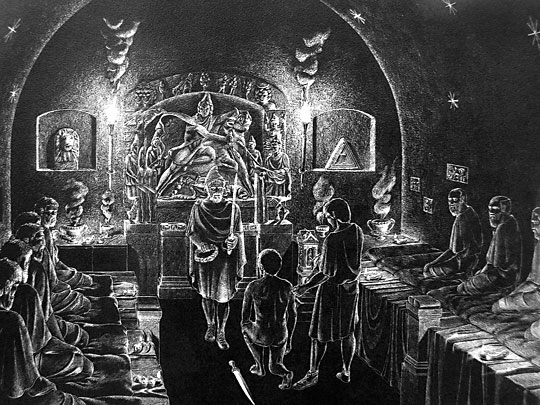
The Mithraeum of Osterburken could not be excavated bodily owing to the water of a well in the immediate neighbourhood. The monument had been covered carefully with sand.
