Your search Abel Rey gave 118 results.

Two grey sandstone fragments of a lion statue on a base from Mithraeum I at Stockstadt, with part of the tail missing
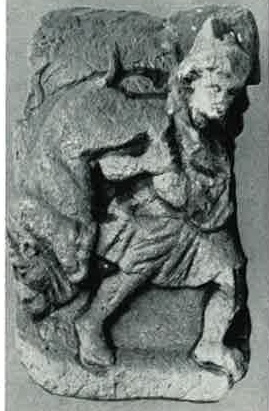
Grey sandstone relief from Mithraeum I at Stockstadt showing Mithras in Oriental dress walking to the right while carrying a bull on his shoulders
Second-century Mithraeum discovered in the lower storey of the Curia complex at Cosa.
Greyish marble fragment from the Mithraeum at Sarmizegetusa, Dacia, preserving the bull's tail and part of Mithras's flying cloak.
Two greyish marble fragments from the Mithraeum at Sarmizegetusa, Dacia, preserving the torso of Mithras in tunic and cloak killing the bull with his right hand.

Three greyish marble tauroctony fragments from the Mithraeum at Sarmizegetusa, Dacia, preserving the head of Mithras and the bull and parts of the subsidiary scenes.
Right lower corner of a greyish marble tauroctony from the Mithraeum at Sarmizegetusa, Dacia, preserving the bull's knees and dewlap, the dog, part of the serpent, and the lower part of Cautes.
Fragment of greyish marble from the Mithraeum at Sarmizegetusa, Dacia, preserving a bull in a small boat — a rare iconographic detail in Mithraic art.
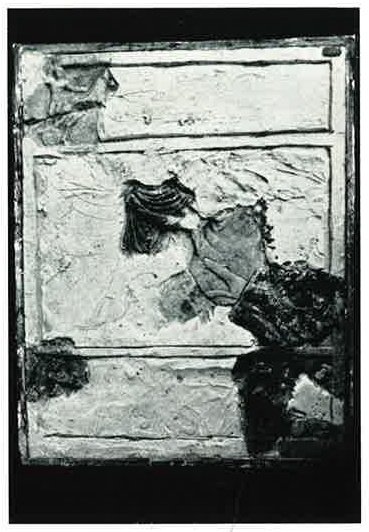
Ten fragments of a greyish marble tauroctony relief from the Mithraeum at Sarmizegetusa, Dacia, divided into three horizontal registers.
Tabella aenea ansata from Mainz, ancient Mogontiacum, dedicated to Deo invicto Mithrae by Catia, lost during the Second World War

Tracing the links between the cult of Mithras and the Proud Boys’ quest for identity, power, and belonging. How ancient rituals and brotherhood ideals resurface in radical modern movements.
Small bronze torchbearer statuette in Oriental dress from the Cabinet des Médailles, with restored feet and a missing torch-bearing arm.

Bronze torchbearer statuette in a short tunic from the Cabinet des Médailles, holding an upraised torch.

Pair of bronze torchbearer statuettes in Oriental dress from the Cabinet des Médailles, originally belonging to the same sculptural group.
Fragment of yellowish chalcedony in the Cabinet des Médailles, Paris, formerly in the Millingen collection, depicting the standard tauroctony.

Rock-crystal gem in the Cabinet des Médailles, Paris, depicting Mithras as bull-slayer with the standard iconographic programme.
A collection of ritual vessels from the Mithraeum at Pons Saravi (modern Saarburg) in Belgica, including a stone vase, a plate with a lion's head in relief, a terra-sigillata plate with a hunting scene, and an urn filled with ash, bird bones, and rings…

Mithraic relief from Rome reproduced in figure 169 of the corpus.
Wall-painting of Mithras tauroktonos in fresco, discovered in 1886 in an underground room of the house of the Nummi Albani on the Quirinal (Via Firenze); the god wears a red cap and tunic, the torchbearers wear yellow or orange tunic and cap with green or brown anaxyrides…
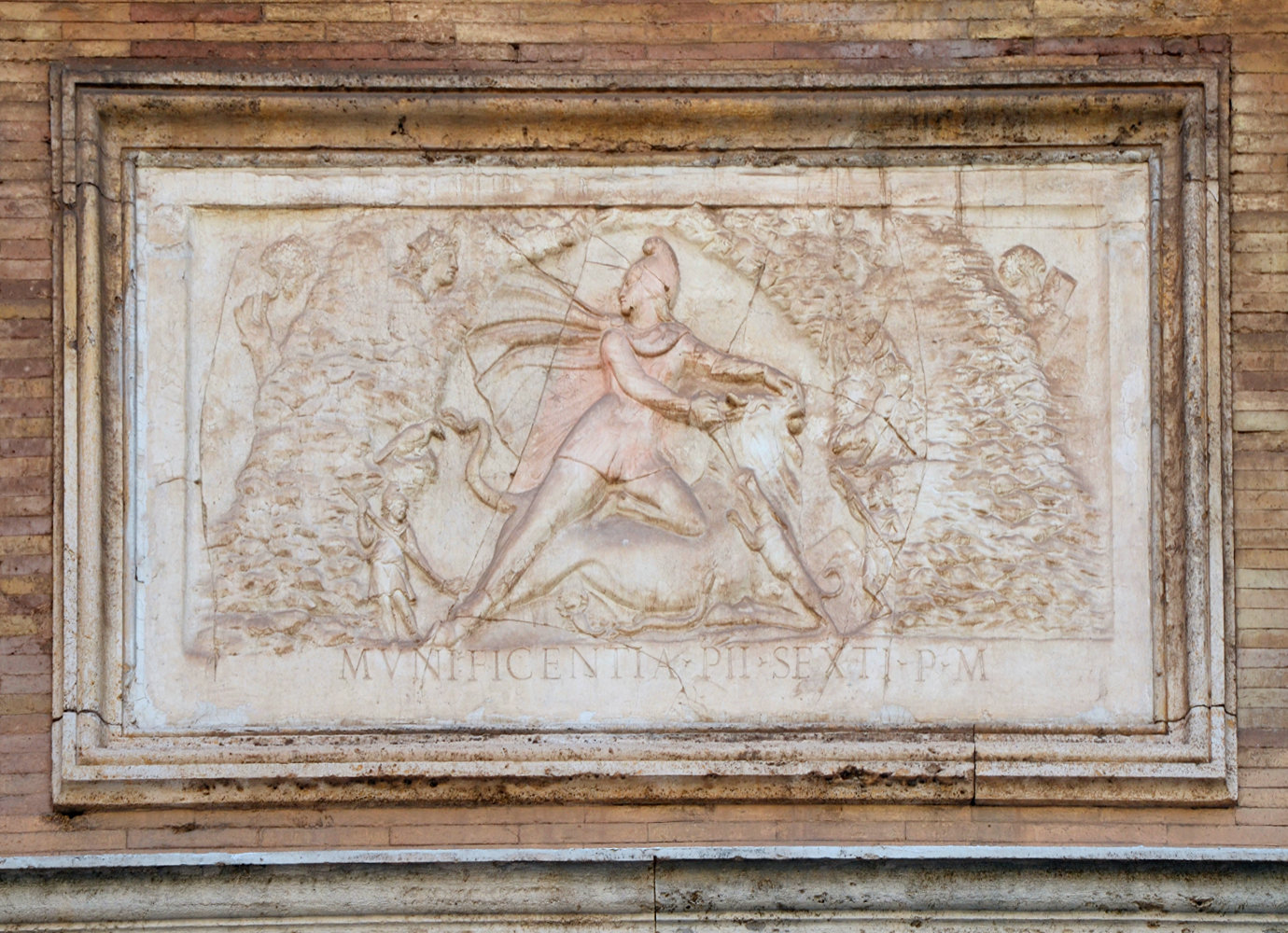
The Tauroctony relief of Mithras killing the bull walled in the Cortile of the Belvedered, Vatican City, was found by Fagan near Ostia.
