Your search Abel Rey gave 118 results.

One of the rooms in a sustantive masonry building in Hollytrees Meadow was considered to be a Mithreum, a theory that has now been discarded.
Stone statue fragments from the Mithraeum at Mackwiller depicting Mithras's rock-birth, preserving the head in Phrygian cap, torso, and right hand holding part of a torch.
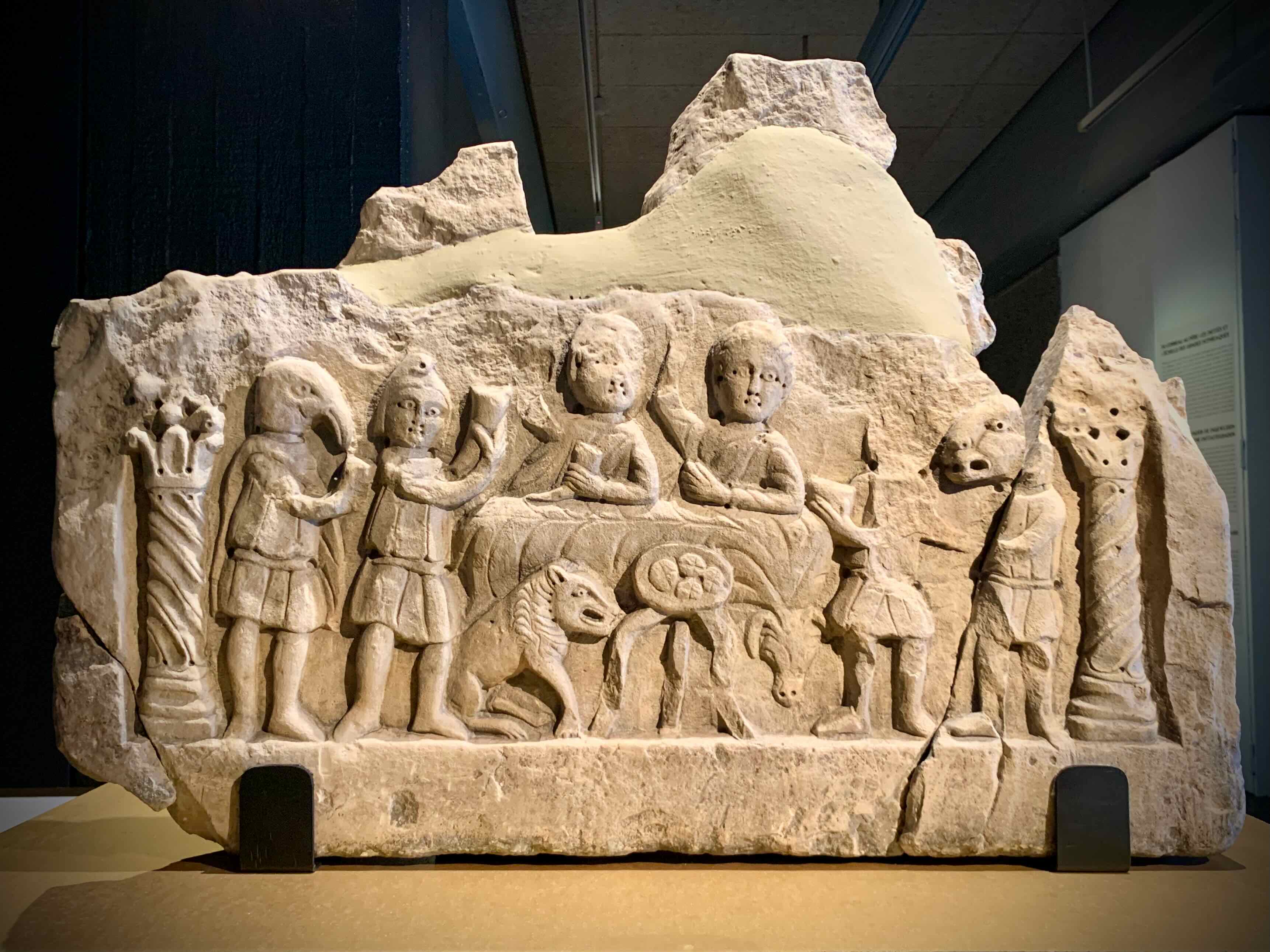
The mithraic relief of Konjic shows a Tauroctony in one side and a ritual meal in the other.
Three fragments of a cone-shaped sandstone mortar with a handled rim, from Mithraeum I at Stockstadt
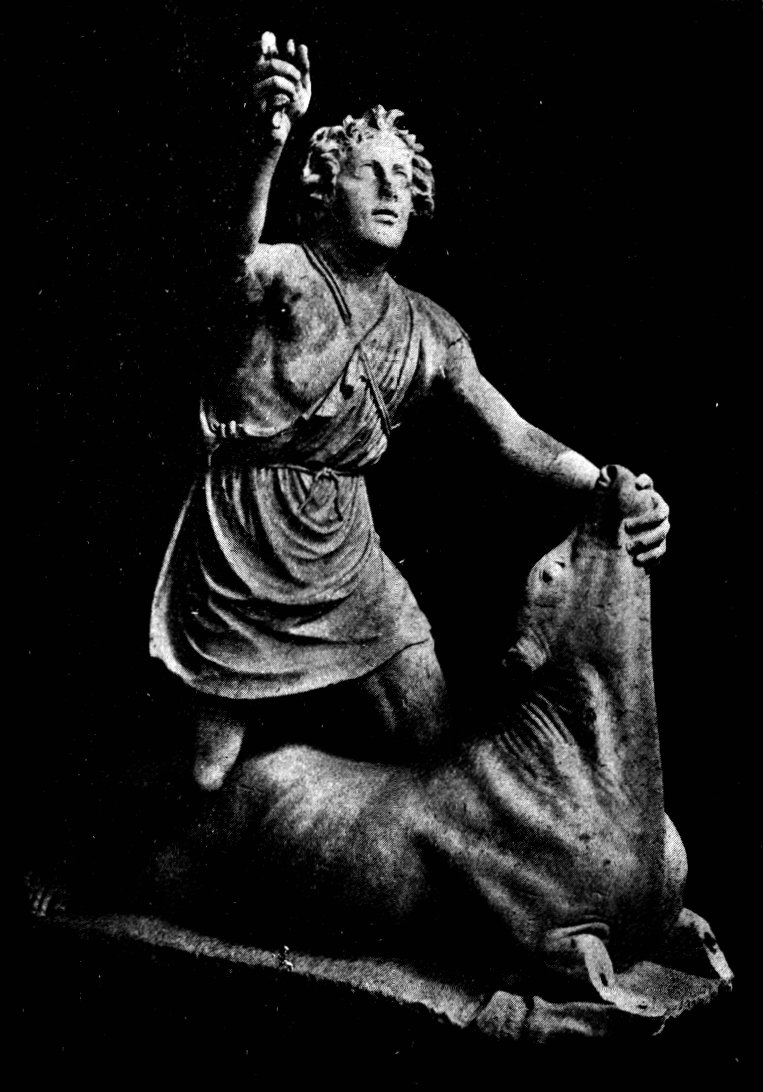
The person who commanded the sculpture may have been M. Umbilius Criton, documented in the Mitreo della Planta Pedis.
Inscription now preserved in the Palazzo Ducale of Urbino whose wording may point to the existence of a Mithraic community.
Fragments of a bluish marble tauroctony from the Mithraeum at Sarmizegetusa, Dacia, possibly related to the preceding piece, preserving remnants of a bull.
Small rectangular Mithraic sanctuary (spelaeum 8.00 m long) found in 1935–36 in a gravel terrace at Schachadorf near Wartberg an der Krems, Noricum; the building is divided into a pronaos and an inner cult room, and shows traces of fire destruction.
Group of basalt cult furniture from Mithraeum II at Heddernheim, ancient Nida, comprising an altar, a large base, and two smaller bases
Damaged red sandstone altar from Mithraeum II at Heddernheim, ancient Nida, with the representation of an axe on its front face
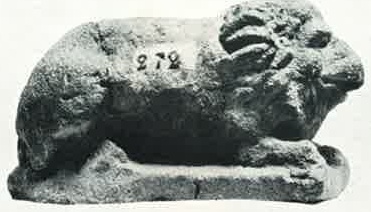
Red sandstone statue of a lying lion with a hollow channel running through its body, from Mithraeum II at Heddernheim, ancient Nida
Two stone relief heads of torchbearers in Phrygian caps, from Mithraeum II at Heddernheim, ancient Nida, with traces of Mithras's mantle
Large circular iron pan with handle from Mithraeum I at Heddernheim, ancient Nida, likely used in Mithraic ritual feasting
Pair of sandstone bases with small columns on the front, carved with a staircase on the reverse, from Mithraeum I at Heddernheim, ancient Nida
Unusual hexagonal sandstone altar from Mithraeum I at Heddernheim, ancient Nida, with six decorated sides of cult significance
Basalt relief from Mithraeum I at Heddernheim, ancient Nida, featuring a depiction of the goddess Epona, found in a Mithraic context
Sandstone statue of a seated lion in attacking posture, from Mithraeum I at Heddernheim, ancient Nida, with its hindmost part lost
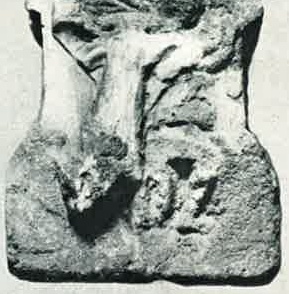
Small sandstone altar from Mithraeum I at Heddernheim, ancient Nida, bearing a snake and cult imagery consistent with Mithraic worship
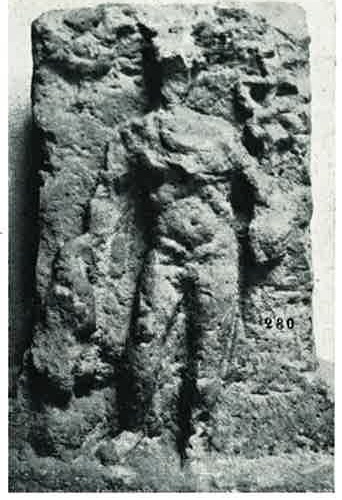
Weathered sandstone relief from Mithraeum I at Heddernheim, ancient Nida, showing a standing Mercury whose body is covered by a shoulder cape
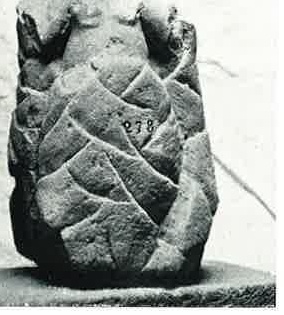
Red sandstone statue from Mithraeum I at Heddernheim, ancient Nida, depicting the young naked Mithras with curly hair being born from the rock
