Your search Al. N. Oikonomides gave 2979 results.
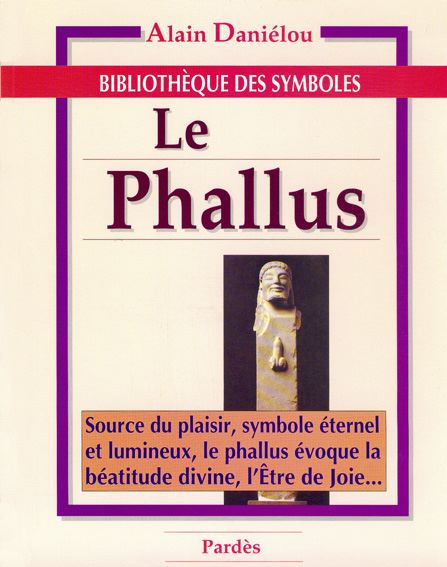
It is only when the penis stands up straight, that it emits semen, the source of life. It is then called the phallus and has been considered, since earliest prehistory the image of the creative principle, a symbol of the process by which the Supreme

Guides, maps and additional information on the Basilica, the Mithraeum and the archaeological area of San Clemente.
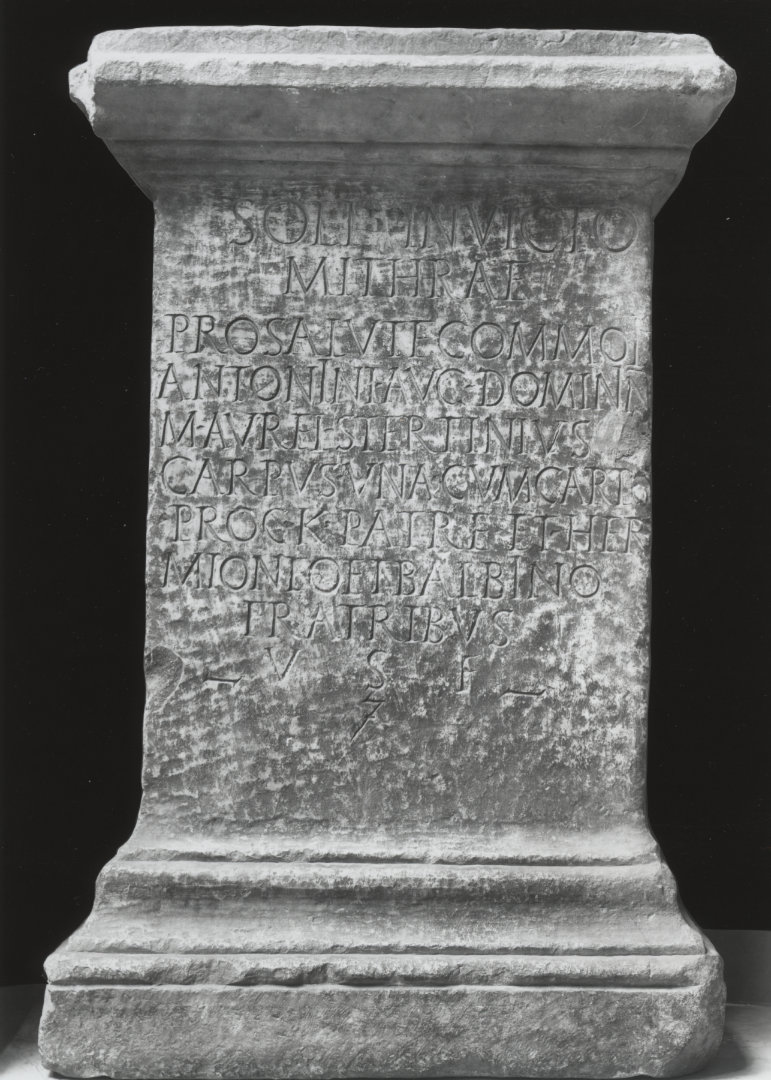
This altar bears an inscription to the health of the emperor Commodus by a certain Marcus Aurelius, his father and two other fellows.
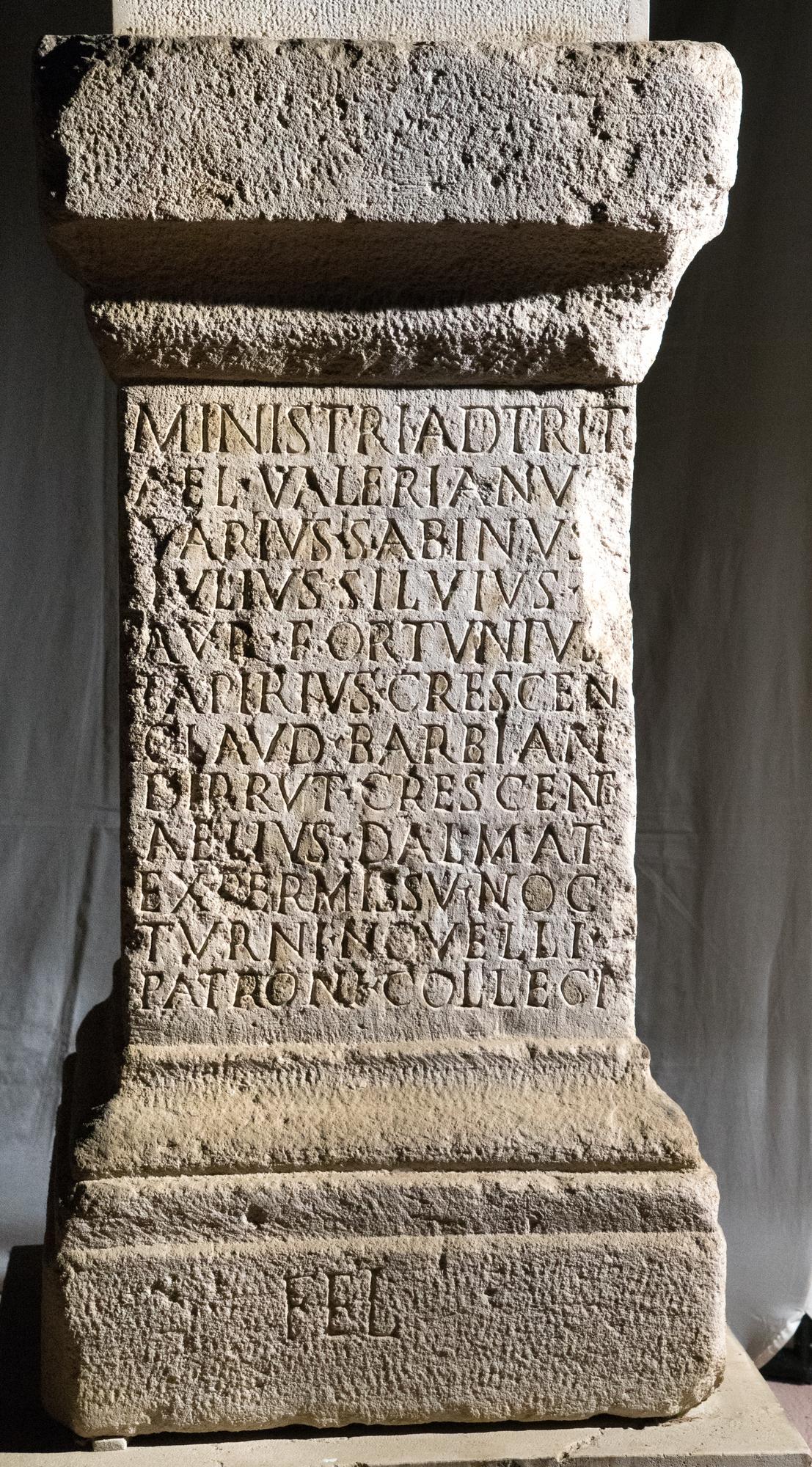
This inscribed limestone altar from Roman Salona preserves several lists of ministers associated with the Tritones collegium during the Tetrarchic period.
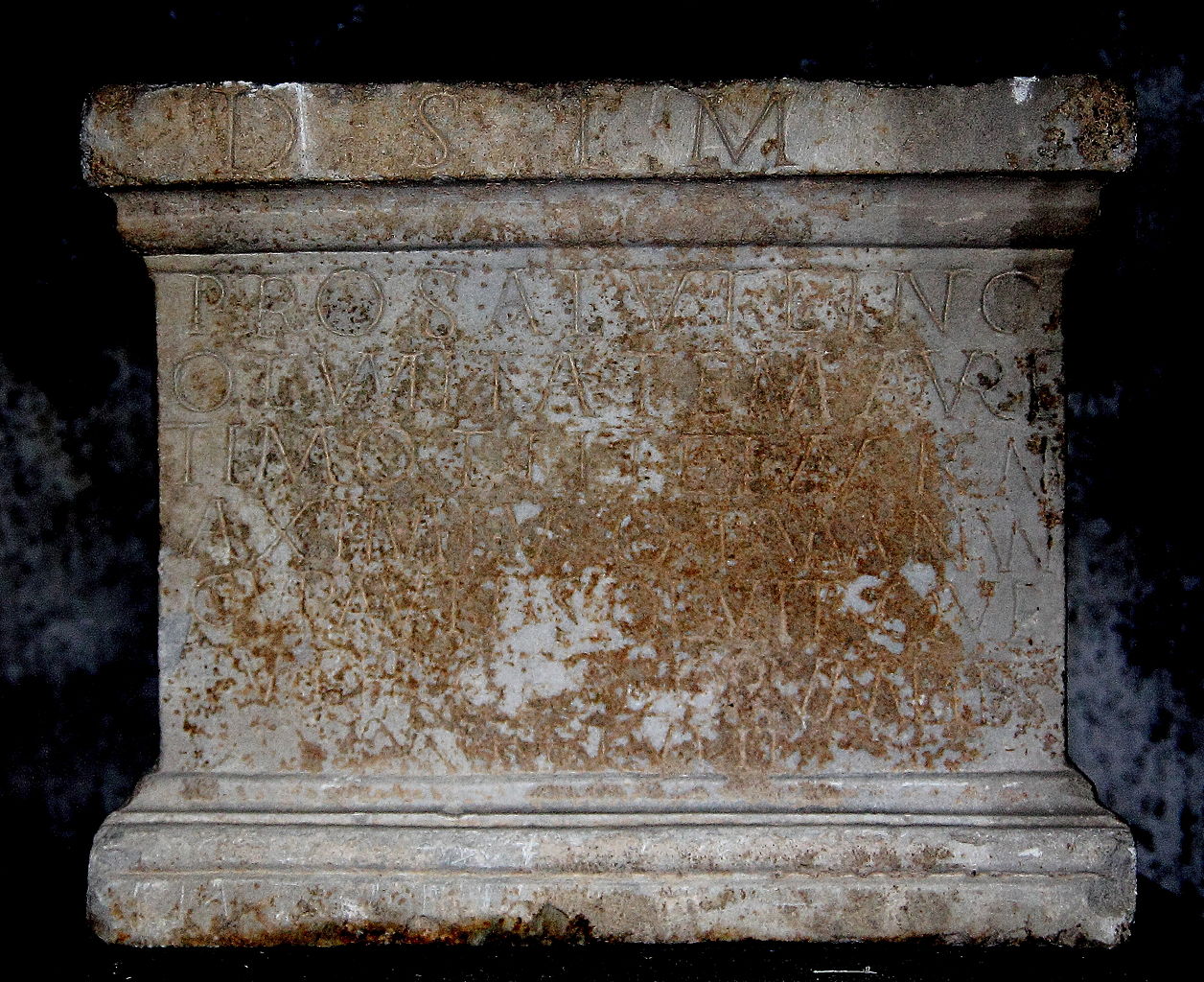
Mithraic stele, from Alba Iulia, Romania, with inscription.
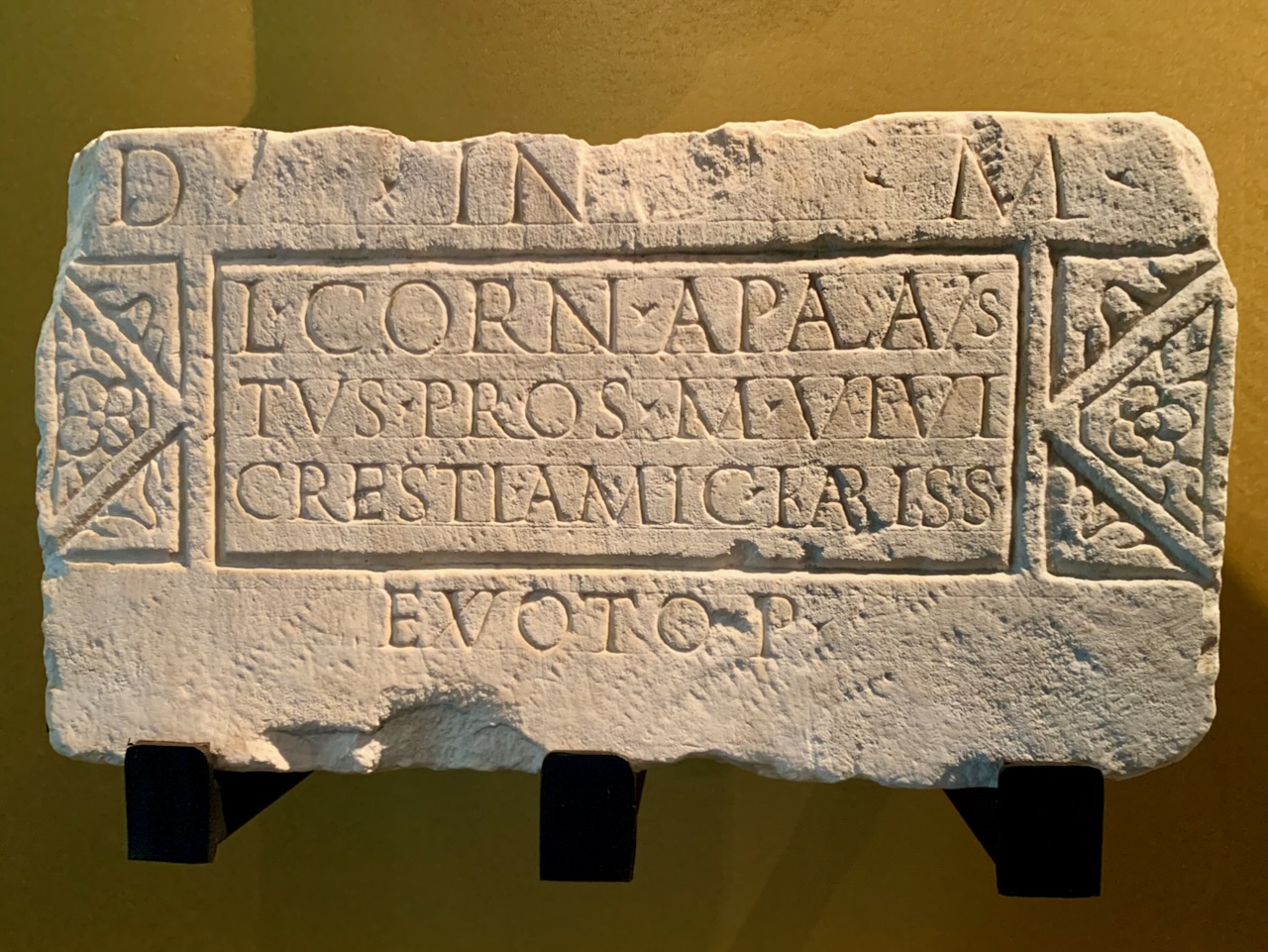
The altar that now stands in Split was dedicated to Invincible Mithras for the health of a dear friend.

Five fragments of a red terra-sigillata vessel showing Cautopates with his torch pointing downwards, in Eastern attire and cross-legged, with the hoof of the bull's hindleg before him, found at Alesia (Mont-Auxois) in Lugdunensis.
A red terra-sigillata cup bearing a relief tauroctony of Mithras, with Cautes and Cautopates cross-legged on either side, found at Alesia (Mont-Auxois) in Lugdunensis and now kept at Saint-Germain-en-Laye.
Group of Mithraic objects now preserved in the museum of the Société des Sciences de Semur at Alésia.
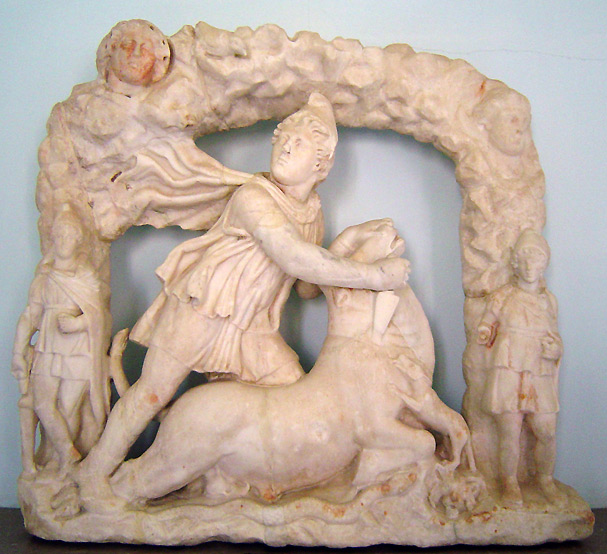
The assumed find-place of the Mithras Tauroctonus of Palermo is uncertain.
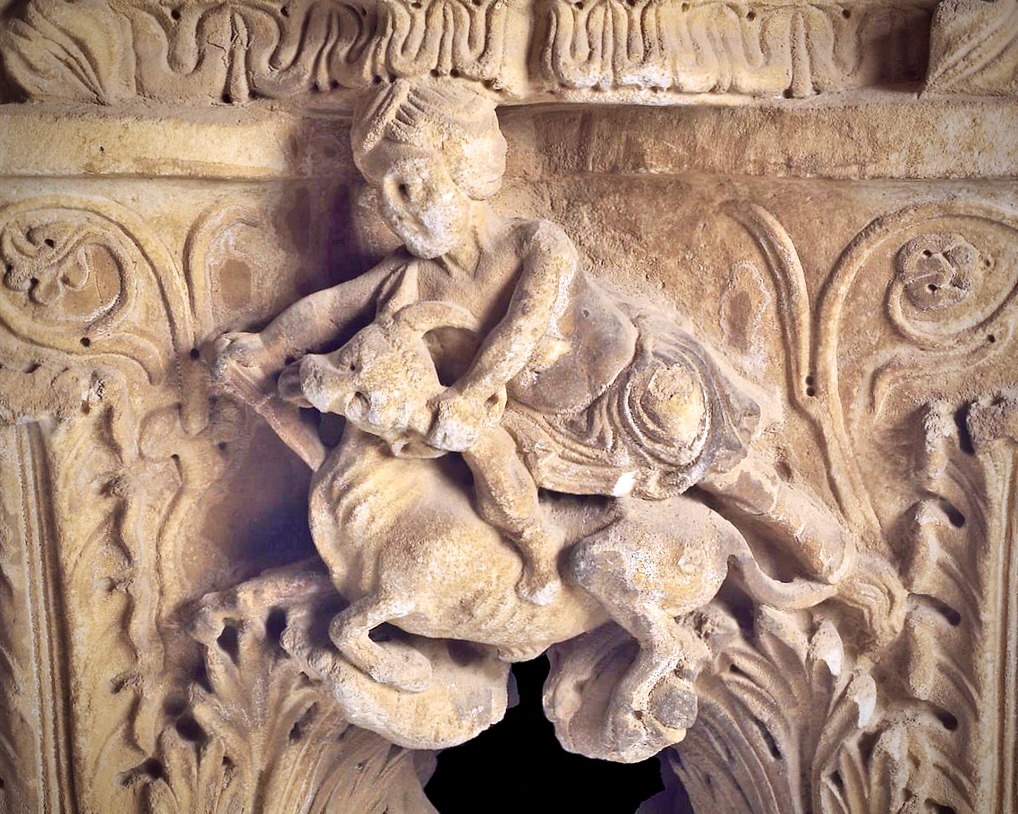
On one of the capitals of the cathedral of Santa Maria Nuova in Monreale, Sicily, an unusual turbaned bull-slaying Mithras has been recorded.
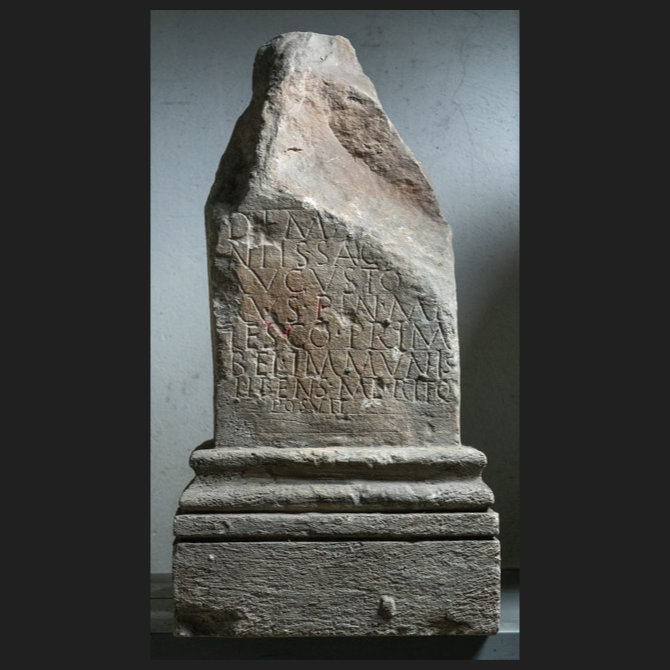
This altar, discovered in Grude, near Tihaljina, Bosnia and Herzegovina, bears an inscription by Pinnes, a soldier of the Cohors Prima Belgica.
This temple of Mithras has been discovered under the Church in Vieux-en-Val-Romey, in 1869.
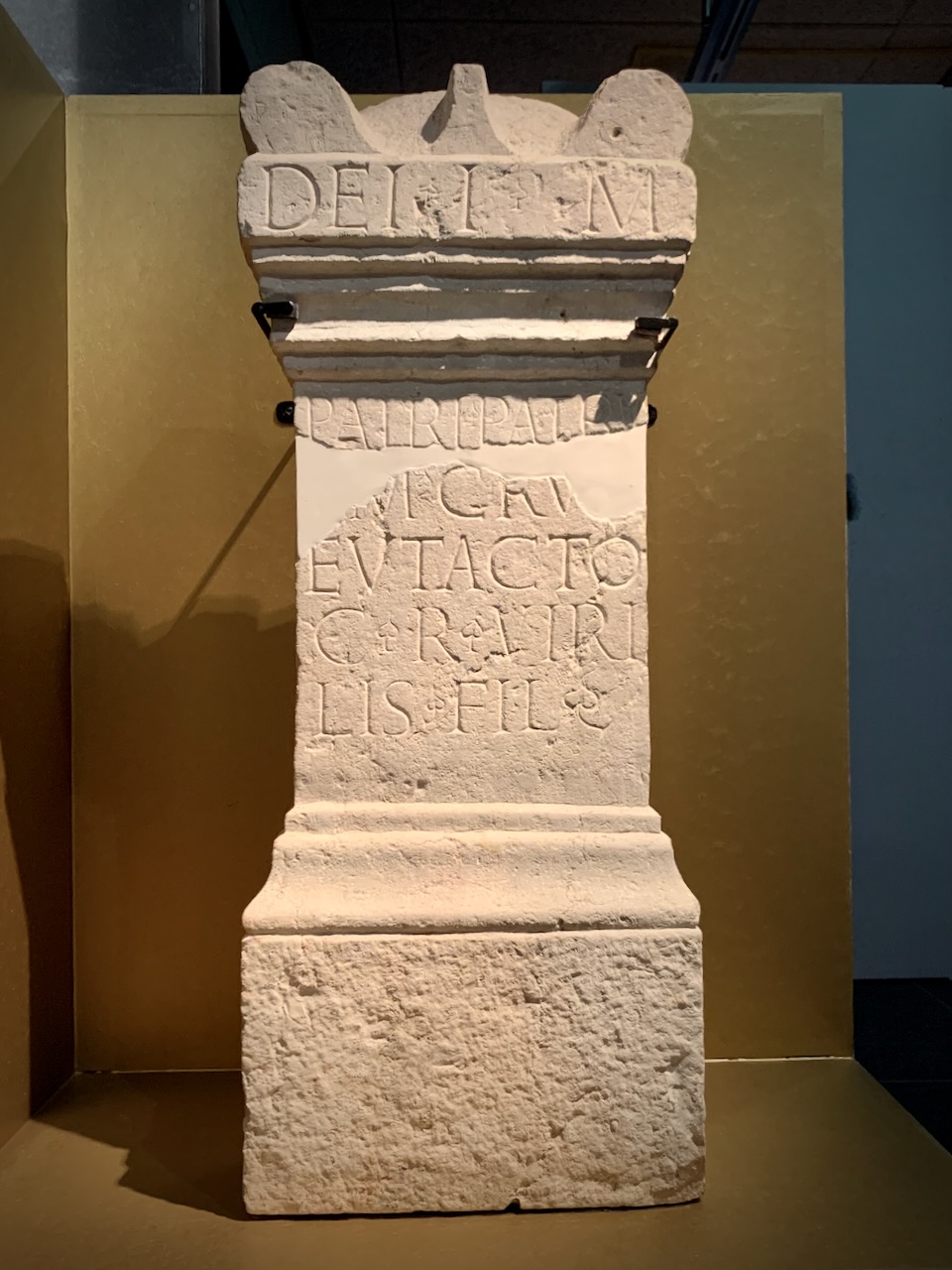
This altar was dedicated by a son to his father, one of the few Patres Patrum recorded in the western provinces.

Moeller interprets the square as a Mithraic construction encoding cosmological, numerical, and theological structures of Roman mystery religion, rather than an early Christian cryptogram.

Tercera entrega de la trilogía de Jaime Alvar dedicada al estudio de los cultos a dioses procedentes de Oriente en la Península Ibérica.

This catalogue proposes, thanks to the contributions of some 75 international experts, a new synthesis for a complex and fascinating cult that reflects the remarkable advances in our knowledge in recent decades.