Your search Anne Le Cam gave 393 results.

Callimorphus dedicated this image of the sun god to the invincible sun ’Mythra’.
In Plutarch’s Life of Alexander, the grieving Darius binds the eunuch Tireus by the light of Mithras to reveal the truth about his captive wife Statira, a solemn appeal that leads to unexpected praise for Alexander’s honor and restraint.
This inscription, which doesn’t mention Mithras, was found near the church of Santa Balbina on the Aventine in Rome.
In the 1900s a model Mithraeum was built in Saalburg in the mistaken belief that there was an original temple of Mithras in an ancient Roman building.
Dion Chrysostom, c. 100 A.D., a philosophical writer under the emperors Nerva and Trajan, composed a series of discourses or essays (λόγοι) on various subjects, in one of which he reports concerning the doctrines and practices of the magi.
The scholiast Lactantius Placidus comments on Statius’ passage identifying the Sun as Titan, Osiris, and Mithras, interpreting the Persian cave figure with the bull.
A powerful and wealthy man, founder of a mithraeum in the city of Aquincum of which he was the mayor.
Thrasyllus was an Egyptian of Greek descent grammarian, astrologer and a friend of the Roman emperor Tiberius.

Pater nominos in Sidon, he consecrated a number of sculptures, including a Hecataion.
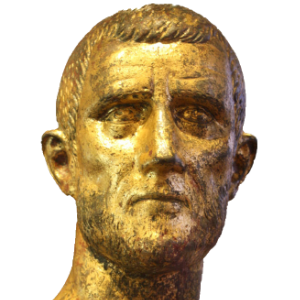
Roman emperor of humble origin who reunited the Empire and repelled the pressure of barbarian invasions and internal revolts.
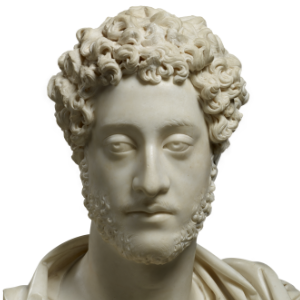

He and his brother, both of the Legio II Adiutrix, built a temple and erected several monuments in Budaors, Pannonia.
Centurion of the Legio VII Gemina Antoniana Pia Felix who erected the only known mithraeum at Lucus Augusti to date.

Veteran and ex duplicarius of ala I civum Romanorum who dedicated an altar to Mithras in Teutoburgium.
Freedman who dedicated the first monument mentioning a Pater.
Freedman, he offered a relief of Mithras as a bull killer for the well-being of his two former masters in Apulum.
Freedman and administrator of the country estate of a certain Flavius Macedo in Moesia.
