Your search As Salhiyah gave 2381 results.
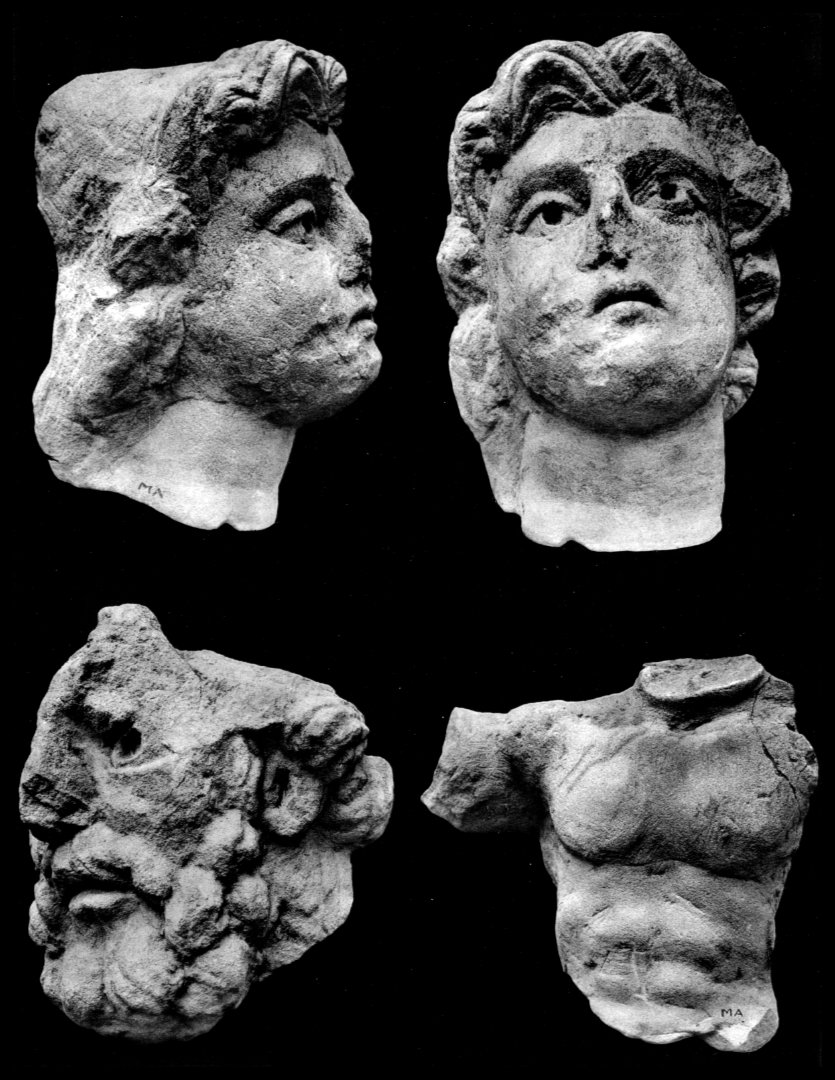
This fragment of the head of a young Mithras is one of the finds made during the excavations carried out by Jean-Jacques Hatt at Mackwiller, France, in 1955.
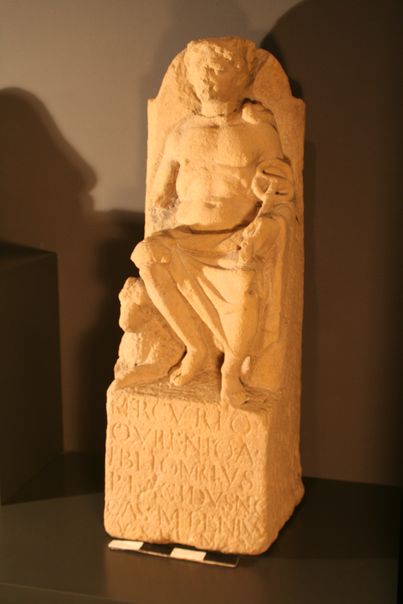
The statue was dedicated to Mercury Quillenius, an epithet used to refer to a Celtic god or the Greek Kulúvios.
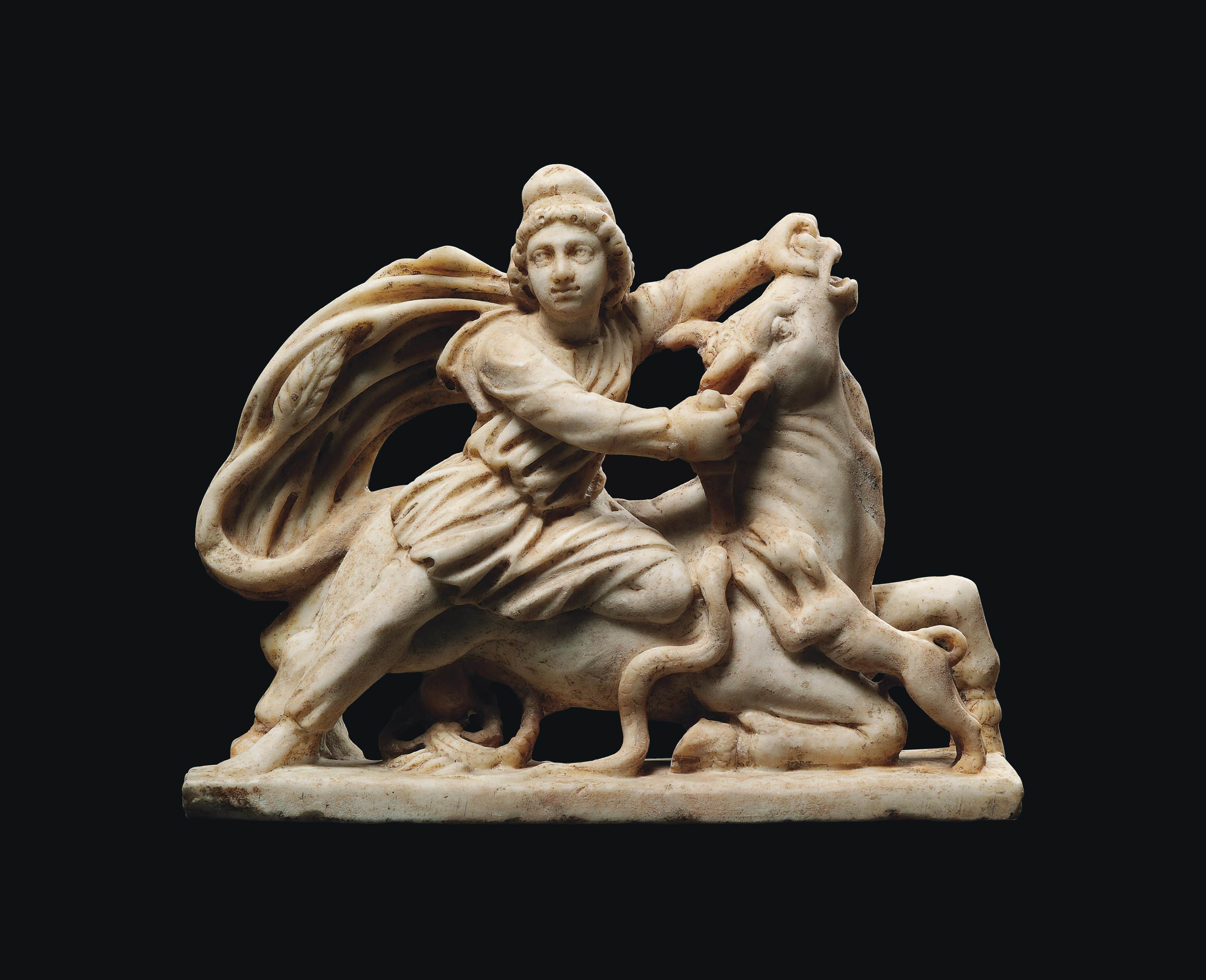
Marble group of Mithras slaying the bull, formerly sold by Antiquarium Ltd., New York.
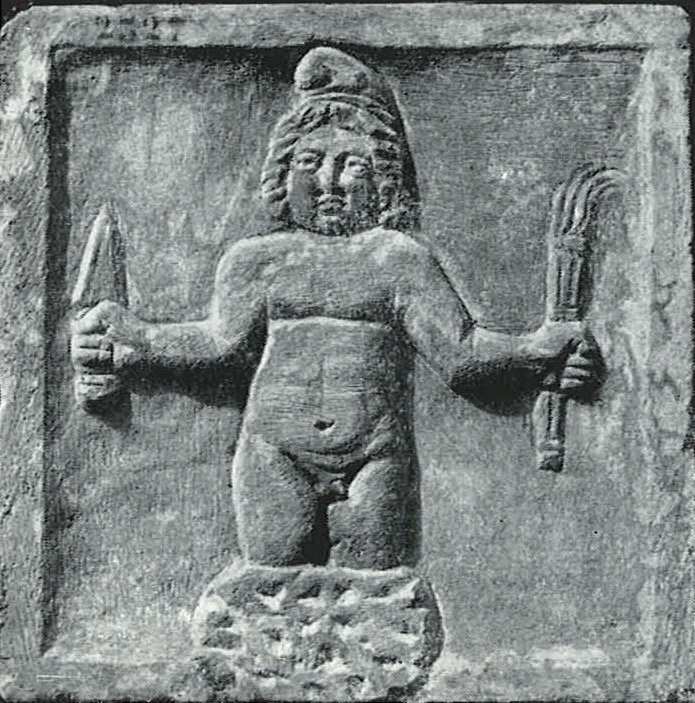
The relief of Mithras being born from the rock of the Esquiline shows the young god naked, as usual, with a torch and a dagger in his hands.
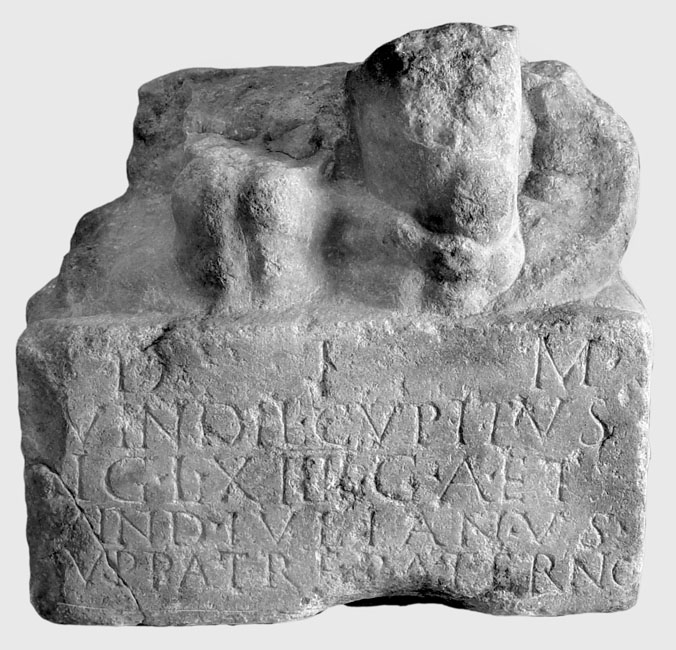
Only parts of the knees of Mithras, emerging from the rock, have been preserved from this monument of Petronell-Carnuntum, Austria.
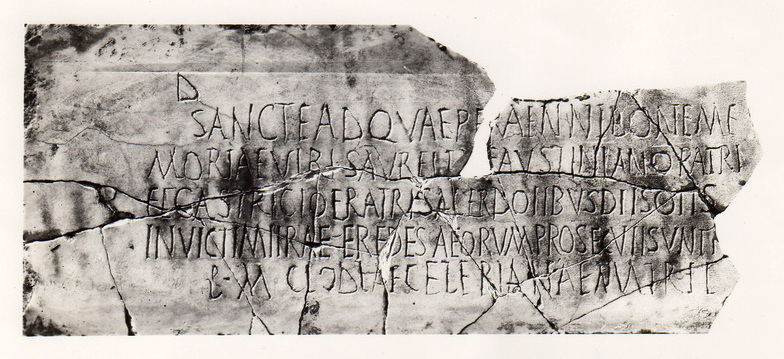
This inscription was commissioned by a family of priests of the invincible god Mithras.
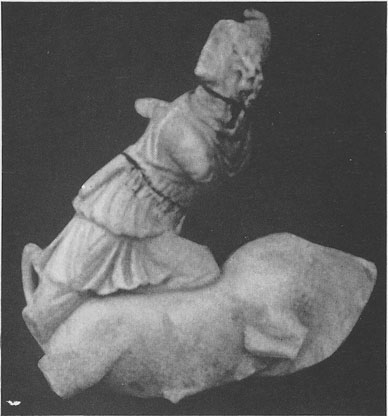
Fragment of a white marble statue of Mithras killing the bull from Rusicade, today Skikda, Algeria.
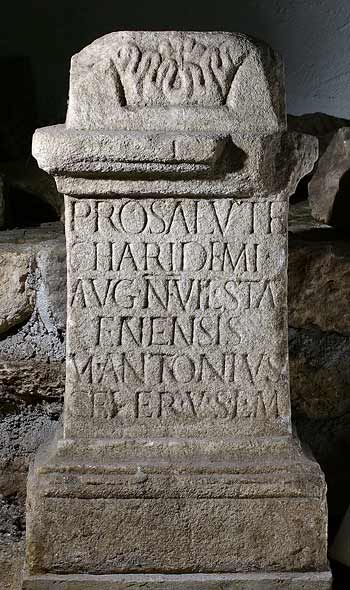
Marble votive altar with inscription to Mithras, featuring coiled, fan-like motifs above the text and associated with the statio Enensis.
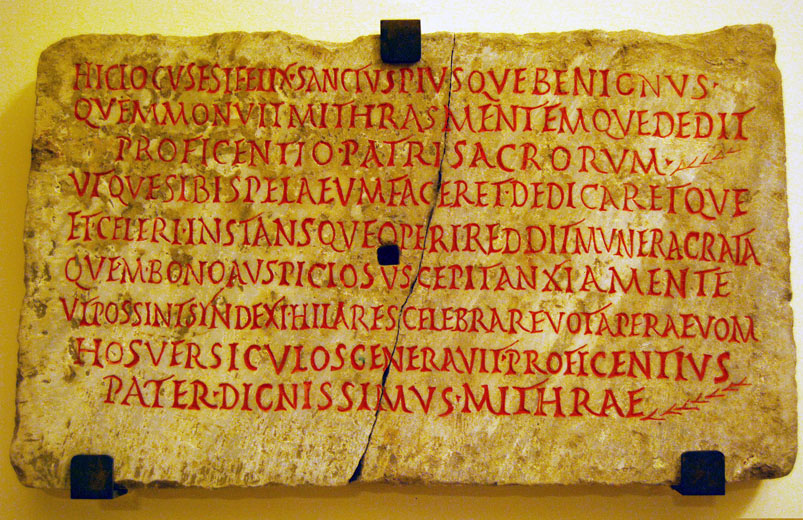
This marble slab bears an inception be the Pater Proficentius to whom Mithras has suggested to build and devote a temple.
The epigrahy includes a mention of Marcus Aurelius, a priest of the god Sol Mithras, who bestowed joy and pleasure on his students.

Fresco of Mithras found in an arched niche above the right bench of the Baths of Caracalla’s Mithraeum in Rome.
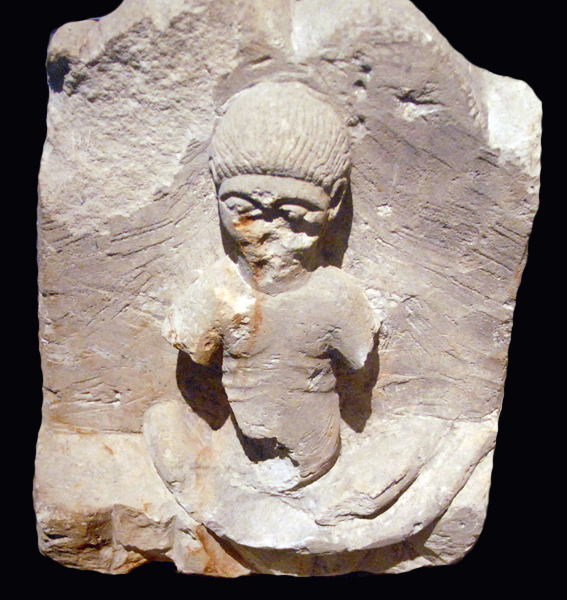
A serpent emerging from a umbilicus at the side of the stele coils over Mithras naked body.
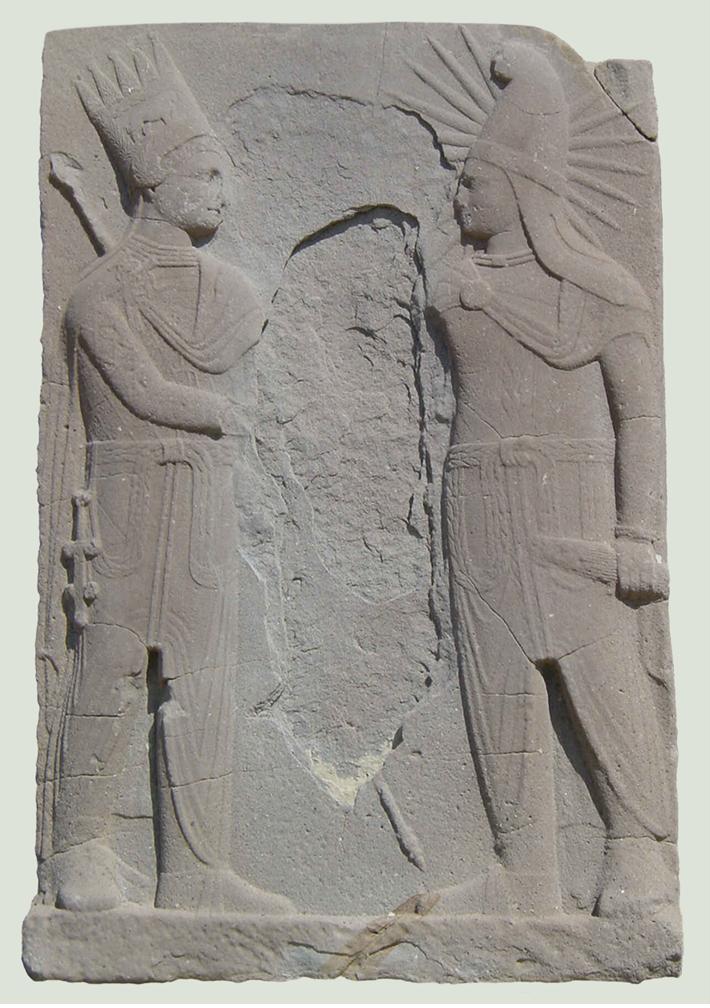
Antiochus I of Commagene shakes Mithras hands in this relief from the Nemrut Dagi temple.
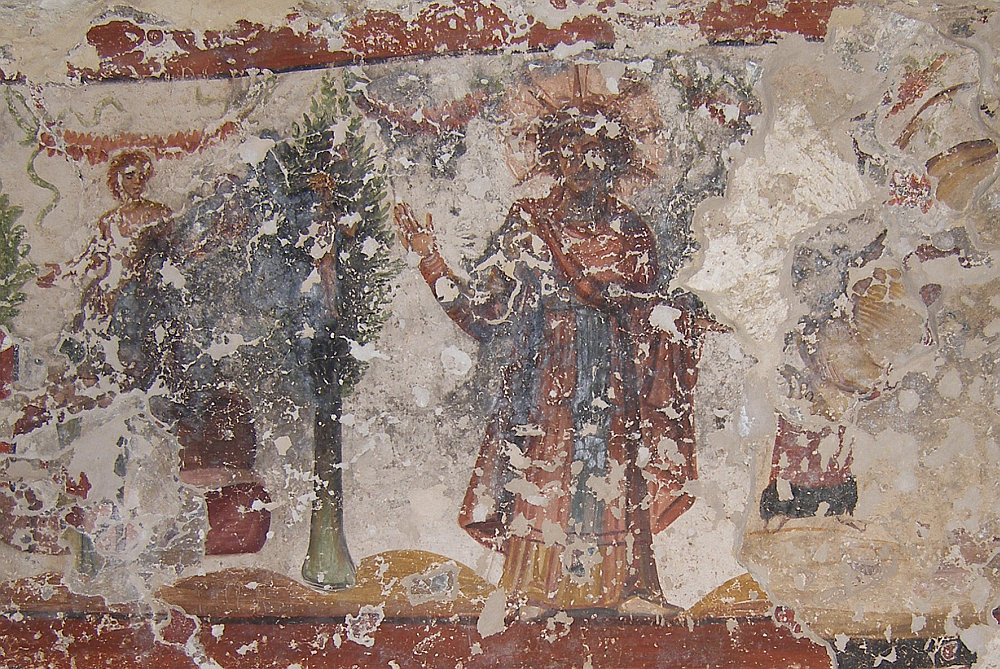
In one of Hawarte’s frescoes, the rock birth of Mithras is preceded by Zeus and followed by the young Persian god suspended from a cypress tree.
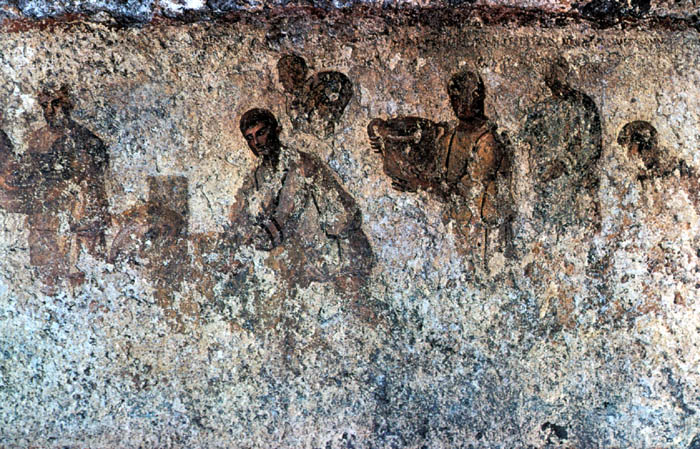
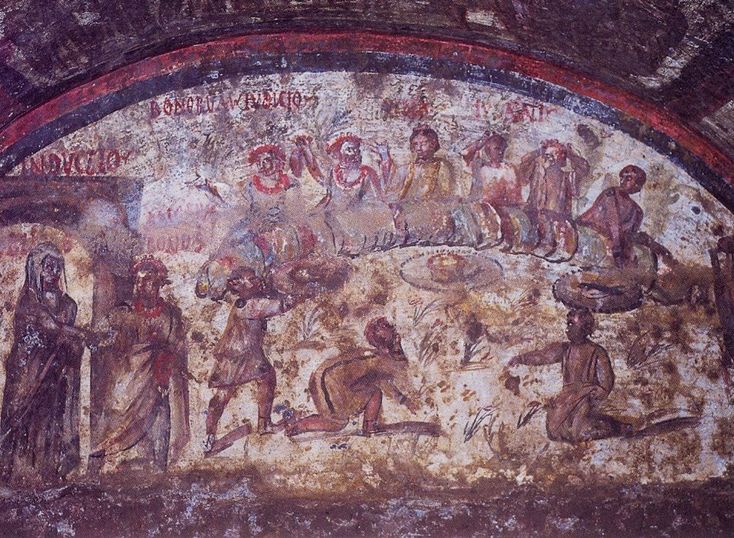
Procession of Leones carrying animals, bread, a krater, and other objects in preparation for a feast.
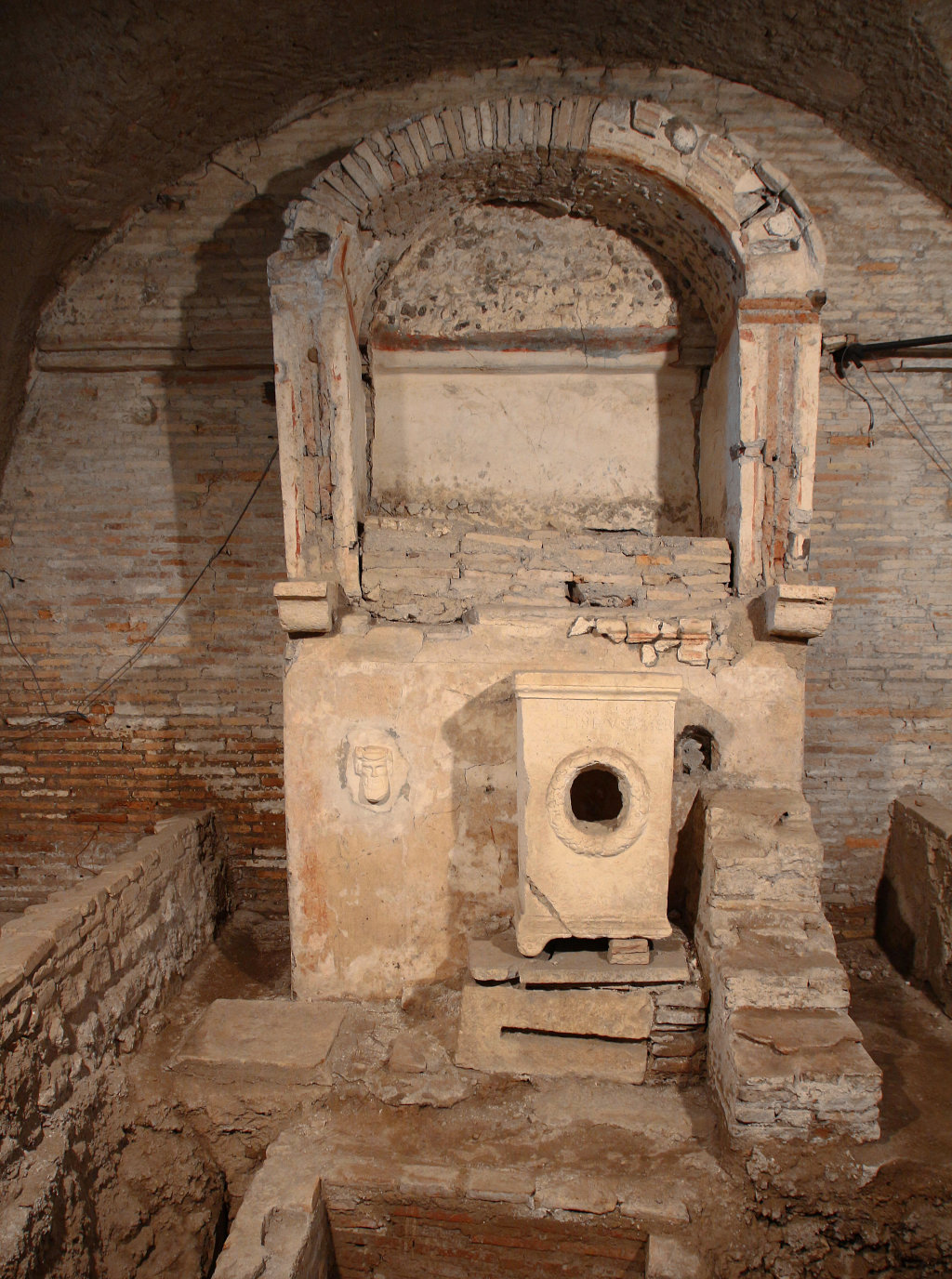
This altar was originally consecrated to Hercules and was rededicated to Mithras by Callinicus in the Mithraeum of the House of Diana.
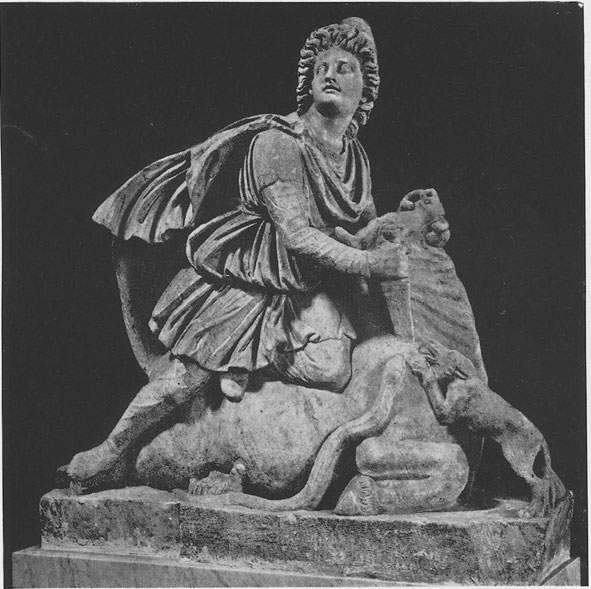
White marble statue found near the Scala Santa in Rome depicting Mithras as bull-slayer, accompanied by the dog, serpent and scorpion, with the bull’s tail ending in ears of grain.
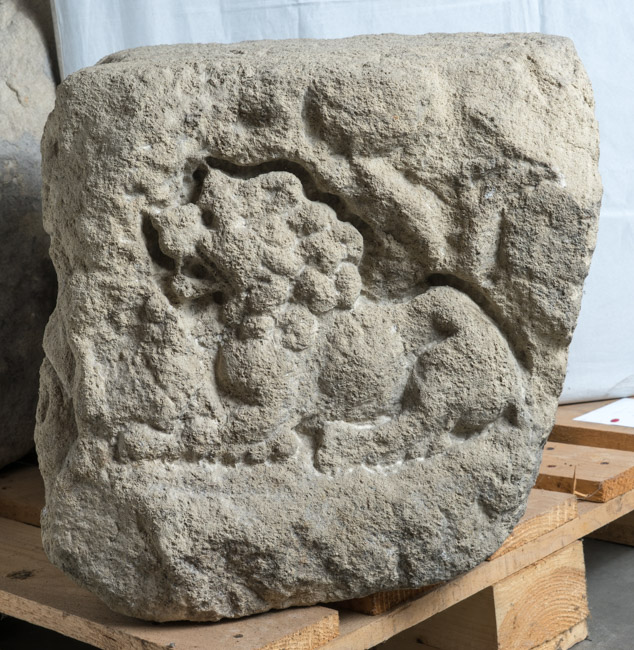
Sandstone base carved on two sides, with a head of Medusa framed by acanthus leaves and a reclining lion holding a head between its forelegs.
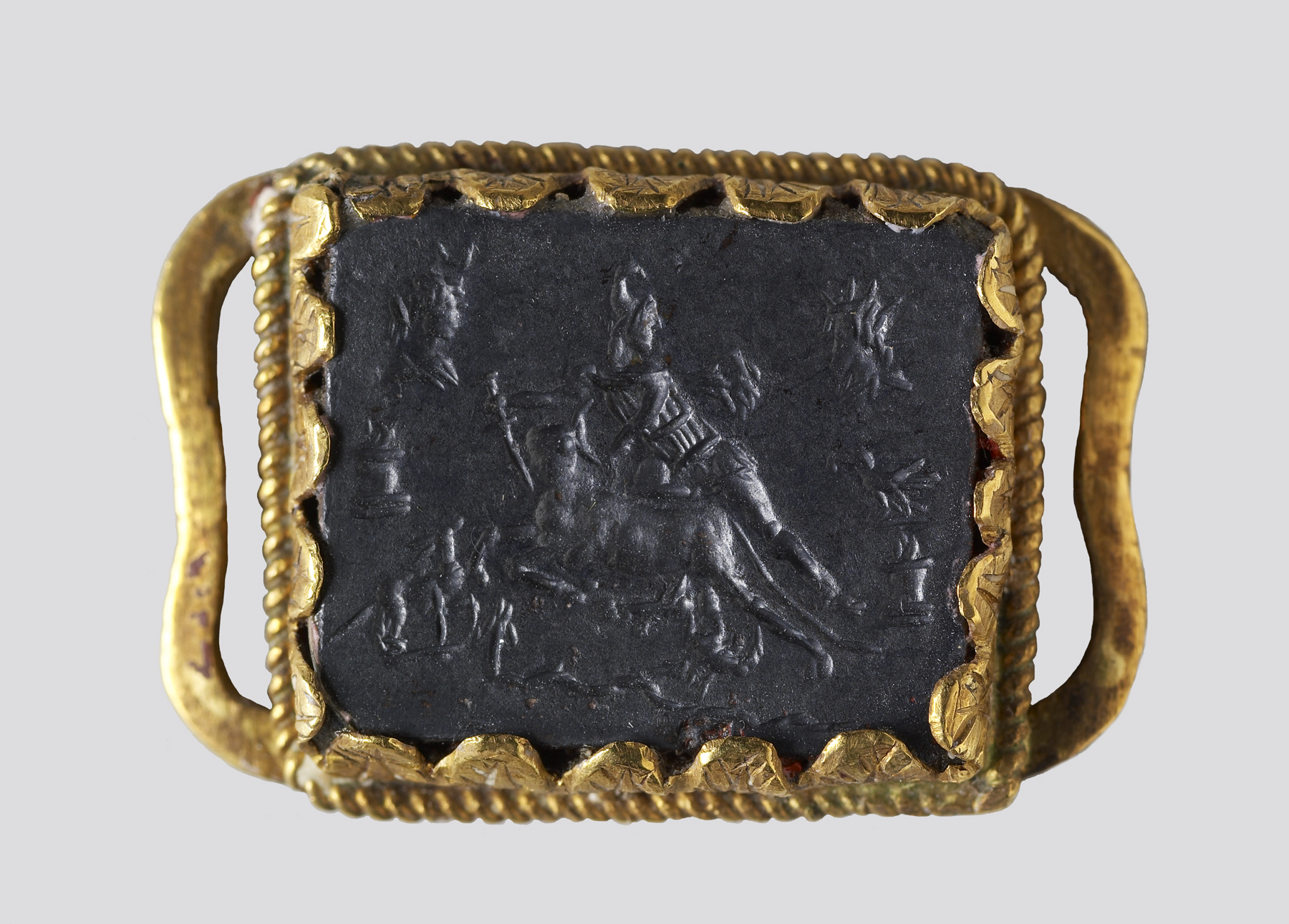
This unusual piece depicts Mithras slaying the bull on one side and the Gnostic god Abraxas on the other.
