Your search As Salhiyah gave 2383 results.
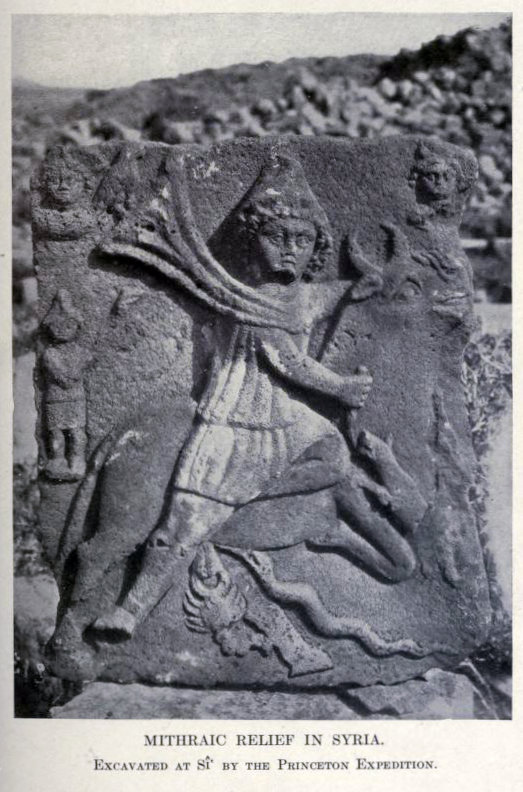
In the tauroctony of Jabal al-Druze in Syria, the snake appears to be licking the head of the bull's penis.
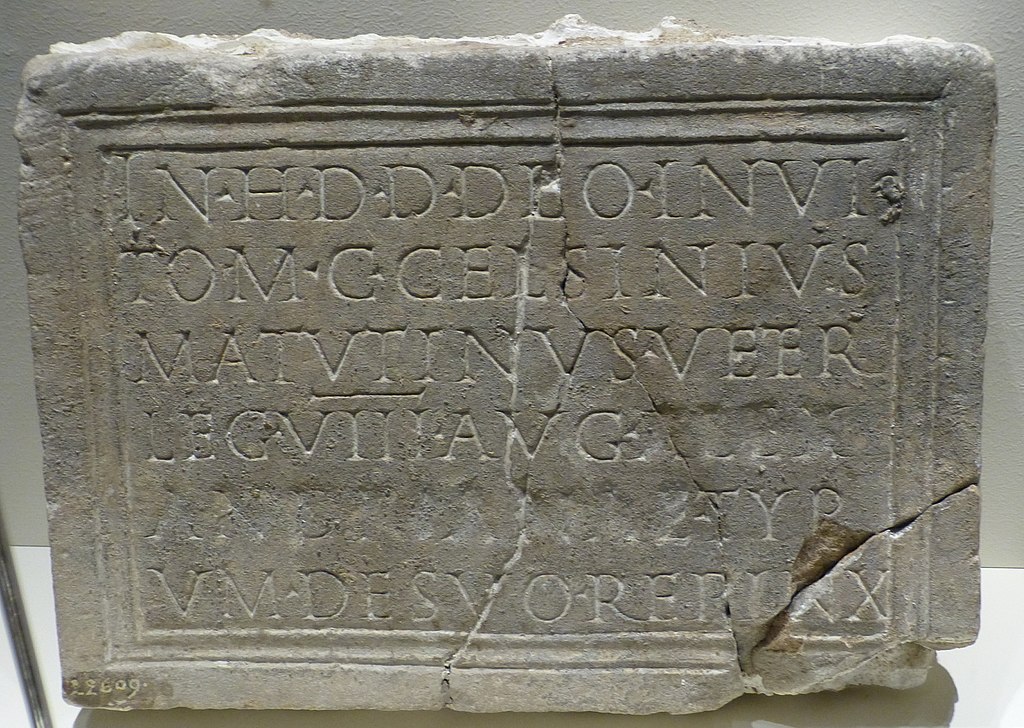
The inscription reports the restoration of the coloured painting of the main relief of the Mithraeum by a veteran of the Legio VIII Augusta.

Centurion of Legio VII Gemina Antoniniana who dedicated an altar to Mithras at Locus, honouring his freedmen Victorius Secundus and Victorius Victor.
Sextus Pompeius Maximus was an Ostian pater, later honoured as pater patrum, whose benefactions transformed the Aldobrandini Mithraeum and linked him to the city’s ferry guilds.

His name was added to the main tauroctony sculpture of the Mitreo Fagan.

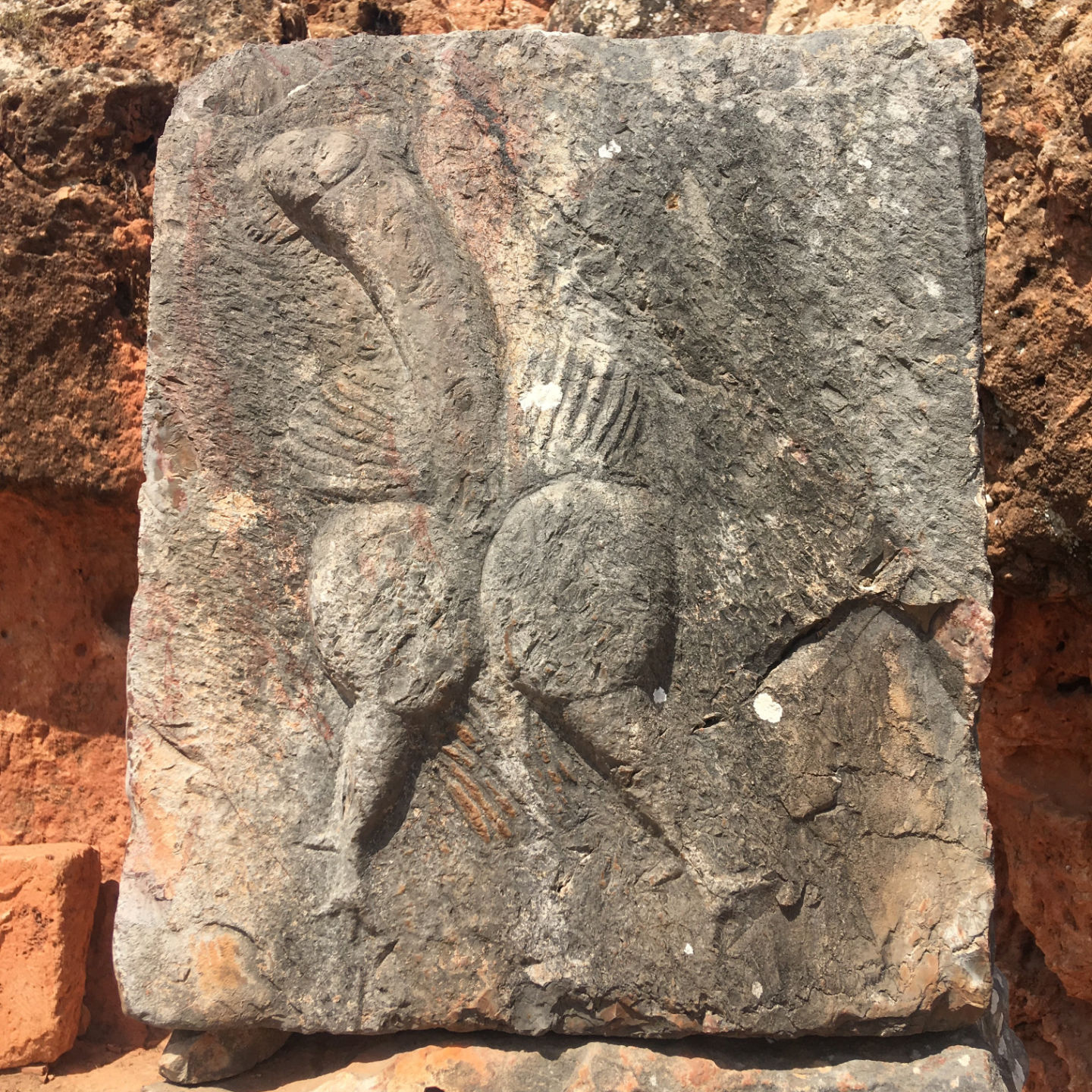
The phallus from Tiddis, Algeria, has been represented as a cock.
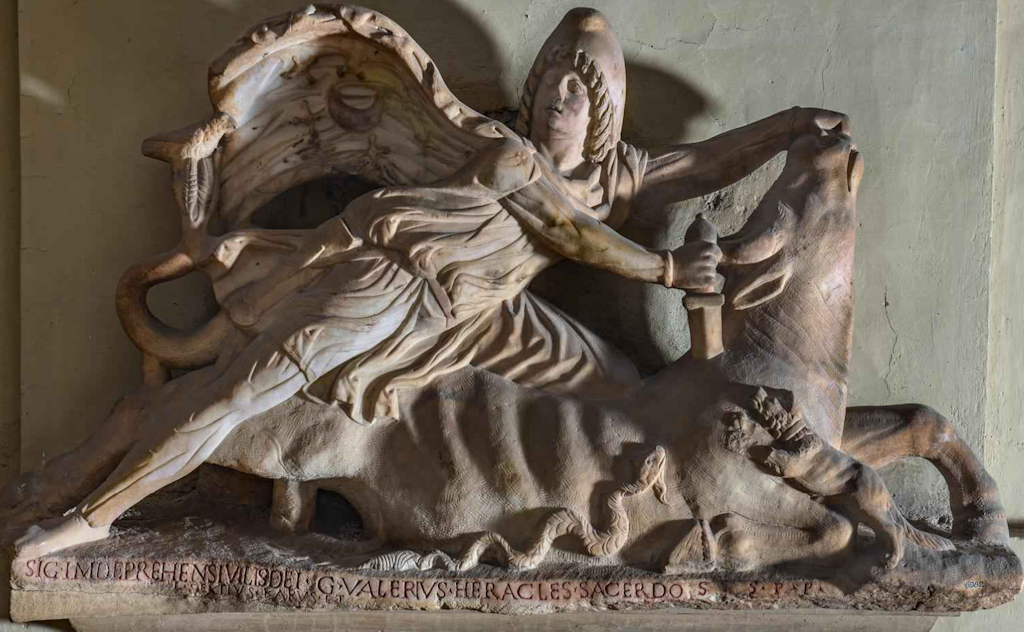
This sculpture of Mithras killing the bull was dedicated to the “incomprehensible god” by a certain priest called Gaius Valerius Heracles.

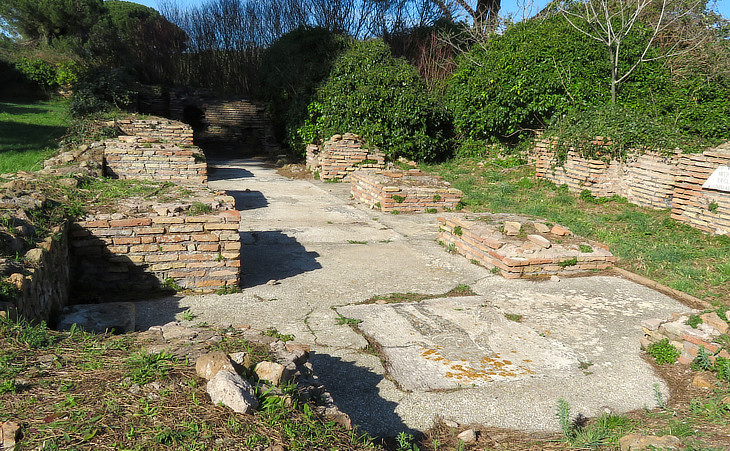
The Mithraeum of the Animals was decorated with a mosaic depicting a naked man, a cock, a raven, an scorpion, a snake and the head of the bull.

Mithraic devotee known from Dacia and tentatively associated with inscriptions from Rome and Poetovio.
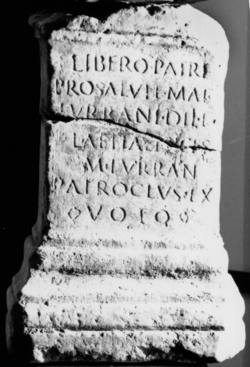
This altar was erected by Hermadio, who also signed other monuments in Dacia and even in Rome.

The Fagan Mithraeum, also known as the Mithraeum of Tor Boacciana, yielded remarkable sculptures of lion-headed deities, several of which are now preserved in the Vatican Museums.
A votive altar dedicated to Deus Invictus Mithras by Paterna, among the few women explicitly associated with Mithraic worship.
Owner of the Facebook group: Roman Cult of Mithras: His Mysteries, Mithraea and Worship. Owner of the blog: Meals with Mithras VERY into the subject.
Marble cap mentioned by Visconti, subsequently identified as certainly belonging to the finds of the Mitreo degli Animali rather than the Mitreo del Palazzo Imperiale, Ostia.
The Sacello delle Tre Navate near the Therms of the Sette Sapienti at Ostia, whose identification as a Mithraeum remains uncertain, with a decorated cult-niche but lacking typical Mithraic iconography.
This inscription, found in the Mitreo della Planta Pedis, among some other monuments in Ostia, suggests a link between Mithras and Silvanus.
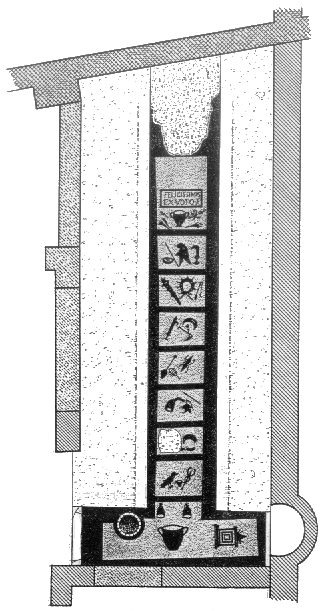
The Mithraeum Felicissimus has a floor mosaic depicting the seven mithraic grades.
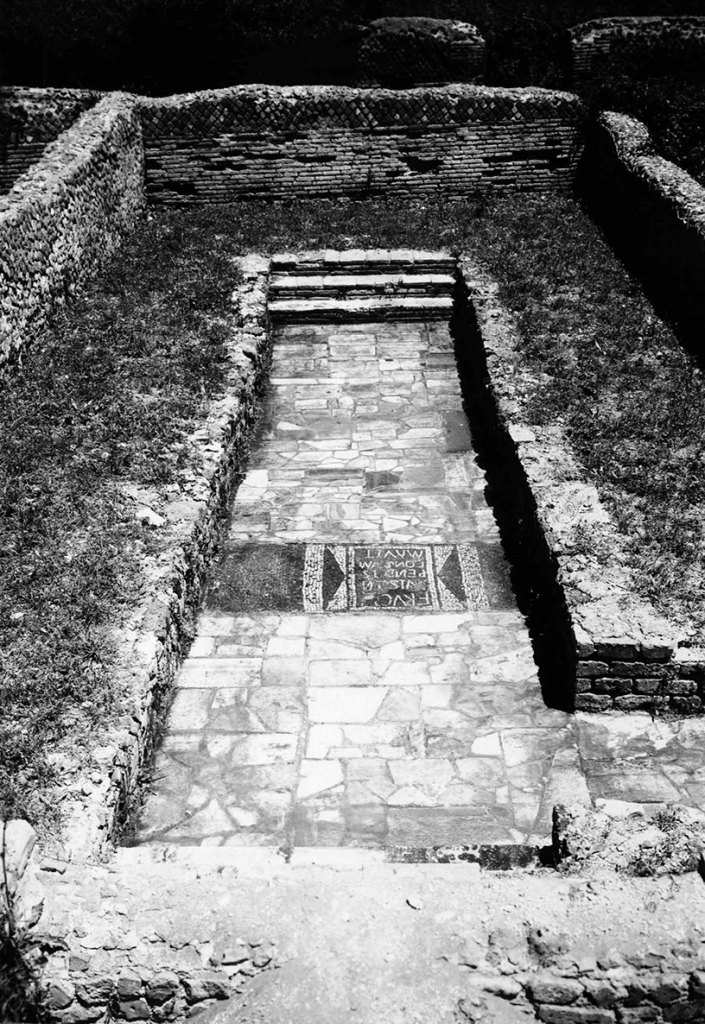
The Mithraeum of Sabazeus was found in one of the rooms of the Horrea built in the years 120 - 125 AD. The installation of the shrine may have taken place in the first half of the third century.
