Your search As Salhiyah gave 2397 results.

White marble statue of Mithras killing the sacred bull preserved in the Museo Nacional Romano.

This lamp, depicting a man slicing his victim into pieces with a sword, was believed to be associated with the Cult of Mithras.
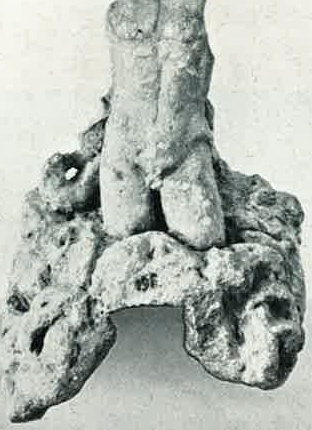
Sandstone petrogenesis from Petronell-Carnuntum (Lower Austria), depicting Mithras emerging from the rock, preserved from the knees upwards.
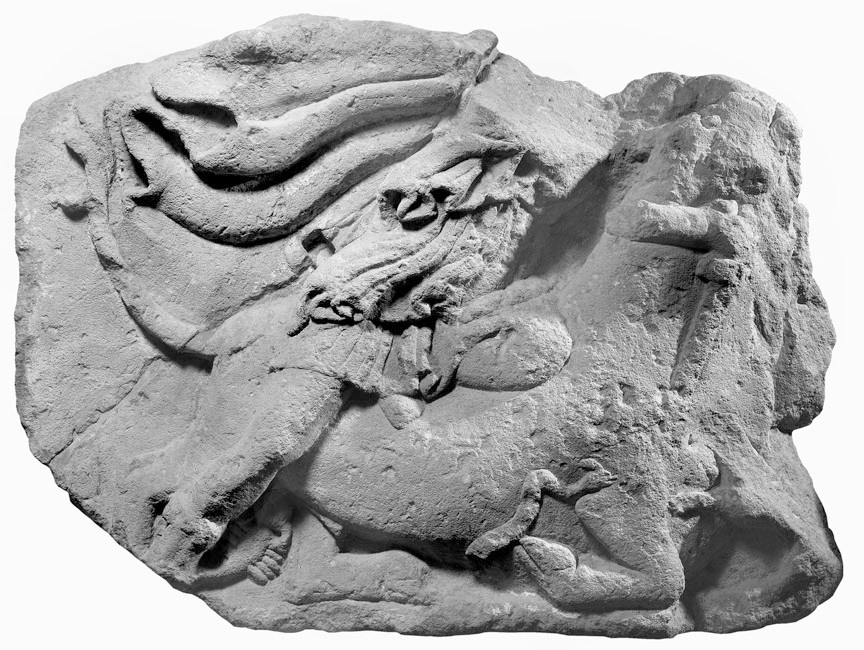
Sandstone relief of Mithras killing the bull, broken in two parts and partly restored, with dog, serpent and scorpion preserved; formerly in Vienna, now on loan to the Museum Carnuntinum.
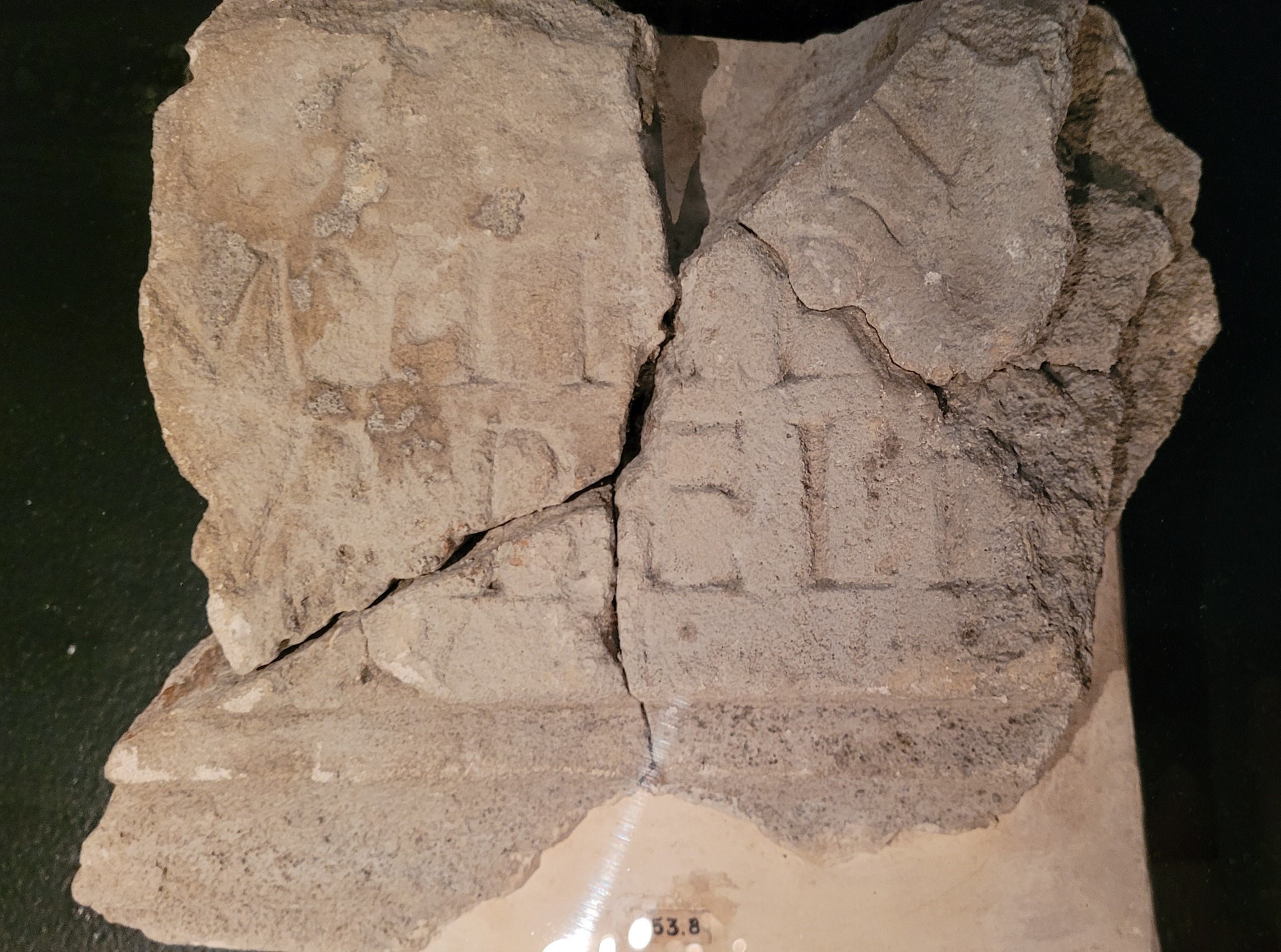
Fragment of limestone from Porêts, which was used in the 4th century.
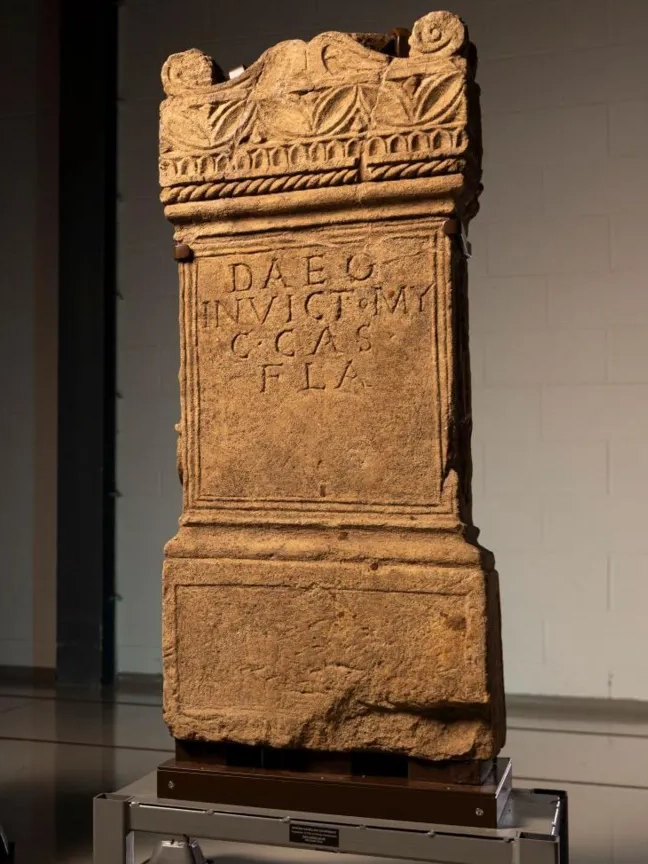
This second altar discovered to date near Inveresk includes several elements unusual in Mithraic worship.

This altar to Invictus Mythra (sic) was found in 1867 in ancient Maros Portum, now Sighișoara, Romania.
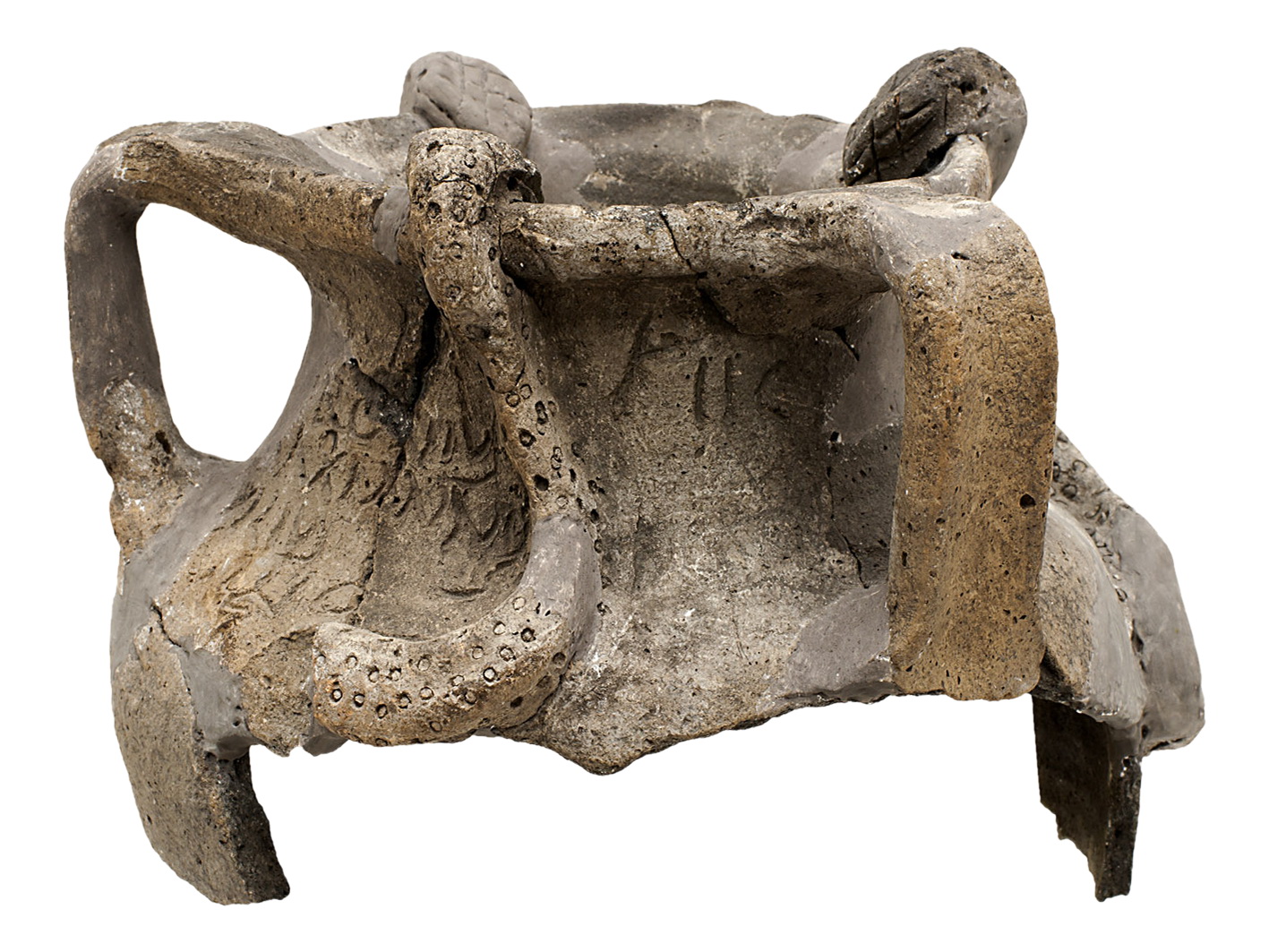
Upon first examination, archaeologists interpreted the inscription on the cult vessel from Gradishje as referencing Mithras, though it has since been re-evaluated.

This remarkable double-sided relief depicts the myth of Mithras and the Tauroctony on one side, and a scene of Mithras the hunter and the banquet of Mithras and the Sol on the other.

The importance of the Mithraeum of Marino lies in its frescoes, the most significant of which is that of Mithras slaying the bull, surrounded by mythological scenes.

This second relief depicting a phallus from Tiddis, Algeria, has been positioned alongside its counterpart atop pillars that greet visitors to the Mithras shrine.
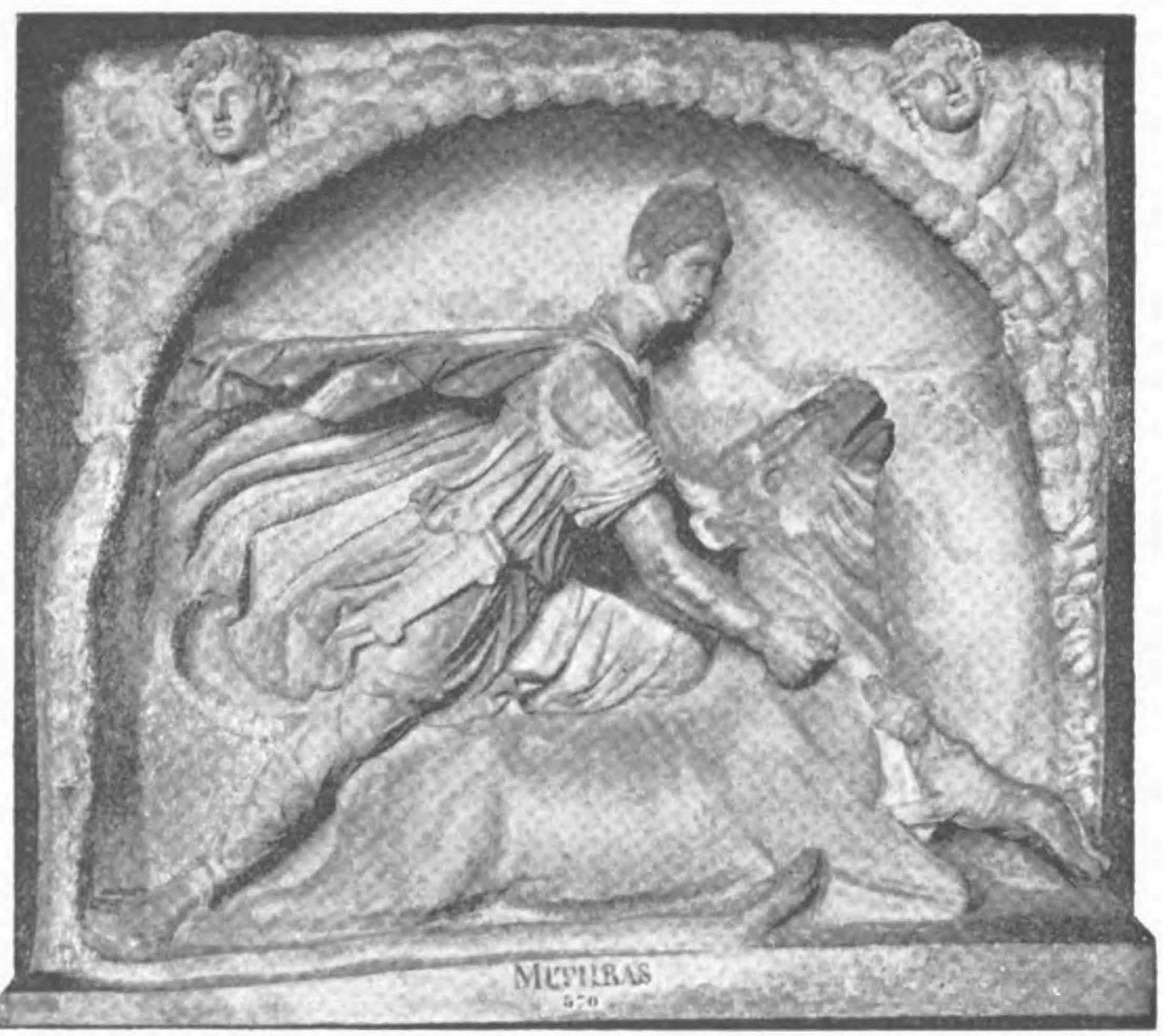
This is one of the three reliefs depicting Mithras killing the bull that the Louvre Museum acquired from the Roman Villa Borghese collection.
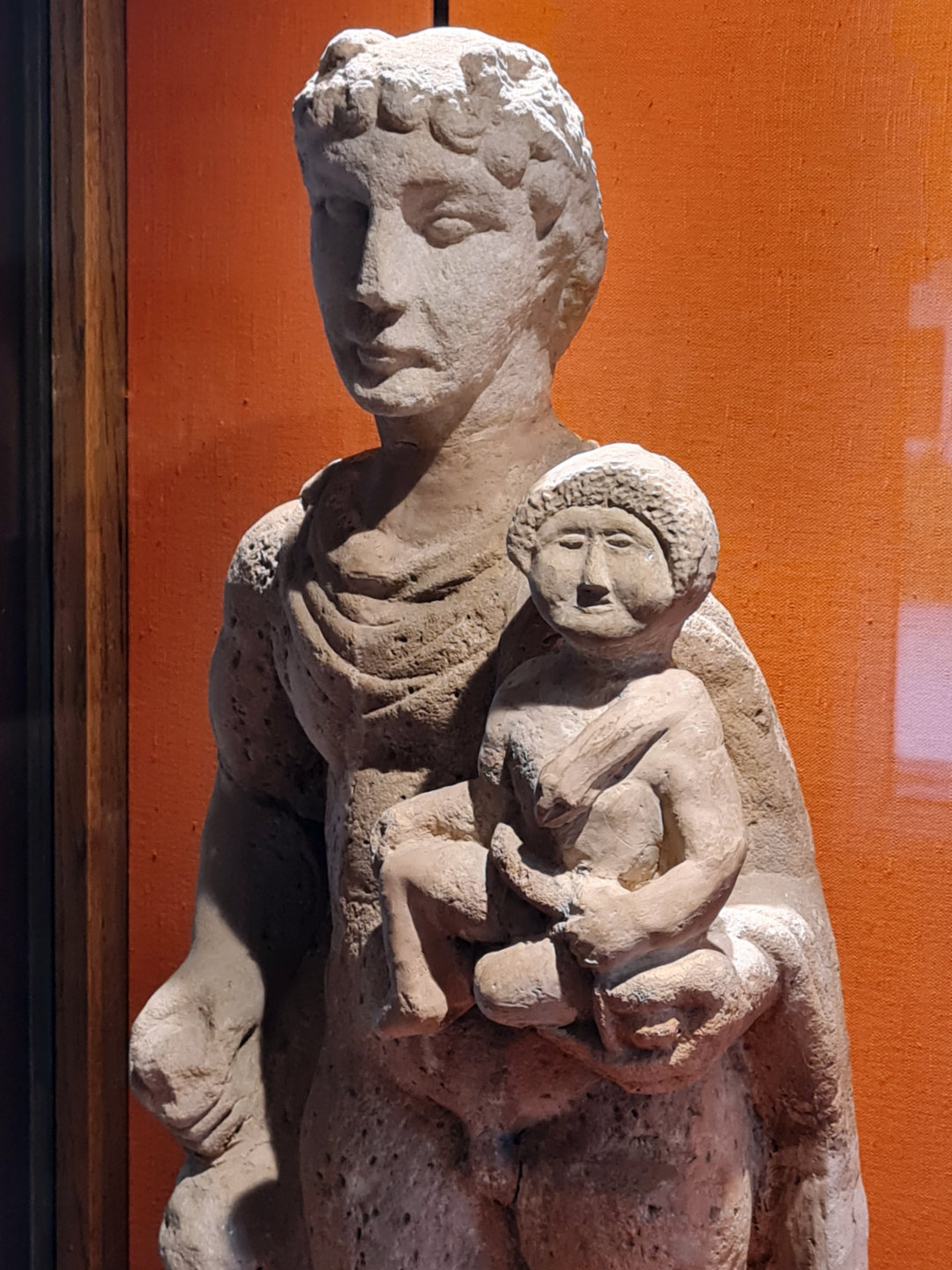
The Stockstadt Mercury carries a purse and a small child around which a snake is coiled.
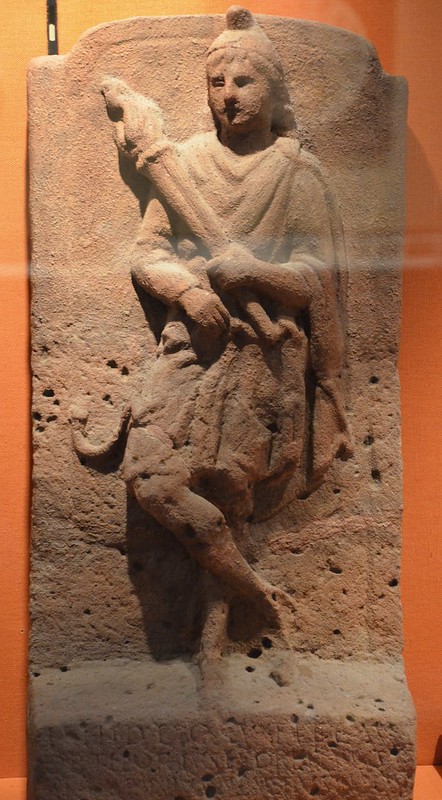
Reliefs of Cautes and Cautopates dedicated by Florius Florentius of Saalburg and Ancarinius Severus.
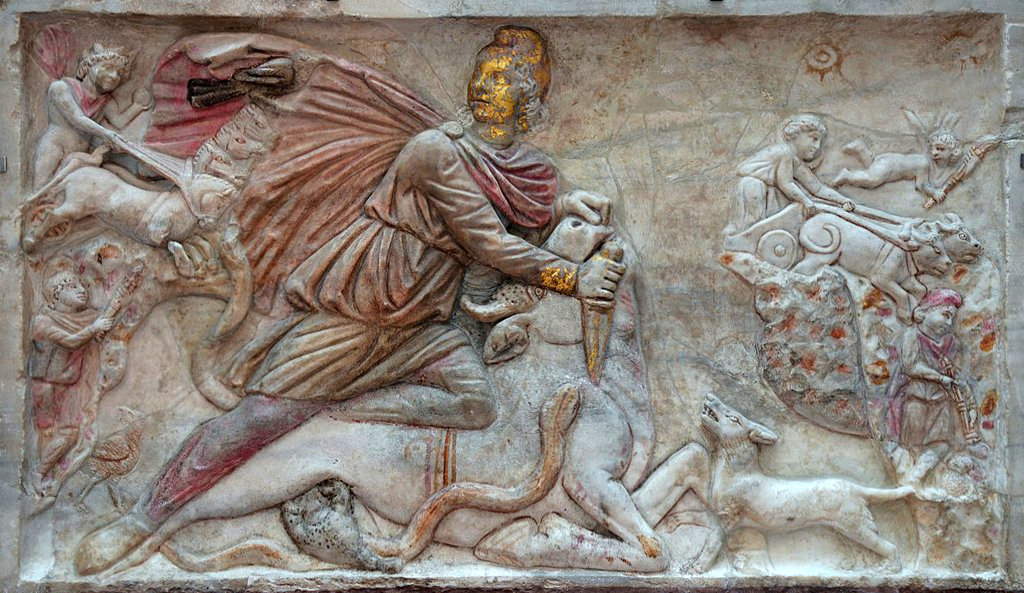
The relief of Mithras killing the bull of Stefano Rotodon preserves part of his polycromy and depicts two unusual figures: Hesperus and an owl.
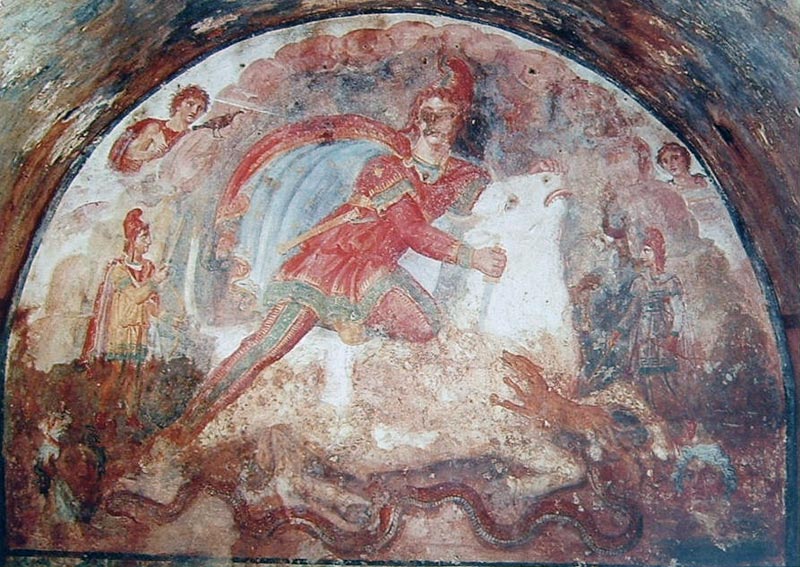
The main fresco of the Mithraeum of Santa Maria Capua Vetere portrays Mithras slaughtering a white bull.
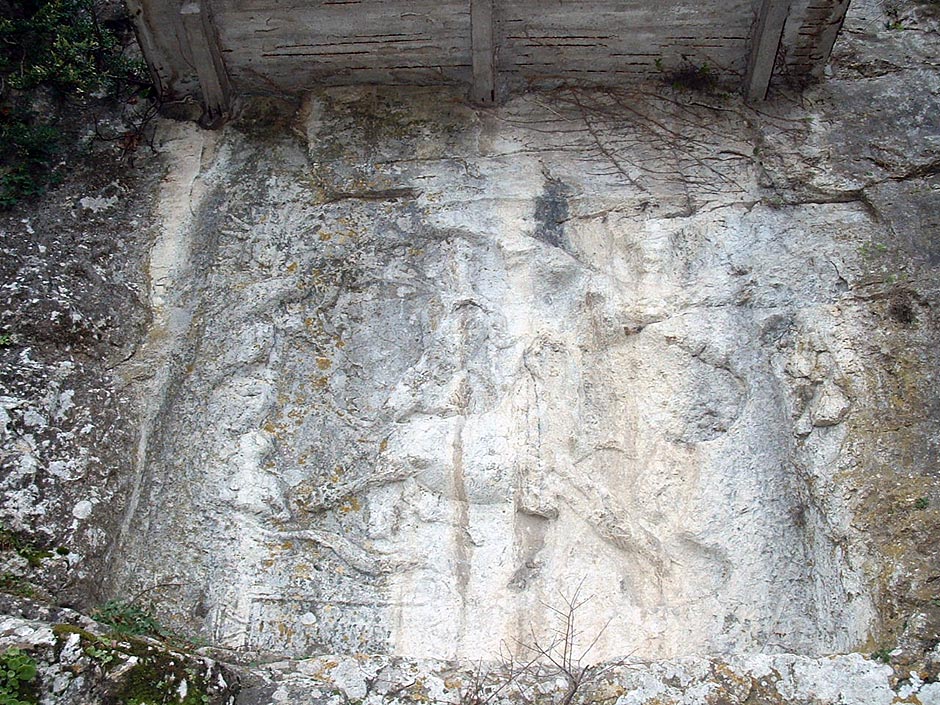
The low relief of Bourg-Saint-Andéol depicting Mithras killing the bull has been chiseled on the rock.
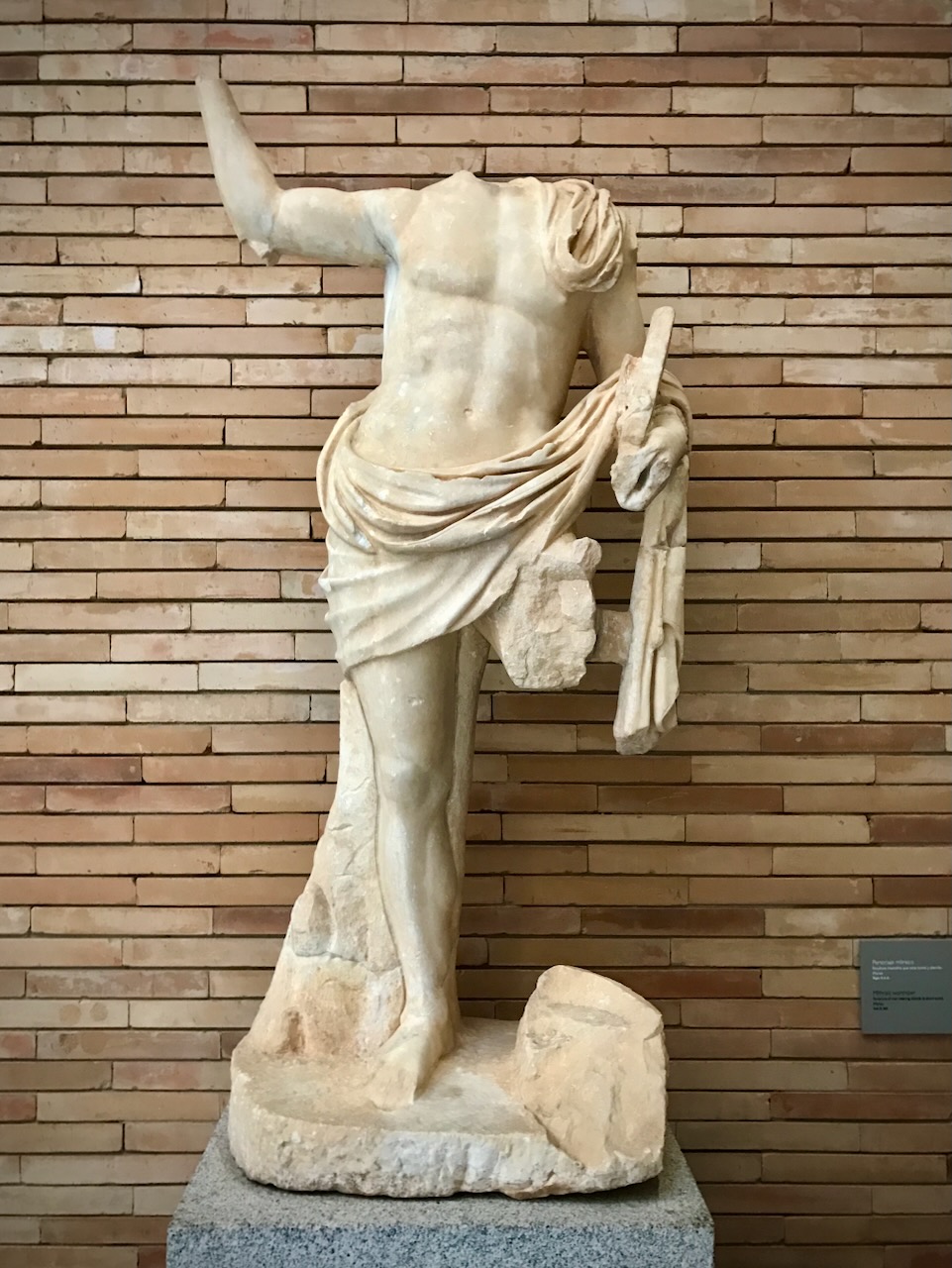
This nude male figure, found at Cerro de San Albín, Mérida, has been identified as Cautes.
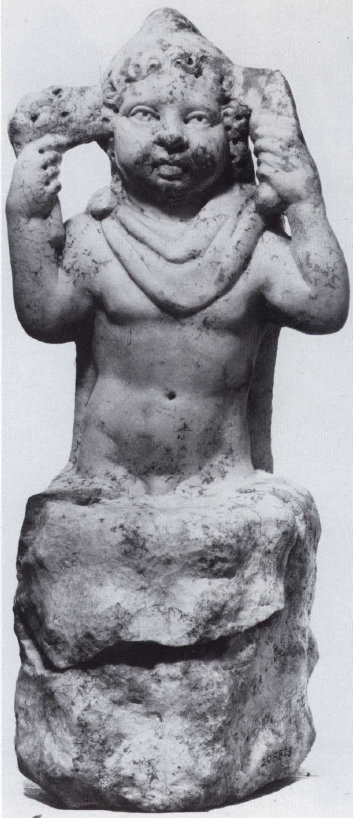
The second statue of Mithras rock-birth was found in the Mitreo di Santo Stefano Rotondo shows a childish Mitras emerging from the rock.
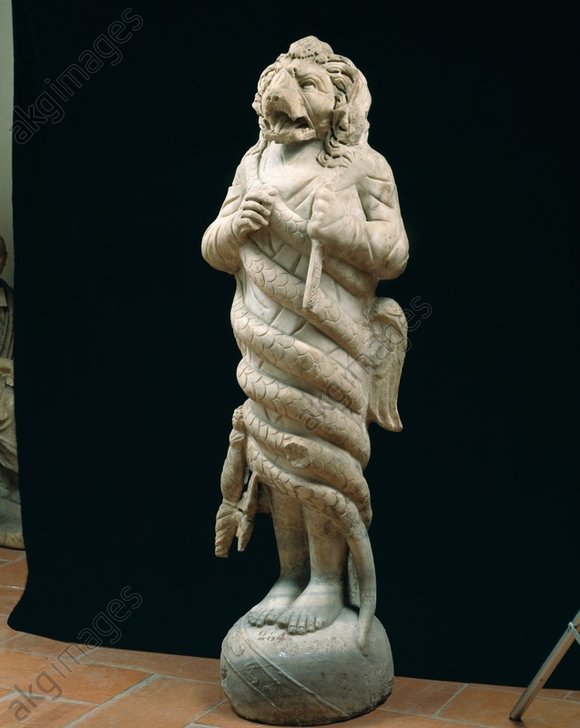
The sculpture of Aion from Florence, Italy, has the usual serpent, coiled six times on its body, whose head rests on that of the god of eternal time.
