Your search Bad Ischl im Salzkammergut gave 1703 results.
This dedicatory inscription by Aurelius Seleucus, found in Cilicia, aligns with Plutarch’s account of Cilician pirates performing foreign sacrifices and secret rites of Mithras.
This plaque, located on the western staircase of the Palace of Darius, mentions the god Mithra together with Ahura Mazda as protectors of King Artaxerxes III Ochus.
These fragments of a monumental relief of Mithras killing the bull from Koenigshoffen were reassembled and are now on display at the Musée Archéologique de Strasbourg.
This relief is so well-known that it has been reproduced in nearly every handbook of archaeology and of history of religions.
The importance of the Mithraeum of Marino lies in its frescoes, the most significant of which is that of Mithras slaying the bull, surrounded by mythological scenes.
Tracing the links between the cult of Mithras and the Proud Boys’ quest for identity, power, and belonging. How ancient rituals and brotherhood ideals resurface in radical modern movements.
Porphyry states that the Mithraists “perfect their initiate by inducting him into a mystery of the descent of souls and their exit back out again, calling the place a ‘cave’.”.
Over the last century or so, a great deal has been said about the god Mithras and his mysteries, which became known to the European world mainly through his Roman cultus during the Imperial Period.
The small Mithraic altar found at Cerro de San Albin, Merida, bears an inscription to the health of a certain Caius Iulius.
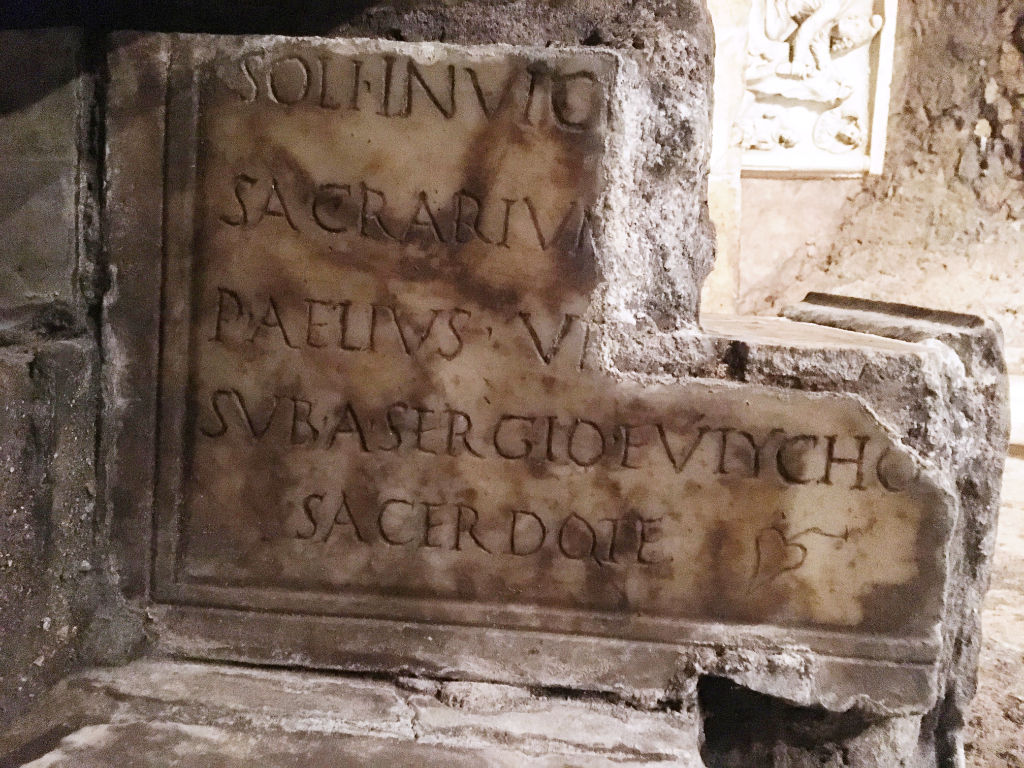
This limestone altar to Sol Invictus Mithra was found at Turda in 1905.
The marble relief of Mithras killing the bull in Naples bears an inscription that calls the solar god omnipotentis.
This eulogy of Saint Eugene of Trapezos tells how, in the time of Diocletian, he and two other Christian fellows destroyed a statue of Mithras.
This altar is dedicated to the birth of Mithras by a frumentarius of the Legio VII Geminae.
This marble monument was dedicated in Rome by the slave Fructus and his son Myro.
This marble altar was found ’in the street called di Branco’, behind the palace of the Cardinal of Bologna, in Rome.
Coin of Istrus, Moesia Inferior, showing Caracalla on one side and a god on horseback (Mithras ?) on the other.
These bronze medallions associates the image of several Roman emperors with that of Mithras, usually as a rider, in the province Pontus.
This altar, dedicated to Sol Invictus Mithras by a certain Eutyches for the health of the Emperor Caracalla, was found in Sisak, Croatia, in 1899.
In a house from the time of Constantine, a Lararium was found with a statue of Isis-Fortuna. The Mithraeum was a door next to it, on a lower room.
This inscription by a certain Aphrodisius was found under the old city hall of Algiers.