Your search Bad Ischl im Salzkammergut gave 1088 results.
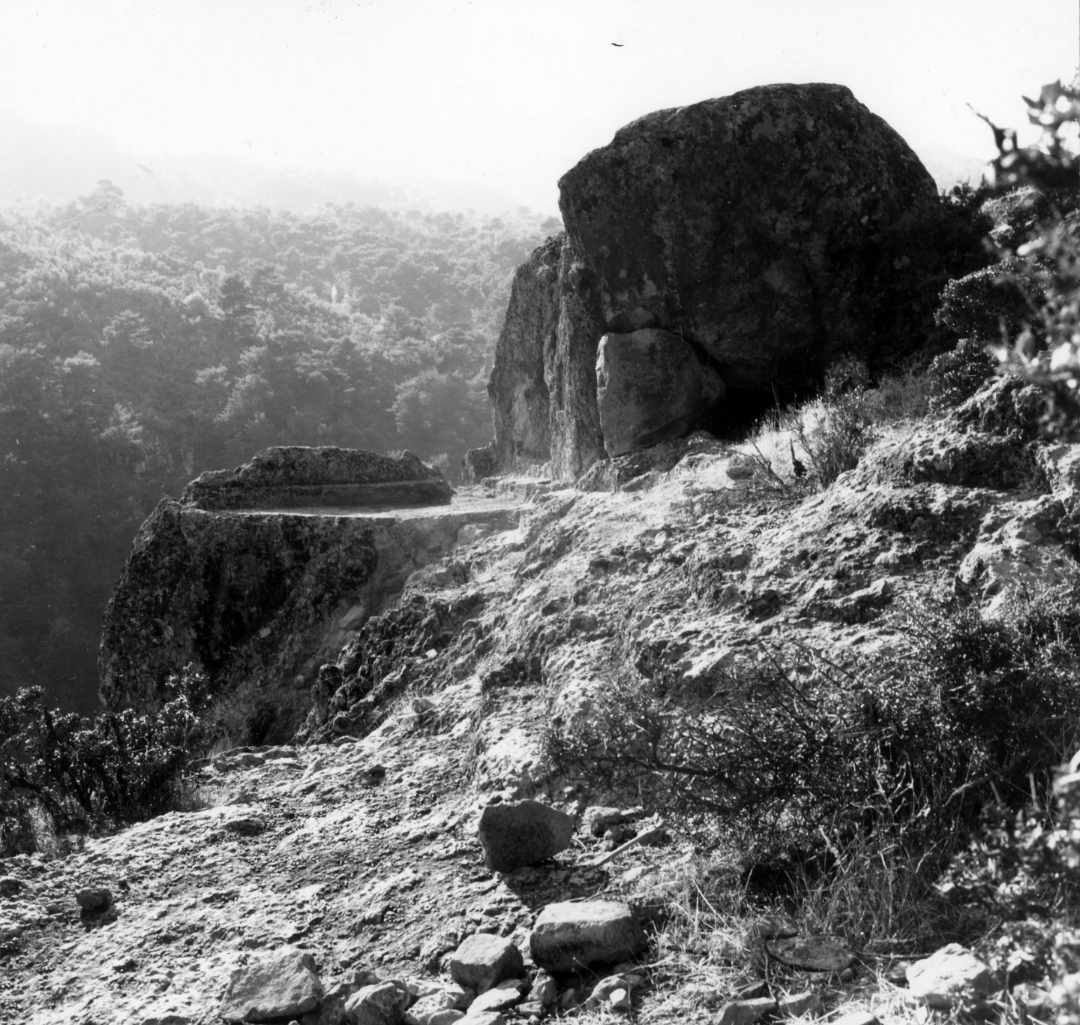
Mithras became the main deity worshipped in the sanctuary of Meter in Kapikaya, Turkey, in Roman times, at least until the fourth century.

This monument to the invincible god Mithras was inscribed on the façade of the church of Aiello deil Friuli, Aquileia.
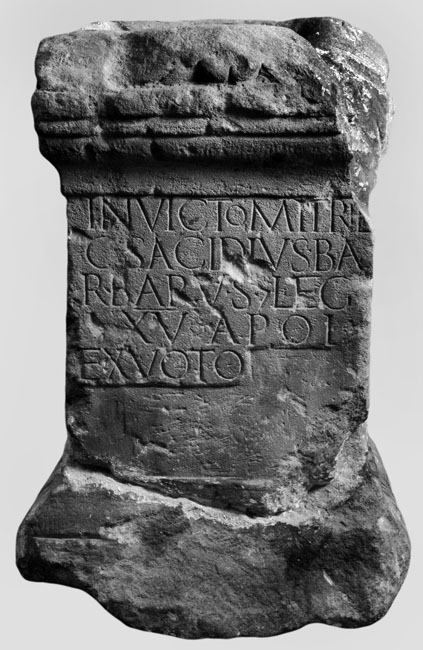
This altar bears the oldest known Latin inscription to the god Mithras, written Mitrhe.
On this slab, Gaius Iulius Propinquos indicates that he made a wall of the Mithraeum at his own expense.
This marble slab found near the Casa de Diana in Ostia bears two inscription with several names of brothers of a same community
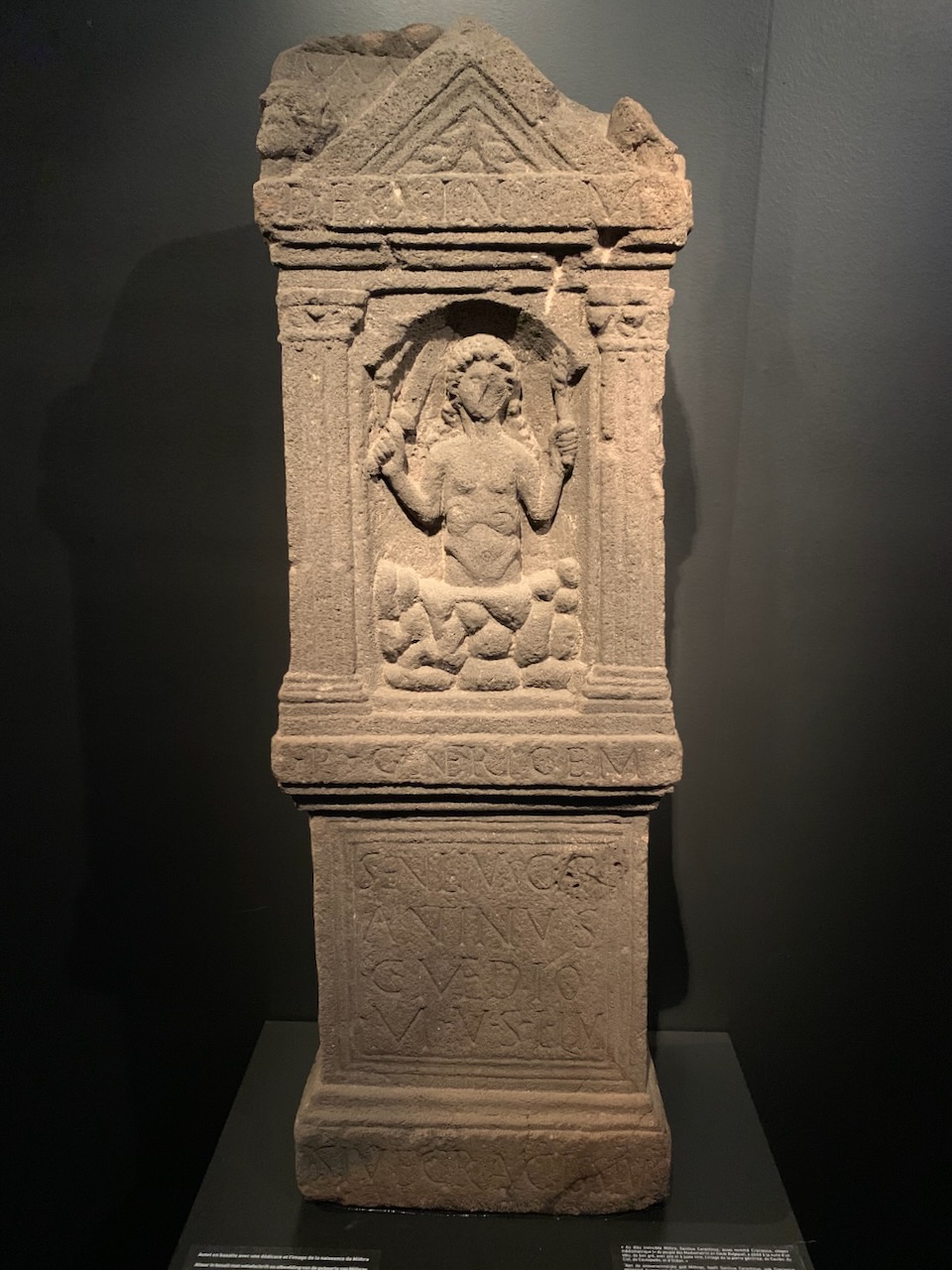
The Mithraic stele from Nida depicts the Mithras Petrogenesis and the gods Cautes, Cautopates, Heaven and Ocean.
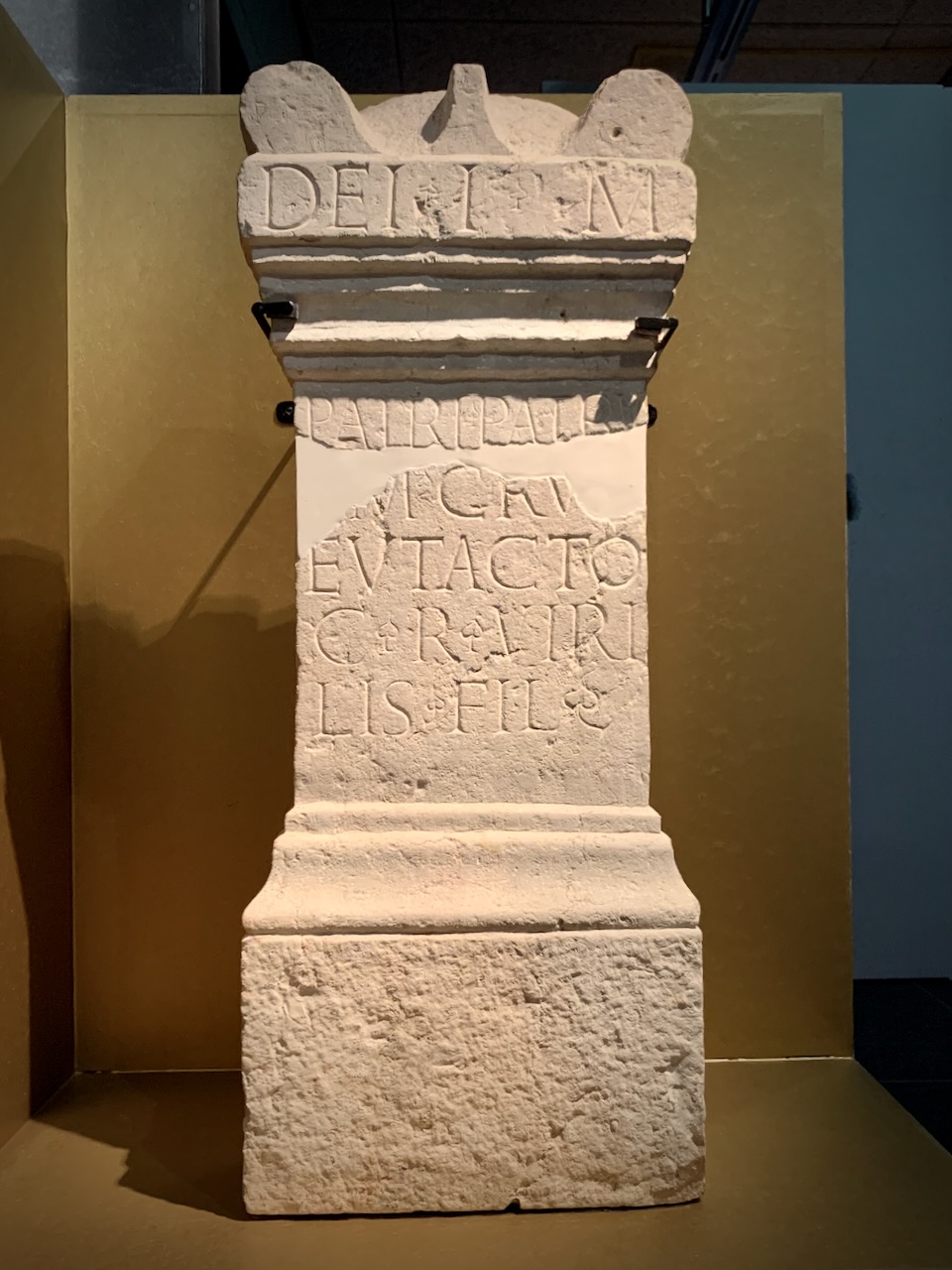
This altar was dedicated by a son to his father, one of the few Patres Patrum recorded in the western provinces.

The dedicator of this altar was a slave in the service of a high official, the prefect Gaius Antonius Rufus, known from other inscriptions.
This altar, now lost, mentions that the Pater Patrum passed on the attributes of the sacred Corax to his son.
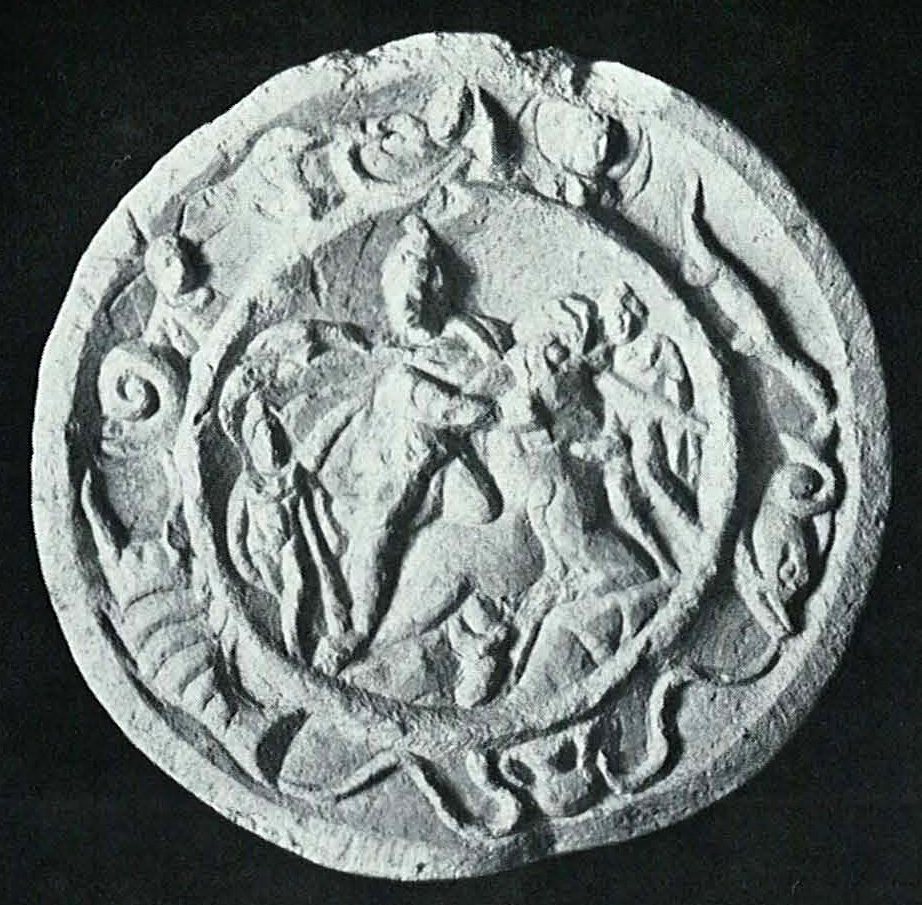
The round relief of Mithras killing the bull of Split is surrounded by a circle with Sun, Moon, Saturn and some unusual animals.
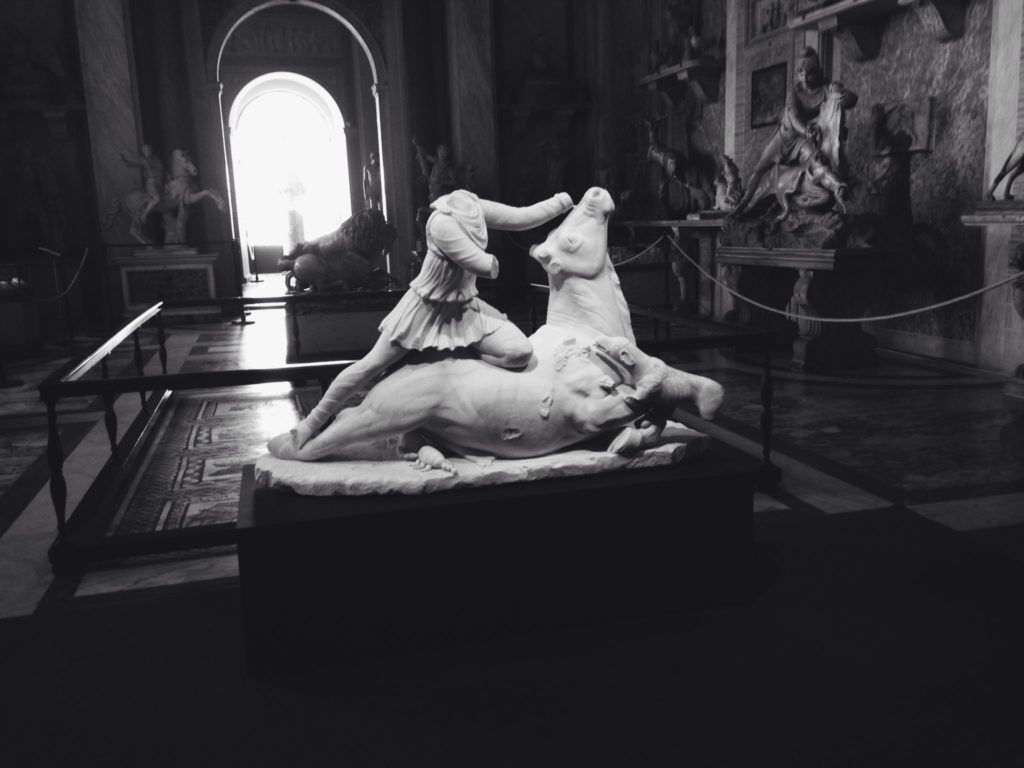
Votive sculpture of Mithras sacrificing the bull from the Mithraeum of Tarquinia.
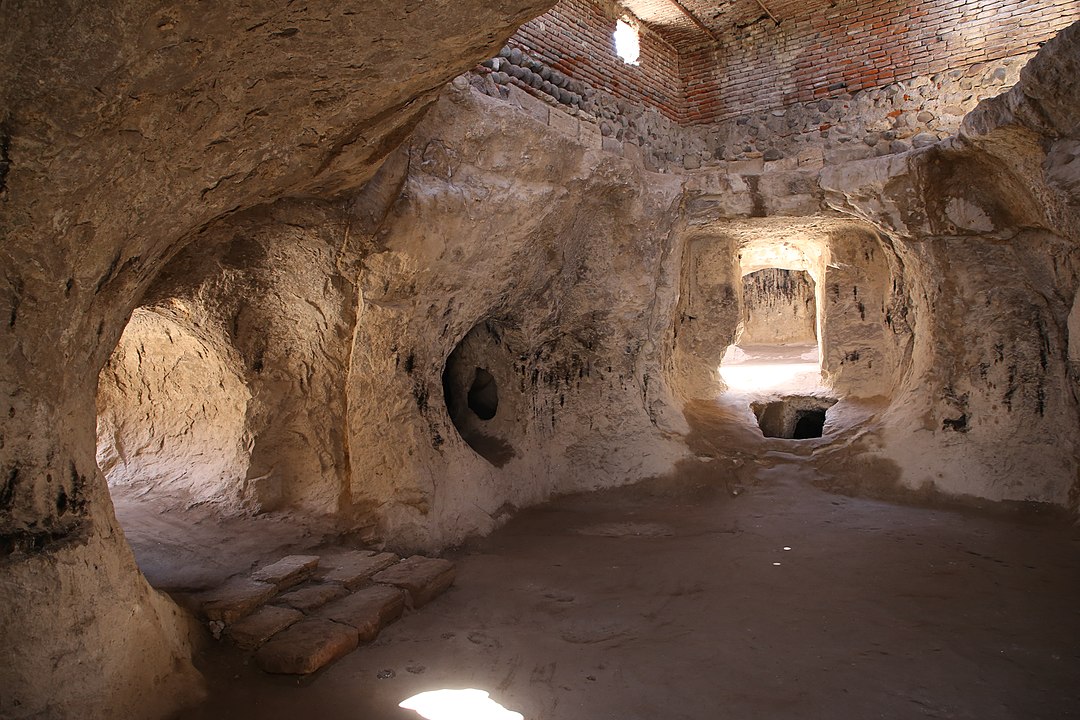
The Mithra Temple of Maragheh, also referred to as the Mithra Temple of Verjuy or simply Mehr Temple, is the oldest surviving Mithraic temple in Iran known to date.
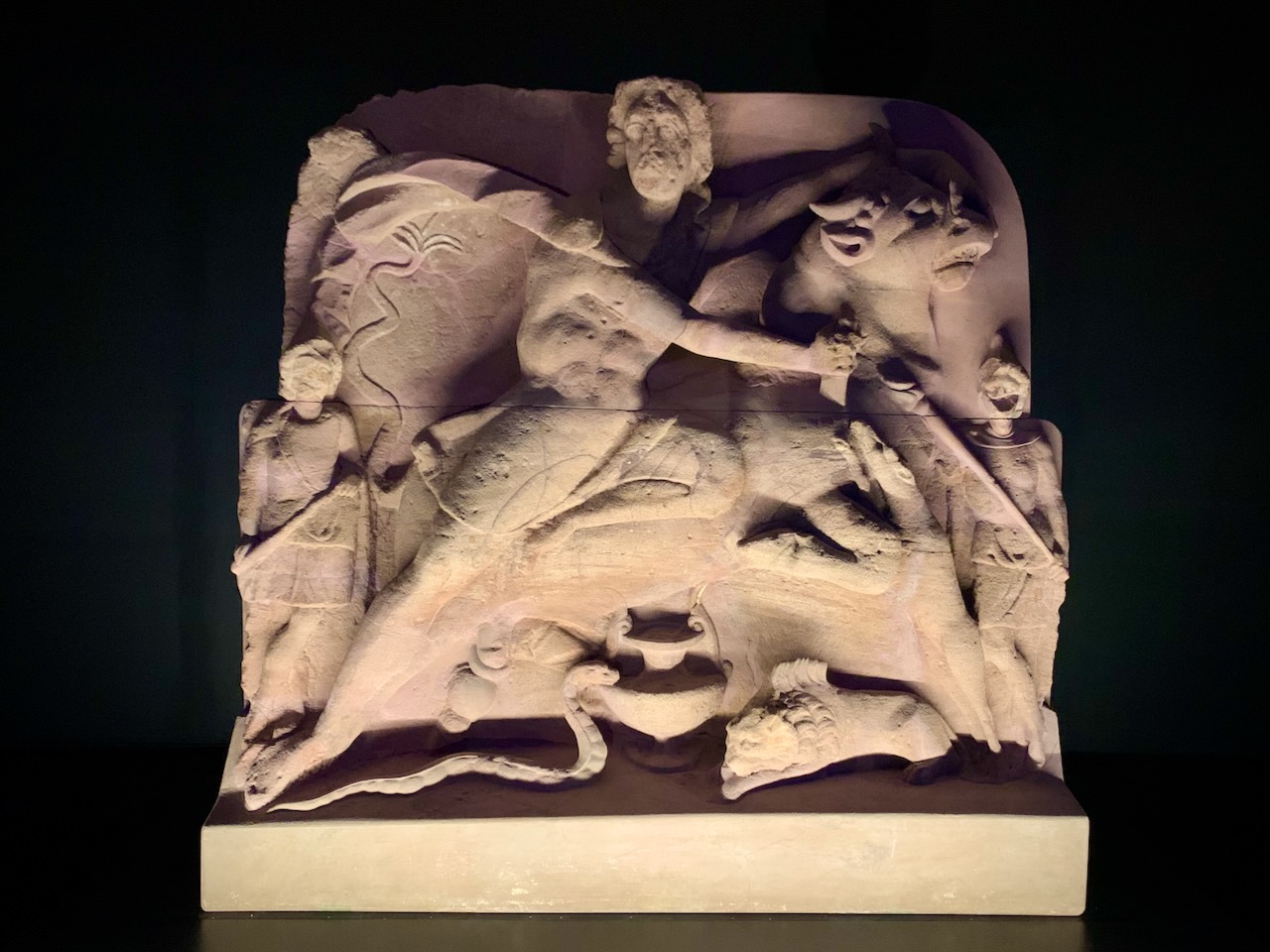
The relief of Mithras slaying the bull from Nida's Mithraeum III was found in two pieces in 1887, destroyed during an air raid on Frankfurt in 1944, and restored in 1986.
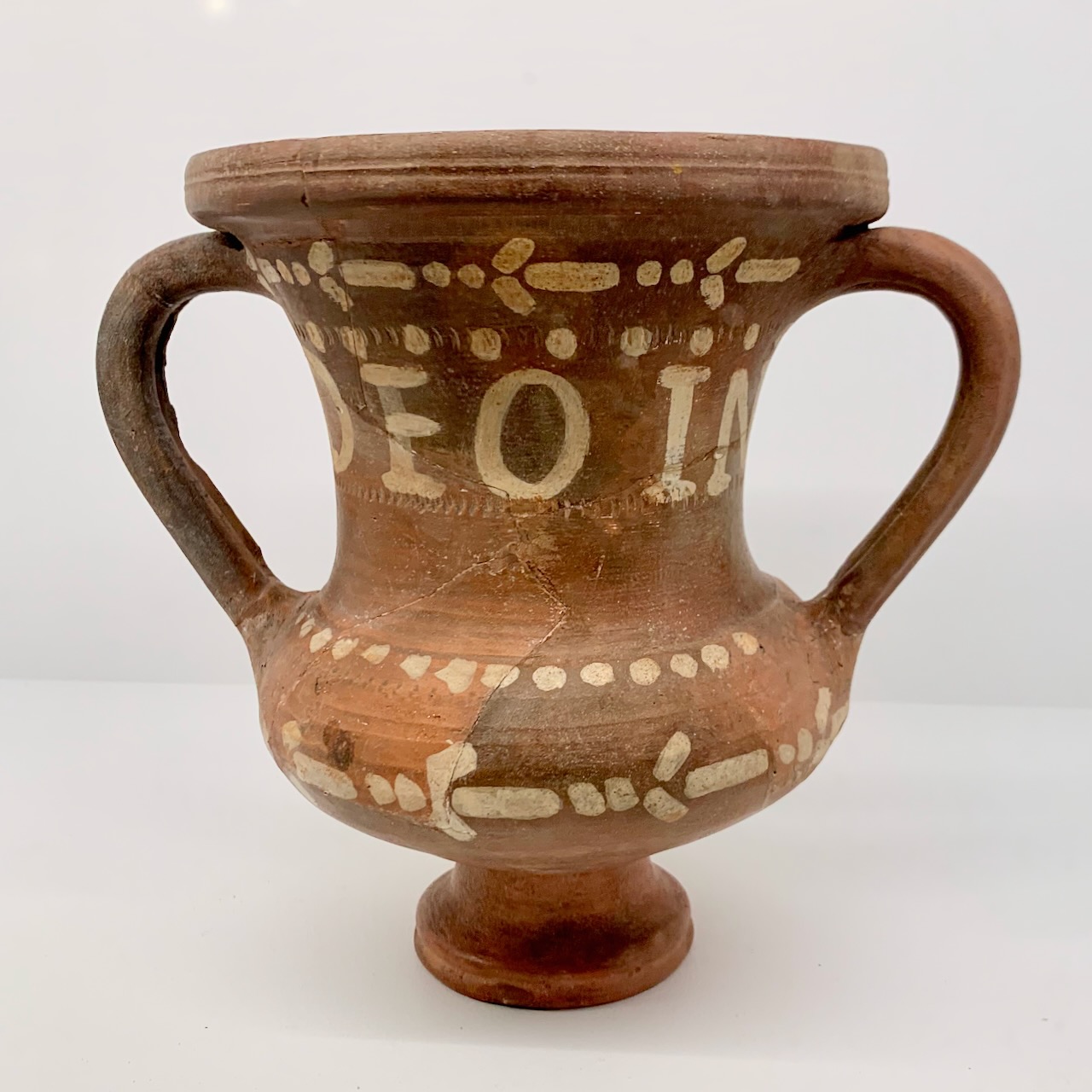
The cantharus of Trier is reminiscent of the crater that often appears in tauroctony scenes collecting the blood from the slaughtered animal.
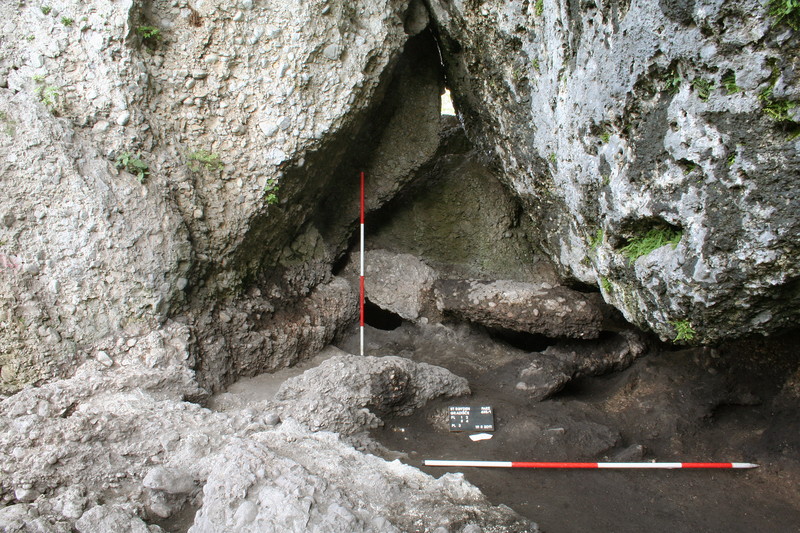
The 'Mithraic cave' in the Gradische/Gradišče massif near St. Egidio contained vessels decorated with snakes and the remains of chicken bones and other animals that were consumed during Mithraic ceremonies.
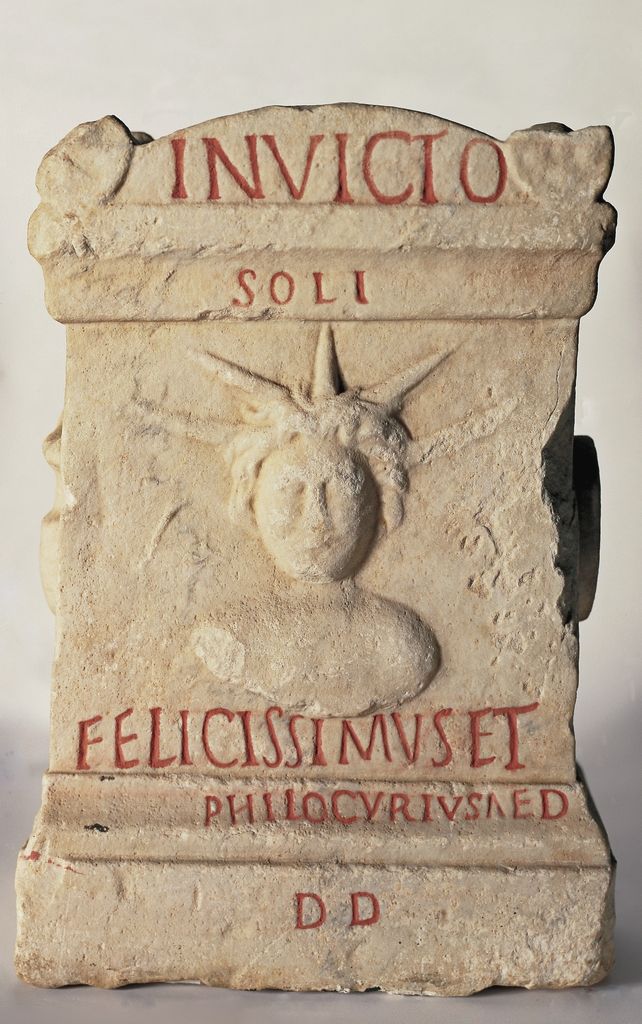
This small altar found in Rome depicts the god Sol with five rays around his head.
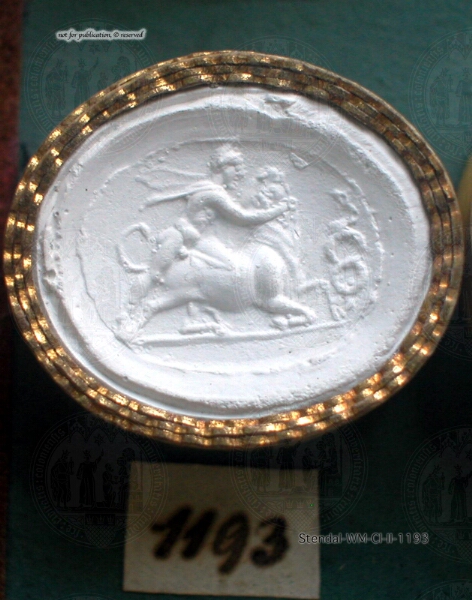
Imprint on glass of a Tauroctony exposed at Winckelmann Museum.
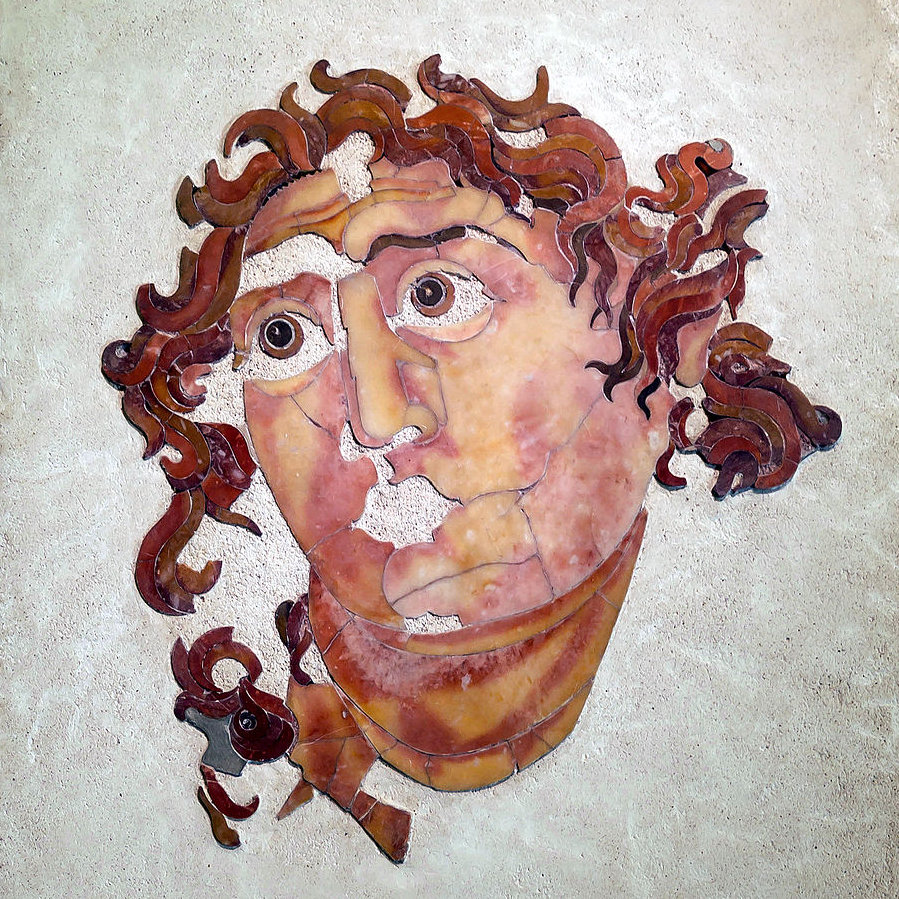
The intarsium of Sol found in the Mithraeum of Santa Prisca is composed of several varieties of marble.
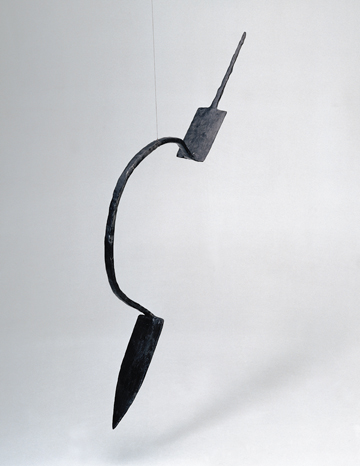
The Mithraic sword found in the Riegel Mithraeum may have been used as a prop during rituals.
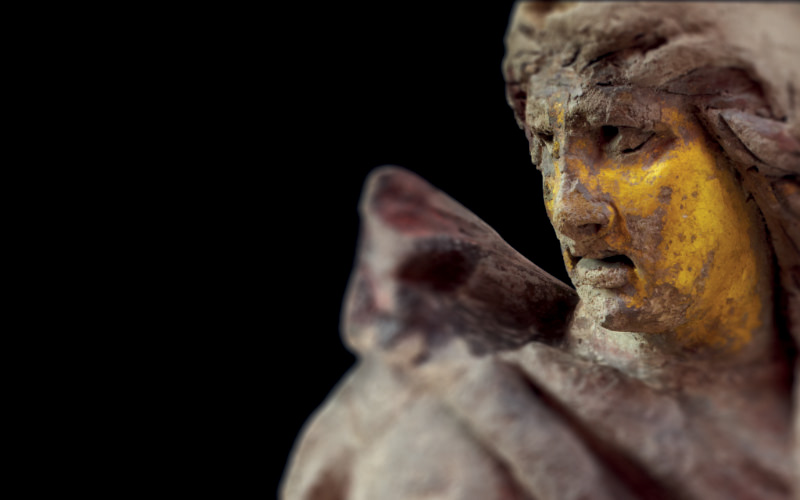
Three European museums celebrate Mithras with a continental exhibition featuring more than 200 works of art from Roman times to the present day.
