Your search Boulogne-sur-mer (Pas-de-Calais) gave 672 results.
Freedman, he offered a relief of Mithras as a bull killer for the well-being of his two former masters in Apulum.
Gladiator to whom his companions Cimber and Pietas erected a monument in Colonia, Germania.
He built the sacred area of the Mitreo del Circo Massimo at his own expense.

Pater and priest of the Fagan Mithtraeum with several monuments to his name.
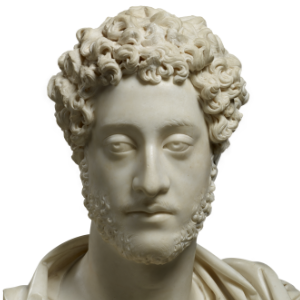

Hermadio's inscriptions have been found in Dacian Tibiscum and Sarmizegetusa, as well as in Rome.
Dioscorus is a freedman from the Greek-speaking part of the Empire who dedicated an altar to the invincible Mythra.

Greek-speaking member of the community of Mithras followers from Apulum in the 2nd century.
This altar dedicated to Sol Invictus Mithras by a certain Septimius Zosimus was found in the Basilica of San Martino ai Monti in Rome.
Limestone altar from the Trier baths, carved on four sides with a lion and serpent, flanked by Sol and Luna, and likely linked to a Mithraic context involving Hekate.
This monument depicts Mihr/Mithras watching over the transition of power from Shapur II to Ardashir II, which took place in 379.
The Hekataion of Sidon, which depicts Hekate in her trimorphic form surrounded by three dancing girls, is the only example found to date in connection with the Mithraic cult.
The site was destroyed in the 5th century but some elements, including the benches, can still been seen.

The votive fresco from the Mithraeum Barberini displays several scenes from Mithras’s myth.
Fragment of an alabaster relief from Cologne with part of a tauroctony scene. Only the tip of Mithras’ Phrygian cap and small narrative details above are preserved.
