Your search Boztepe Hill gave 86 results.

Pair of white marble statues — Cautes with upraised torch and a cock, and Cautopates with a bird at his feet — found in 1886 on the north side of the Palatine between the hill and Via S. Teodoro, with traces of red painting on base and sides.
Mithraeum discovered towards the end of the 16th century in a vineyard of Horazio Muti opposite S. Vitale, between the Quirinal and Viminal hills, known from Vacca's report of a sealed room with many terracotta lamp-holders.
Marble altar found in the pontifical gardens on the Quirinal Hill, with a dedication to the Invictus N(abarze?) by Atticus pater, decorated with a urceus on the left and a patera on the right.
Marble cippus from the Quirinal residence of Ceionius Iulianus Kamenius preserving references to his Mithraic and other priestly functions.
Foundations of a rectangular building (10 × 6 m) and a front-stone fragment at Golubić near Bihać, Dalmatia, suggesting the existence of a Mithraic sanctuary.
Many of the inscriptions and sculptures of the site were kept in a museum which has been destroyed.

Administrator, probably a slave of Pater Alfius Severus, who dedicated the main altar of the Mitreo di Marino.
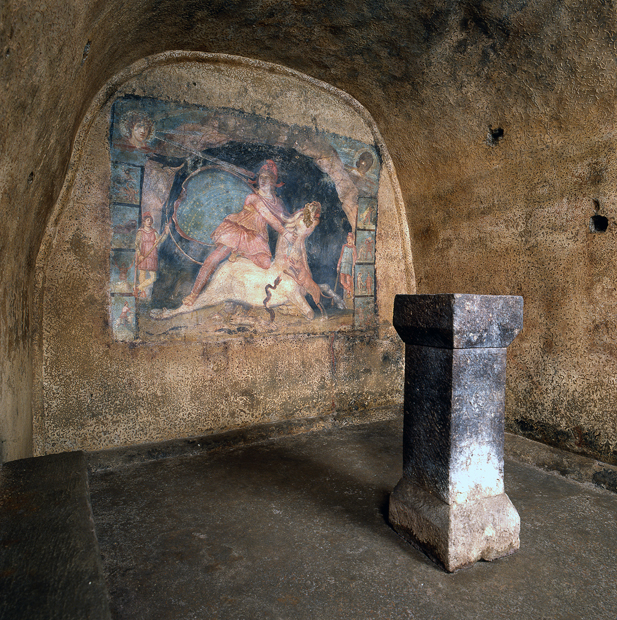
The Marino Mithraeum preserves one of the most elaborate painted cycles of Mithras’ myth, combining the tauroctony, planetary symbolism and scenes from the god’s sacred narrative.

Emona or Aemona was a Roman castrum, located in the area where the navigable Nauportus River came closest to Castle Hill, serving the trade between the city’s settlers – colonists from the northern part of Roman Italy – and the rest of the empire.
Neuenheim lies in an area occupied since at least the Iron Age, with a Celtic hilltop refuge and cult site on the nearby Heiligenberg from the 5th century BC. From around 40 - 45 CE, the site developed into a Roman vicus associated with a castellum.
Tivoli is a town and comune in Lazio, central Italy, 30 kilometres north-east of Rome, at the falls of the Aniene river where it issues from the Sabine hills.
Spoleto is an ancient city in the Italian province of Perugia in east-central Umbria on a foothill of the Apennines.
Senj is a town on the upper Adriatic coast in Croatia, in the foothills of the Mala Kapela and Velebit mountains. The symbol of the town is the Nehaj Fortress which was completed in 1558. Senj is to be found in the Lika-Senj County of Croatia, the
The area was populated by Iberians, but the origins of Baetulo date back to the 1st century BC, when the Romans founded the city on the Rosés hill. Baetulo was famous for its vineyards, which produced wine for export throughout the Empire.

Around the relief with Mithras as a bullkiller, a number of scenes from the Mithras Iegend have been painted in the Mithraeum of Dura Europos.
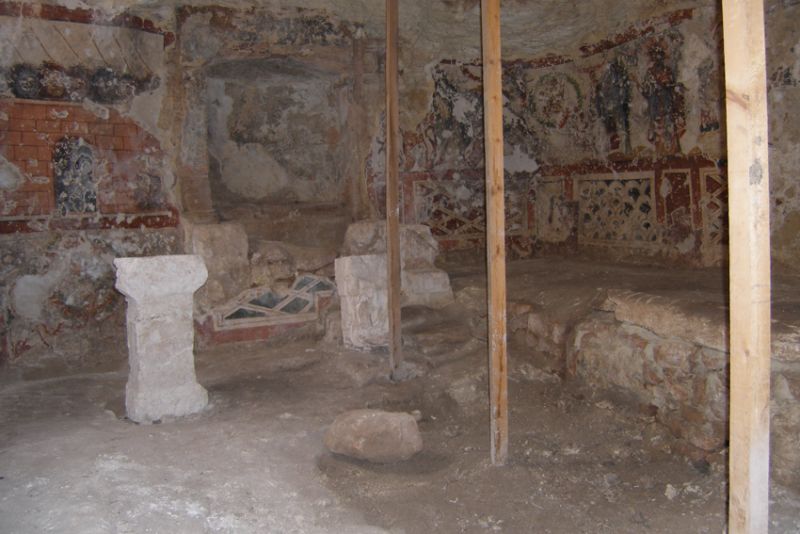
The Mithraeum of Hauarte or Hawarte, which preserves colourful frescoes, it’s the latest know and used.
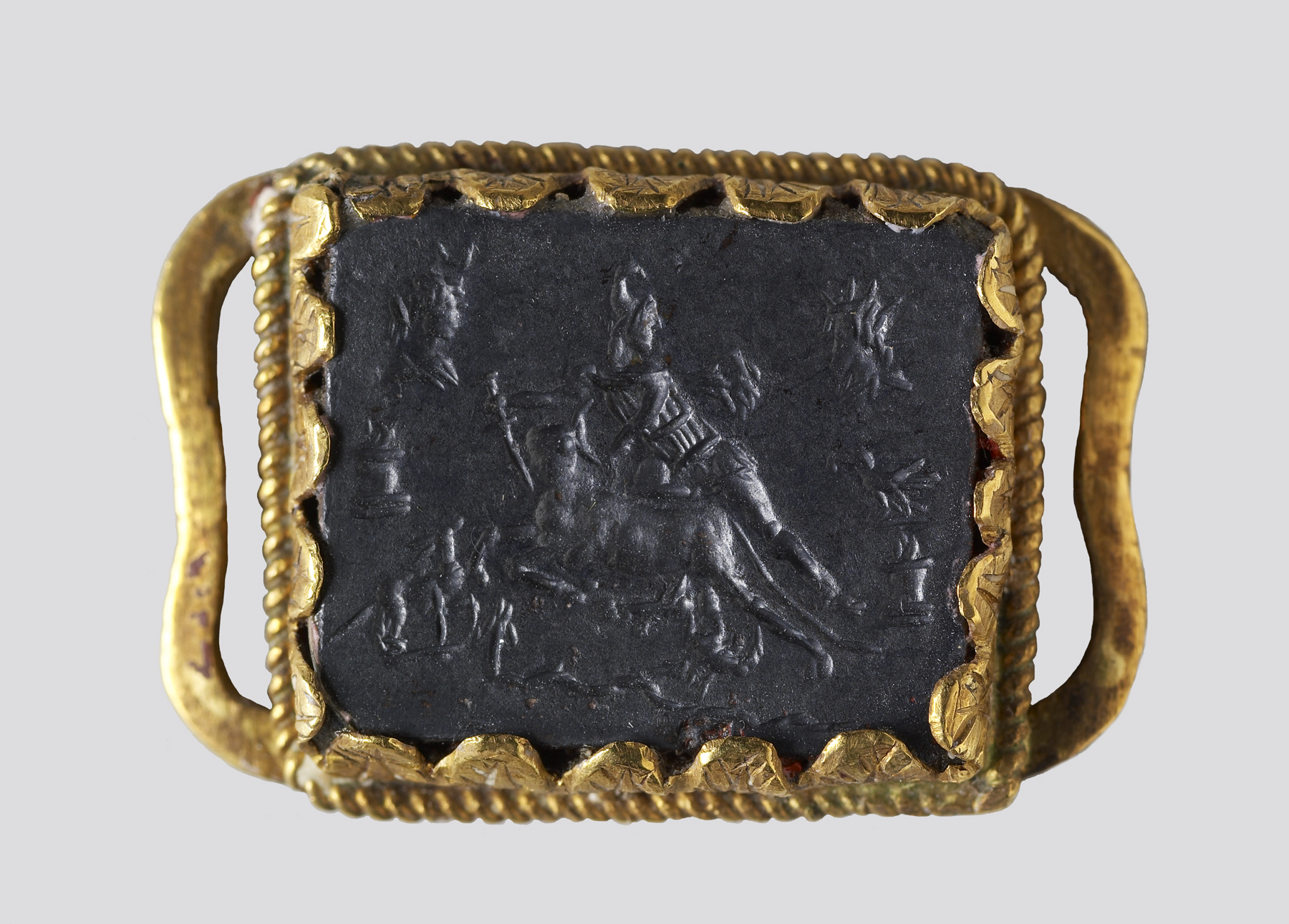
This unusual piece depicts Mithras slaying the bull on one side and the Gnostic god Abraxas on the other.
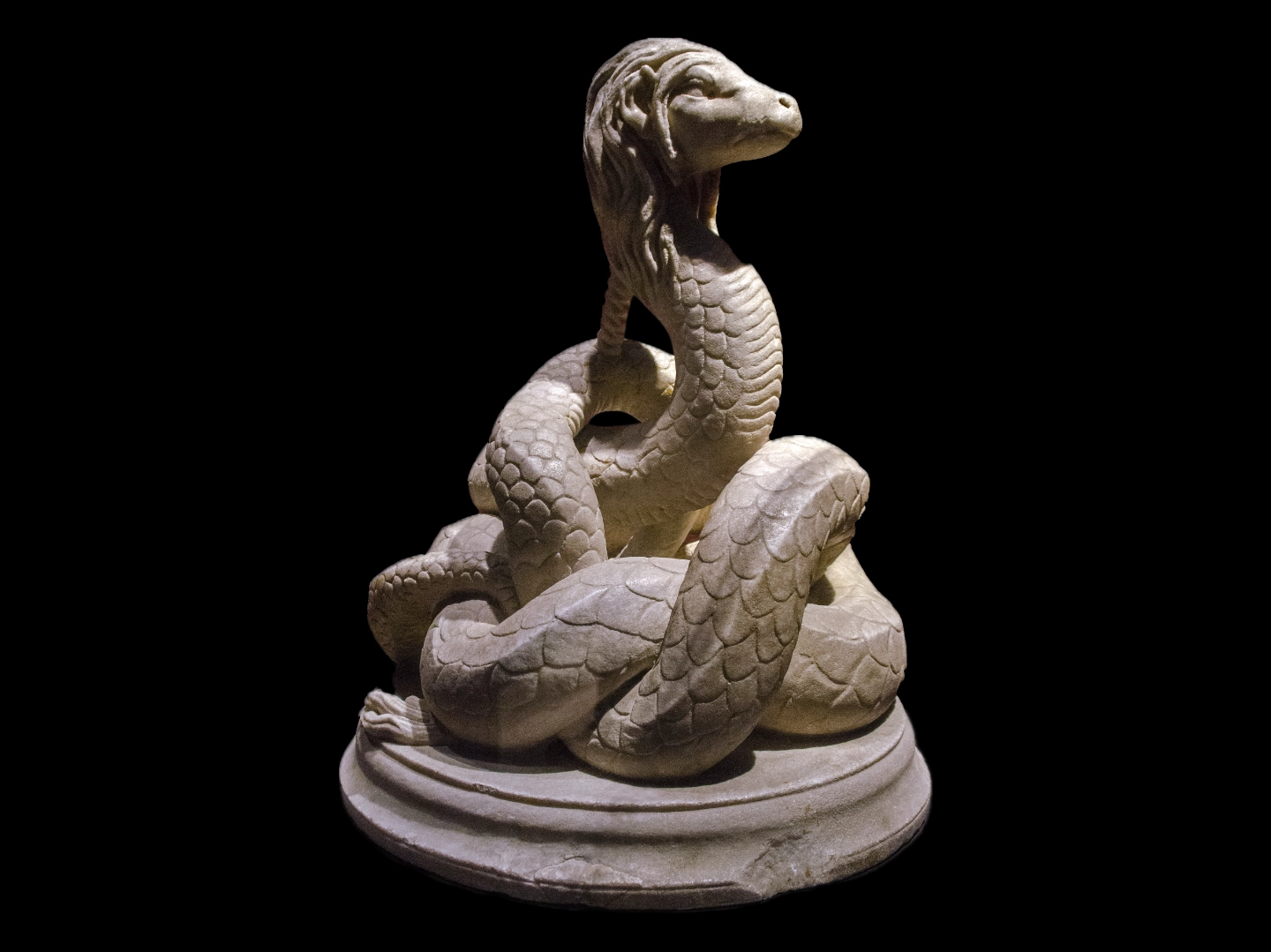
At Rome’s twilight, amid political upheaval and Christian ascendancy, Vettius Agorius Praetextatus embodied pagan intellect, virtue, and authority across senatorial, military, and mystical spheres.

In their groundbreaking new book, Mushrooms, Myths & Mithras, classics scholar Carl Ruck and friends reveal compelling evidence suggesting that psychedelic mushroom use was equally influential in early Europe, where it was central to initiation cerem
