Your search Cabrera de Mar gave 1568 results.
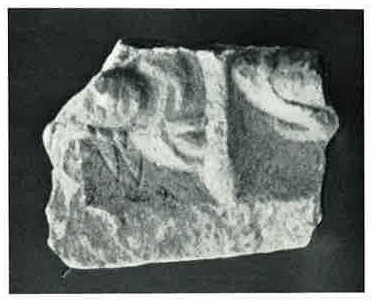
Left upper corner of a marble relief from Mithraeum II at Ptuj, ancient Poetovio, with the dressed bust of Sol in radiate crown above a horizontal rim, beneath which the head of a torchbearer, probably Cautopates.

Marble relief fragment from Mithraeum II at Ptuj, ancient Poetovio, preserving the body of Cautopates; the upper head and both feet are lost.
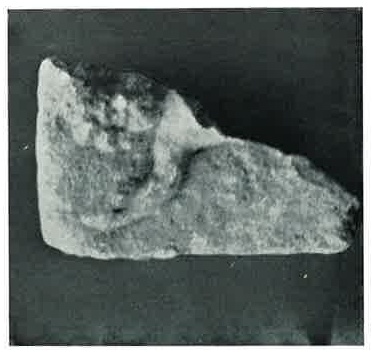
Left upper corner of a marble relief from Mithraeum II at Ptuj, ancient Poetovio, depicting Jupiter with the thunderbolt in his raised right hand, identified as a scene from the Battle against the Giants.
Small marble head in Phrygian cap from Mithraeum II at Ptuj, ancient Poetovio.
Very small marble head in Phrygian cap from Mithraeum II at Ptuj, ancient Poetovio.
Marble relief fragment from Mithraeum II at Ptuj, ancient Poetovio, preserving the upper part of Cautopates supporting his head with his left hand in a pensive attitude.
Left upper corner of a marble relief from Mithraeum II at Ptuj, ancient Poetovio, preserving part of the grotto's border, Sol's head, and below it a primitive torchbearer's head.
Marble relief fragment from Mithraeum II at Ptuj, ancient Poetovio, preserving the raven perched on the grotto's border with only two rays of Sol visible above.
Very small marble head in Phrygian cap from Mithraeum II at Ptuj, ancient Poetovio.
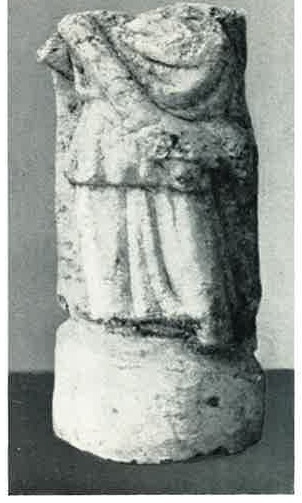
Marble statuette from Mithraeum II at Ptuj, ancient Poetovio, depicting Cautes raising the torch with both hands; head, right hand, and lower legs are lost.
Marble left hand holding a torch from Mithraeum II at Ptuj, ancient Poetovio, belonging to a statue of Cautes.
Small marble head in Phrygian cap from Mithraeum II at Ptuj, ancient Poetovio; the hind part is lost.
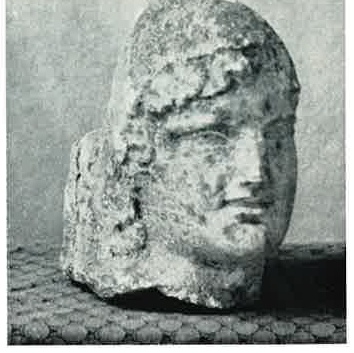
Small marble head from Mithraeum II at Ptuj, ancient Poetovio, depicting a smiling Mithras in Phrygian cap with a profiled reverse — one of the most expressive Mithraic heads from the Danubian provinces.
Marble relief fragment from Mithraeum II at Ptuj, ancient Poetovio, depicting a standing woman holding her right hand above an altar and a palm branch in her left; the lower body and base are lost.
Fragment of a marble relief from Mithraeum II at Ptuj, ancient Poetovio, preserving a woman's head adorned with a wreath; probably a secondary deity from the sanctuary's sculptural programme.
Marble relief from Mithraeum II at Ptuj, ancient Poetovio, depicting standing Jupiter with sceptre and thunderbolt beside standing Hercules with the Hesperides' fruit and club — a divine pair with Mithraic associations.
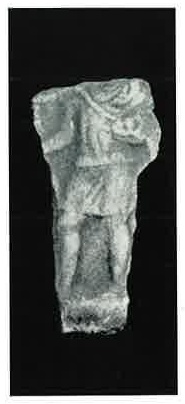
Marble relief fragment from Mithraeum II at Ptuj, ancient Poetovio, depicting a person in Oriental dress with outstretched right arm holding a small fruit basket in his left hand — probably a fragment of the sacred repast scene.
Marble torso from Mithraeum II at Ptuj, ancient Poetovio, probably representing a winged, reclining bull with two vertical attachment ligaments on the reverse.
Marble statuette fragments from Mithraeum II at Ptuj, ancient Poetovio, preserving the torsos and partial bodies of Sol's horses together with a two-wheeled car — a rare three-dimensional representation of this scene.
Marble plate fragment from Mithraeum II at Ptuj, ancient Poetovio, recording a dedication to Deo invicto Mithrae for the welfare of the Emperors and the restoration or construction of a templum.
