Your search Cabrera de Mar gave 1568 results.

Supervisor of the imperial couriers who offered an elaborate votive altar and ritual insignia to Mithras in Rome under Commodus.
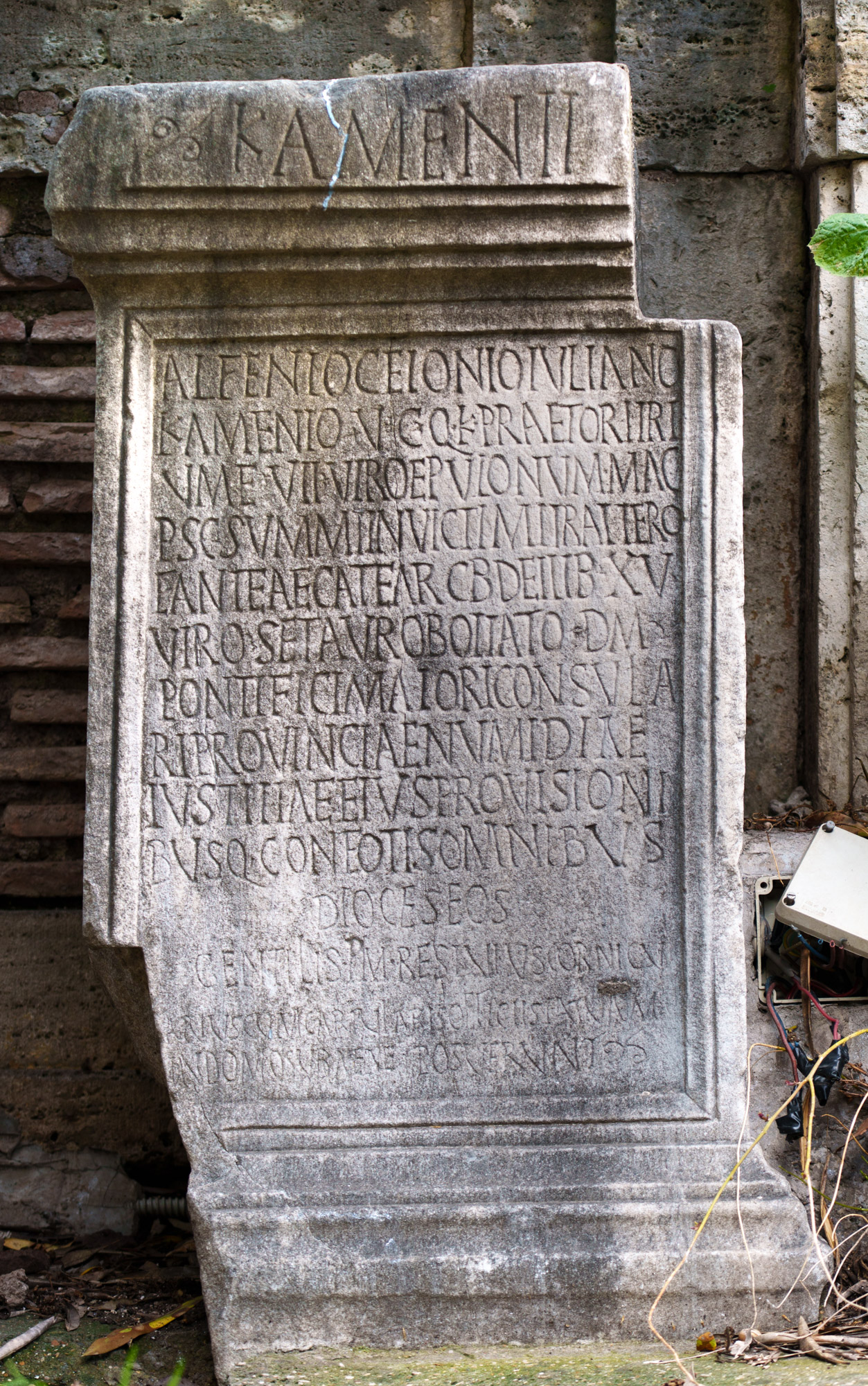
Honorific marble statue base dedicated to the senator and Mithraic pater Alfenius Ceionius Iulianus Kamenius by members of his provincial administration.

Marble altar dedicated at the Vatican Phrygianum in Rome by the Mithraic pater Alfenius Ceionius Iulianus Kamenius in 374 CE.
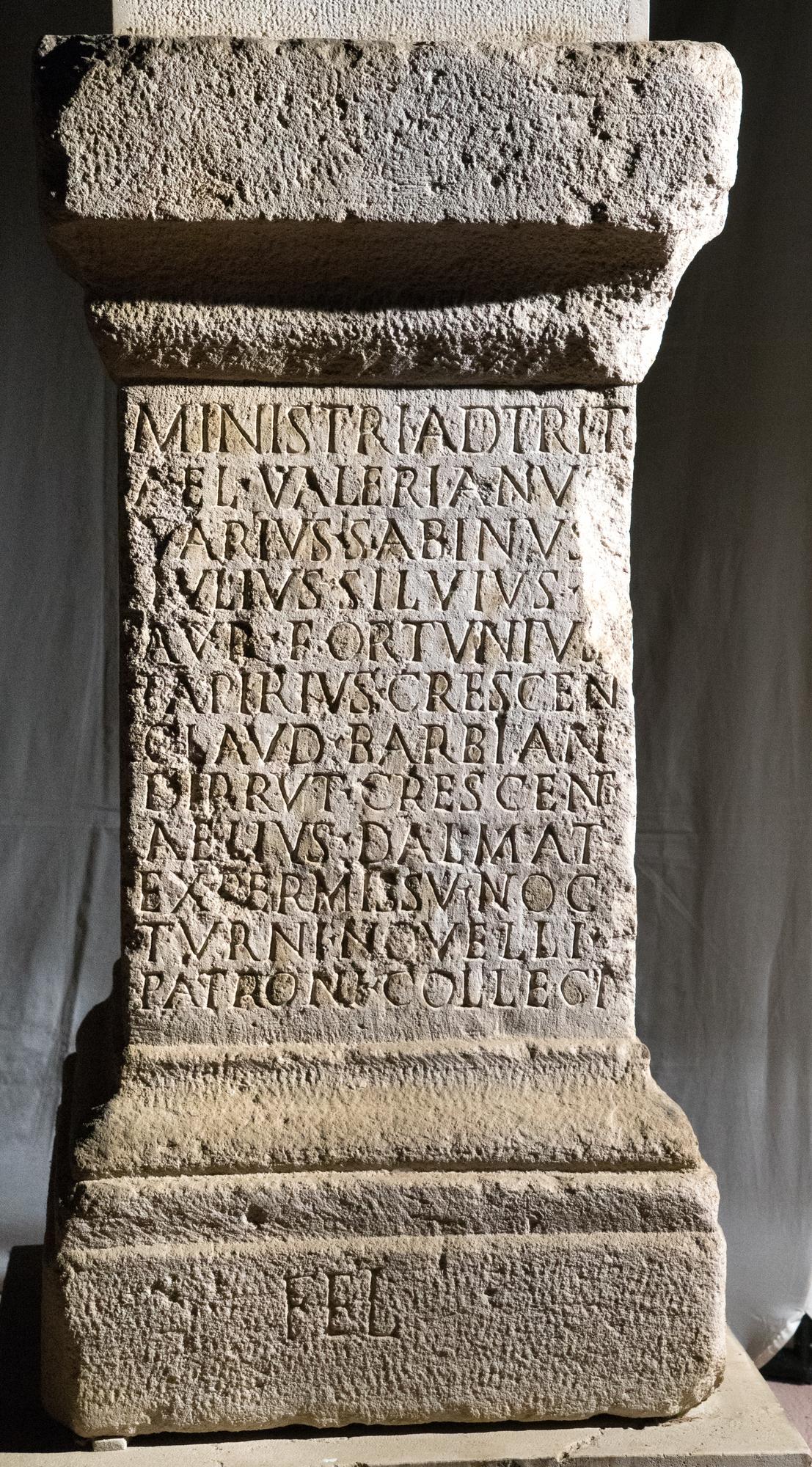
This inscribed limestone altar from Roman Salona preserves several lists of ministers associated with the Tritones collegium during the Tetrarchic period.
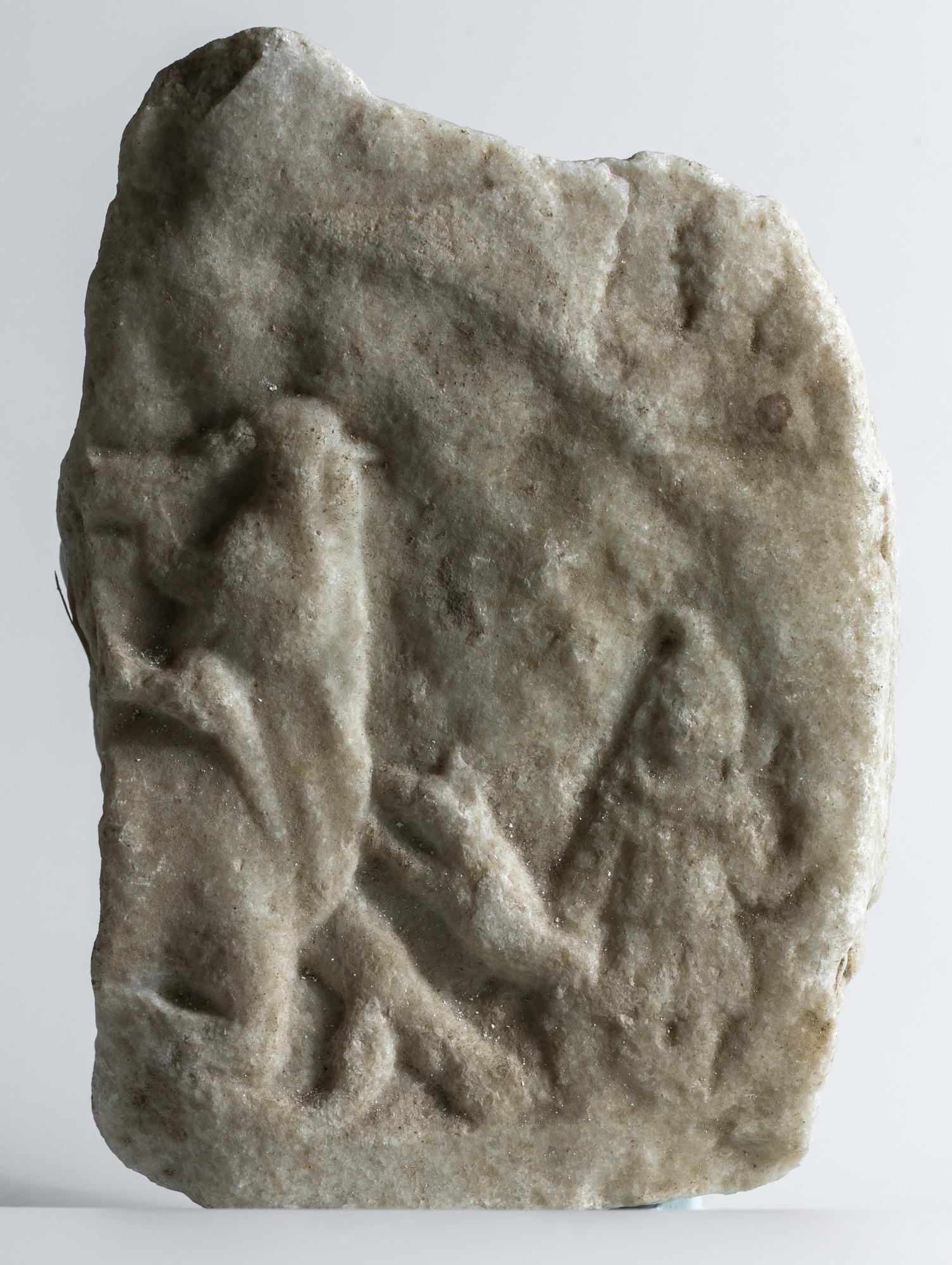
This weathered marble fragment from Viminacium preserves part of a tauroctony with Luna, Cautopates, the serpent, and the dog.

These six marble fragments from the Second Mithraeum of Poetovio preserve parts of tauroctonies together with figures of Sol, Cautes, and Cautopates.
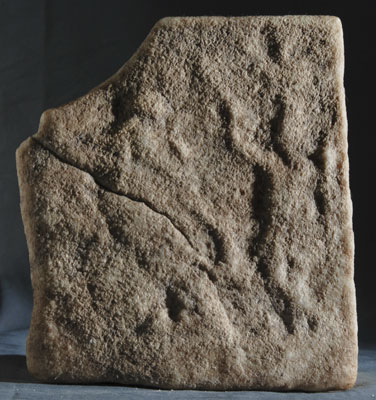
This small weathered marble fragment preserves part of a tauroctony with Cautes, Luna, the serpent, and a leaping dog.
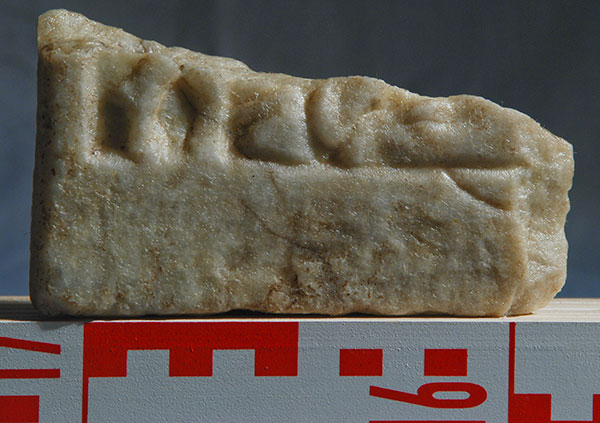
This small marble fragment preserves the crossed legs of a torchbearer, probably Cautopates, beside the hoof of the bull and the foot of Mithras.
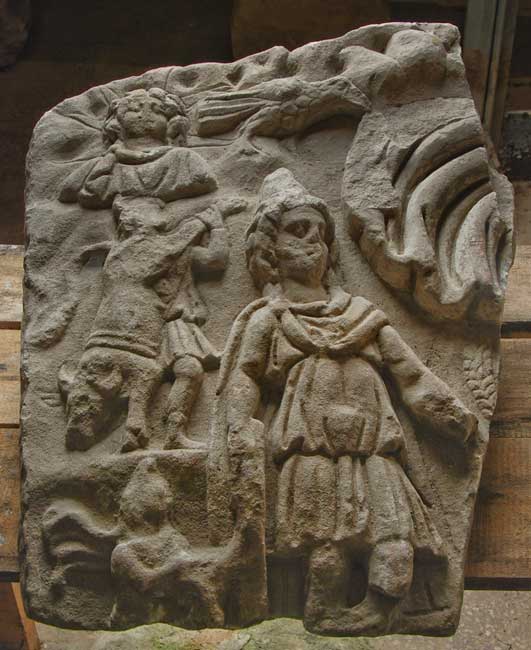
This marble fragment from Roman Dacia preserves part of a tauroctony with Sol, the raven, and Mithras dragging the bull.
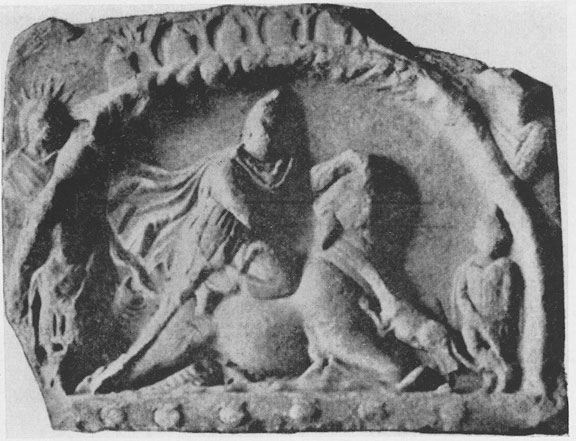
This finely carved marble tauroctony from Interamna features an unusual series of altars and ritual vases surrounding the scene.
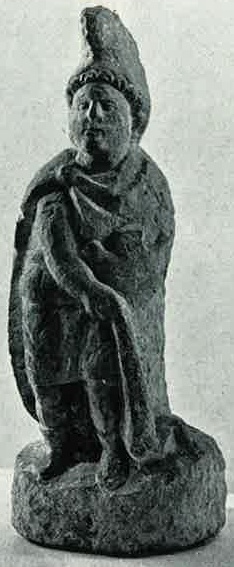
This statuette of Cautopates from Intercisa shows the torchbearer holding a burning torch and a pelta at his side.
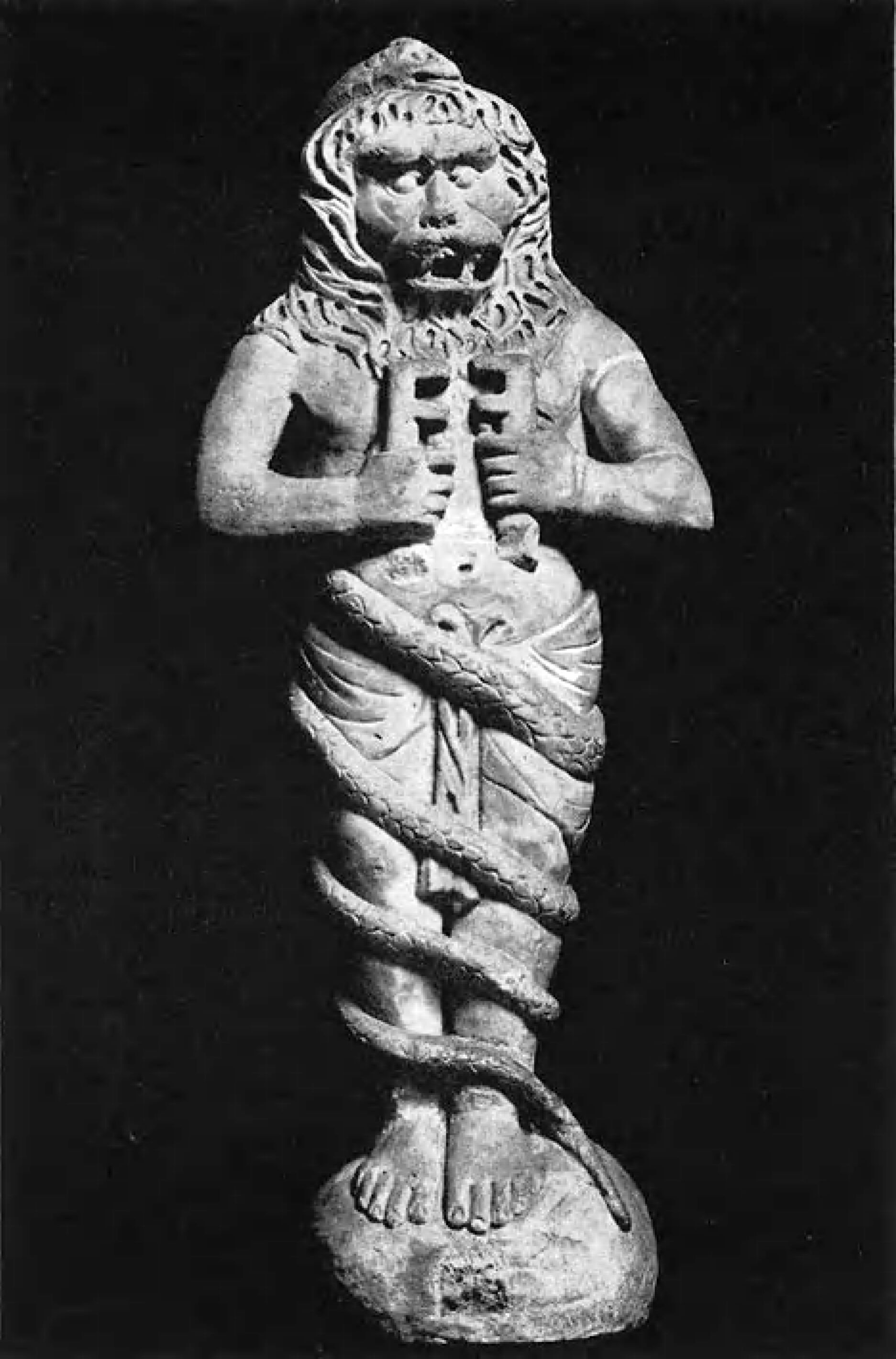
The lion-headed marble from Muti's gardens has a serpent entwined in four coils around his body.
This marble head of Mithras was found in the Luxemburgerstrasze in Cologne, Germany.
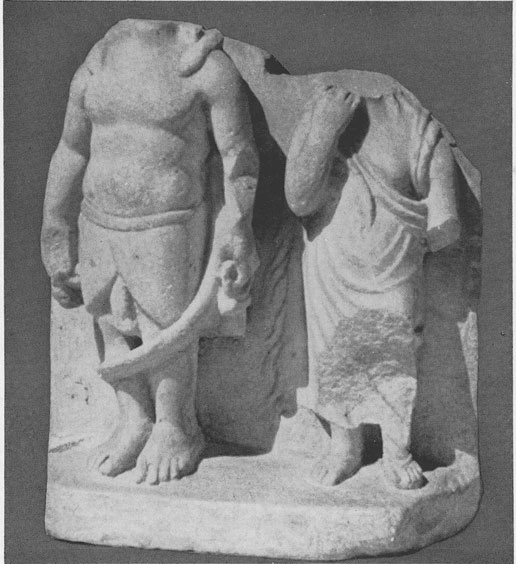
Marble relief, probably found in Rome during the construction of the Palazzo Primoli along the Via Zanardelli.
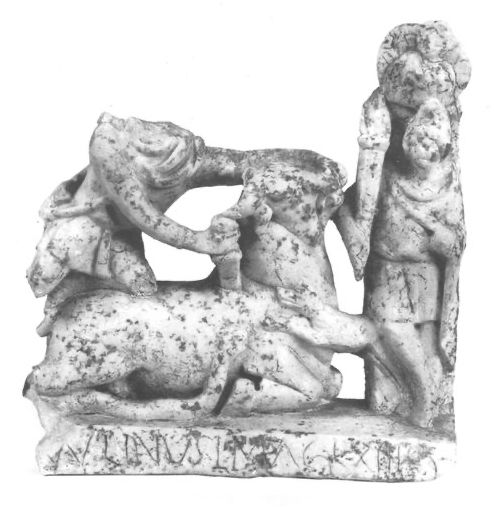
This relief of Mithras killing the bull was dedicated by the bearer of the imperial standard of Legio XIII Gemina, Marcus Ulpius Linus.
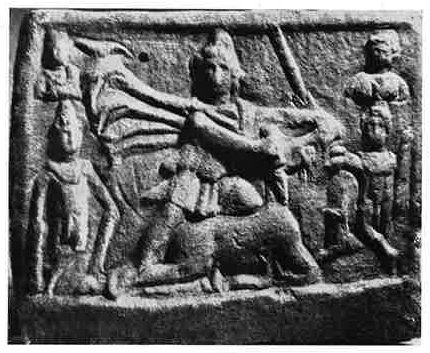
This marble relief depicting Mithras as a bull-slayer was once owned by Major Holzhausen and Franz Cumont and is now housed at the Belgian Academy.
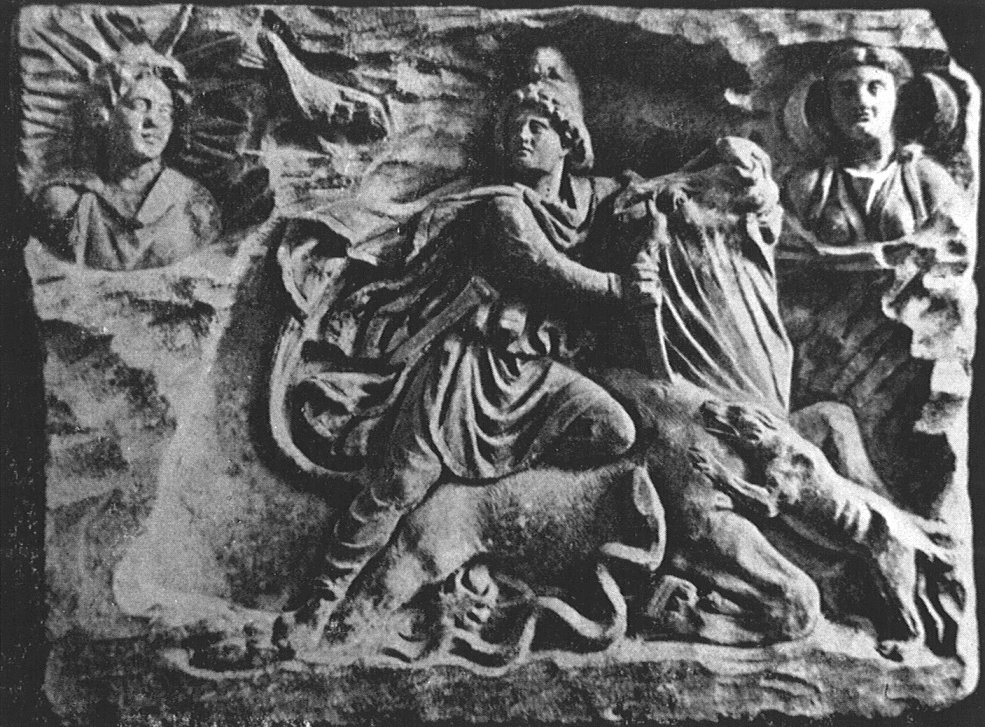
This marble relief depicting Mithras as a bull slayer was found in the back room of the Mithraeum of the Circus Maximus.

This marble relief depicting Mithras killing the bull, found at Porto d’Anzio in 1699 and now lost, is known from a engraving by del Torre.

Fragments of a marble relief of Sol, which probably served as a fenster.
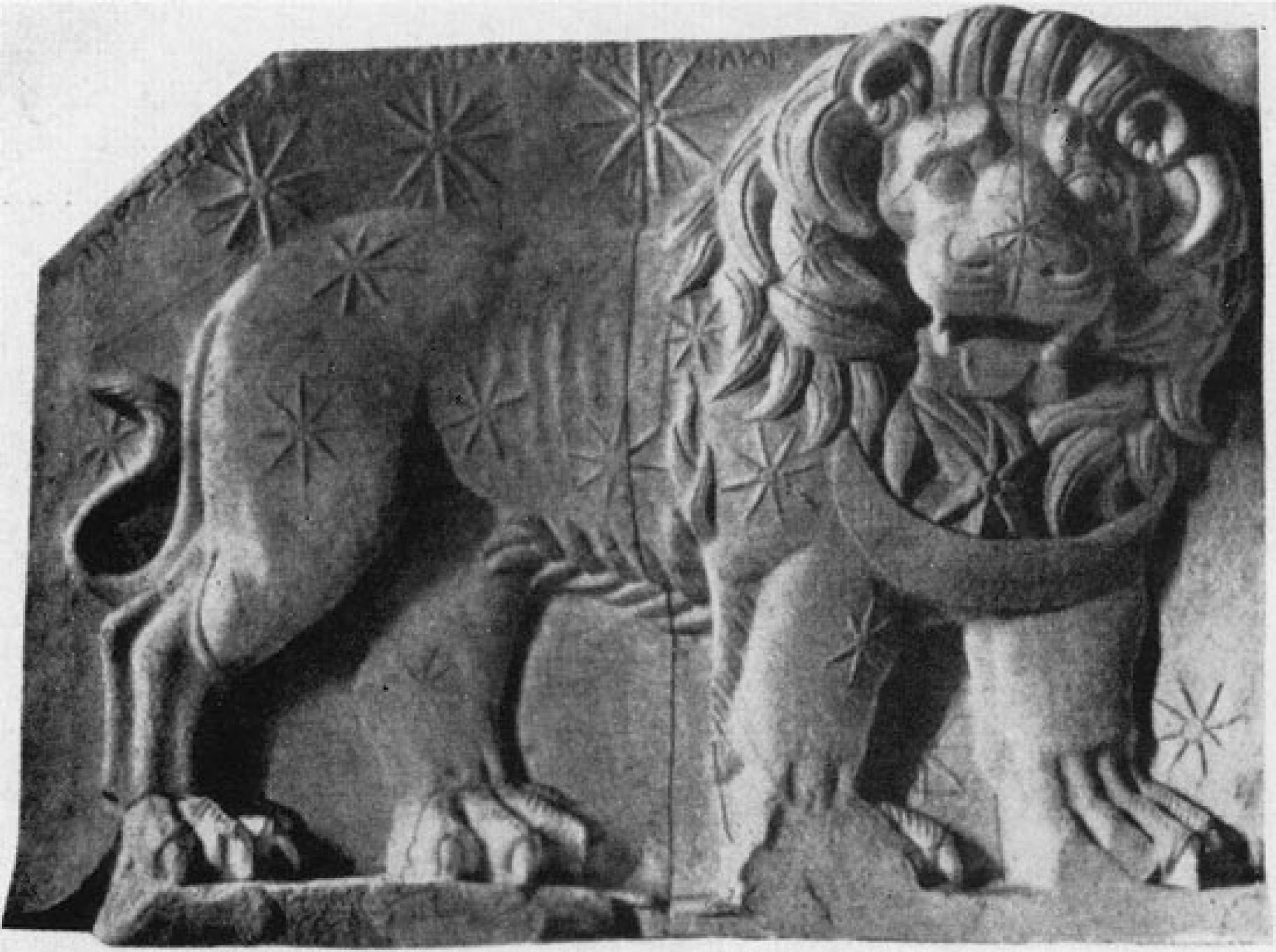
The lion relief from Nemrut Dag has the moon and several stars over his body.
