Your search Cabrera de Mar gave 1568 results.

An inscription from the place called La Oneda near Breno in Val Camonica, dedicated to Sol Divinus by L. Apisocius Successus for himself and his four patrons Marcus, Gaius, Lucius and Quintus, with a dagger with ribbons carved below.
Numerous animal bones including birds, beasts of prey, and the muzzle of a wild boar, found as ritual deposits in the Mithraeum at Pons Saravi (modern Saarburg) in Belgica.
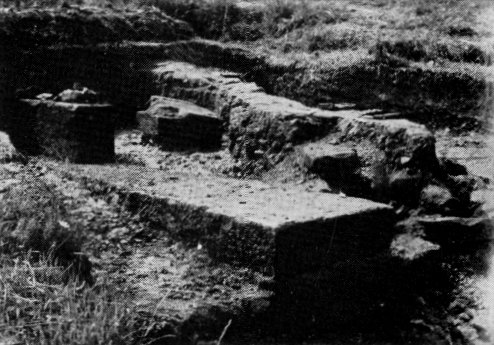
The Mackwiller Mithraeum was built in the middle of the 2nd century, during the reign of Antoninus the Pious, on the site of a spring already worshipped by the natives.
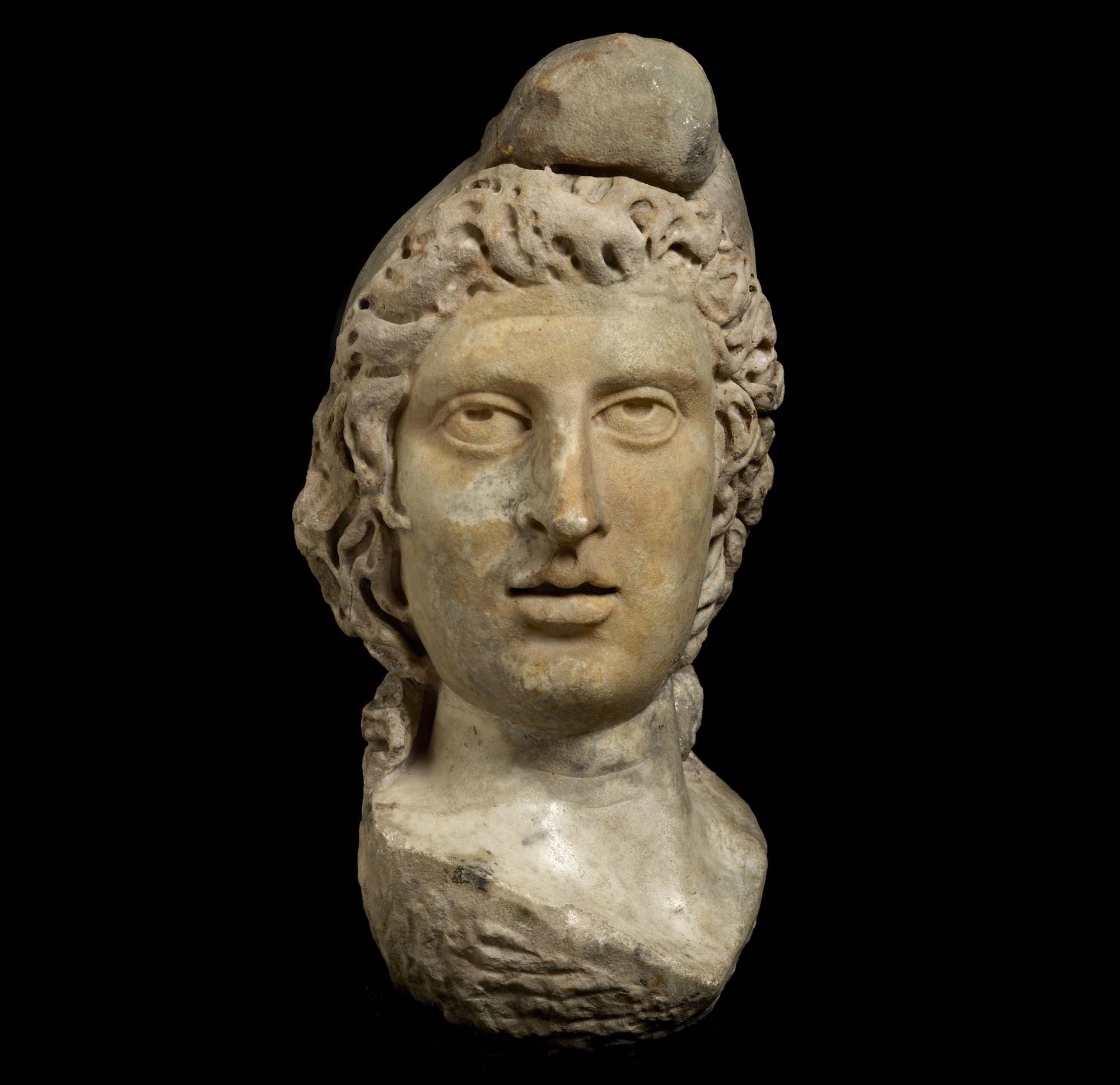
The Mithras's head of Walbrook probable belonged to a life-size scene of the god scarifying the bull.
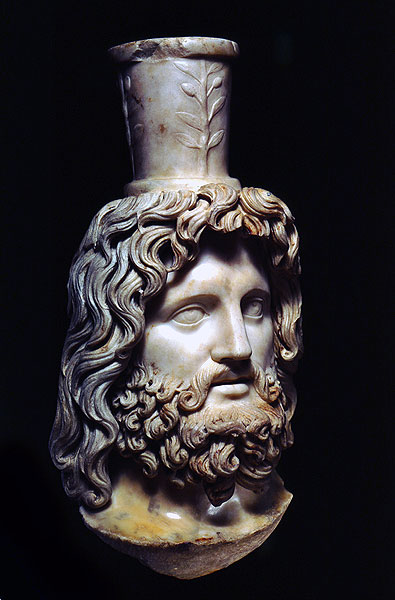
The head of Serapis found at Walbrook, London, is decorated with stylised olive branches.
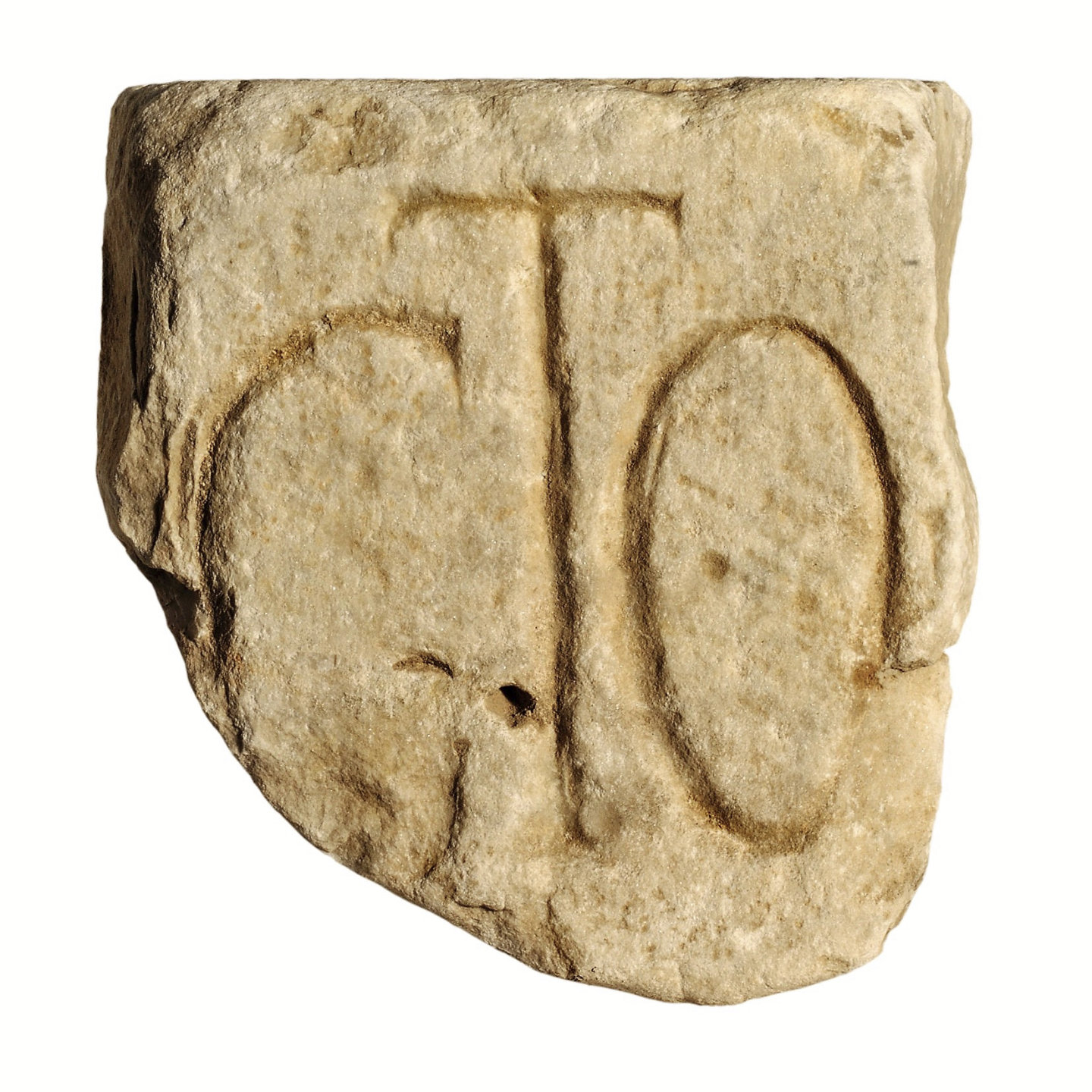
This fragment of the base of a statue from Tarragona, Spain, bears an inscription which appears to be dedicated to the invincible Mithras.
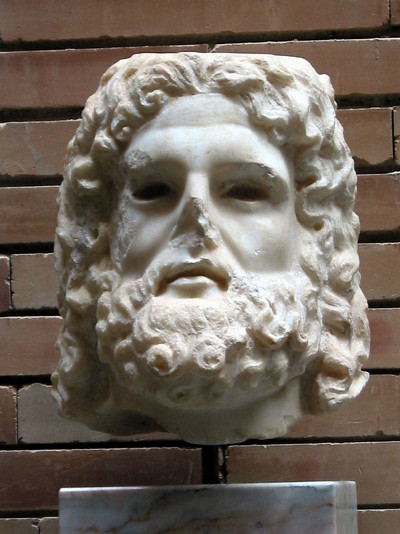
This head of Serapis from Cerro de San Albín may be unrelated to Mithras worship.
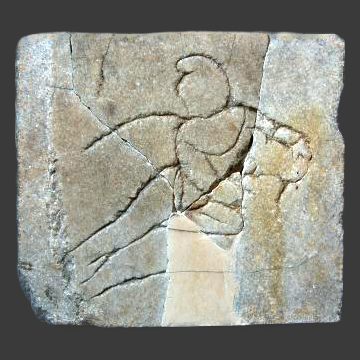
This unfinished Mithras tauroctonos without the usual surrounding animals was found in 1923 in Italica, near Seville, Spain.
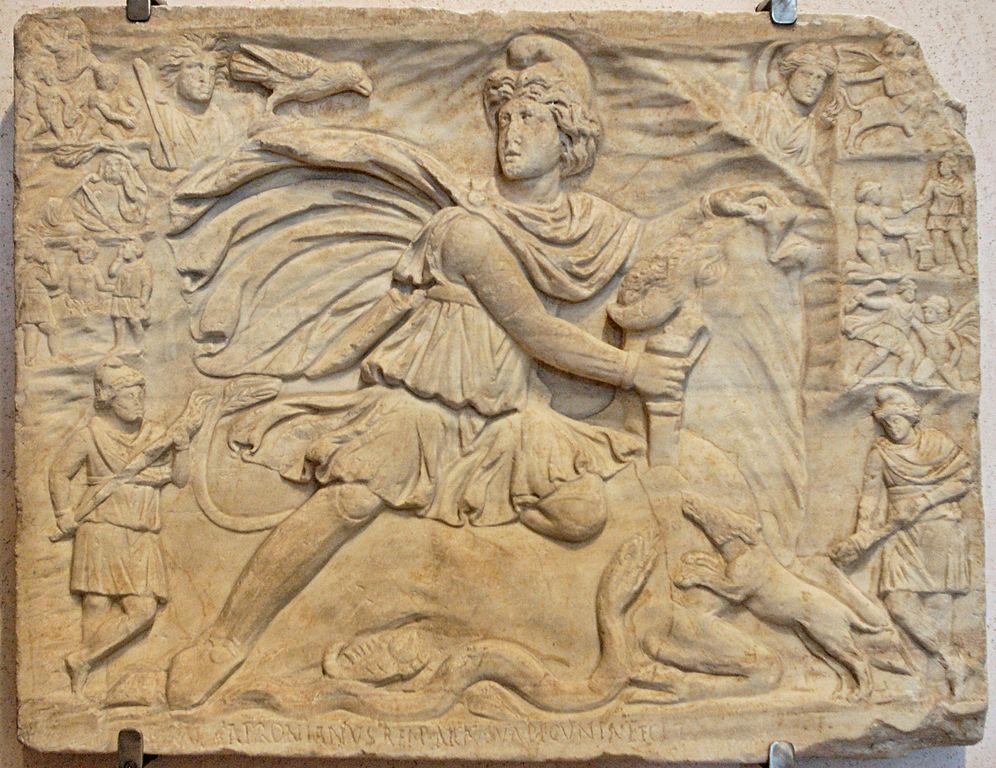
The relief of Mithras slaying the bull of Nersae includes several episodes from the exploits of the solar god.
A subterranean room with a stucco depiction of Mithras slaying the bull, probably from the fourth century, discovered at Agurzano near Ponte Mammolo on the Via Tiburtina outside Rome.
An inscription to Sol Invictus Mithras found in the Vigna Patritii outside the Porta Pia in Rome, dedicated by Aelius Victorinus, a veteran of the emperors honourably discharged, with M. Aurelius Romulus as antistes and sacerdos of the cult.

Mithraic relief from Rome reproduced in figure 169 of the corpus.
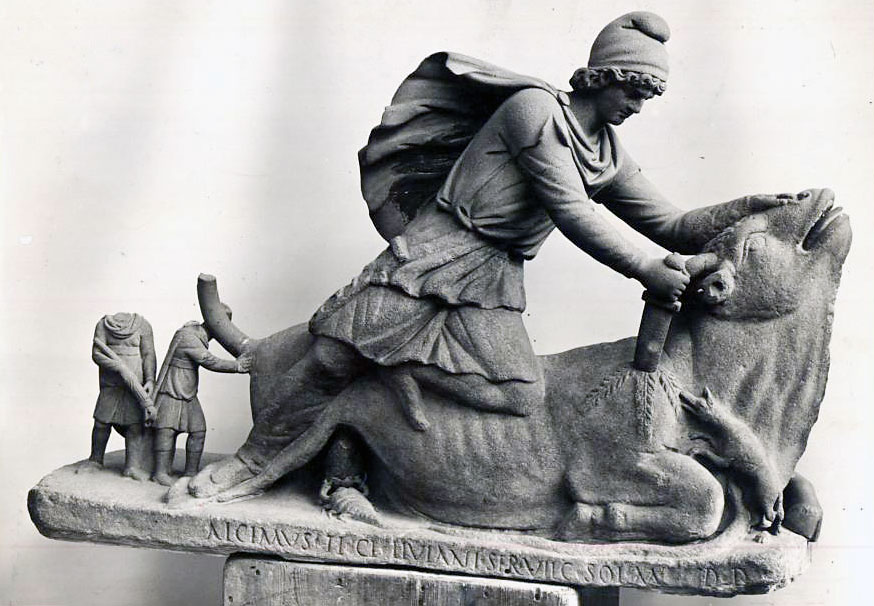
Flat marble base from Rome, with fragments of statue feet still resting on it, bearing a dedication to the Lord Sol in fulfilment of a vow by Claudius Amerimnus, a lictor curiatus.
Small marble arula found near the church of SS. Apostoli in Rome, bearing a brief Greek dedication to Helios Mithras Invictus.
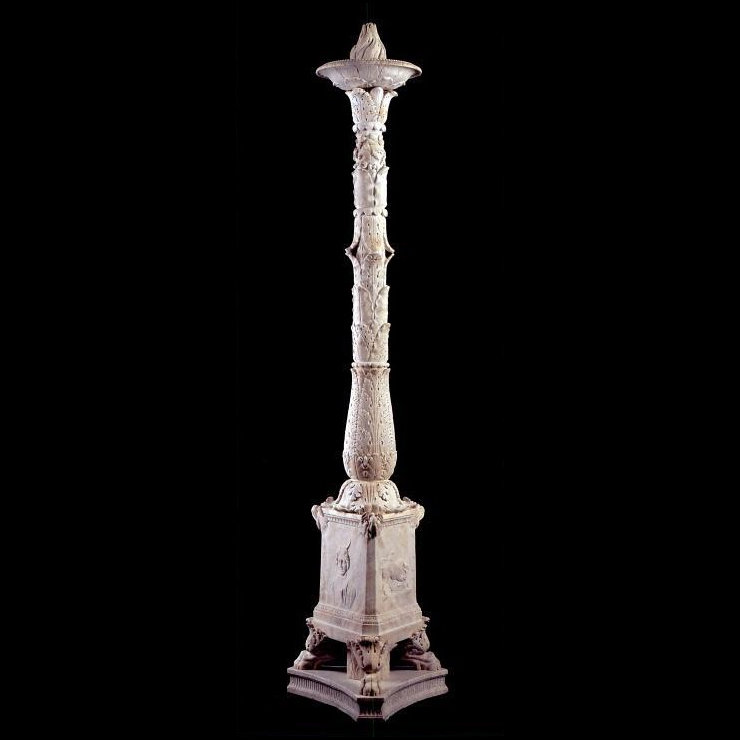
This magnificent candelabrum was found in Rome in 1803, in the Syrian Temple of Janicule.
This small cippus to Zeus, Helios and Serapis includes Mithras as one of the main gods, although some authors argue that it could be the name of the donor.
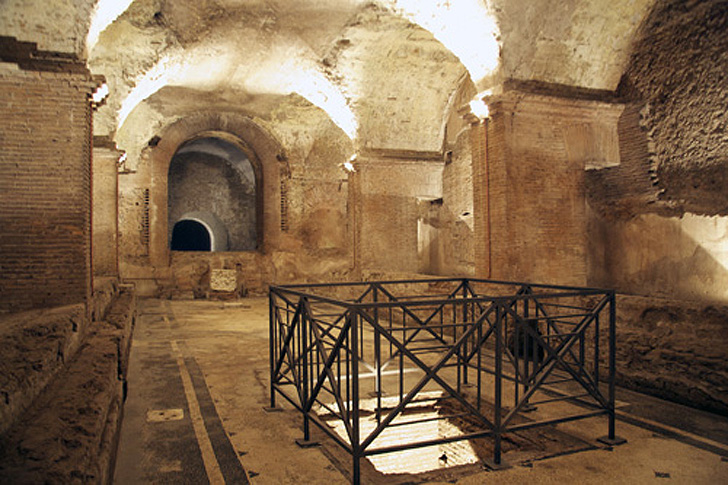
The Mitreo delle terme di Caracalla is one of the largest temples dedicated to Mithras ever found in Rome.
Wall-painting of Mithras tauroktonos in fresco, discovered in 1886 in an underground room of the house of the Nummi Albani on the Quirinal (Via Firenze); the god wears a red cap and tunic, the torchbearers wear yellow or orange tunic and cap with green or brown anaxyrides…
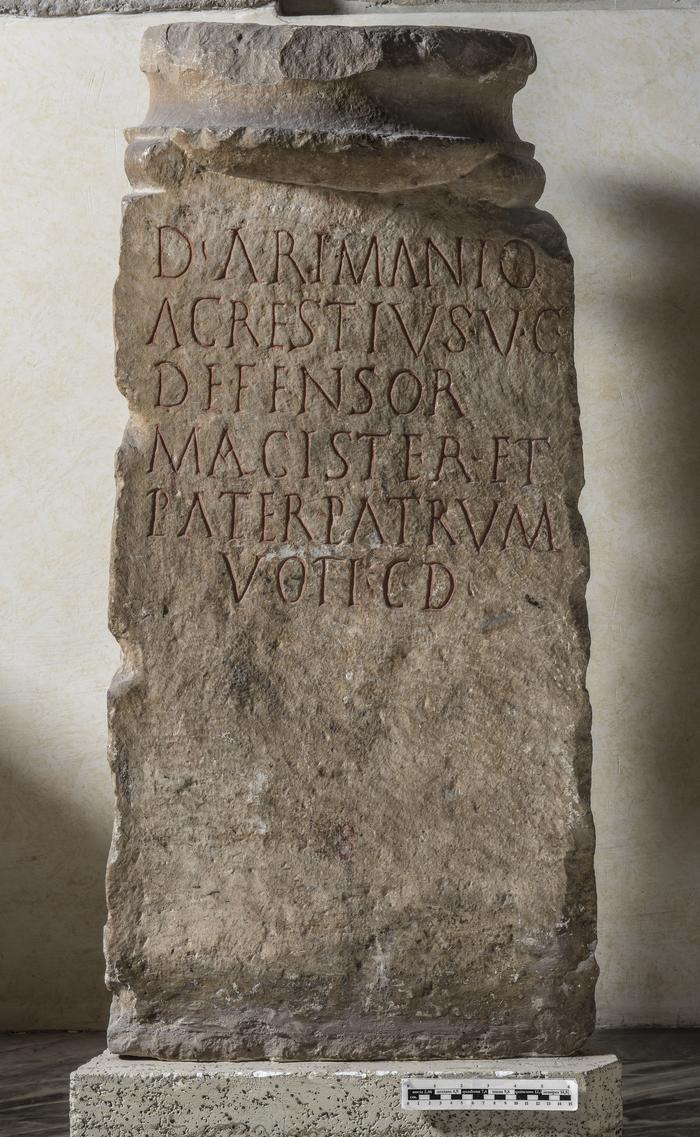
This altar mentioning the god Arimanius was found in 1655 at Porta San Giovanni, on the Esquilino.
