Your search Castellammare di Stabia gave 1916 results.
Beheaded Cautopates in limestone found on the podium of the Jajce Mithraeum, Bosnia and Herzegovina.
The remains of the Jajački Mithraeum were discovered accidentally during excavation for the construction of a private house in 1931.
This relief of Mithras as a bullkiller was found in Golubić, Bosnia and Herzegovina, near a cementery.
According to F. Cumont, the Bedouins told a legend from which Nöldeke concluded that the castle of Quasr-ibn-Wardân was a fort with a mithraeum.
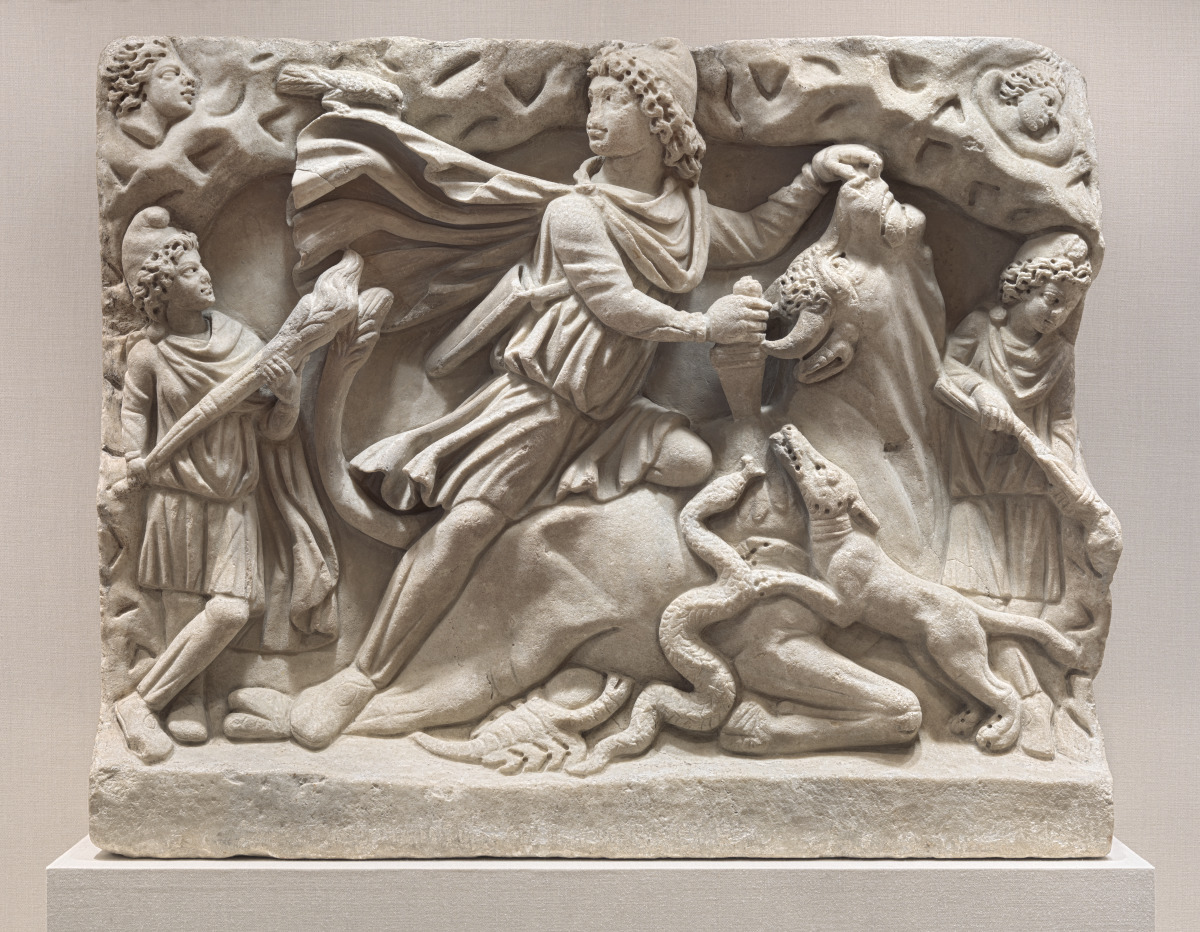
This relief of Mithras killing the bull, signed by a certain Χρῆστος, is on display in the Sala dei Animali of the Vatican Museum.
This relief of Mithras Tauroctonos from Rome bears the inscription of three brothers, two of them lions.
This small relief of Mithras killing the bull was found in 1859 in Turda, in the Cluj region of Romania.
The relief of Mithra slaying the bull from Apulum, Romania, has been missing until the scholar Csaba Szabó identified it in the diposit of the Arad Museum.
The sculpture of Mithras slaying the bull found in Dormagen is exposed at Bonn Landesmuseum.
According to the scarcely detailed design of von Sacken, the lay-out of the temple must have been nearly semi-circular.
This column found in the Mithraeum of Sarmizegetusa bears an inscription to Nabarze instead of Mithras.
This limestone relief of Mithras killing the bull bears an inscription by a certain Flavius Horimos, consecrated in a 'secret forest' in Moesia.
This fragment of a double relief shows a tauroctony on one side and the sacred meal, including a serving Corax, on the other.
This altar dedicated to the Invincible Sol Mithra was found in 1878 in a cemetery in Alba Iulia.
This monument bears an inscription by a certain Lucius Aelius Hylas, in which he associates Sol Invictus with Jupiter.
This marble relief of Mithras killing the bull was made by a freedman who dedicated it to his old masters.
This relief of Mithras killing the bull was dedicated by the bearer of the imperial standard of Legio XIII Gemina, Marcus Ulpius Linus.
In the altar that Titus Tettius Plotus dedicated to the invincible God, he called himself pater sacrorum.
Workman digging in a field near Dormagen found a vault. Against one of the walls were found two monuments related to Mithras.